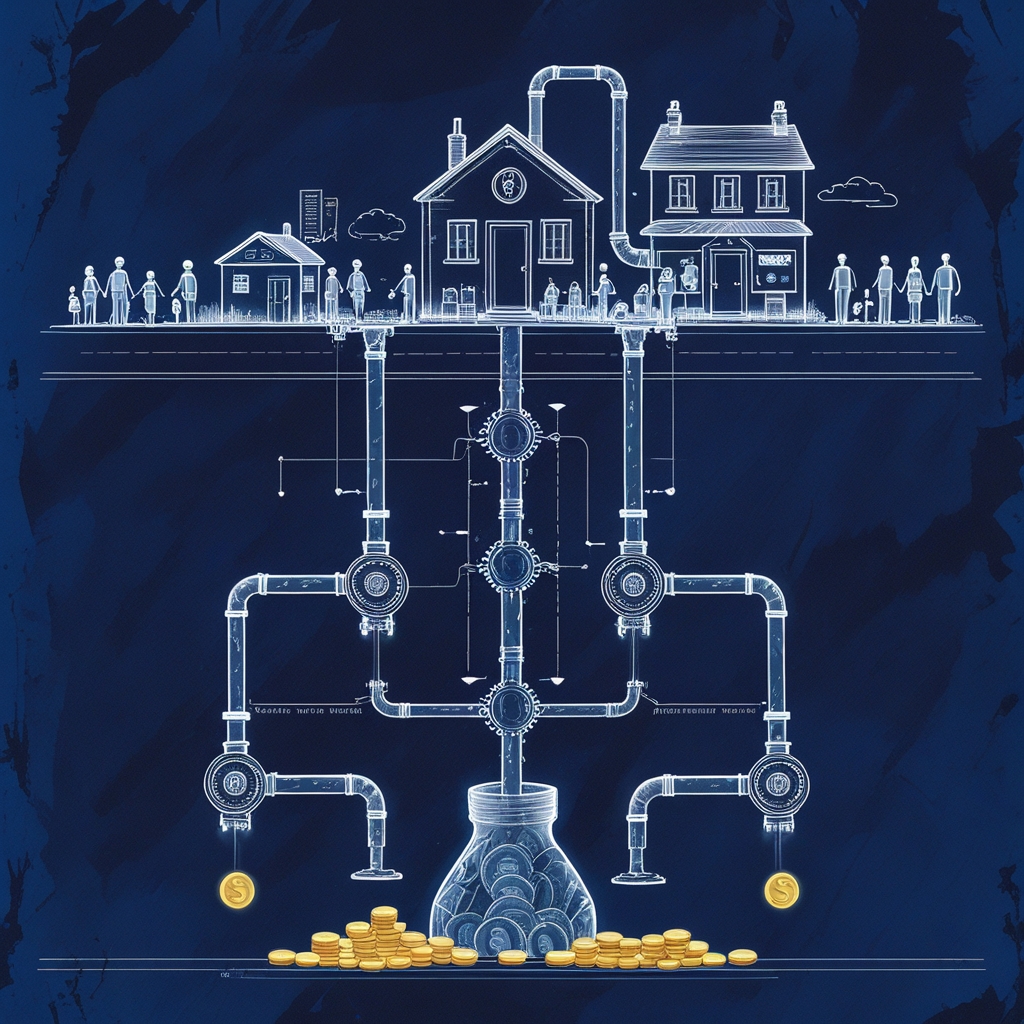
Case Study - The Young Driver Crisis
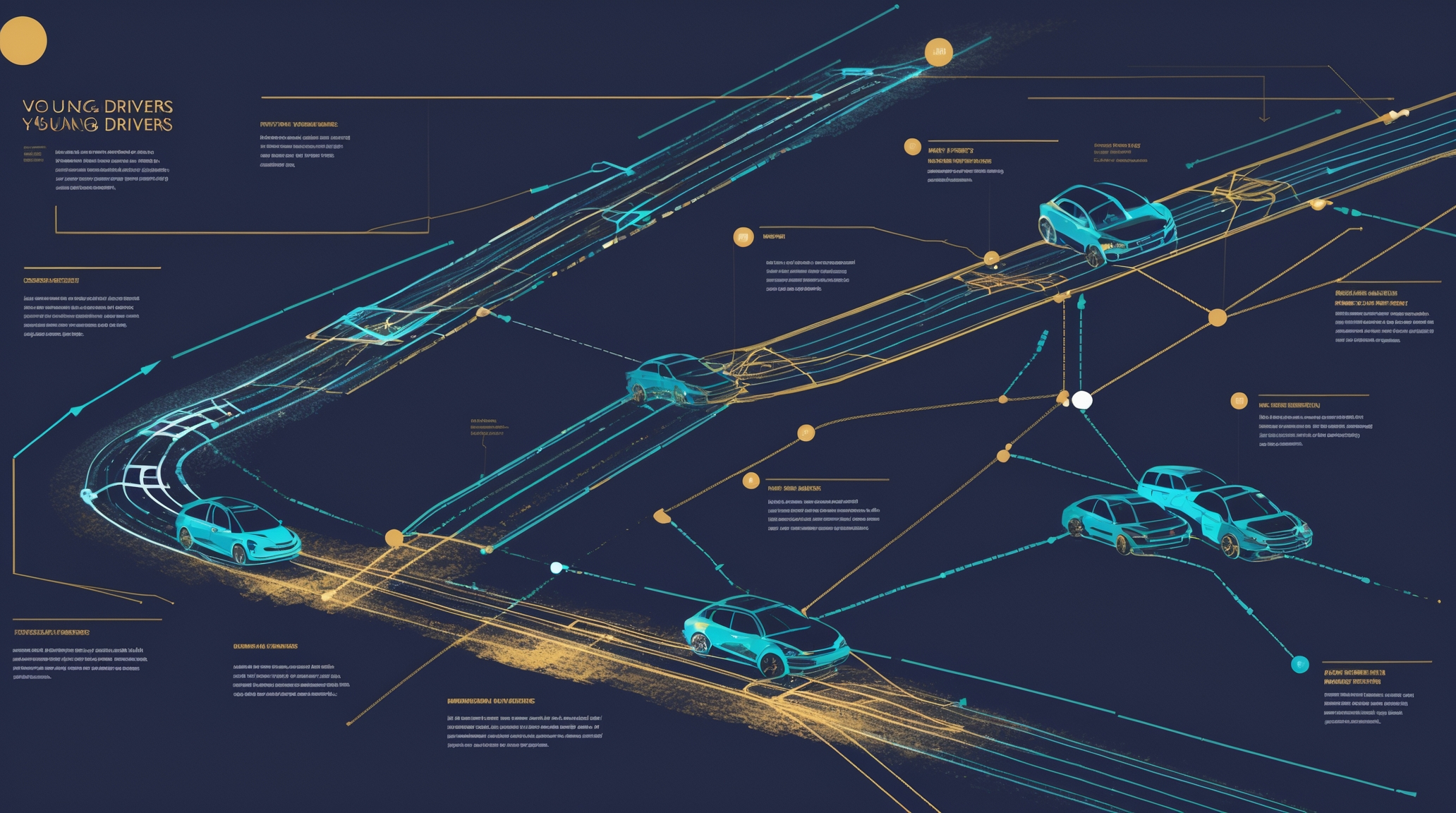
In the early 2010s, car insurance for young drivers became a crisis. Premiums for drivers under twenty-five, particularly young men, soared to levels that were, for many, completely unaffordable. The average premium for a seventeen-year-old male driver reached over two thousand pounds per year, and in some areas, in cities, for certain cars, premiums exceeded three thousand, four thousand, even five thousand pounds. Five thousand pounds for basic third-party insurance, for the legal right to drive, for a teenager who might earn minimum wage, who might be a student, who might be starting an apprenticeship.
And this was not insurance in any meaningful sense. It was not protection, it was not risk pooling, it was extraction. Young drivers were being charged multiples of what their actual claims cost, and the premiums bore little relation to the risk they posed. The system had identified young drivers as a captive market, as people who needed to drive, who had no alternative, who would pay whatever was asked because the alternative was not driving at all, was losing access to work, to education, to independence. And insurers, seeing this captivity, extracted.
And the crisis created consequences. Young people could not afford insurance, so they drove uninsured, risking fines, prosecution, losing their license. Or they did not drive at all, stayed dependent on public transport, on lifts from parents, on taxis, and this limited their opportunities, limited where they could work, where they could study, how they could live. And families struggled, parents paying insurance for children who could not afford it, going into debt, sacrificing other spending, because without a car, without insurance, their children had no future.
Understanding what happened in the young driver crisis, how premiums reached such levels, why reform failed, and how telematics black boxes were introduced as a supposed solution, reveals the dynamics of car insurance extraction and shows what happens when the system is allowed to operate without constraint.
Let me show you what happened.
The buildup to the crisis began in the mid-2000s. Young driver premiums had always been higher than average, because young drivers, statistically, have more accidents, make more claims. This is actuarial fact, it is defensible, and it is reasonable to charge young drivers more to reflect the higher risk. But the scale of the difference, the multiple, was growing, and by the late 2000s, young drivers were paying not just more, but vastly more, than older drivers.
And the driver of this escalation was claims inflation, particularly personal injury claims. The cost of personal injury claims rose sharply in the 2000s, driven by an increase in whiplash claims, by claims management companies advertising aggressively, by a culture of claiming for minor injuries, by lawyers pursuing compensation for accidents that previously would not have resulted in claims. And insurers, facing higher claims costs, raised premiums to cover them.
But the increase was not spread evenly. Insurers, using data, using segmentation, identified which groups had the highest claims costs, and those groups were charged disproportionately more. And young drivers, particularly young men, in cities, driving certain types of cars, were identified as the highest-risk group, and their premiums rose fastest.
And the rise was accelerated by comparison sites. As comparison sites became dominant, insurers focused their pricing strategies on comparison sites, offering low prices to low-risk customers to rank highly, and charging high prices to high-risk customers, young drivers, to maximize profit. And because young drivers had no claims history, had no no-claims bonus, had no leverage, insurers could charge them whatever they wanted, could test the upper limits of what young people would pay.
And premiums spiraled. In 2005, the average premium for a seventeen-year-old male was around one thousand five hundred pounds. By 2011, it had reached over two thousand pounds, an increase of thirty percent in six years, far above inflation, far above wage growth. And in some postcodes, in London, in Manchester, in Birmingham, premiums exceeded three thousand, four thousand pounds. Young people, earning perhaps ten thousand pounds per year in a first job, were being asked to pay forty percent of their income just for car insurance.
And this created a crisis. Young people could not afford it. Families could not afford it. And the number of young drivers fell, because many simply gave up, decided that driving was impossible, that they could not afford the insurance, and they stayed off the roads.
But others, desperate, needing to drive for work, drove uninsured. And uninsured driving increased, particularly among young people, and this created risk for everyone, because uninsured drivers, if they caused an accident, could not pay for damage, and the cost fell on other drivers, on the Motor Insurers' Bureau, funded by a levy on all insured drivers. So the crisis fed itself, young people priced out, driving uninsured, increasing costs for everyone, justifying higher premiums.
The political response was inadequate. The government, aware of the crisis, aware of rising premiums, held consultations, commissioned reports, made speeches about tackling rip-off insurance. But the reforms were minor, were incremental, were insufficient. The focus was on reducing whiplash claims, on cracking down on fraudulent personal injury claims, on reducing the cost side rather than addressing the pricing side, the extraction.
And the industry response was to introduce telematics, black box insurance, as a solution. Telematics devices, installed in cars, monitor driving behavior, track speed, braking, acceleration, time of day, location. And insurers use this data to assess risk, to identify safe drivers, and to offer lower premiums to young drivers who agree to be monitored, who prove they drive safely.
And telematics was marketed as the answer to the young driver crisis. Insurers claimed that telematics would reduce premiums for safe young drivers, would reward good behavior, would make insurance affordable. And comparison sites promoted telematics policies heavily, presented them as the solution, as the way for young people to access affordable insurance.
And telematics did reduce premiums for some young drivers. Those who drove carefully, who avoided speeding, who drove during low-risk times, who accepted monitoring, saw their premiums fall, sometimes by hundreds of pounds. And for those drivers, telematics was beneficial, allowed them to afford insurance, allowed them to drive.
But telematics was not a solution to the crisis, it was a response that benefited insurers, that increased their profits, and that deepened extraction in new ways.
First, telematics shifted the burden. Instead of insurers reducing premiums for all young drivers, they reduced premiums only for those who accepted monitoring, who agreed to surveillance. And those who did not accept monitoring, who valued privacy, who did not want to be tracked, continued paying full price, continued being priced out. So telematics divided young drivers into two groups, those willing to be monitored and those not, and only the willing benefited.
Second, telematics created new extraction. The devices themselves cost money, installation costs, monthly monitoring fees, data processing costs, and these costs were built into premiums, or charged separately. And insurers, collecting detailed data on driving behavior, profited from that data, selling it, using it for purposes beyond pricing, and young drivers, desperate for lower premiums, agreed without fully understanding how their data would be used.
Third, telematics increased segmentation and inequality. Insurers, with detailed data on individual driving behavior, could price more accurately, could identify high-risk individuals and charge them more, could identify low-risk individuals and charge them less. And this segmentation, while appearing fair, deepened inequality, because it meant that young drivers who lived in cities, who drove at night for work, who could not avoid high-risk times and locations, were priced out even with telematics. Telematics rewarded those who could conform, who could drive at safe times in safe places, and penalized those who could not.
Fourth, telematics did not address the underlying problem, which was that young drivers as a group were being overcharged, that premiums far exceeded claims costs, that profit margins on young driver policies were enormous. Telematics allowed insurers to continue charging high premiums to most young drivers while offering discounts to a subset, and this maintained overall profitability while appearing to address the crisis.
And the evidence shows that telematics, while reducing premiums for some, did not reduce average premiums for young drivers overall. The average premium for young drivers continued to rise through the 2010s, even as telematics became widespread, because insurers, offering discounts to telematics users, raised premiums for non-users, and the overall extraction continued.
And telematics created new problems. Young drivers, monitored, faced penalties for behavior that the device deemed risky. Speeding, even slightly, even when safe, triggered warnings, increased premiums. Hard braking, even when necessary to avoid an accident, was recorded as risky behavior. Driving at night, even when required for work, increased risk scores. And young drivers, trying to keep premiums low, modified their behavior, drove more cautiously, but also drove with anxiety, with the constant awareness of being watched, of being judged, of being priced based on every action.
And some insurers used telematics punitively. They canceled policies if driving behavior was deemed too risky, left young drivers without insurance, unable to get alternative cover because they had been canceled, and forced into even higher premiums or into driving uninsured. And this punitive use of telematics, while affecting a minority, created fear, created pressure, and made young drivers feel they had no control, no recourse.
The outcome of the young driver crisis, a decade later, is mixed. Premiums for young drivers remain high, remain unaffordable for many, but telematics has provided a route for some to access lower premiums. The number of young drivers has not recovered to pre-crisis levels, many young people do not drive, delay learning, delay buying a car, because the cost is prohibitive. And uninsured driving, while reduced through enforcement, remains a problem, particularly in deprived areas, where young people cannot afford insurance and have no alternative.
And the crisis revealed the system's priorities. When premiums became unaffordable, when young people were priced out, the response was not to cap premiums, not to regulate pricing, not to create a public insurance option that would cover young drivers at cost. The response was telematics, a technological solution that increased surveillance, that increased data extraction, that benefited insurers by allowing more accurate pricing and more granular discrimination, and that divided young drivers into those who could afford to be monitored and those who could not.
And this is the pattern. When a group is identified as high-risk, as unprofitable, as difficult, the system does not reform to serve them better, it finds ways to extract more efficiently, to segment more accurately, to exclude those who cannot or will not pay. And the justification is always risk, always actuarial science, always market efficiency. But the reality is extraction, maximizing revenue from a captive market, and leaving those who cannot pay without options, without recourse, without fairness.
So here is what the young driver crisis reveals. That the car insurance system, when unconstrained, charges what it can extract rather than what is fair. That young drivers, needing insurance, having no alternative, are a captive market and are charged accordingly. That political responses are inadequate, focus on symptoms not structure, and allow extraction to continue. That telematics, marketed as a solution, is a surveillance tool that increases segmentation and deepens inequality. And that the system, resistant to reform, prioritizes profit over affordability, extraction over access, and leaves those least able to pay bearing the highest costs.
And the young driver crisis is not over, it is ongoing, and every year, a new cohort of young people face premiums they cannot afford, and they make impossible choices, pay and go into debt, drive uninsured and risk prosecution, or do not drive and lose opportunities. And the system continues, and the extraction continues, and nothing fundamental changes.