• Home
  • Start Here
  • Systems
  • Deep Dives
  • The Question
  • System Watch
  • System Health
  • Toolkit
  • Books
  • Videos
  1. You are here:  
  2. Home
  3. Start Here

Start Here

New to systems thinking? Start with Core Concepts for a quick, practical introduction.

Ready to go deeper? Explore Fundamentals for the theoretical foundations and advanced concepts.

The System You Live In (But Rarely See)

Have you ever had the feeling that no matter how hard you try, certain things in your life just stay the same? You work harder, you make changes, you tell yourself this time will be different — and yet, somehow, you end up back in the same place. Same frustrations. Same patterns. Same results.

Read more →

Why Fixes Often Make Things Worse

There is a kind of fix that feels good in the moment but quietly makes everything worse over time. You have done it. Everyone has. And most of the time, we don't even realise we're doing it.

It works like this. Something goes wrong. You feel the pressure. You act quickly to stop the immediate pain. The problem goes away, or at least it seems to. Relief floods in. You move on. Job done.

Read more →

Events vs Structures

There is a question most people ask when something goes wrong. It is short, it is natural, and it almost guarantees you will miss what actually matters.

The question is: what happened?

It sounds reasonable. Something broke, someone is upset, a deadline was missed, a relationship ended, a business failed. Of course you want to know what happened. That is where the story is. That is where the drama lives. That is what you can point to and say, there, that is the problem.

Read more →

Incentives Are Stronger Than Instructions

There is a company, and in this company there is a meeting. The leadership team stands at the front of the room and delivers a message. We value quality, they say. We want you to take your time, get things right, don't cut corners. Quality is what sets us apart. Everyone nods. The message is clear.

Then everyone goes back to their desk. And within a week, the same leadership team sends an email asking why last month's output numbers were down. They want to know why fewer units were completed, why targets were missed, why things are taking longer than expected. There is concern in the tone. There is pressure in the follow-up.

Read more →

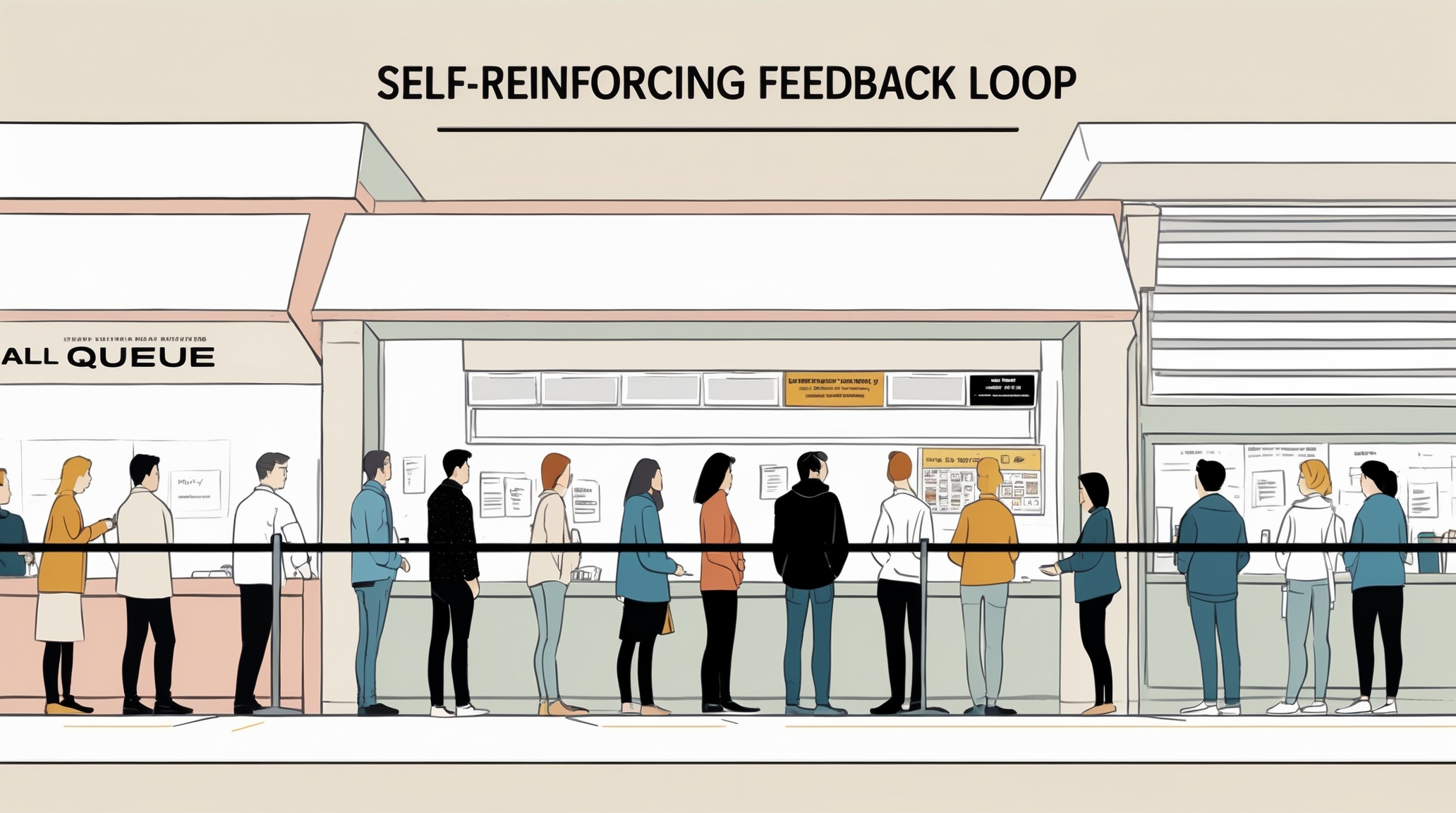
Feedback Loops: How Systems Reinforce Themselves

Imagine you are standing in a queue at a coffee shop. It is moving slowly. Really slowly. The person at the front is taking forever to decide what they want. You can feel the frustration building behind you. People start checking their phones, sighing, shifting their weight. And then something happens.

The barista, feeling the pressure of the long queue, starts rushing. They make mistakes. An order gets mixed up. Someone asks for it to be remade. Now the queue is moving even slower. More people join the back of the line because from the outside it still looks like a popular place. The queue gets longer. The barista rushes more. More mistakes happen. The cycle continues.

Read more →

Constraints: What Actually Limits Change

There is a factory, and this factory has a problem. Orders are piling up. Customers are waiting. The management team gathers to fix it. Someone suggests hiring more workers on the assembly line. Good idea, everyone agrees. So they hire ten more people. Production should increase, right?

Except it does not.

The new workers arrive. They are trained. They are ready. But output barely moves. The bottleneck, it turns out, is not the assembly line. It is the quality inspector at the end. There is only one of her, and she can only check so many units per hour. No matter how many people you add to the line, everything still has to pass through her. She is the constraint. And until you address her capacity, nothing else you do will make a meaningful difference.

Read more →

Why Complex Systems Resist Control

You have a problem. You know what is causing it. You know what needs to change. So you design a solution. A good one. Thought through. Logical. You implement it. And then you wait for the results.

Except the results are not what you expected. The problem does not go away. Or it goes away in one place and shows up somewhere else. Or it gets worse. Or something completely unexpected happens that you never saw coming. And you are left wondering: what went wrong?

Nothing went wrong. You just tried to control a complex system.

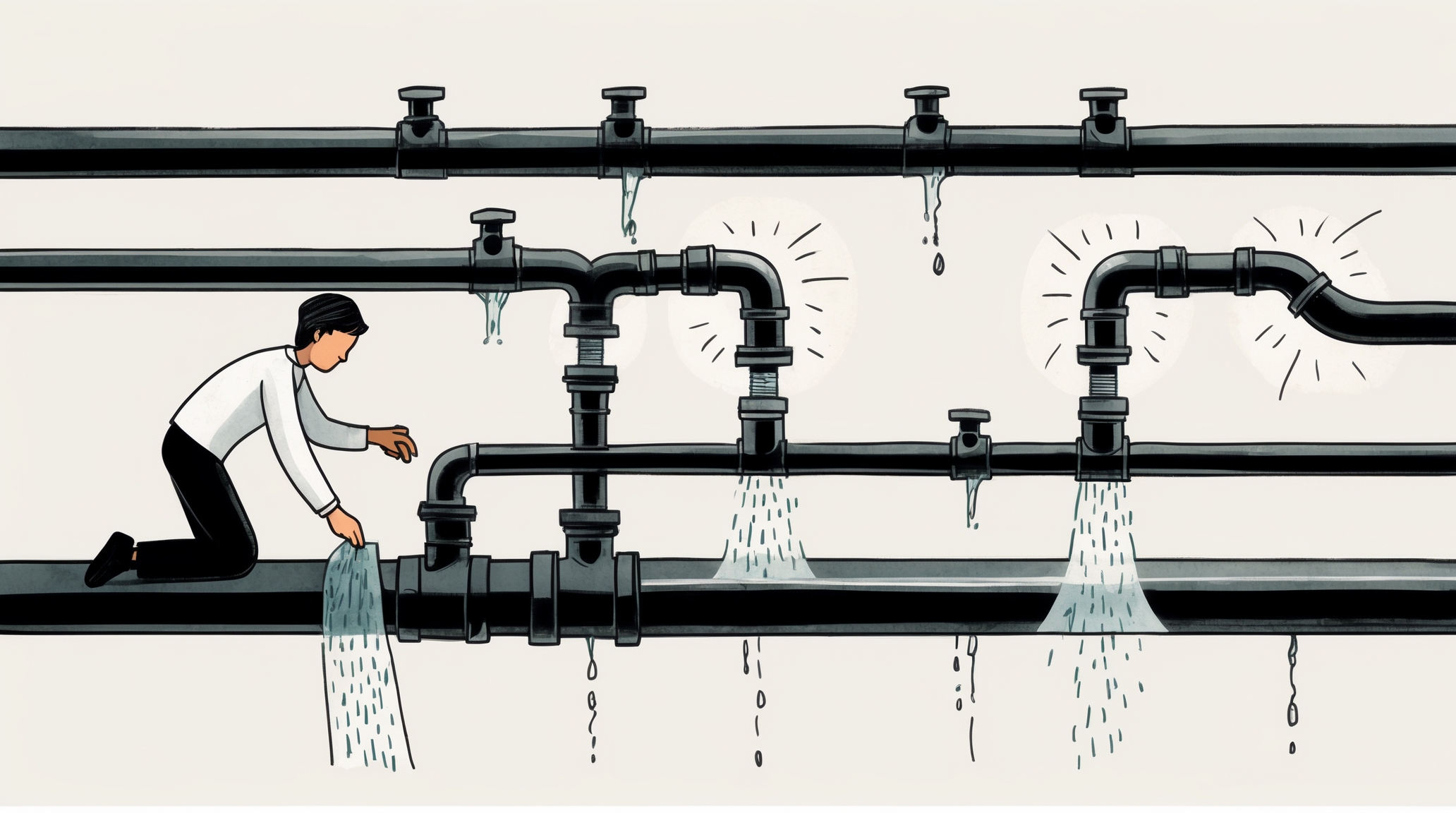
Here is the thing about complex systems. They do not behave the way you expect them to. They do not respond to simple cause and effect. Push here, and something happens over there. Fix this, and that breaks. Solve one problem, and three new ones appear. It is not that your solution was bad. It is that the system is not a machine. It is a web. And webs do not respond well to being pulled in one direction.

Read more →

Subcategories

Fundamentals

Ready to go deeper? Explore the theoretical foundations of systems thinking - where it comes from, why it works, and the core concepts that explain how any system behaves.

From feedback loops to entropy, from emergence to system archetypes - the deeper principles behind the lens.

Book Feature

The Blueprint: How Britain's System Really Works and What You Can Do About It

The Blueprint

Why do the same political and economic problems repeat decade after decade? This book reveals the deeper machinery behind Britain’s institutions — the incentives, constraints and feedback loops that quietly shape outcomes.

Once you understand the system, you can finally see where real leverage exists.

Explore the Book →

Book Feature

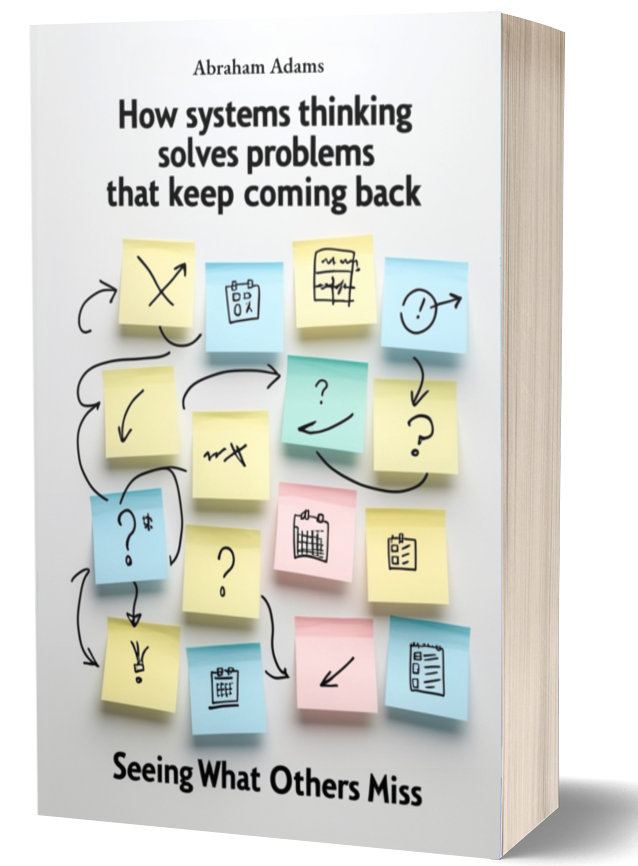
How Systems Thinking Solves Problems That Keep Coming Back

How Systems Thinking Solves Problems That Keep Coming Back

Many problems return again and again because the underlying system is never examined. This book introduces the practical mindset of systems thinking — a way to see incentives, feedback loops and hidden structures shaping outcomes.

Explore the Book →

How To Map The System

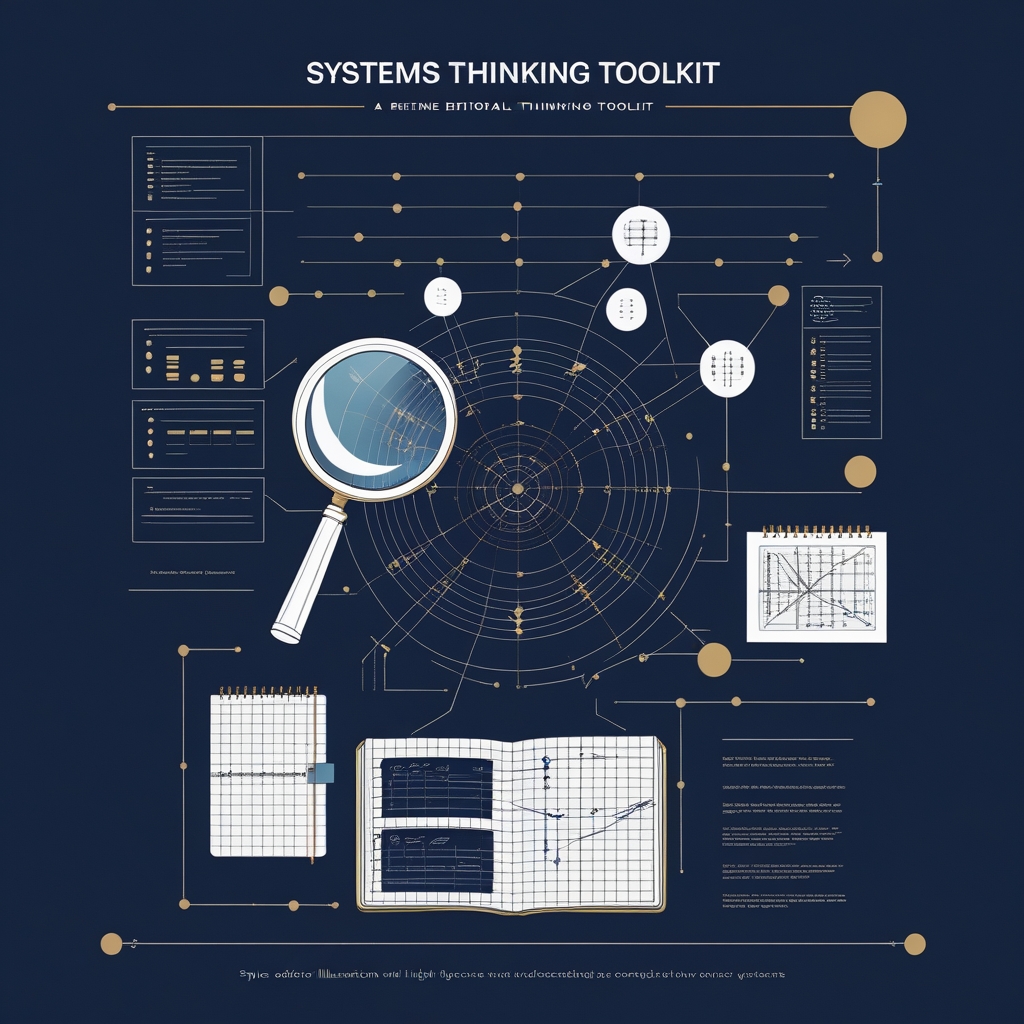
The Toolkit

The Toolkit

Practical methods to map systems, trace incentives, uncover feedback loops, and identify where real leverage exists. Learn how to analyse any system and understand how it truly works.

Explore the Toolkit →

How Money Flows

The Extraction Pattern

The Extraction Pattern

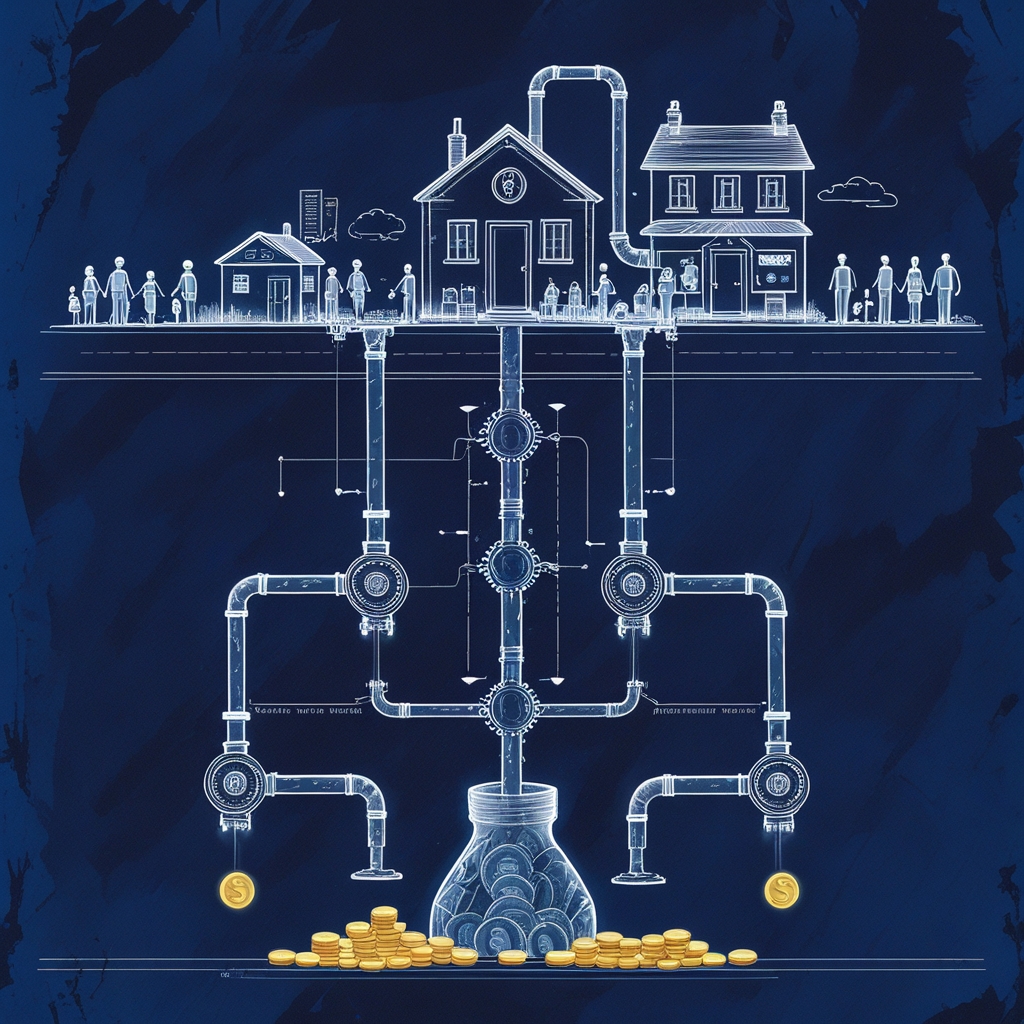
How extraction works across systems — where value is drawn from the many and concentrated toward the few through structure, incentives, and design.

Read the Article →

Books

Explore the Books

  • The Blueprint
  • Understanding Systems Thinking
  • How Systems Thinking Solves Problems That Keep Coming Back
  • The Chain Reaction Effect: Change One Thing, Change Everything
  • Browse Books

Topics

  • Home
  • Start Here
  • Systems
  • Toolkit
  • Fundamentals
  • Deep Dives

Deep Dives

  • The Money System
  • The Customer Service System
  • The UK Housing System
  • The UK Student Loan System
  • The UK Health System
  • The UK Childcare System

Resources

  • Books
  • Videos
  • Toolkit
  • Disclaimer
  • Privacy Policy
  • Contact Us
© 2026 Think On The System | Disclaimer | Privacy Policy