Why Fixes Often Make Things Worse
There is a kind of fix that feels good in the moment but quietly makes everything worse over time. You have done it. Everyone has. And most of the time, we don't even realise we're doing it.
It works like this. Something goes wrong. You feel the pressure. You act quickly to stop the immediate pain. The problem goes away, or at least it seems to. Relief floods in. You move on. Job done.
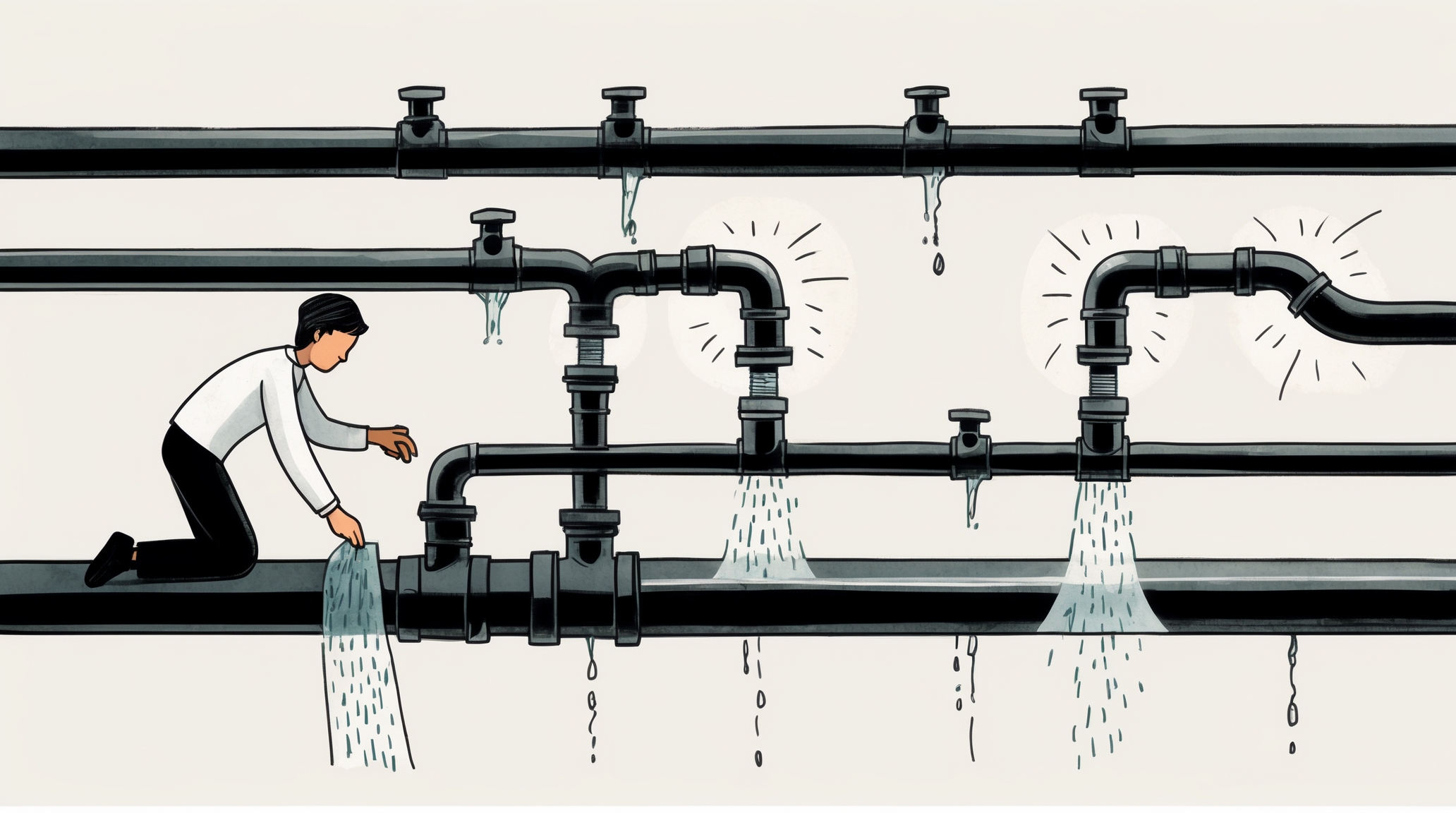
Except it isn't done. Because a few weeks later, or a few months later, the same problem is back. Only now it's a bit worse. A bit harder to manage. So you apply the same fix again, only this time you have to use more of it. More effort. More resources. More time. And the cycle continues.
This is not failure. This is not laziness. This is what happens when you solve the symptom instead of the structure.
Let me give you an example that probably sounds familiar. You are tired. Really tired. So you reach for coffee. The coffee works. Energy returns. You get through the afternoon. Problem solved. Except the reason you were tired in the first place — maybe you are not sleeping enough, or you are overcommitted, or your stress levels are through the roof — none of that has changed. So tomorrow, you need coffee again. And the day after that. And eventually, you need two cups, then three. The fix that worked so well at first has now become part of the problem. You are more dependent, more wired, and probably sleeping even worse than before.
The coffee is not the villain here. The point is that it treated a symptom — tiredness — without touching the structure that created the tiredness in the first place. And that is the pattern we are talking about. Quick fixes aim at what hurts right now. But they rarely ask why it hurts. And because they don't address the why, the problem not only comes back, it comes back stronger.
This happens everywhere. In workplaces, managers see productivity dropping, so they add more meetings to hold people accountable. Productivity drops further because now people have even less time to do actual work. So more meetings get added. The fix becomes the problem.
In personal finance, someone gets into debt, so they take out another loan to cover the payments. The immediate crisis is handled. But now there are two debts, two sets of interest, and the underlying issue — spending more than they earn — is still there, only now it is harder to escape.
In relationships, tension builds, so someone smooths it over by avoiding the conversation that needs to happen. Peace is restored, temporarily. But the unresolved issue festers. And the next time it surfaces, it comes with all the weight of every time it was ignored before.
These are not stupid decisions. They are completely rational in the moment. When you are drowning, you grab whatever keeps your head above water. The problem is that some of the things we grab are attached to weights.
Here is why this happens. Human beings are wired to respond to what is immediate and visible. Pain right now gets our attention. A vague structural problem three months down the line does not. Evolution built us that way because for most of human history, immediate threats were the ones that mattered. The tiger in front of you was more urgent than the long-term sustainability of the food supply.
But we do not live in that world anymore. Most of the problems we face now are not tigers. They are slow-building, self-reinforcing loops that punish short-term thinking. And yet we still reach for the quick fix, because it is faster, easier, and it makes us feel like we have done something.
The other reason quick fixes are so seductive is that they work. At first. That is what makes them dangerous. If they didn't work at all, we would stop using them. But they do work, just long enough to convince us we have solved the problem, and just short enough that we never notice we have made it worse.
This is what systems thinkers call a shifting the burden structure. You have a problem. You apply a symptomatic fix. The symptom goes away. You feel relief. But because the underlying cause is still there, the symptom returns. So you apply the fix again. And again. And over time, two things happen. First, you become dependent on the fix. Second, your ability to address the real problem weakens, because you have spent all your energy managing symptoms.
Think about a business that is losing customers. The quick fix is to cut prices. Sales tick up. Crisis averted. But if the reason customers were leaving was poor service, or a product that no longer meets their needs, then cutting prices has done nothing except reduce profit margins. Now the business has less money to invest in improving service or developing the product. So more customers leave. Prices get cut again. Revenue shrinks further. The fix that saved the business in month one is killing it by month twelve.
Or think about a person who feels anxious and uses alcohol to take the edge off. It works. The anxiety dims. But drinking disrupts sleep, affects mood, and over time creates its own stress. So the anxiety that alcohol was meant to relieve actually gets worse. And the person drinks more to cope. The fix has become the fuel.
None of this means you should never address symptoms. Sometimes you have to. If your arm is broken, you take painkillers while it heals. The painkillers are not solving the broken bone, but they are keeping you functional while the real healing happens. That is a good use of a symptomatic fix. The danger comes when the painkiller becomes the only strategy, and you never set the bone.
So how do you know the difference? How do you know if you are treating a symptom or solving the structure?
Here is a simple test. Ask yourself this. If I stopped doing this fix, would the problem come back on its own? If the answer is yes, you are managing a symptom. That does not mean stop doing it. But it does mean you need a second strategy, one that addresses why the problem keeps returning in the first place.
The next article will give you the tool to see that difference clearly. It will show you how to stop reacting to events and start reading the structures underneath them. Because once you can see the structure, you stop fighting the same fire over and over again.
You start draining the fuel.