The Extraction Pattern
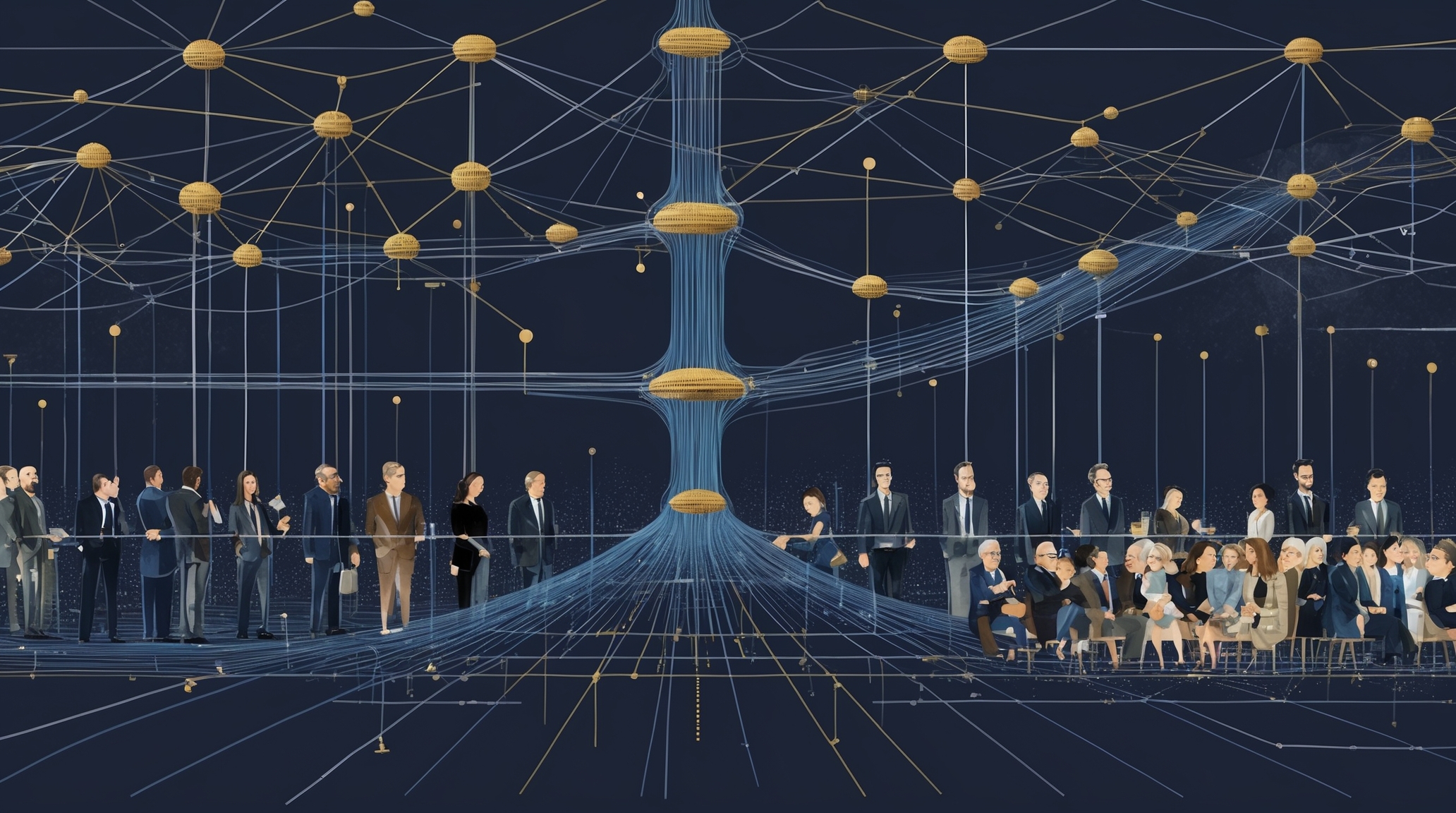
Every system you will read about in these deep dives is different. Different actors, different structures, different histories, different technical details. Housing is not energy, energy is not pensions, pensions are not childcare. The specifics vary enormously, and the complexity of each system is real and matters.
But beneath the surface, beneath the details, beneath the complexity, there is a pattern. The same pattern. In every single system we analyze, you will see the same fundamental structure, the same dynamics, the same flow of money and power. And once you see this pattern, once you recognize it, you will see it everywhere. Not just in the systems we have mapped here, but in every broken system you encounter, in your workplace, in your community, in your country, in the world.
This pattern is extraction. And understanding it is the key to understanding why systems stay broken, why problems persist, why reform fails, and why those who suffer have so little power to change things.
Let me show you the pattern.
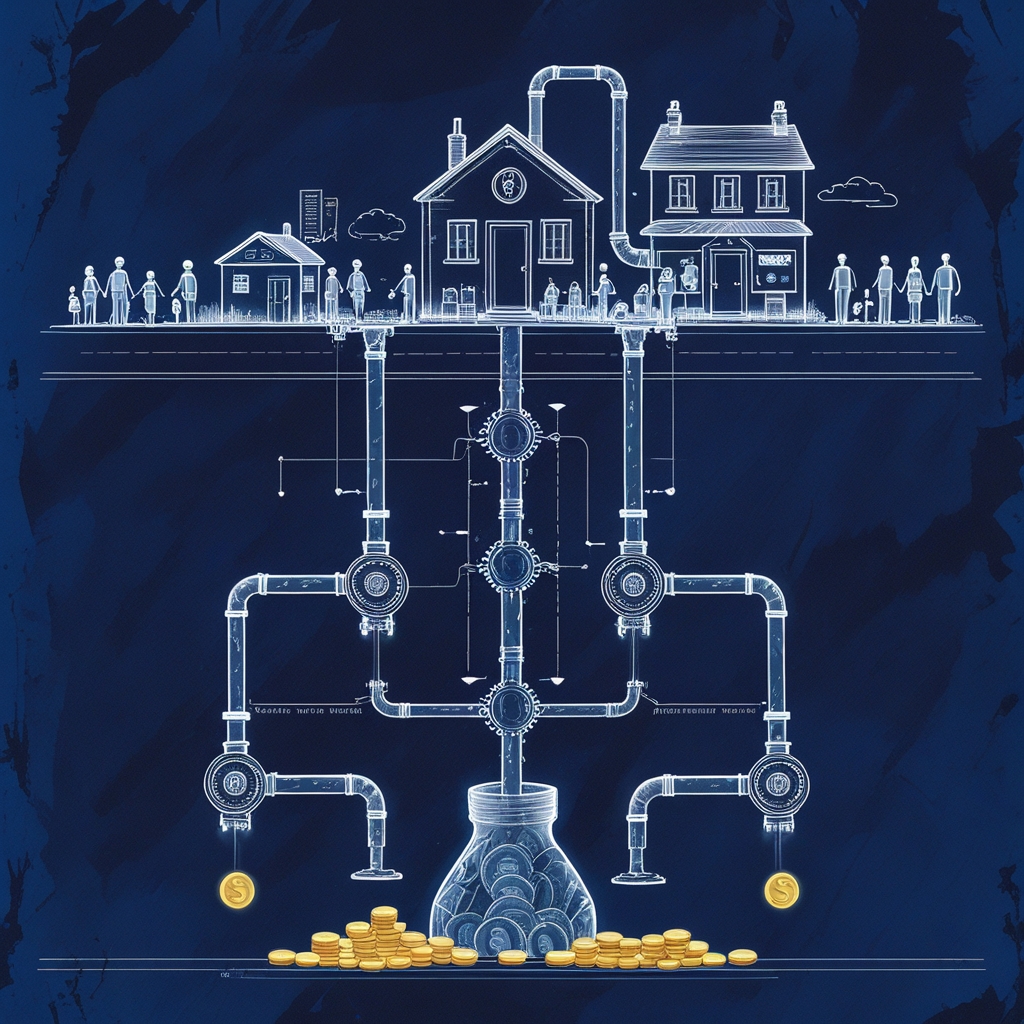
Picture a system, any system that provides something people need. Housing, healthcare, education, energy, childcare, pensions, transport, food. On one side of the system, on the left, are the many. The people who need the service, who depend on it, who have no choice but to participate. Renters who need somewhere to live. Patients who need healthcare. Students who need education. Consumers who need energy. Parents who need childcare. Workers who need pensions. These are the many, and they are numerous, dispersed, atomized, and largely powerless.
On the other side of the system, on the right, are the few. The people and organizations who control access to the service, who own the infrastructure, who set the prices, who extract value. Landlords who own property. Private providers who run hospitals. Universities and loan companies. Energy generators and network operators. Nursery chains and private equity firms. Fund managers and pension providers. These are the few, and they are small in number, concentrated, organized, and powerful.
And between the left and the right, there is a flow. Money flows from the many to the few. Every month, every transaction, every interaction. Rent flows from tenants to landlords. Fees flow from students to universities and loan companies. Bills flow from patients to private providers. Energy costs flow from consumers to generators and networks. Childcare fees flow from parents to nursery operators and investors. Pension contributions flow from savers to fund managers and platforms. The flow is constant, it is large, and it is one-directional. From left to right. From the many to the few.
And risk flows in the opposite direction. From right to left. The few guarantee their returns, they protect their profits, they structure the system to ensure they are paid regardless of performance, regardless of outcomes, regardless of whether the service is good or adequate or barely functional. And the many bear the risk. The risk that rents will rise faster than wages. The risk that loans will never be repaid. The risk that healthcare will be inadequate. The risk that energy bills will spike. The risk that childcare will be unaffordable. The risk that pensions will be insufficient. All the risk, all the uncertainty, all the consequences of failure, flow from right to left. From the few to the many.
This is the extraction pattern. Money flows from the many to the few. Risk flows from the few to the many. And power, the power to shape the system, to set the rules, to resist change, sits on the right. With the few.
Now let me show you how this pattern appears in every system we analyze.
In the rental system, tenants are on the left. Millions of them, needing housing, paying rent, moving frequently, isolated from each other, lacking bargaining power. And on the right are landlords, buy-to-let investors, letting agents, corporate landlords. Far fewer in number, organized into trade bodies, lobbying government, controlling supply, setting rents. Money flows from tenants to landlords every month. And risk flows back. Tenants risk eviction, risk rent increases, risk losing deposits, risk instability. Landlords are protected, their returns are guaranteed by scarcity, their power is entrenched by ownership.
In the energy system, consumers are on the left. Millions of households and businesses, needing energy, paying bills, unable to opt out, unable to generate their own power at scale. And on the right are generators, network operators, suppliers, energy traders. Fewer in number, owning the infrastructure, setting the prices through marginal pricing, lobbying for favorable regulation, extracting profits. Money flows from consumers to generators and networks every quarter. And risk flows back. Consumers risk price spikes, risk cold homes, risk fuel poverty. Generators lock in guaranteed returns, networks earn regulated profits, and the system protects them.
In the pension system, savers are on the left. Millions of workers, contributing to pensions over decades, trusting that their savings will grow, unable to avoid fees, unable to negotiate terms. And on the right are fund managers, pension providers, financial advisors, private equity firms. Fewer in number, managing assets, charging fees, extracting profits regardless of performance. Money flows from savers to the industry over a working lifetime. And risk flows back. Savers risk poor returns, risk high fees, risk inadequate pensions, risk outliving their savings. The industry locks in fees, profits from complexity, and faces no penalty for underperformance.
In the childcare system, parents are on the left. Desperate for care, needing to work, facing long waiting lists, paying fees that consume a quarter or more of their income. And on the right are nursery chains, private equity owners, landlords, suppliers. Fewer in number, setting fees, minimizing costs, extracting profits, lobbying against regulation. Money flows from parents to providers every month. And risk flows back. Parents risk unaffordable fees, risk losing their job if childcare fails, risk inadequate care. Providers lock in profits, staff earn minimum wage, and the system ensures extraction continues.
In the housing system, buyers and renters are on the left. Needing somewhere to live, competing for limited supply, paying ever-increasing prices. And on the right are developers, landowners, banks, estate agents. Controlling land, controlling credit, setting prices, profiting from scarcity. Money flows from buyers and renters to developers and banks and agents. And risk flows back. Buyers risk debt, risk negative equity, risk repossession. Renters risk eviction, risk rent increases, risk insecurity. Those on the right profit from scarcity, from debt, from transaction fees, and the system protects them.
In the student loan system, students are on the left. Needing education, borrowing to pay fees, accumulating debt, repaying for decades. And on the right are universities, the Student Loans Company, private lenders. Setting fees, charging interest, extracting repayments, protected from risk by government guarantees. Money flows from students to universities and lenders over decades. And risk flows back. Students risk debt they cannot repay, risk degrees that do not lead to good jobs, risk paying more than they borrowed. Universities and lenders face no risk, their income is guaranteed, and the system ensures it.
In the healthcare system, patients are on the left. Needing care, paying through taxes and sometimes directly, waiting for treatment, bearing the consequences of delays and failures. And on the right are private providers, consultants, pharmaceutical companies, medical device manufacturers. Contracted by the NHS, setting prices, extracting profits, lobbying for more outsourcing. Money flows from patients and taxpayers to private providers. And risk flows back. Patients risk inadequate care, risk long waits, risk poor outcomes. Providers lock in contracts, guarantee their margins, and face limited accountability.
Every time. Every system. The pattern is the same. The many on the left, needing the service, paying the fees, bearing the risk. The few on the right, controlling access, extracting value, protected by structure and by power.
And here is why the pattern persists, why extraction continues, why systems do not change even when the harm is obvious and the need for reform is urgent.
The few are organized. They have trade bodies, industry associations, lobbying firms. They meet with ministers, with regulators, with civil servants. They fund research, they shape narratives, they influence policy. Landlords have the National Residential Landlords Association. Energy companies have Energy UK. Pension providers have the Investment Association. Childcare chains have the Early Years Alliance. They are organized, they coordinate, they speak with one voice, and they defend their interests effectively.
The many are atomized. They are dispersed, isolated, fragmented. Tenants do not know each other, do not organize collectively, do not have the time or resources to lobby. Energy consumers pay their bills individually, they do not coordinate, they do not collectively bargain. Pension savers are scattered across millions of individual pots, they do not act together, they do not challenge fees. Parents needing childcare are desperate, competing for scarce places, not organizing for reform. The many lack organization, lack coordination, lack collective power. And without power, they cannot challenge extraction.
The few have information. They understand the system, they know the rules, they have access to data, they employ experts. Landlords know the market, know the regulations, know how to maximize returns. Energy companies understand marginal pricing, understand regulation, understand how to structure contracts. Pension providers understand fees, understand fund performance, understand how to obscure costs. The few have information, and information is power.
The many lack information. They do not understand how the system works, they do not see the extraction, they do not know what fees they are paying or where their money goes. Tenants do not see the landlord's profit margin. Energy consumers do not understand marginal pricing. Pension savers do not see the compounding impact of fees. Parents do not know where childcare fees go. The many lack information, and without information, they cannot challenge extraction.
The few have alternatives. If one tenant complains, evict them, there are others waiting. If one pension saver leaves, there are millions more. If one parent refuses to pay, there are others who will. The few have options, they can replace, they can choose, they can walk away. And this gives them power.
The many have no alternatives. Tenants need housing, they cannot opt out, they cannot refuse to pay rent. Energy consumers need power, they cannot opt out, they cannot refuse to pay bills. Pension savers need to save, auto-enrollment makes it compulsory. Parents need childcare, they cannot work without it. The many are trapped, they have no alternatives, and this makes them powerless.
And feedback loops ensure extraction accelerates. High rents make it harder to save for a deposit, which keeps people renting, which sustains high rents. High energy bills paid by consumers generate profits for generators, which funds lobbying to protect marginal pricing, which ensures high bills continue. High fees reduce pension pots, which forces people to work longer or save more, which generates more fees. High childcare costs force one parent out of work, which reduces household income, which makes childcare even less affordable. The loops are reinforcing, they amplify extraction, and they lock the system in place.
And political power protects the few. Landlords vote, they donate to political parties, they have representation. Pensioners vote in high numbers, they protect the triple lock, they resist reform. Energy companies fund campaigns, they employ former ministers, they shape regulation. Childcare providers lobby, they warn of closures, they resist fee caps. The few have political power, and they use it to defend extraction, to block reform, to maintain the structure.
The many have less political power. Younger people vote less. Renters are less politically engaged than homeowners. Workers saving for pensions do not organize around pension reform. Parents needing childcare are too exhausted to campaign. The many lack political power, and without it, they cannot force change.
So extraction persists. The pattern continues. The flow from left to right, from the many to the few, accelerates. And the system, despite being broken, despite harming millions, despite being unjust, does not change. Because it is working exactly as it was designed to work. To extract. To concentrate wealth. To protect those who benefit. And to ensure that those who suffer lack the power to stop it.
This is what every deep dive will show you. We will map the machine, show you how money flows, show you the structure. We will identify the incentives, name who profits, show you who is on the right extracting. We will trace the feedback loops, show you how extraction accelerates, how the system reinforces itself. We will analyze the resistance, show you why reform fails, why the few defend the structure, why the many cannot overcome it. We will identify the leverage points, show you where intervention could work, where pressure could shift the balance. And we will show you the history, the case studies, the moments when extraction was entrenched, when decisions were made that locked the pattern in place.
Every deep dive follows this structure. Every deep dive reveals this pattern. And once you have seen it nine times, once you have seen extraction in housing, in energy, in pensions, in healthcare, in childcare, in student loans, in rental, in money, in customer service, you will never unsee it. You will see it everywhere. In every broken system. In every unjust structure. In every dynamic where the many pay and the few profit.
And seeing it is the first step. Because you cannot challenge what you cannot see. You cannot organize against extraction if you do not know it exists. You cannot demand reform if you do not understand the structure. But once you see it, once you understand it, once you recognize the pattern, you can name it. You can explain it. You can show others. And you can start to build the collective power needed to change it.
Now choose a system. Any system. And see the extraction pattern in action.