Incentives Are Stronger Than Instructions
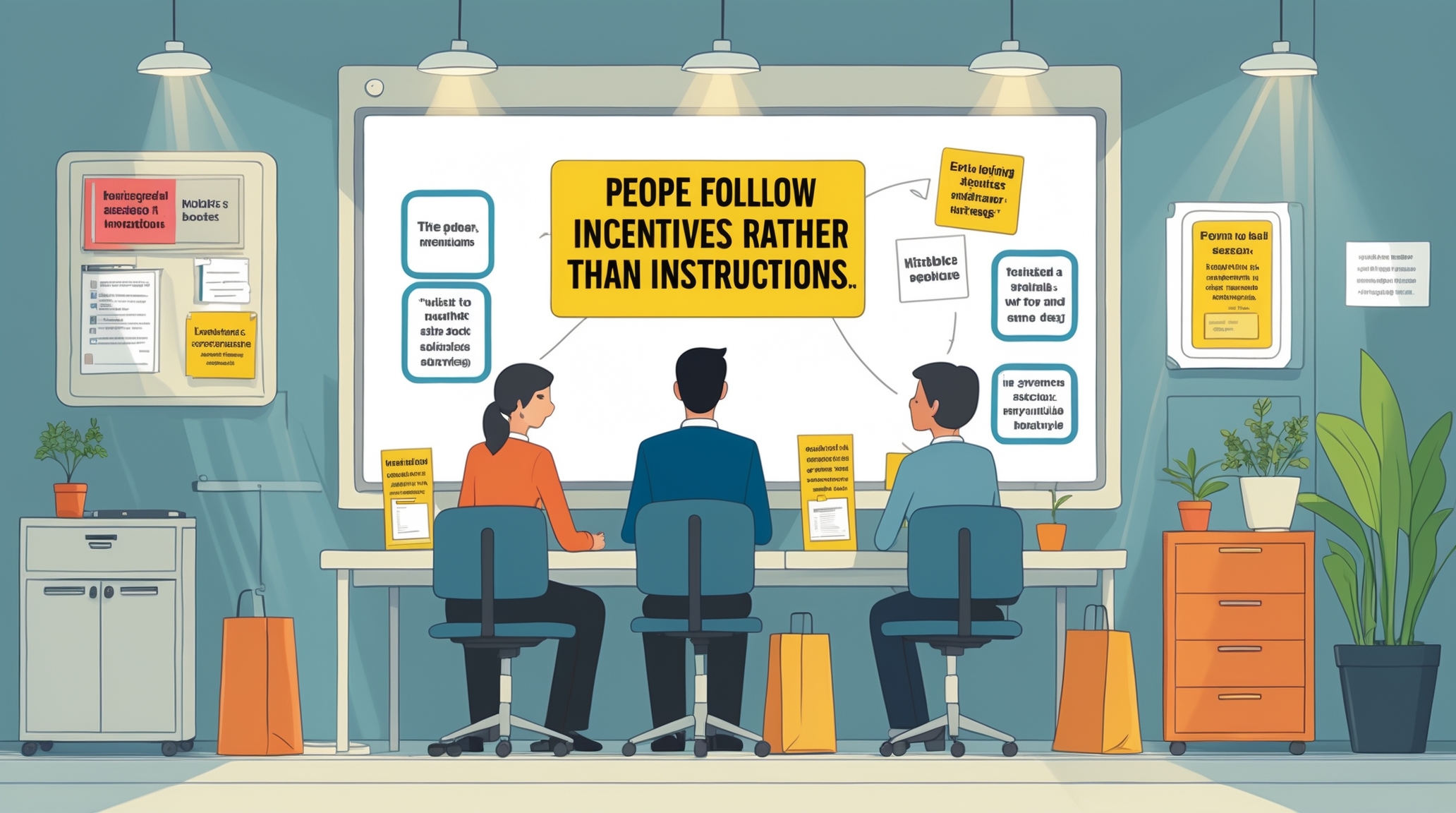
There is a company, and in this company there is a meeting. The leadership team stands at the front of the room and delivers a message. We value quality, they say. We want you to take your time, get things right, don't cut corners. Quality is what sets us apart. Everyone nods. The message is clear.
Then everyone goes back to their desk. And within a week, the same leadership team sends an email asking why last month's output numbers were down. They want to know why fewer units were completed, why targets were missed, why things are taking longer than expected. There is concern in the tone. There is pressure in the follow-up.
So what do people do?
They speed up. They cut corners. They prioritise output over quality. Not because they are dishonest or lazy. But because they have just learned what actually matters. The company says it values quality. But it measures, tracks, and rewards speed. And when the two conflict, speed wins. Every time.
This is not a story about hypocrisy. It is a story about incentives. And if there is one thing you take away from this article, let it be this. Incentives are stronger than instructions. What gets rewarded gets repeated. What gets punished gets avoided. And everything else, no matter how sincerely it is proclaimed, is just noise.
Human beings respond to incentives the way water responds to gravity. It is not a choice. It is not a moral question. It is just how behaviour works. You can tell people what you want them to do. You can put it in the mission statement, print it on posters, repeat it in every speech. But if the incentive structure points in a different direction, that is where people will go.
Think about a school that says it cares about creativity and critical thinking. It says it wants students to explore ideas, ask questions, develop their own voice. But then it tests them on memorisation. It ranks them on standardised scores. It rewards the students who can repeat information quickly and penalises the ones who take time to think differently. What behaviour does that system produce? Memorisation. Compliance. Teaching to the test. Not because anyone decided to abandon creativity, but because the system is rewarding something else.
Or think about a hospital that says patient care is the priority. Everything is built around that message. But then it pays doctors based on how many patients they see per hour. It measures efficiency, throughput, speed. So what happens? Appointments get shorter. Conversations get rushed. The incentive is volume, not care. And no matter how much the hospital insists that care comes first, the structure is producing something different.
This happens everywhere. In politics, leaders say they want long-term solutions, but they are re-elected based on short-term wins. So they chase headlines, not outcomes. In workplaces, companies say they want innovation, but they punish failure and reward people who stick to the proven formula. So nobody takes risks. In personal life, people say they want deep relationships, but they spend their time on activities that are easy and shallow because those are the ones that feel immediately rewarding. The incentive wins.
Here is the uncomfortable part. Most of the time, the people inside these systems know this. They see the gap between what is said and what is rewarded. They are not blind. But they also know that pointing it out rarely changes anything. So they adapt. They learn to ignore the mission statement and read the incentive structure instead. They figure out what actually gets you promoted, what actually keeps you safe, what actually gets noticed. And they do that.
This is not cynicism. This is survival. Because in most systems, the people who follow the stated values instead of the actual incentives are the ones who get left behind.
Now, here is why this matters for systems thinking. If you want to understand why a system produces the results it does, do not listen to what people say they want. Look at what they reward. Follow the incentives. That will tell you everything.
A company says it wants collaboration, but it ranks employees against each other and promotes the top performers. The incentive is competition, not collaboration. So people hoard information, protect their turf, and avoid helping colleagues who might outperform them. The system is working exactly as designed. It is just designed differently than the words suggest.
A government says it wants to reduce homelessness, but it funds services based on how many people are currently homeless. If the numbers go down, the funding gets cut. So what is the incentive? Keep the numbers stable. Not because anyone wants people to stay homeless, but because solving the problem eliminates the resource. The structure resists its own stated goal.
Or take something closer to home. You want to get healthier, so you tell yourself you are going to exercise every morning. But your incentive structure is stacked against you. Exercise is hard, uncomfortable, and the benefits are distant. Staying in bed is easy, pleasant, and the reward is immediate. The instruction says exercise. The incentive says stay in bed. Which one wins?
This is why willpower is not enough. Willpower is you fighting the incentive structure with nothing but intention. And intention loses to structure almost every time. If you want behaviour to change, you have to change the incentives. Make the desired behaviour easier, more rewarding, more immediate. Make the undesired behaviour harder, less rewarding, more costly. Shift the structure, and the behaviour follows.
Let me give you an example of what that looks like in practice. There is a city with a litter problem. The streets are covered in rubbish. So the city launches a campaign. Keep our city clean, the posters say. Take pride in where you live. Do the right thing. It is a nice message. It changes almost nothing.
Then the city tries something different. It puts bins on every corner. It makes them easy to use. And it introduces a small deposit on bottles and cans, so people can return them for money. Suddenly, litter drops. Not because people's values changed. Not because they suddenly started caring more. But because the incentive structure changed. Throwing rubbish away became harder and less rewarding than putting it in a bin. The behaviour followed the path of least resistance, and the path of least resistance was redesigned.
That is the power of incentives. And that is the danger of ignoring them.
Because if you keep trying to change behaviour with better instructions, clearer communication, stronger appeals to values, you will keep failing. Not because people are stubborn or selfish, but because you are asking them to act against the structure. And the structure is always stronger.
So here is the question you need to start asking. Not what do people say they want, but what does the system reward? Not what are the rules, but what actually happens when someone follows them or breaks them? Not what is the mission, but what gets measured, tracked, noticed, celebrated, punished?
Answer those questions, and you will see why the system behaves the way it does. And more importantly, you will see where to intervene if you actually want it to behave differently.
Because changing behaviour starts with changing incentives. And changing incentives starts with seeing them clearly in the first place.
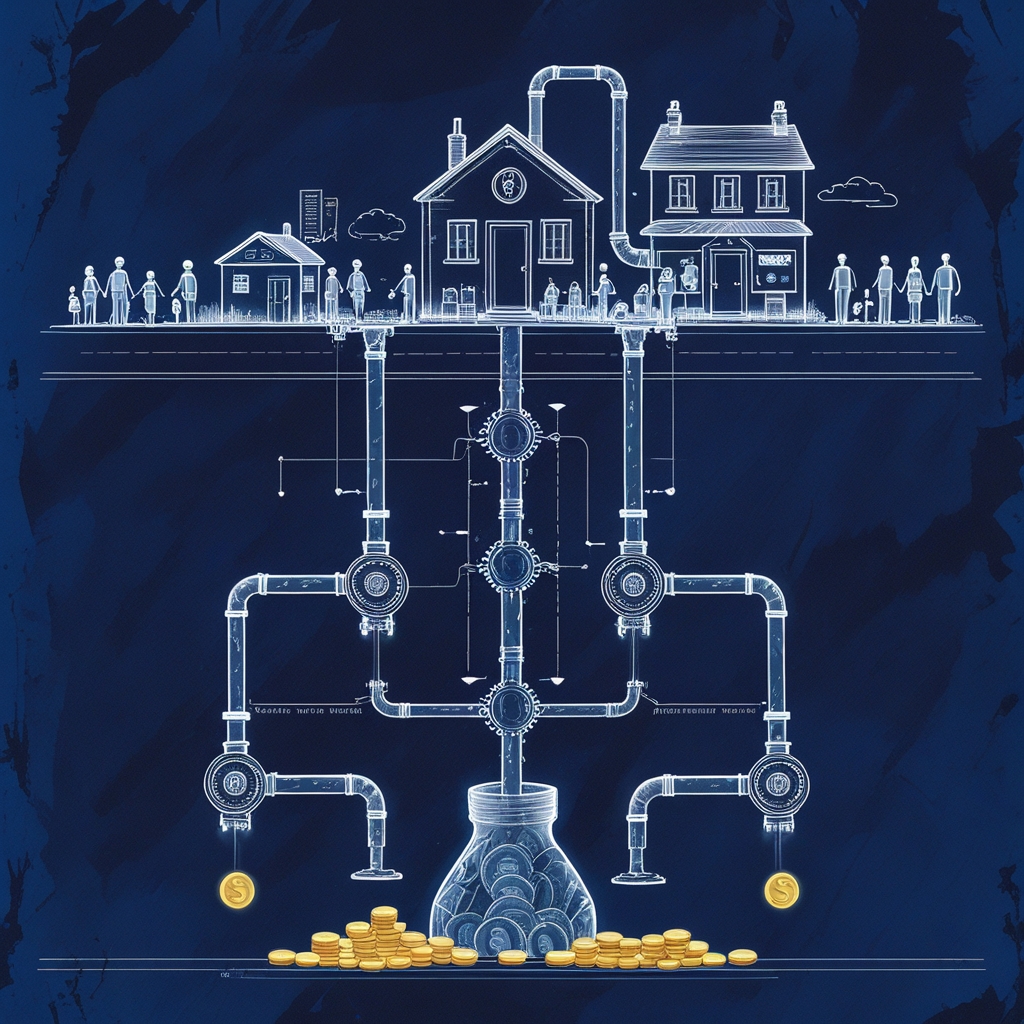
Instructions are just words. Incentives are the architecture. And architecture always wins.