Events vs Structures

There is a question most people ask when something goes wrong. It is short, it is natural, and it almost guarantees you will miss what actually matters.
The question is: what happened?
It sounds reasonable. Something broke, someone is upset, a deadline was missed, a relationship ended, a business failed. Of course you want to know what happened. That is where the story is. That is where the drama lives. That is what you can point to and say, there, that is the problem.
But here is what that question misses. It misses everything that made the event inevitable.
Because most of the time, the event is not the problem. The event is just the moment the problem became visible.
Let me give you an example. A company has a data breach. Thousands of customer records are exposed. Headlines appear. The CEO apologises. An investigation begins. And the question everyone asks is: what happened? Who clicked the wrong link? Which system was vulnerable? What was the event that caused this?
But if you dig deeper, you find something else. You find that the IT team had been underfunded for years. You find that security updates were delayed because there was no time in the schedule. You find that staff were overworked and undertrained, and warnings had been raised before but never acted on. The breach was not caused by a single click. It was caused by a structure that had been running for years, a structure that prioritised speed over security, cost-cutting over resilience. The event was just the day that structure finally produced its inevitable result.
This is the difference between events and structures. Events are visible. Structures are not. Events are dramatic. Structures are boring. Events get attention. Structures get ignored. And that is exactly why most problems never get solved.
Because when you focus only on the event, your solutions are always reactive. You patch the hole. You fire the person. You add a new rule. And then you wait for the next event to tell you where the next hole is. You are forever one step behind, plugging leaks, managing crises, wondering why the same kinds of problems keep showing up in different forms.
Structures, on the other hand, are the reason the problems keep showing up in the first place.
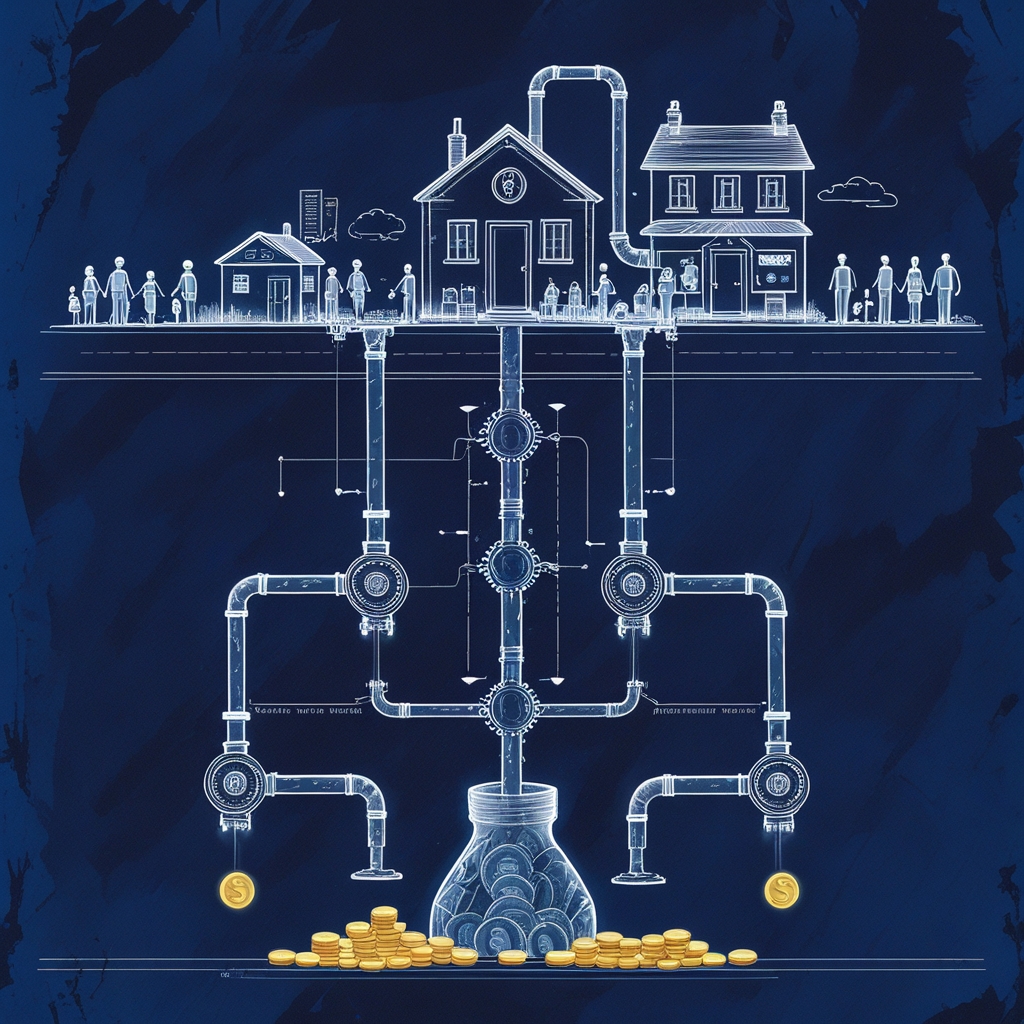
A structure is the way things are set up. It is the incentives people respond to. It is the rules, written and unwritten, that shape behaviour. It is the relationships between different parts of a system. It is what makes certain outcomes likely and others nearly impossible. And here is the key thing. Structures do not care about your intentions. They do not care how hard you work or how much you want things to be different. They produce results based on how they are designed, not on how you feel about them.
Think about a road. If a road has a sharp bend and no warning signs, and every few months there is a crash at that spot, you could respond at the event level. You could blame the drivers. You could say they should have been more careful, more alert, better trained. And maybe that is true. But the crashes will keep happening. Because the structure — the road, the bend, the lack of signage — is still producing the same result. Change the structure, add the signs, widen the curve, and the crashes stop. Same drivers. Different outcome.
Or think about a workplace where staff turnover is high. The event-level response is to look at each person who leaves and ask what happened. They got a better offer. They did not fit the culture. They were not committed. And maybe all of that is true. But if twenty people leave in two years, the question is not what happened with each individual. The question is what is the structure that keeps pushing people out? Is it the pay? The management style? The workload? The lack of development opportunities? The structure is doing the work. The exits are just the evidence.
Here is the uncomfortable truth. Most of us spend our entire lives reacting to events. We respond to what just happened. We solve today's crisis. We put out today's fire. And we never step back far enough to see that the fires are being lit by a system we are standing inside.
This is not because people are short-sighted or lazy. It is because events scream for attention and structures whisper. Events have a timestamp. Structures unfold over months and years. Events can be photographed, reported, turned into a headline. Structures are invisible until you learn how to look for them.
So how do you start looking?
You ask different questions.
Instead of asking what happened, you ask: what has been happening? Instead of asking who is responsible, you ask: what makes this kind of thing likely to happen again? Instead of looking for a cause, you look for a pattern. And once you see the pattern, you look for the structure that keeps producing it.
Let me give you a personal example. Imagine someone who keeps starting projects with enthusiasm and then abandoning them halfway through. The event-level story is simple. They started a project. They quit. They lacked discipline. Case closed. But if that pattern has repeated five times, ten times, across different projects, different contexts, different years, then the event explanation stops making sense. The structure explanation asks: what is it about the way they start projects that makes quitting likely? Do they overcommit at the beginning? Do they set unrealistic timelines? Do they lose interest once the novelty fades because there is no deeper purpose anchoring the work? That is a structural question. And the answer gives you something you can actually change.
Events tell you where you are. Structures tell you why you keep ending up there.
Now, here is the part that makes this difficult. Structures are not always someone else's fault. Sometimes we are participating in the structure. Sometimes we are reinforcing it with every decision we make, even when we think we are trying to escape it. The person who keeps choosing the same kind of partner and wondering why the relationship always ends the same way is not unlucky. They are responding to a structure in how they choose, what they tolerate, what they believe they deserve. Change the event — the person, the timing, the setting — and the structure remains. The outcome stays the same.
This is why event-based thinking feels easier. It lets you point outward. It gives you someone to blame, something to fix, a clear beginning and end. Structural thinking asks you to sit with complexity. It asks you to see your own role. It asks you to admit that the problem is not a moment in time but a pattern across time, and patterns take longer to shift.
But here is what you gain. When you see the structure, you stop being surprised by the events. You stop thinking this time will be different when nothing structural has changed. And most importantly, you stop wasting energy on fixes that were never going to work because they were aimed at the wrong level.
You start intervening where it matters.
The rest of this website is about learning how to do that. How to spot structures. How to map the connections that produce the outcomes you keep experiencing. How to find the places where a small shift in structure creates a large shift in result. Not because systems thinking is some magic formula, but because it teaches you to look at the right level.
You have spent your whole life learning to see events. Now it is time to see what is underneath them.
Because that is where the leverage is.