The Incentives - Who Profits From Car Insurance

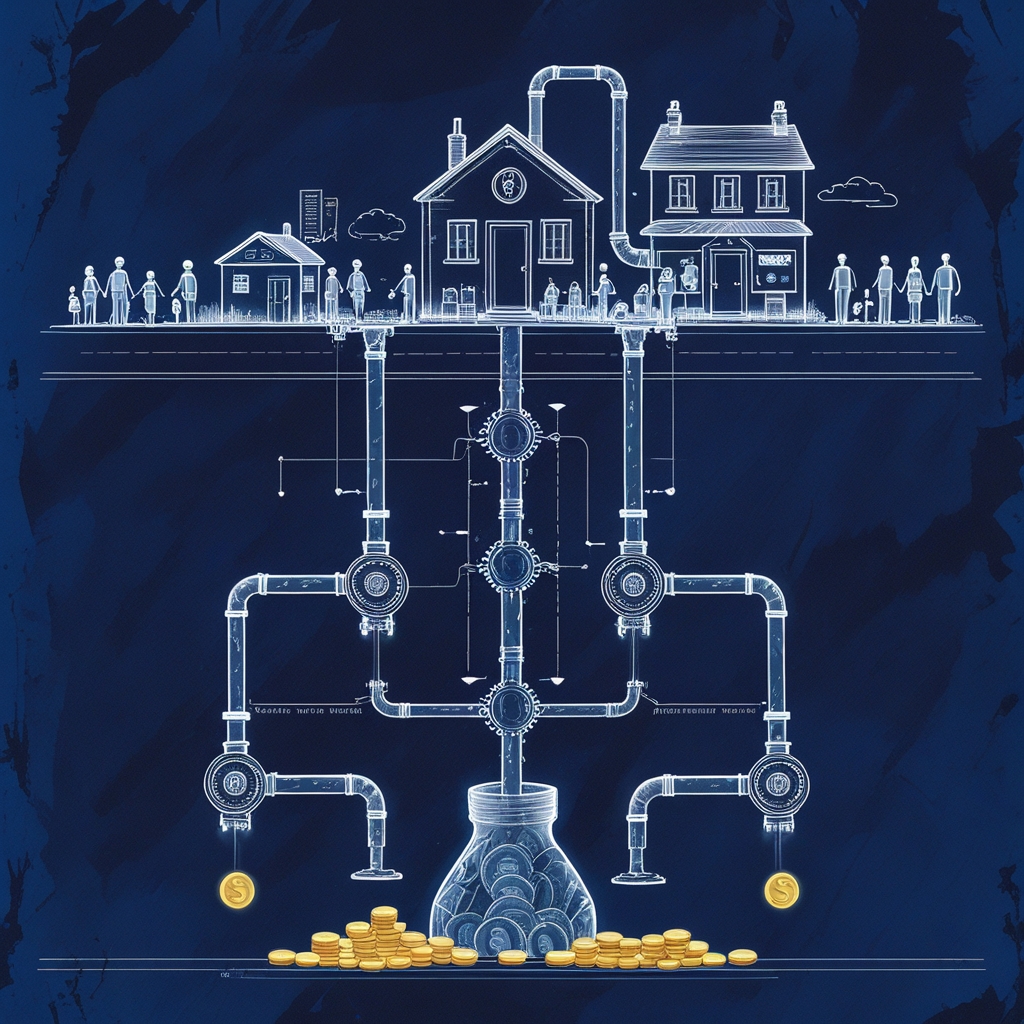
Car insurance in the UK is a twelve billion pound industry. Twelve billion paid in premiums every year by drivers who need insurance to drive legally. And that twelve billion does not just disappear, it does not evaporate, it flows somewhere, it is extracted by someone, and understanding who profits from car insurance, who benefits from the system as it is structured, reveals why premiums are high, why they keep rising, and why reform does not happen.
Let me show you who profits from car insurance.
The first and most obvious beneficiary is the insurance companies themselves. Aviva, Direct Line, Admiral, LV, RSA, Hastings Direct, dozens of insurers operating in the UK market, collecting premiums, paying claims, and keeping the difference. And the difference, the profit, is significant. The UK motor insurance industry has been profitable in most recent years, with combined operating ratios, the ratio of claims and costs to premiums, typically below one hundred percent, meaning premiums exceed payouts and costs, and the excess is profit.
And insurers profit not just from underwriting, from the difference between premiums and claims, but from investment. Premiums are collected upfront, at the start of the policy year, but claims are paid out later, sometimes months later, sometimes years later if the claim is disputed or involves injury. And in the meantime, the insurer holds the money, invests it, earns returns, and those returns are profit, additional to the underwriting profit.
So insurers collect twelve billion in premiums, pay out perhaps eight billion in claims, spend two billion on operating costs, marketing, administration, staff, and keep two billion as profit and investment returns. These are rough figures, the actual numbers fluctuate year to year, but the structure is clear. Insurers profit from the gap between what they collect and what they pay out, and the wider the gap, the more they profit.
And insurers are not small operations, they are large corporations, often publicly traded, with shareholders, with executives paid millions, with profit targets, with quarterly earnings reports. And those profit targets drive behavior. Insurers are incentivized to maximize premiums, to minimize claims payouts, to reduce costs, and to grow market share. And every decision, every pricing model, every policy term, every claims process, is shaped by the need to deliver profit to shareholders.
The second beneficiary is comparison sites. GoCompare, Compare the Market, MoneySuperMarket, Confused, these are household names, advertised heavily, used by millions of people every year to find the cheapest car insurance. And comparison sites seem like a service, like they are helping consumers, giving them choice, forcing insurers to compete on price. But comparison sites are not charities, they are businesses, and they profit enormously from car insurance.
Comparison sites charge insurers a fee for every policy sold through their platform. This fee is typically fifty to sixty pounds per policy, sometimes more for certain types of cover or certain customer segments. So if you buy insurance through a comparison site, the insurer pays the site fifty pounds, and that cost is built into your premium. You are paying for the comparison site, indirectly, through a higher premium than you would pay if you bought directly from the insurer.
And comparison sites process millions of policies every year. If a comparison site facilitates two million car insurance sales per year, at fifty pounds per sale, that is one hundred million pounds in revenue, just from car insurance, and comparison sites also earn fees from home insurance, travel insurance, energy switching, broadband, credit cards, loans. They are multi-revenue-stream businesses, and car insurance is one of their most profitable products.
And comparison sites have high profit margins. Their costs are primarily technology, maintaining the platform, and marketing, advertising heavily to attract users. But once the platform is built, the marginal cost of processing an additional quote is near zero, so revenue scales efficiently, and profits are substantial. Some comparison sites are owned by large corporations, some are privately held, but all are profitable, all extract significant value from the insurance market.
And here is the perverse outcome. Comparison sites were supposed to increase competition, to drive prices down by making it easy for consumers to compare and switch. And they have increased competition, insurers do compete on price on comparison sites, but the competition is distorted because the comparison site fee is built into every premium. So the prices you see on comparison sites are higher than they would be in a market without comparison sites, because every quote includes the fifty-pound fee. The comparison site extracts from both sides, from insurers who pay the fee and from consumers who pay higher premiums.
The third beneficiary is add-on providers and brokers. When you buy car insurance, you are offered add-ons, breakdown cover, legal expenses, personal injury cover, key cover. And these add-ons are often provided not by the insurer but by third-party specialists, breakdown services, legal firms, who pay the insurer or the comparison site a commission for selling their product alongside the insurance.
And add-ons are highly profitable. The cost of providing breakdown cover, for instance, is low, because most people never break down, and when they do, the cost of a callout and a tow is modest. But breakdown cover sold as an add-on with car insurance costs sixty, seventy, eighty pounds, far more than equivalent cover bought directly from the AA or RAC. The difference is profit, split between the add-on provider, the insurer, and the comparison site.
Legal expenses cover is even more profitable. It costs perhaps five, ten pounds to provide, because most people never use it, never make a legal claim. But it is sold for thirty, forty pounds, and the difference is pure profit. And personal injury cover, key cover, windscreen cover, all follow the same pattern. Low cost to provide, high price to sell, significant profit margin.
And the sale of add-ons generates commission for everyone involved. The comparison site earns commission from the add-on provider. The insurer earns commission. And the customer, buying multiple add-ons, might pay an extra hundred, hundred and fifty pounds on top of their premium, and most of that is profit distributed among intermediaries.
The fourth beneficiary is claims management companies and repair networks. When you have an accident, when you make a claim, the insurer does not handle everything directly. They outsource. They use claims management companies to process claims, to assess damage, to coordinate repairs. They use approved repair networks, garages and body shops that have contracts with insurers to carry out repairs at agreed rates.
And these intermediaries profit. Claims management companies charge insurers fees for handling claims. Repair networks markup parts and labor. And the insurer, rather than paying you directly and letting you choose where to repair your car, controls the process, directs you to their approved repairer, and the repairer, knowing the insurer will pay, charges the insurer more than they would charge a private customer.
And here is the conflict. The repairer is supposed to work for you, to restore your car, but they are paid by the insurer, and the insurer wants to minimize cost. So the repairer has an incentive to do the minimum necessary, to use cheaper parts, to cut corners, because the insurer, not you, is their customer. And you, the policyholder, have little say, little control, and often receive a repair that is adequate but not excellent.
And in cases where your car is written off, deemed uneconomical to repair, the insurer uses a salvage company to take the wreck and sell it for parts or scrap. And the salvage company pays the insurer a fee, and that fee reduces the payout to you. So the insurer profits from writing off your car, from selling the wreck, and you receive less than the car was worth.
The fifth beneficiary is credit hire companies. If your car is off the road because of an accident, and the accident was not your fault, you are entitled to a replacement car while yours is repaired, and the cost of that replacement is claimed from the at-fault driver's insurer. But instead of hiring a car from a normal rental company at fifty, sixty pounds per day, some claimants are directed to credit hire companies, who provide a replacement car at inflated rates, two hundred, three hundred pounds per day, and bill the at-fault insurer.
And credit hire companies profit enormously from this. They charge far above market rates, knowing the cost will be passed to an insurer, not paid by the claimant. And insurers, facing these inflated bills, either pay them or fight them in court, and fighting is expensive, so often they pay, and the cost is passed on to all policyholders through higher premiums.
And this creates a cycle. Inflated credit hire costs increase insurers' payouts, insurers raise premiums to cover the costs, and everyone pays more. And the credit hire companies, extracting excessive fees, profit, while drivers, even those not involved in accidents, pay higher premiums.
The sixth beneficiary is data providers and technology companies. Insurers use data, vast amounts of data, to price risk, to segment customers, to calculate premiums. And much of this data comes from third parties. Credit reference agencies provide credit scores. DVLA provides driving license history. Police provide crime statistics. Telematics companies provide black box data, tracking how people drive, how fast, how hard they brake, when they drive.
And these data providers charge insurers for access to data. Credit reference agencies charge per search. Telematics companies charge monthly fees for black box monitoring. And the cost of data is built into premiums, passed on to drivers, who pay for the privilege of being monitored, of being scored, of being priced.
And telematics, black box insurance, is marketed as a way for young drivers to reduce premiums by proving they drive safely. But it is also a data extraction tool. The insurer collects detailed data on driving behavior, and uses that data to price risk more accurately, to identify high-risk drivers, to raise premiums or decline renewal. And the data, the information about where you drive, when you drive, how you drive, is valuable, and insurers profit from it, selling aggregated data to third parties, to marketers, to other insurers.
The seventh beneficiary is the government. Car insurance is subject to insurance premium tax, a tax levied on premiums, currently twelve percent. So if your premium is one thousand pounds, one hundred and twenty pounds of that is tax, paid to the government. And with twelve billion in premiums collected annually, insurance premium tax raises over one billion pounds for the Treasury.
And this tax is regressive. It falls on everyone who drives, regardless of income, and it falls hardest on young drivers, on those paying the highest premiums, who pay the most tax in absolute terms. A young driver paying two thousand pounds in premium pays two hundred and forty pounds in tax. An older driver paying three hundred pounds pays thirty-six pounds in tax. Same tax rate, but vastly different burden.
And the government benefits from the insurance industry in other ways. Insurers are large employers, they pay corporate tax, they contribute to the economy. And the government, regulating the industry through the Financial Conduct Authority, has an interest in a profitable, stable insurance sector, and this interest can conflict with the interest of consumers, who want lower premiums.
The eighth beneficiary is lawyers and law firms. Car accidents generate legal work. Personal injury claims, liability disputes, uninsured driver claims, all require legal representation, and law firms profit from this. And some law firms specialize in car accident claims, advertising heavily, encouraging people to claim for whiplash, for minor injuries, even when the injury is exaggerated or fabricated.
And these claims increase insurers' costs, because insurers must defend against them, must pay out when they lose, and the cost is passed on to all policyholders through higher premiums. So law firms profit, claimants sometimes profit, and honest drivers pay more.
And insurers themselves employ lawyers, in-house legal teams and external law firms, to fight claims, to defend against liability, to minimize payouts. And this legal cost, the cost of fighting claims, is significant, is built into premiums, and drivers pay for it.
The ninth beneficiary is the wealthy and the low-risk. The insurance system, while extracting from everyone, extracts disproportionately from the young, from the high-risk, from those in cities, from those with no claims history. And those who pay less, older drivers, rural drivers, those with long no-claims bonuses, benefit from a system that charges others more.
And this is not accidental. Insurance is supposed to pool risk, to spread cost across everyone, but the system is designed to segment risk, to identify low-risk individuals and charge them less, and to identify high-risk individuals and charge them more. And this segmentation benefits the low-risk, who pay premiums below the average cost of claims, while high-risk individuals pay premiums far above the cost of their claims.
And this creates inequality. Those who can afford to live in low-risk areas, who can afford to buy low-risk cars, who can afford to build no-claims history by not claiming for minor damage, pay less. Those who cannot, who live in cities because that is where work is, who drive older cars because they cannot afford newer ones, who claim when they have an accident because they cannot afford to pay for repairs themselves, pay more. And the gap widens, and the system entrenches advantage and disadvantage.
So here is who profits from car insurance. Insurers, earning billions in underwriting profit and investment returns. Comparison sites, extracting fifty pounds per policy from millions of sales. Add-on providers, selling cover at multiples of cost. Claims management companies and repair networks, charging fees and markups. Credit hire companies, billing inflated rates. Data providers and telematics companies, selling information. The government, collecting over a billion in insurance premium tax. Lawyers, profiting from claims and disputes. And the low-risk, who benefit from a system that segments and charges others more.
Notice who is not on that list. Drivers. The people who need insurance, who pay the premiums, who fund the entire system. They do not profit. They pay. They are charged premiums that exceed the cost of claims, that include fees for comparison sites, markups for add-ons, costs of data, costs of legal disputes, costs of credit hire fraud, and tax. And they receive, in return, insurance that is mandatory, that they cannot opt out of, and that, when they claim, fights to deny, delay, and underpay.
The next article will show you the feedback loops that ensure premiums keep rising, that the young keep paying more, that the system resists reform. Because the structure creates loops, loops that accelerate extraction, that widen inequality, and that make change almost impossible.