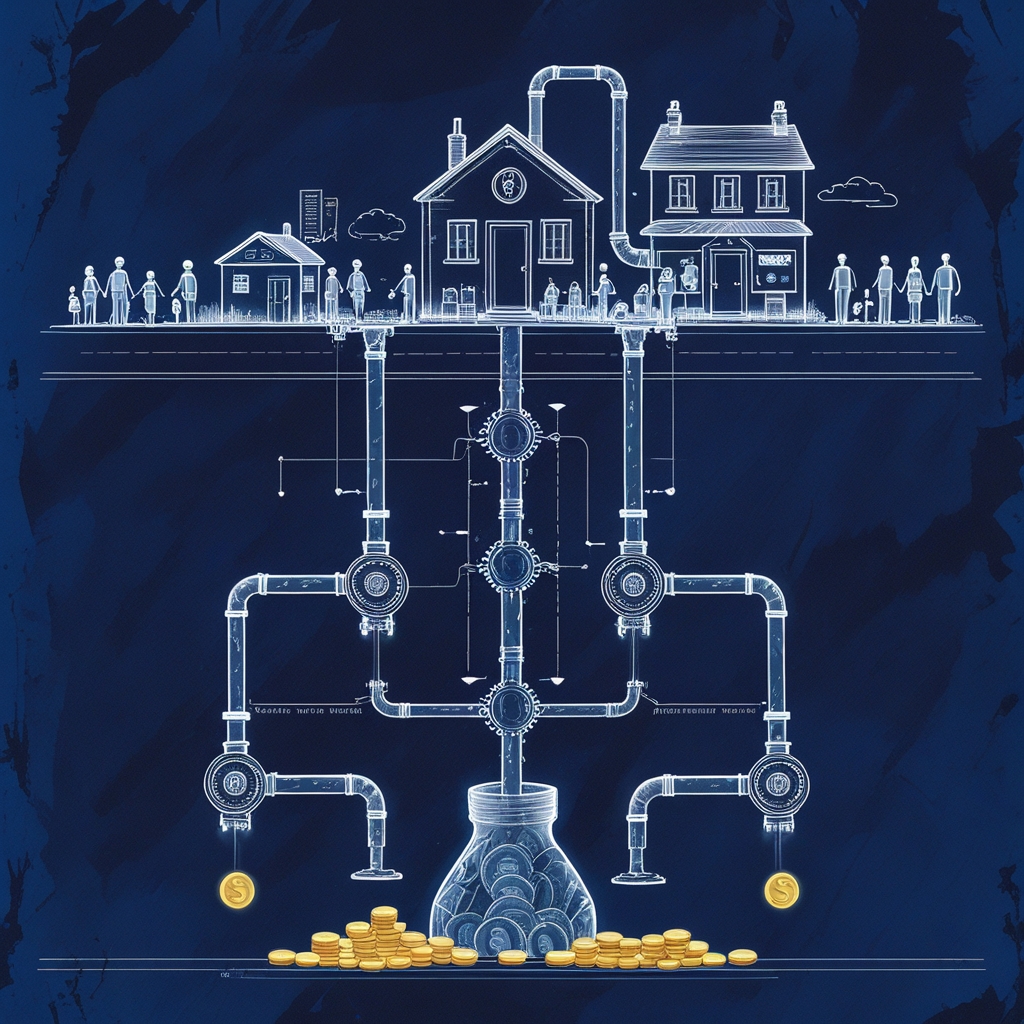
Where Policy Actually Has Leverage
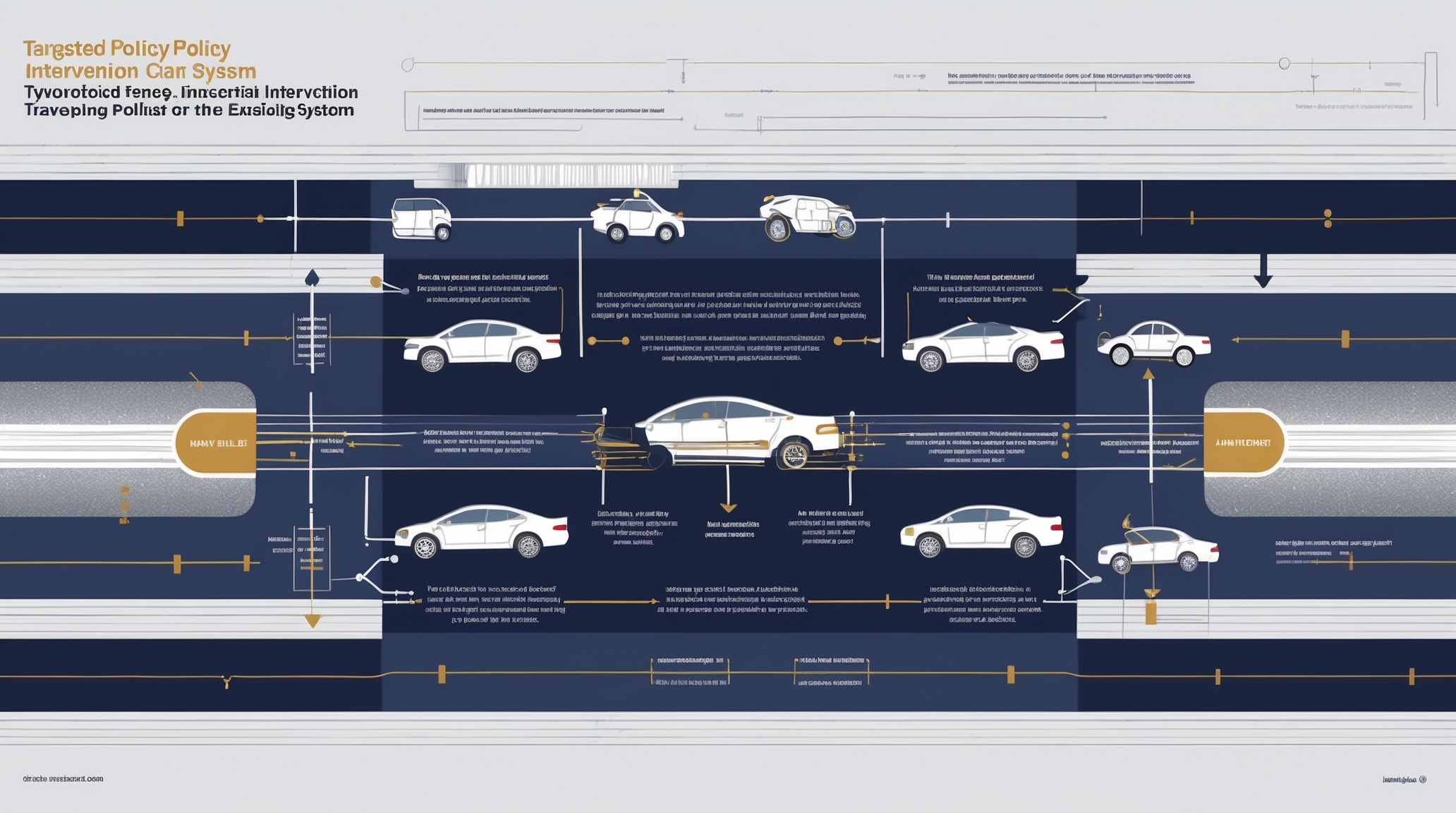
The car insurance system is resistant to reform, but it is not immovable. There are points where policy could shift outcomes, where intervention could reduce premiums, increase fairness, and shift power from insurers to drivers. Not easily, and not without political cost, but it is possible. The challenge is not that solutions do not exist, they do. The challenge is that implementing them requires overcoming insurer lobbying, comparison site resistance, regulatory caution, and political fear of unintended consequences. But leverage points exist, and understanding where they are and how to use them is essential for anyone who wants to see car insurance reformed.
Let me show you where UK policy actually has leverage over car insurance.
The first point of leverage is banning loyalty penalties and requiring equal pricing. The loyalty penalty, where existing customers are charged more than new customers for identical coverage, is extraction, pure and simple. It punishes loyalty, subsidizes churn, and forces drivers to switch every year to avoid being overcharged. And it is unfair, unjustifiable, and could be banned.
A ban would work simply. Insurers would be required to offer renewal prices that are no higher than the price they would offer to a new customer with identical characteristics, identical risk profile, identical coverage. If a new customer would pay five hundred pounds, an existing customer renewing must also pay five hundred pounds, no more.
This would eliminate the loyalty penalty, would remove the need for annual switching, would allow drivers to stay with an insurer without being punished. And it would reduce churn, reduce comparison site fees, reduce marketing costs, and potentially reduce premiums overall because the cost of acquiring new customers would fall.
The political obstacle is that insurers claim this would increase prices for new customers, because new customer discounts, currently subsidized by loyalty penalties, would disappear. But this is a distributional argument, not a cost argument. The total cost of insurance would not change, it would just be spread more fairly, with everyone paying closer to the average rather than new customers paying below average and loyal customers paying above.
And even if new customer prices rose slightly, the benefit, in terms of fairness, in terms of removing the need for annual switching, in terms of protecting vulnerable customers who do not switch, would outweigh the cost. And the FCA has already moved in this direction, requiring insurers to show last year's price on renewal notices, to make the loyalty penalty visible. But visibility is not enough, the penalty must be banned entirely.
The second point of leverage is capping or banning comparison site fees. Comparison sites charge insurers fifty to sixty pounds per policy sold through their platform, and this cost is built into premiums, passed to drivers, who pay indirectly for the comparison site. And comparison sites, while appearing to increase competition, actually increase costs, because every quote on a comparison site includes the fee.
A cap would limit how much comparison sites can charge, perhaps ten or twenty pounds per policy instead of fifty, and this would reduce the cost built into premiums. A ban would prohibit comparison sites from charging insurers for referrals, forcing them to find alternative business models, perhaps charging consumers directly for the service, or earning revenue from advertising rather than from per-policy fees.
And either reform would reduce premiums, because the cost of comparison site fees, currently hidden, would be removed or reduced. And it would increase transparency, because drivers would see the cost of using a comparison site, would be able to choose whether to pay for the service, rather than paying unknowingly through higher premiums.
The political obstacle is that comparison sites have market power, control access to customers, and would resist fiercely. They would argue that capping or banning fees would reduce competition, would harm consumers, would drive comparison sites out of business. But the evidence suggests the opposite, that comparison sites increase costs, that their fees are built into premiums, and that removing those fees would benefit drivers.
And an alternative reform would be to require insurers to offer the same price to customers who buy directly as to customers who buy through comparison sites, removing the incentive to use comparison sites, allowing drivers to avoid the fee by buying directly. This would increase competition, would allow insurers to compete on direct sales, and would give drivers a choice.
The third point of leverage is capping premiums for young drivers or introducing risk-pooling for high-risk groups. Young drivers pay thousands of pounds for insurance, often two, three, four times what older drivers pay, and while young drivers are statistically higher risk, the scale of the difference is unjustifiable and creates financial hardship.
A cap would limit how much insurers can charge young drivers, perhaps requiring that premiums for under-twenty-fives cannot exceed one thousand pounds, or cannot exceed twice the average premium. This would make insurance affordable, would allow young people to drive legally, would reduce the number of uninsured young drivers.
Alternatively, a risk pool could be created, where all insurers contribute to a fund that covers the cost of insuring high-risk drivers, young drivers, drivers with claims history, and the cost is spread across all policyholders. This would prevent young drivers from being priced out, would ensure they can get insurance, and would spread the cost more equitably.
The political obstacle is that insurers claim capping premiums would lead them to refuse to cover young drivers, because if they cannot charge enough to cover the risk, they will not offer insurance. But this is not inevitable, it is a choice, and regulation could require insurers to cover all drivers, to participate in the risk pool, and to accept that some customers are cross-subsidized by others, as insurance is supposed to work.
And the refusal to cover young drivers, if it occurred, would create political pressure for a public insurance option, for a government-backed insurer that covers those refused by private insurers, and the existence of a public option would force private insurers to compete or face losing market share.
The fourth point of leverage is transparency on pricing and profit margins. Insurers do not disclose how premiums are calculated, what factors drive the price, what portion of the premium is claims cost, what portion is profit, what portion is comparison site fees, what portion is admin. And this opacity allows extraction, allows insurers to charge more than necessary, allows them to hide profit margins.
Requiring transparency, requiring insurers to disclose a breakdown of every premium, showing claims cost, admin cost, comparison site fees, profit margin, would empower drivers, would allow them to see whether they are being charged fairly, and would create pressure for insurers to reduce prices if profit margins are revealed to be excessive.
And requiring publication of aggregate data, showing average profit margins across the industry, showing how much of total premiums goes to claims versus profit, would allow regulators, consumer groups, and the public to assess whether the market is working, whether premiums are fair, whether reform is needed.
The political obstacle is that insurers claim pricing is proprietary, that disclosing it would harm competition, would reveal trade secrets. But this is self-serving, and transparency is essential for a functioning market, for consumer protection, for accountability. And many other industries are required to disclose costs and margins, and there is no reason insurance should be exempt.
The fifth point of leverage is regulating or banning telematics and data-driven discrimination. Telematics, black box insurance, allows insurers to monitor driving behavior, to collect detailed data on speed, braking, acceleration, time of day, location. And this data is used to price risk more accurately, to segment drivers, to charge high-risk drivers more.
But telematics is also surveillance, is intrusive, and creates inequality. Drivers who cannot afford high premiums are pressured to accept telematics, to allow monitoring, to prove they are low-risk. And the data collected, the detailed information on driving behavior, is valuable, is sold, is used for purposes beyond insurance, and drivers have little control over it.
Regulating telematics, requiring informed consent, requiring that data be used only for pricing and not sold to third parties, requiring that drivers can opt out without penalty, would protect privacy, would limit the extent of surveillance. Banning telematics entirely, or banning its use for pricing, would prevent data-driven discrimination, would prevent insurers from charging individuals based on granular behavior data, and would return to risk pooling based on broad categories rather than individual surveillance.
The political obstacle is that insurers claim telematics reduces premiums for low-risk drivers, benefits safe drivers, and banning it would increase prices for everyone. But the benefit is only for those willing to be monitored, and the cost is privacy, surveillance, and increased inequality.
The sixth point of leverage is creating a public insurance option. The UK could create a government-backed car insurance provider, operating at cost, without profit motive, offering insurance to all drivers at prices that reflect actual claims costs plus admin, with no comparison site fees, no marketing costs, no shareholder dividends.
A public insurer would compete with private insurers, would set a floor on prices, would prevent private insurers from charging excessive premiums because drivers would have an alternative. And it would cover those refused by private insurers, those priced out, ensuring everyone can get insurance, can drive legally.
The political obstacle is ideological opposition to public ownership, claims that government cannot run an insurer efficiently, that a public option would crowd out private insurers. But the evidence from other sectors, from healthcare, from broadcasting, shows that public provision can work, can be efficient, and can coexist with private provision. And the cost of setting up a public insurer would be repaid through lower premiums, through reducing extraction, through serving those currently excluded.
The seventh point of leverage is banning or capping add-on pricing. Add-ons, breakdown cover, legal expenses, personal injury cover, are sold at inflated prices, far above cost, and generate significant profit for insurers, add-on providers, and comparison sites. And drivers, pressured, uncertain, buy add-ons they do not need, at prices they cannot afford.
Capping add-on prices, requiring that add-ons be sold at cost plus a reasonable margin, say ten or twenty percent, would reduce the cost of insurance, would protect drivers from exploitation. Banning the sale of add-ons with insurance, requiring drivers to buy them separately if they want them, would increase transparency, would allow drivers to shop around, would force add-on providers to compete on price.
The political obstacle is that insurers and add-on providers profit enormously from add-ons, and would lobby against any cap or ban, claiming it would reduce choice, would harm consumers. But the evidence shows add-ons are overpriced, are often unnecessary, and that consumers would benefit from lower prices and greater transparency.
The eighth point of leverage is eliminating insurance premium tax or making it progressive. Insurance premium tax, currently twelve percent, is a regressive tax that falls hardest on those paying the highest premiums, young drivers, high-risk drivers, those least able to afford it. Abolishing the tax would reduce premiums by twelve percent, would save drivers hundreds of pounds, and would make insurance more affordable.
Alternatively, the tax could be made progressive, with higher-rate tax on high-value policies, luxury cars, and lower or zero tax on basic policies, on young drivers, on low-income drivers. This would redistribute the tax burden, would reduce the cost for those struggling to afford insurance, and would maintain revenue from those who can afford to pay.
The political obstacle is fiscal cost, the Treasury depends on insurance premium tax revenue, over one billion pounds per year, and losing that revenue would require finding it elsewhere or cutting spending. But the benefit, in terms of making insurance affordable, in terms of reducing uninsured driving, would justify the cost.
The ninth point of leverage is banning gender-based pricing. Young men pay significantly more than young women for car insurance, because statistically young men have more accidents. But this is discrimination, charging individuals based on group characteristics, and it penalizes individuals who may be safe drivers for the behavior of others in their demographic group.
Banning gender-based pricing, as the EU did in 2012, would require insurers to price based on individual factors, driving history, claims history, telematics data, rather than gender. And this would reduce premiums for young men, would increase fairness, and would align UK law with broader anti-discrimination principles.
The political obstacle is that insurers claim banning gender-based pricing would increase premiums for young women, because the cost currently borne by young men would be spread across both genders. But this is a distributional issue, not a cost issue, and the total cost of insuring young drivers would not change, it would just be allocated more fairly.
The tenth point of leverage is requiring insurers to offer payment plans without interest or fees. Many drivers cannot afford to pay annual premiums upfront, and they pay monthly, and insurers charge interest, often at high rates, fifteen, twenty percent or more. And this interest is extraction, is a poverty penalty, charging more to those who can least afford to pay.
Requiring insurers to offer interest-free monthly payment plans, or capping interest at a low rate, would reduce the cost for those paying monthly, would reduce the poverty penalty, and would make insurance more affordable for low-income drivers.
The political obstacle is that insurers claim the interest reflects the cost of financing, the risk of non-payment, and that banning it would reduce availability of monthly payment options. But the rates charged are far above the cost of capital, and capping them would still allow insurers to offer monthly payments while reducing extraction from the poor.
So here is where policy has leverage. Ban loyalty penalties to eliminate the need for annual switching and reduce churn. Cap or ban comparison site fees to reduce hidden costs built into premiums. Cap premiums for young drivers or create risk pools to make insurance affordable. Require transparency on pricing and profit margins to empower drivers and expose extraction. Regulate or ban telematics to protect privacy and prevent data-driven discrimination. Create a public insurance option to compete with private insurers and cover those priced out. Ban or cap add-on pricing to reduce overcharging. Eliminate or make progressive insurance premium tax to reduce the regressive burden. Ban gender-based pricing to eliminate discrimination. Require interest-free payment plans to remove the poverty penalty.
Each of these would help, some more than others, and some are easier to implement than others. But all are possible, all would shift the system toward fairness, toward affordability, and toward serving drivers rather than extracting from them. The obstacle is not technical, it is political. The will to act, the courage to override insurer lobbying, comparison site resistance, regulatory caution, and ideological opposition. And the willingness to prioritize drivers over industry profits, fairness over market ideology, and long-term outcomes over short-term fiscal convenience.
Most governments do not have that will, so the levers exist but are not pulled, and the system continues extracting, continues charging young drivers thousands, continues penalizing loyalty, and continues enriching insurers, comparison sites, and intermediaries at the expense of drivers. But the levers are there, and understanding them is the first step toward using them.
The final article will show you a case study, the young driver crisis, when premiums for under-twenty-fives soared to unaffordable levels, when telematics black boxes were introduced as the solution, and when extraction from young people accelerated. Because understanding that moment, understanding what happened and why, reveals the dynamics of car insurance politics and shows what happens when those least able to pay are targeted for maximum extraction.