Boundaries and Mental Models
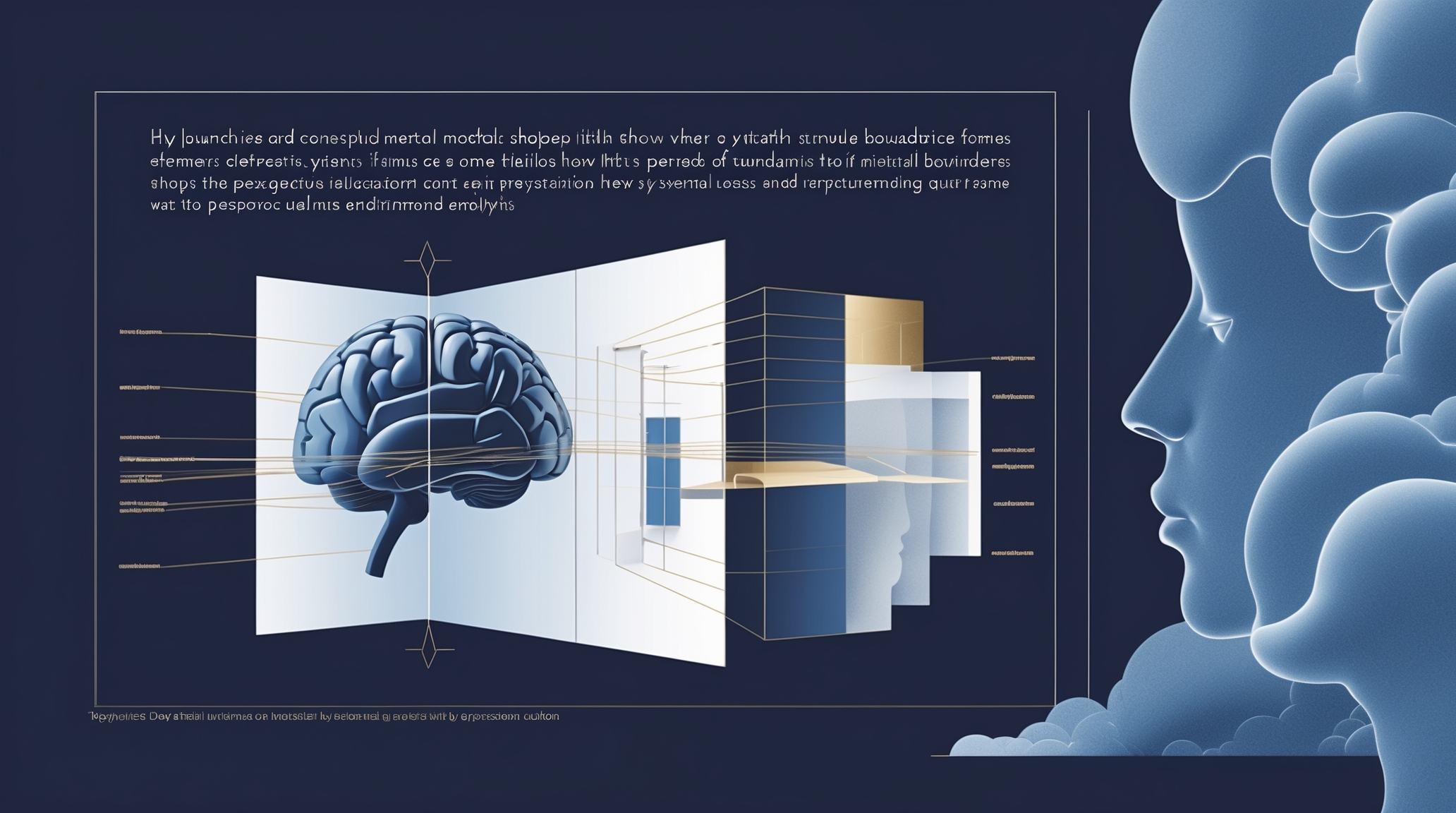
When you analyze a system, one of the first and most important decisions you make is where to draw the boundary. What is inside the system and what is outside? What is part of the system you are trying to understand and what is part of the environment? This choice, the choice of boundary, determines what you see, what you analyze, and what conclusions you reach. And different boundaries produce different understandings, different explanations, and different interventions.
Drawing boundaries is not neutral, it is not objective, and it is not obvious. It is a choice, often an unconscious one, shaped by your assumptions, your perspective, your interests, and your mental models. And mental models are the deeply held beliefs, the frameworks, the stories you tell yourself about how the world works. They shape what you pay attention to, what you ignore, what you consider possible, and what you consider inevitable. And they are often invisible to you, you do not question them, you do not examine them, because they feel like reality, like the way things are, rather than like one way of seeing things.
Understanding boundaries and mental models is essential because they determine what you see when you look at a system. Two people looking at the same system, with different boundaries and different mental models, will see completely different things. One will see a problem, the other will see an opportunity. One will see victims, the other will see personal responsibility. One will see a system that needs reform, the other will see a system that is working as intended. And both will believe they are seeing reality, seeing the truth, when in fact they are seeing their mental model reflected back at them.
Let me show you how boundaries and mental models work and why they matter.
Start with boundaries. When you analyze a problem, you define what is in scope and what is out of scope. You decide which actors, which factors, which relationships to include and which to treat as external, as background, as given. And this choice shapes everything that follows.
Consider unemployment. If you draw the boundary narrowly, around the individual, you see unemployment as an individual problem. The person is unemployed because they lack skills, because they are not trying hard enough, because they made poor choices. The solution is for the individual to change, to get training, to work harder, to make better decisions.
But if you draw the boundary more widely, around the labor market, you see unemployment as a structural problem. There are not enough jobs, employers are not hiring, wages are too low to live on, industries are declining. The solution is not individual change but structural change, more investment, better education, industrial policy, stronger labor protections.
And if you draw the boundary even more widely, around the economy and the political system, you see unemployment as a systemic problem. Economic policy prioritizes low inflation over full employment, trade policy has shifted jobs overseas, automation has displaced workers, and political power is concentrated among those who benefit from high unemployment because it suppresses wages. The solution is systemic change, different economic priorities, different trade policies, redistribution, political reform.
These are three different boundaries, and they produce three completely different understandings of the same problem. The narrow boundary focuses on individuals and blames them. The medium boundary focuses on markets and sees structural barriers. The wide boundary focuses on systems and sees power and interests. And all three can look at the same data, the same unemployment statistics, and reach different conclusions because they are drawing the boundary differently.
And here is the critical point, the boundary is not dictated by the problem, it is chosen by the analyst. And that choice is shaped by mental models, by beliefs about how the world works, about where responsibility lies, about what is changeable and what is fixed.
Now consider healthcare. If you draw the boundary around the individual, you see health as a personal responsibility. People are sick because they eat poorly, because they do not exercise, because they smoke or drink. The solution is individual behavior change, education, personal responsibility.
But if you draw the boundary around the healthcare system, you see health as determined by access to care. People are sick because they cannot afford treatment, because they live far from hospitals, because waiting lists are long. The solution is better healthcare provision, more doctors, more hospitals, universal access.
And if you draw the boundary around society, you see health as determined by social conditions. People are sick because they live in poverty, because they work in dangerous jobs, because their neighborhoods are polluted, because stress and inequality erode health. The solution is social change, reducing poverty, improving working conditions, environmental regulation, reducing inequality.
Again, three boundaries, three understandings, three sets of solutions. And the choice of boundary is not neutral, it reflects values, it reflects interests, it reflects power. Those who benefit from the current system prefer narrow boundaries that focus on individuals and avoid scrutiny of structures. Those who are harmed by the current system prefer wide boundaries that expose structures and demand systemic change.
Now let us talk about mental models. A mental model is a framework, a set of assumptions, a story about how the world works. And mental models operate largely unconsciously, you do not think about them, you think with them. They shape your perception, your interpretation, your judgment. And they are resistant to change because challenging a mental model feels like challenging reality itself.
Consider the mental model that markets are efficient and self-regulating. If you hold this model, you see market outcomes as fair, as reflecting value, as optimal. If someone is wealthy, they must have created value. If someone is poor, they must lack skills or effort. If a company is profitable, it must be serving customers well. And if there are problems, inefficiency, inequality, harm, the solution is more market, less regulation, more competition.
But if you hold a different mental model, that markets concentrate power and extract value, you see the same outcomes differently. Wealth reflects not value creation but extraction, exploitation, inherited advantage. Poverty reflects not lack of effort but structural barriers, discrimination, lack of opportunity. Profit reflects not service but market power, monopoly, externalization of costs. And the solution is not more market but regulation, redistribution, structural change.
These are two different mental models, and they lead to completely different interpretations of the same facts. Both models can explain what they see, both can marshal evidence, both feel internally consistent. But they cannot both be correct, they are fundamentally incompatible ways of understanding how markets work and what markets do.
Or consider the mental model that people are fundamentally selfish and rational. If you hold this model, you design systems based on incentives, on rewards and punishments, on competition. You assume that people will cheat if they can, that they need to be monitored and controlled, that altruism is rare and unreliable. And you see systems that trust people, that rely on cooperation, that assume good intentions, as naive and doomed to fail.
But if you hold a different mental model, that people are fundamentally social and cooperative, you design systems differently. You emphasize trust, shared purpose, community norms. You assume that people want to contribute, that they respond to fairness and reciprocity, that intrinsic motivation is powerful. And you see systems based purely on incentives as corrosive, as undermining trust and cooperation, as creating the selfishness they assume.
And both models have evidence. People do sometimes cheat, they do respond to incentives, they do act selfishly. But people also cooperate, they volunteer, they sacrifice for others, they act according to principles rather than narrow self-interest. The question is not which model is true but which model is more useful in which contexts, and what happens when we apply the wrong model.
Now let us talk about how mental models resist change. Mental models are sticky, they persist even in the face of contradictory evidence, because we interpret evidence through our mental models. If evidence contradicts the model, we explain it away, we find exceptions, we dismiss it as anomalous. And we seek out evidence that confirms the model, we notice information that fits and ignore information that does not. This is confirmation bias, and it is a powerful force that protects mental models from scrutiny.
And mental models are reinforced by social groups. The people around you, your colleagues, your community, your media diet, tend to share your mental models. And this creates echo chambers where the model is constantly reinforced, where dissent is rare, where alternative models are not encountered or are dismissed as foolish or dangerous. And within the echo chamber, the mental model feels like common sense, like obvious truth, and alternatives feel absurd.
But mental models can change, usually slowly, sometimes suddenly. They change when the model fails so badly that it can no longer explain experience, when predictions fail, when interventions backfire, when the gap between what the model says should happen and what actually happens becomes too large to ignore. And they change through exposure to alternative models, through encountering people with different frameworks who see the world differently and whose understanding makes sense, challenges assumptions, and offers better explanations.
Now let us talk about why boundaries and mental models matter for systems thinking. If you draw the wrong boundary, you miss critical feedback loops, you treat as external factors that are actually internal, and you fail to see how the system creates its own problems. And if you hold mental models that do not match reality, you misinterpret what you see, you intervene in ways that fail or backfire, and you blame the wrong actors and miss the real causes.
Effective systems thinking requires examining your boundaries and your mental models. It requires asking, am I drawing the boundary too narrowly, am I excluding factors that matter, am I treating as given things that could be changed? And it requires asking, what assumptions am I making, what mental models am I using, what alternative explanations exist, what would I see differently if I held a different model?
This is difficult because it requires stepping outside your own perspective, it requires recognizing that your view is partial, that your mental models are constructs, and that reality is more complex and more ambiguous than any model can capture. And it requires humility, recognizing that you might be wrong, that your mental model might be flawed, and that other people, with different models, might see things you are missing.
But this is also liberating because it means that changing your understanding does not require changing reality, it requires changing your boundary, your mental model, your way of seeing. And changing your way of seeing changes what is possible, what interventions make sense, what alliances can be built, what futures can be imagined.
So here is what boundaries and mental models reveal about systems. The boundary you draw determines what you include and exclude, what you see as internal dynamics and what you treat as external constraints. Different boundaries produce different understandings and different interventions. Mental models are frameworks, assumptions, beliefs about how the world works, and they shape what you see, what you interpret, and what you consider possible. Mental models operate largely unconsciously and are resistant to change because challenging them feels like challenging reality. And effective systems thinking requires examining your boundaries and your mental models, questioning your assumptions, and remaining open to alternative perspectives.
Boundaries and mental models are everywhere. In every analysis, every argument, every policy debate. And once you start noticing them, once you start asking where the boundary is drawn and what mental models are operating, you see that many disagreements are not about facts but about frameworks. People are looking at the same system through different boundaries and different mental models, and they are seeing completely different things. And resolving those disagreements requires not more evidence but dialogue about boundaries and models, about what is included, what is assumed, and what alternative frameworks might reveal.
The next article will show you entropy, decay, and system death, why systems degrade without constant effort, why maintenance is always undervalued, and why preventing problems is so much harder politically than responding to crises.