Entropy, Decay, and System Death
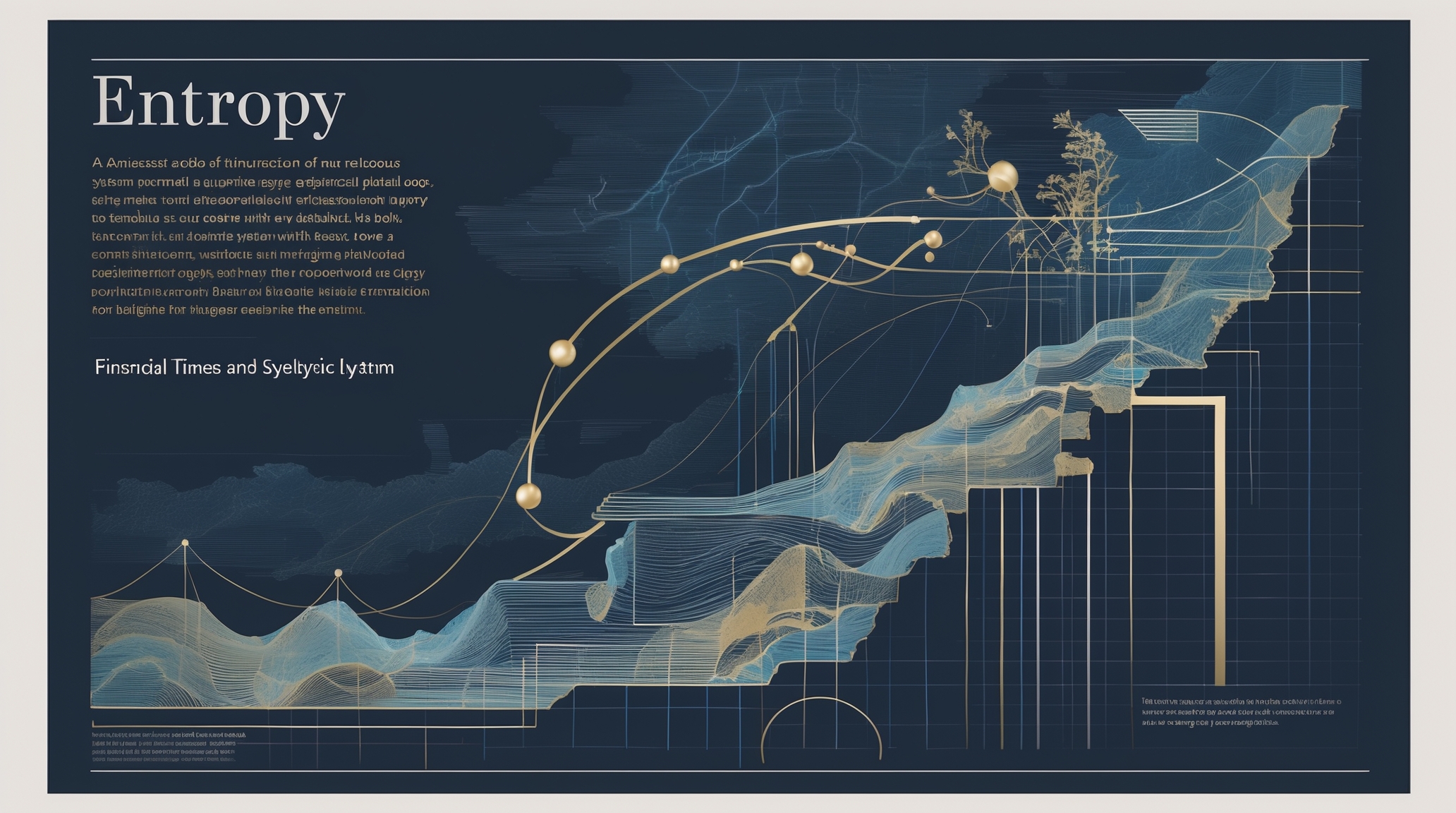
Everything decays. Buildings crumble, roads crack, bridges rust, infrastructure degrades. Organizations drift, lose focus, become bureaucratic, stop innovating. Relationships erode, trust declines, communication breaks down. Skills atrophy, knowledge is forgotten, traditions fade. This is not random, this is not bad luck, this is entropy, the universal tendency of systems to move from order to disorder, from organization to chaos, from function to dysfunction.
Entropy is a concept from thermodynamics, the second law, which says that in any closed system, entropy increases over time. Energy disperses, differences flatten, structure breaks down. And while human systems are not closed, they are not isolated thermodynamic systems, the principle applies metaphorically and practically. Systems require energy, effort, attention to maintain order, to preserve structure, to prevent decay. And without that input, without constant maintenance, systems degrade. Inevitably. Predictably.
Understanding entropy and decay is essential because it reveals why maintenance matters, why prevention is critical, and why neglecting systems, even briefly, creates problems that compound and accelerate. And it explains one of the great puzzles of policy, why maintenance is chronically underfunded, why prevention is chronically undervalued, and why societies allow infrastructure, institutions, and systems to decay until they fail catastrophically, even though preventing decay is far cheaper and far more effective than repairing failure.
Let me show you how entropy and decay work in systems and why they matter.
Start with physical infrastructure. A road is built, smooth, functional, well-drained. And immediately, it starts to decay. Traffic compresses the surface, water seeps into cracks, freeze-thaw cycles expand those cracks, the structure weakens. At first, the decay is invisible, minor surface wear, small cracks that do not affect function. But if nothing is done, the cracks grow, the surface deteriorates, potholes form, the road becomes rough, dangerous, expensive to drive on.
And here is the key, early maintenance is cheap and effective. Sealing small cracks costs very little and prevents water infiltration. Resurfacing a slightly worn road costs modestly and extends its life by decades. But if maintenance is deferred, if the road is allowed to decay, the costs escalate. Potholes require patching, which is more expensive than sealing. Structural failure requires rebuilding, which is far more expensive than resurfacing. And at some point, the road becomes so degraded that it must be completely reconstructed, at ten times the cost of regular maintenance.
This is the decay curve, the longer you wait, the more damage accumulates, and the more expensive and difficult repair becomes. And this applies to all infrastructure, bridges, water pipes, sewers, electrical grids, railways. All of it decays, all of it requires maintenance, and deferring maintenance does not save money, it just shifts costs to the future and multiplies them.
Now consider organizations. An organization is built, structured, functional, aligned around a purpose. But over time, entropy sets in. Rules accumulate, exceptions are added, bureaucracy grows. Informal networks form, silos develop, communication breaks down. The original purpose fades, new goals emerge, priorities conflict. Key people leave, knowledge is lost, institutional memory erodes. And the organization drifts, becomes less effective, less efficient, less responsive, until it is dysfunctional.
And maintaining an organization requires constant effort. Revisiting purpose, clarifying goals, simplifying processes, breaking down silos, training new people, preserving knowledge, addressing conflicts. These are maintenance activities, they do not create anything new, they do not generate visible output, but they prevent decay. And if they are not done, if the organization is left to drift, decay accelerates, dysfunction spreads, and eventually the organization fails, it cannot fulfill its purpose, and it collapses or is replaced.
Now consider skills and knowledge. You learn something, a language, a musical instrument, a technical skill. And immediately, forgetting begins. If you do not use the skill, if you do not practice, it decays. Neural pathways weaken, muscle memory fades, knowledge becomes inaccessible. And the decay is rapid at first, then slower, but continuous. And reversing decay, relearning a skill you have lost, is harder than maintaining it through regular practice.
This is why continuous learning matters, not just for acquiring new knowledge but for maintaining what you already have. And why organizations that do not invest in ongoing training, in skill development, in knowledge management, find that their workforce degrades, that expertise is lost, that capacity erodes, even though no one leaves and nothing explicitly changes.
Now consider relationships. A relationship, personal or professional, is built through shared experience, through communication, through trust. But if it is neglected, if you do not invest time, attention, effort, it decays. Communication becomes superficial, trust erodes, resentment builds, connection weakens. And at some point, the relationship dies, it cannot be revived, too much damage has accumulated.
And maintaining relationships requires ongoing effort. Talking, listening, resolving conflicts, expressing appreciation, creating shared experiences. These are maintenance activities, they do not produce anything tangible, but they prevent decay. And relationships that are maintained survive, grow, deepen. Relationships that are neglected decay, weaken, and eventually fail.
Now let us talk about why maintenance is undervalued and underfunded. The first reason is that maintenance is invisible when it works. If a road is well-maintained, if it never develops potholes, if it is always smooth and safe, people do not notice the maintenance. They take the road for granted, they assume it is naturally durable, and they do not value the effort that keeps it functional. But if maintenance is deferred and the road fails, the failure is visible, dramatic, and it generates political pressure to fix it.
This creates a perverse incentive. Politicians and managers are rewarded for responding to crises, for fixing visible failures, because those actions generate attention, gratitude, and credit. But they are not rewarded for preventing failures, because prevention is invisible, no crisis occurs, no dramatic action is taken, and voters or stakeholders do not see the value. So maintenance is deferred, budgets are cut, and decay accelerates, and the cycle repeats.
The second reason is that maintenance costs are immediate and certain, while the costs of decay are future and uncertain. Maintaining a road costs money now, this year, and that cost shows up in the budget and must be justified. But deferring maintenance does not create an immediate cost, the road does not collapse today, and the future cost, when the road fails, is distant, uncertain, and can be ignored or hoped away. So financially constrained organizations, governments, individuals defer maintenance, they prioritize immediate needs and visible projects, and they accept future decay because it is not their problem yet.
The third reason is that maintenance does not create anything new. Building a new road, a new bridge, a new building is visible, it creates something that was not there, it can be named, celebrated, photographed, associated with a politician or a leader. But maintaining an old road, an old bridge, an old building does not create anything new, it just preserves what exists, and preservation does not generate the same excitement, the same political capital, the same legacy.
So politicians prefer building to maintaining, they prefer ribbon-cutting ceremonies to sealing cracks, they prefer new projects to sustaining old ones. And this bias toward the new, the visible, the dramatic, means that maintenance is chronically underfunded, infrastructure decays, and failures accumulate until they become crises.
Now let us talk about system death. Systems do not just decay gradually and indefinitely, they can die, they can reach a point where decay is irreversible, where the system cannot be restored, and where it collapses or is replaced. And understanding how systems die is essential for recognizing when decline can be reversed and when it cannot.
Systems die when critical thresholds are crossed, when key structures fail, when feedback loops shift from balancing to reinforcing in destructive ways. An organization dies when it loses its purpose, when it can no longer attract talent or resources, when it becomes so dysfunctional that it cannot perform its mission. A relationship dies when trust is irreparably broken, when communication stops, when the connection that held it together is severed. An ecosystem dies when keystone species are lost, when the web of interactions collapses, when the system transitions to a degraded state that cannot support the original community.
And system death is often sudden, even after long periods of gradual decay. The system looks functional, it continues operating, it appears stable, but internally it is hollow, it is being sustained by inertia, by residual capacity, by the efforts of a few committed individuals. And then a shock occurs, a crisis, a loss, a disruption, and the system collapses. Because the underlying structure was already too degraded to absorb the shock.
This is how infrastructure fails. A bridge looks fine, it is still carrying traffic, inspections note concerns but judge it safe enough. And then a crack propagates, a support fails, and the bridge collapses. Catastrophically. Suddenly. And people are shocked, they ask how this could happen, but it did not happen suddenly, it happened over years or decades of deferred maintenance, of gradual decay, and the collapse was the culmination, not the cause.
And this is how organizations fail. A company looks functional, it is still operating, still generating revenue, still employing people. But internally, it is rotting. Key people have left, morale is low, innovation has stopped, the product is stale, competitors are gaining ground. And then a downturn hits, revenue falls, and the company collapses. Quickly. Dramatically. And observers are surprised, they say it happened so fast, but it did not, it was decaying for years, and the downturn was just the trigger that exposed the decay.
Now let us talk about resilience and decay. Resilient systems can absorb shocks, they can adapt to change, they can recover from disturbances. But resilience requires maintenance, it requires redundancy, it requires slack, it requires diverse capacity. And when maintenance is deferred, when systems are optimized for efficiency by removing redundancy and slack, resilience decays. And systems become brittle, they cannot absorb shocks, and they fail catastrophically when stressed.
This is the efficiency-resilience trade-off. Efficiency, doing more with less, maximizing output per input, drives out redundancy, drives out slack, drives out spare capacity. And in normal conditions, this looks smart, it looks fiscally responsible, it looks like good management. But when a shock occurs, when demand spikes, when a component fails, when conditions change, the optimized system has no buffer, no capacity to adapt, and it fails.
And rebuilding resilience, adding redundancy and slack after a failure, is far more expensive than maintaining it throughout. Because the failure has consequences, it disrupts operations, it damages reputation, it erodes trust, and repairing those takes time and resources that maintaining resilience would have avoided.
So here is what entropy and decay reveal about systems. All systems decay without constant maintenance because entropy is universal and relentless. Early maintenance is cheap and effective, but deferred maintenance multiplies costs and accelerates decay. Maintenance is invisible when it works, which makes it politically and organizationally undervalued. Prevention is always cheaper than repair, but it does not generate the same political capital, so it is chronically underfunded. Systems can die when decay crosses irreversible thresholds, when critical structures fail, and when shocks expose underlying fragility. And resilience requires maintenance, it requires redundancy and slack, and optimizing for efficiency at the expense of resilience makes systems brittle and vulnerable to collapse.
And entropy explains one of the most frustrating dynamics in systems, that it is far easier to destroy than to build, far easier to let things decay than to maintain them, and far easier to respond to crises than to prevent them. Because destruction is passive, it requires no effort, entropy does it for you. But creation, maintenance, prevention, all require active effort, sustained attention, and ongoing investment. And in systems where effort is scarce, where attention is limited, where investment is contested, entropy wins. And systems decay.
The next article will show you resilience versus efficiency, the trade-off between optimizing performance and maintaining the capacity to survive shocks, and why systems that appear efficient often fail catastrophically when stressed.