State Pension to Rise 4.1% in April 2026: Triple Lock Delivers £460 Annual Increase
Published: 26 February 2026
The Event
The government confirmed today that the state pension will rise by four point one percent from April 2026, in line with the triple lock commitment. The full new state pension will increase from eleven thousand five hundred and two pounds per year to eleven thousand nine hundred and seventy-three pounds. That is an extra four hundred and seventy-one pounds per year, or thirty-nine pounds per month.
The basic state pension, for those who reached state pension age before April 2016, will rise from eight thousand eight hundred and fourteen pounds to nine thousand one hundred and seventy-five pounds. An increase of three hundred and sixty-one pounds per year.
The four point one percent increase is based on average earnings growth between May and July 2025, which was the highest of the three measures the triple lock considers: earnings growth (four point one percent), inflation (three point two percent), or a minimum of two point five percent.
Why It Matters
Four hundred and seventy-one pounds per year sounds substantial. But context matters. Inflation over the past year was three point two percent. The state pension increase of four point one percent is only zero point nine percentage points above inflation. So pensioners are getting a real-terms increase, but a modest one.
And while the state pension has increased significantly since 2010 thanks to the triple lock, rising from around six thousand nine hundred pounds per year to nearly twelve thousand pounds, the cost of living has also increased dramatically. Energy bills have more than doubled since 2020. Council tax has risen every year. Food prices have spiked. Housing costs, whether rent or mortgage interest for those still paying, have increased.
So a pensioner receiving the full new state pension gets eleven thousand nine hundred and seventy-three pounds per year, around nine hundred and ninety-eight pounds per month. After essential costs, energy bills averaging two hundred pounds per month, council tax averaging one hundred and fifty pounds per month, food at three hundred pounds per month, there is little left for anything else. And this assumes the pensioner owns their home outright. If they rent or still have a mortgage, the state pension alone is not enough to live on.
And many pensioners do not receive the full state pension. You need thirty-five years of National Insurance contributions to get the full amount. Those with incomplete contribution records, particularly women who took career breaks to raise children, receive less. The average state pension paid in 2026 is around ten thousand pounds per year, not the full twelve thousand.
For those receiving less than the full amount, the four point one percent increase is smaller in absolute terms. Someone on ten thousand pounds gets a four hundred and ten pound increase. Someone on eight thousand gets three hundred and twenty-eight pounds. Still an increase, but modest, and eroded quickly by rising living costs.
How the Triple Lock Works
The triple lock, introduced in 2010, guarantees the state pension rises each year by the highest of three measures: average earnings growth, inflation (measured by the Consumer Price Index), or two point five percent.
This year, earnings growth was four point one percent, higher than inflation at three point two percent and higher than the two point five percent floor. So the pension rises by four point one percent.
And the triple lock has been generous over its lifetime. Since 2010, the state pension has increased by around seventy-three percent in cash terms, while average earnings have increased by around fifty-five percent and inflation has been around forty-eight percent. Pensioners have gained relative to workers and relative to inflation.
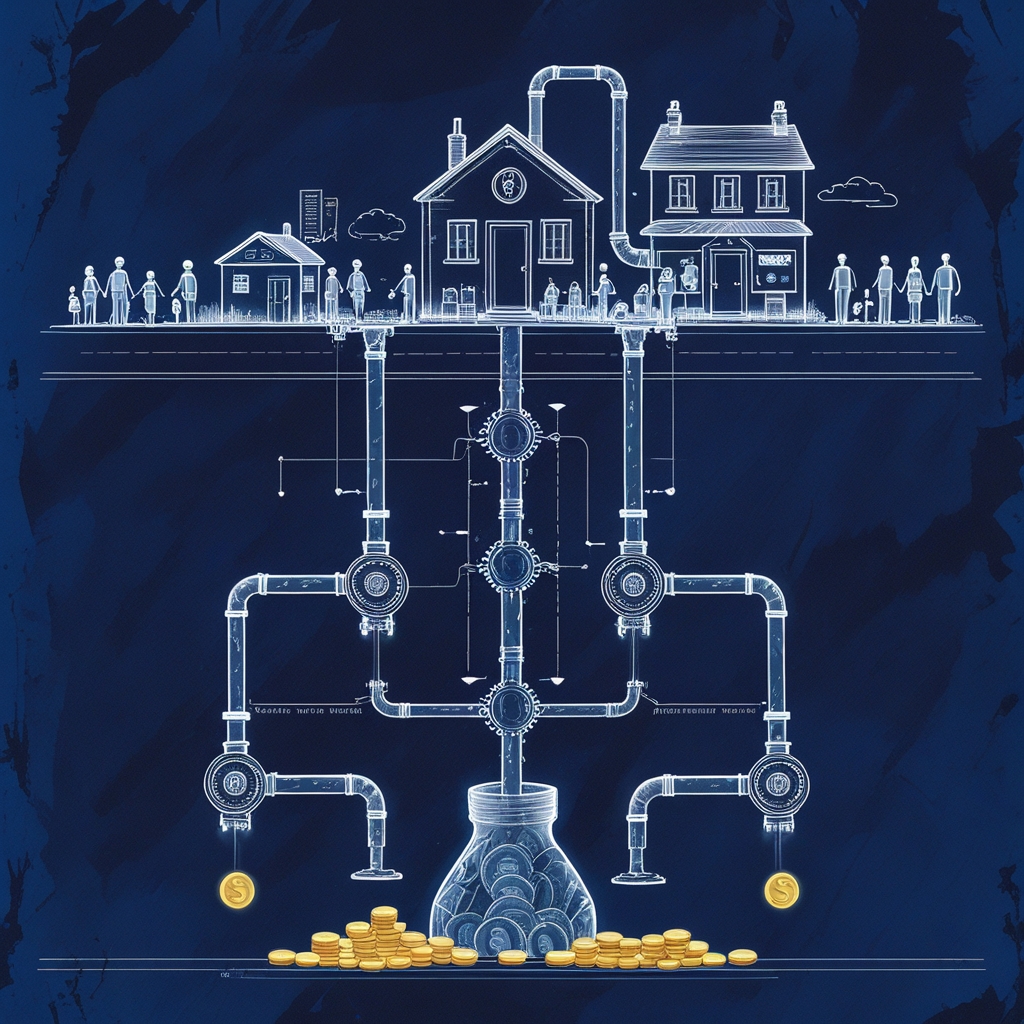
But the triple lock is expensive. The cost of the state pension is funded by National Insurance contributions paid by current workers. As the pensioner population grows, and as the triple lock ensures pensions rise faster than wages on average, workers pay more to fund pensions that are more generous than the pensions they themselves will receive.
And the triple lock is politically untouchable. Pensioners vote in high numbers. No party wants to alienate them. So the triple lock stays, workers pay, and the intergenerational transfer accelerates.
Who Benefits, Who Pays
The state pension increase benefits current pensioners. Around twelve point four million people in the UK receive the state pension. All of them get the four point one percent increase from April.
For a couple both receiving the full new state pension, the household increase is nine hundred and forty-two pounds per year. For a single pensioner living alone on the full amount, it is four hundred and seventy-one pounds.
But not all pensioners benefit equally. Those on the full pension get the largest cash increase. Those on partial pensions get less. And pensioners with significant private pensions, savings, or property wealth benefit from the triple lock even though they do not need it. The triple lock is universal, not means-tested, so wealthy pensioners receive the same increase as poor pensioners.
And who pays? Current workers. National Insurance contributions fund the state pension, and as the cost rises, contributions must rise or other government spending must be cut to cover the gap.
In 2024-25, the state pension cost around one hundred and twenty-four billion pounds. The four point one percent increase adds around five billion pounds to that cost annually. And this is on top of previous triple lock increases. The cumulative cost of the triple lock since 2010 is estimated at over fifty billion pounds compared to if pensions had risen only with inflation.
Workers, particularly younger workers who will never receive pensions as generous as current pensioners, are paying for this. And the gap between what they pay and what they will receive is widening.
Regional and Demographic Variation
The state pension increase applies equally across the UK. A pensioner in London gets the same percentage increase as a pensioner in rural Wales. But the cost of living varies dramatically by region, so the real value of the increase differs.
In London, where energy, council tax, and food are more expensive, four hundred and seventy-one pounds per year is absorbed quickly by higher costs. In rural areas with lower living costs, the increase goes further.
And demographic variation matters. Women, on average, receive lower state pensions than men because they have fewer years of National Insurance contributions due to career breaks for childcare. The gender pension gap means women receive around twenty percent less state pension than men on average. So the four point one percent increase benefits men more in absolute terms, even though the percentage is the same.
Older pensioners, those in their eighties and nineties, are more likely to be on the basic state pension rather than the new state pension, because they reached pension age before April 2016. The basic pension is lower, so the increase is smaller. And older pensioners, particularly women, are more likely to live alone, to have higher care costs, and to struggle financially.
Pensioner Poverty
Despite the triple lock, one in six pensioners in the UK lives in poverty, defined as household income below sixty percent of median income after housing costs. That is over two million pensioners struggling to afford heating, food, and essentials.
And pensioner poverty is concentrated among certain groups. Women, ethnic minorities, renters, those without workplace pensions, all face higher rates of poverty. The state pension alone is not enough to live on, and without additional income from private pensions or savings, poverty is nearly inevitable.
The four point one percent increase helps, but it does not lift pensioners out of poverty. A pensioner on the full state pension of eleven thousand nine hundred and seventy-three pounds, with no other income, is still below the poverty line if they rent or have significant housing costs.
And pensioner poverty is rising in some areas. Renters, who spend a large share of income on housing, are particularly vulnerable. As rents rise faster than the state pension, more pensioner renters fall into poverty.
Political Context
The triple lock is politically popular but fiscally controversial. Pensioners support it because it protects their income. Workers, particularly younger workers, increasingly question it because they are paying for pensions more generous than they will receive.
And the triple lock creates strange outcomes. In 2022-23, when inflation spiked to over ten percent, the state pension rose by ten point one percent, the largest increase in decades. Pensioners gained significantly. But workers, whose wages rose slower than inflation, saw their living standards fall while they paid for pensioners to gain.
This year, earnings growth at four point one percent is higher than inflation at three point two percent, so pensioners gain in real terms while many workers see wages rise slower than their personal inflation rate, particularly if they face high energy or housing costs.
And the fiscal cost is growing. The state pension is the single largest item of government spending, and the triple lock ensures it grows faster than the economy on average. Eventually, this becomes unsustainable. Either taxes rise, or other spending is cut, or the triple lock is reformed.
But reform is politically difficult. Any government that touches the triple lock faces backlash from pensioners, who vote reliably and in high numbers. So the triple lock stays, for now.
What to Watch Next
The next triple lock decision will be announced in autumn 2026, based on data from summer 2026. If earnings growth remains strong, expect another increase above inflation. If inflation rises again, the pension will follow. And if neither earnings nor inflation is high, the two point five percent floor ensures the pension still rises.
Also watch for the March 2026 Budget. If the Chancellor announces changes to National Insurance, either rates or thresholds, this affects how the state pension is funded. Higher National Insurance means workers pay more to fund the triple lock.
And watch for political debate around pension reform. Some economists and think tanks are calling for the triple lock to be replaced with a double lock, removing the two point five percent floor and linking pensions only to earnings or inflation. Others call for means-testing, so wealthy pensioners do not receive increases they do not need. Any movement on this issue will be politically explosive.
What You Can Do
If you are a pensioner receiving the state pension, the increase is automatic. You do not need to apply. The new amount will be paid from the week beginning 7th April 2026. Check your bank account in early April to confirm the increase has been applied.
If you are not receiving the full state pension because you have an incomplete National Insurance record, check if you can make voluntary contributions to increase your entitlement. You can buy missing years of contributions, up to six years back, which can boost your pension. Use the government's "check your state pension" service online to see your forecast and identify gaps.
If you are a pensioner struggling financially, check if you are eligible for Pension Credit, a means-tested benefit that tops up income to a minimum level. Around eight hundred thousand eligible pensioners do not claim Pension Credit, missing out on an average of three thousand five hundred pounds per year. Also check eligibility for Council Tax Reduction, which can reduce your council tax bill significantly.
And if you want to understand why the state pension uses the triple lock, why it is funded by current workers rather than by past contributions, and who benefits most from the current system, read the full deep dive on the UK Pension System.
Links:
[Read: The UK Pension System Deep Dive - How This System Really Works]
[Read: Where Is the UK Pension System Heading? Data Snapshot (2026)]