The Last Eviction Window: What Criterion Capital's Section 21 Notices Tell Us About How the Rental System Works
When a law is about to change, the system responds before it does. That is what is happening right now in south-west London, and it tells us something important about how the rental system actually operates — not in theory, but in practice.
More than 130 tenants renting privately from Criterion Capital, one of London's largest landlords with over £9 billion deployed across 58 properties, have been served Section 21 notices in recent weeks. Section 21 is the legal mechanism that allows a landlord to evict a tenant without giving any reason. From 1 May 2026, it will no longer exist. The Renters Rights Bill abolishes it entirely, meaning landlords will need a legitimate legal ground — unpaid rent, property damage, or personal occupation — to remove a tenant.
Criterion Capital denies that the timing is connected to the legislative change, describing the notices as part of "standard asset management processes." The government has described the practice as "legal but highly immoral" and the prime minister has asked the Housing Secretary to investigate.
The system responding to a deadline
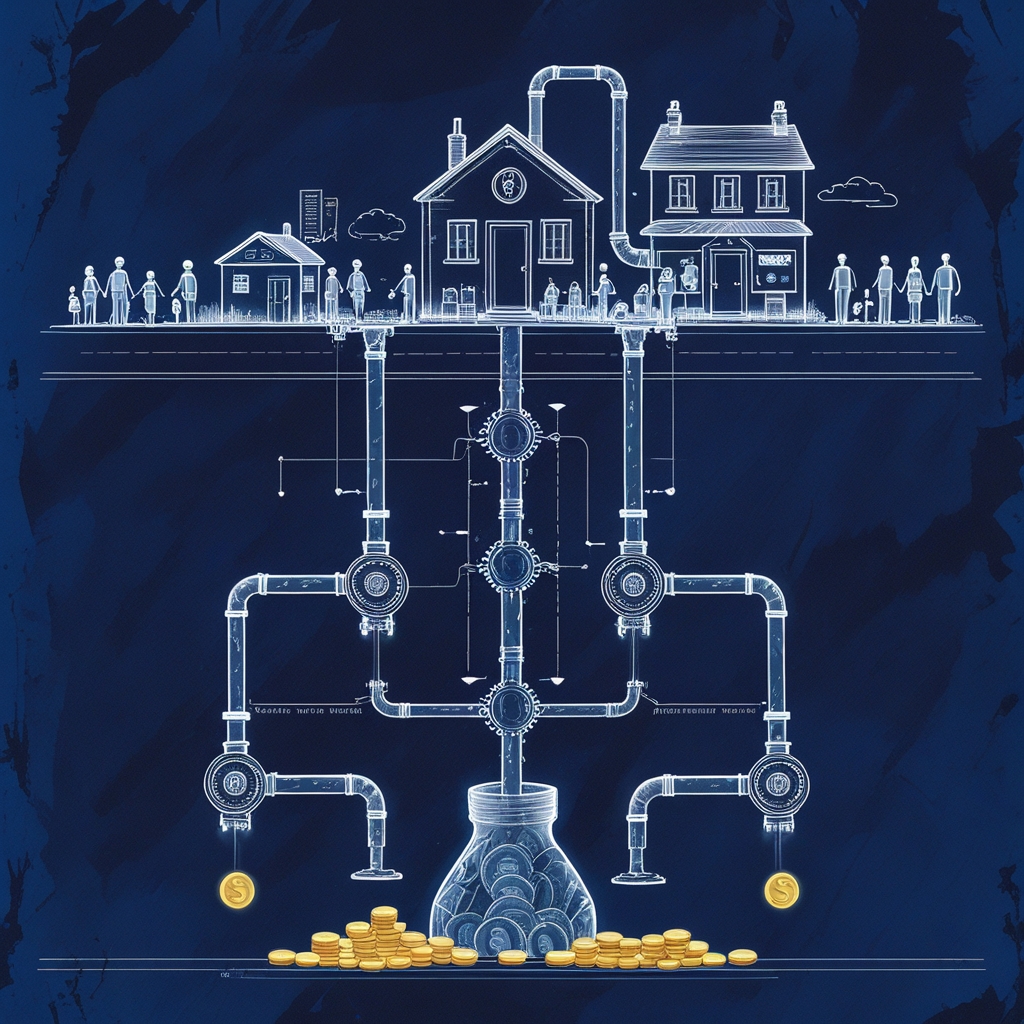
Whether or not this specific landlord intended to act ahead of the law change, the structural reality is straightforward. Section 21 exists. It expires on 1 May. Any landlord who wants to recover possession of a property without providing a legal reason has a closing window in which to do so. The regulation created a deadline, and deadlines concentrate behaviour. This is not unique to housing — any system facing a rule change will see actors within it adjust their behaviour in advance of that change taking effect.
This is what systems analysts call a transitional flaw. The reform is sound in its intention. But the design of the transition — announcing an end date for Section 21 without immediately removing it — created an incentive for landlords to act before the window closed. The policy intended to protect tenants produced, in its final weeks, a mechanism that could be used against them. The harm the reform was designed to prevent has been concentrated into a shorter and more intense period rather than eliminated.
What this reveals about the rental system
The Criterion Capital case is one visible example of a dynamic that is likely playing out across the private rental sector at smaller scales and with less public attention. One local councillor involved in the case noted that he was already aware of similar notices being served across at least three other blocks in Merton and Croydon, and described the full scale as still unknown.
The rental system in England has operated for decades with a significant structural imbalance between landlord and tenant rights. Section 21 was central to that imbalance — it gave landlords an exit mechanism that required no justification and offered tenants no defence. Its abolition is a meaningful structural change. But structural changes do not happen cleanly. The period immediately before a reform takes effect is often when the behaviour the reform targets becomes most visible, because those who benefit from the existing arrangement have both the awareness and the incentive to use it one final time.
The ripple effects
The consequences here do not stay neatly within the rental system. Several of the affected blocks also house people in temporary accommodation funded by local councils. Tenants displaced by Section 21 notices in a city where average rents in south-west London already exceed £1,600 a month face an extremely constrained market. Some will present as homeless to their local authority, adding pressure to already stretched council housing budgets. Others will face significant disruption to employment, children's schooling, and health — costs that eventually flow into other public systems.
This is how a failure in one part of the system generates costs that appear elsewhere, often invisibly and often attributed to other causes entirely.
What to watch next
The government has indicated it is considering what action it can take in the period before 1 May. The Housing Secretary's investigation may produce guidance or emergency measures, though the legal position — that Section 21 notices served before 1 May remain valid — constrains what intervention is possible. After 1 May, Section 21 is gone. The question then becomes whether the replacement grounds for eviction are enforced robustly enough to prevent the same structural imbalance reasserting itself in a different form.
The rental system will have a new set of rules from May. Whether it has a genuinely different power structure is a question that will take considerably longer to answer.
*Source: BBC News, 20 March 2026 — Link to article*