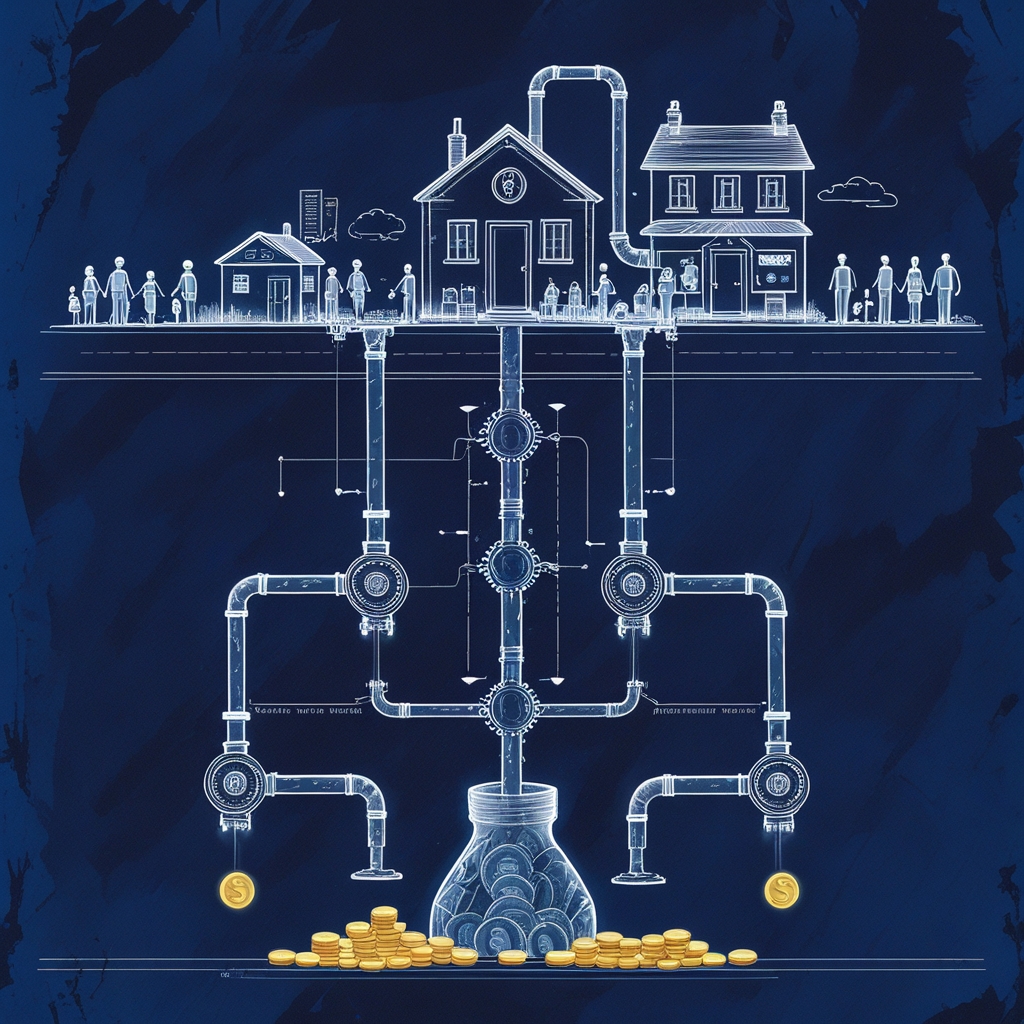
Case Study - Telecom Customer Service
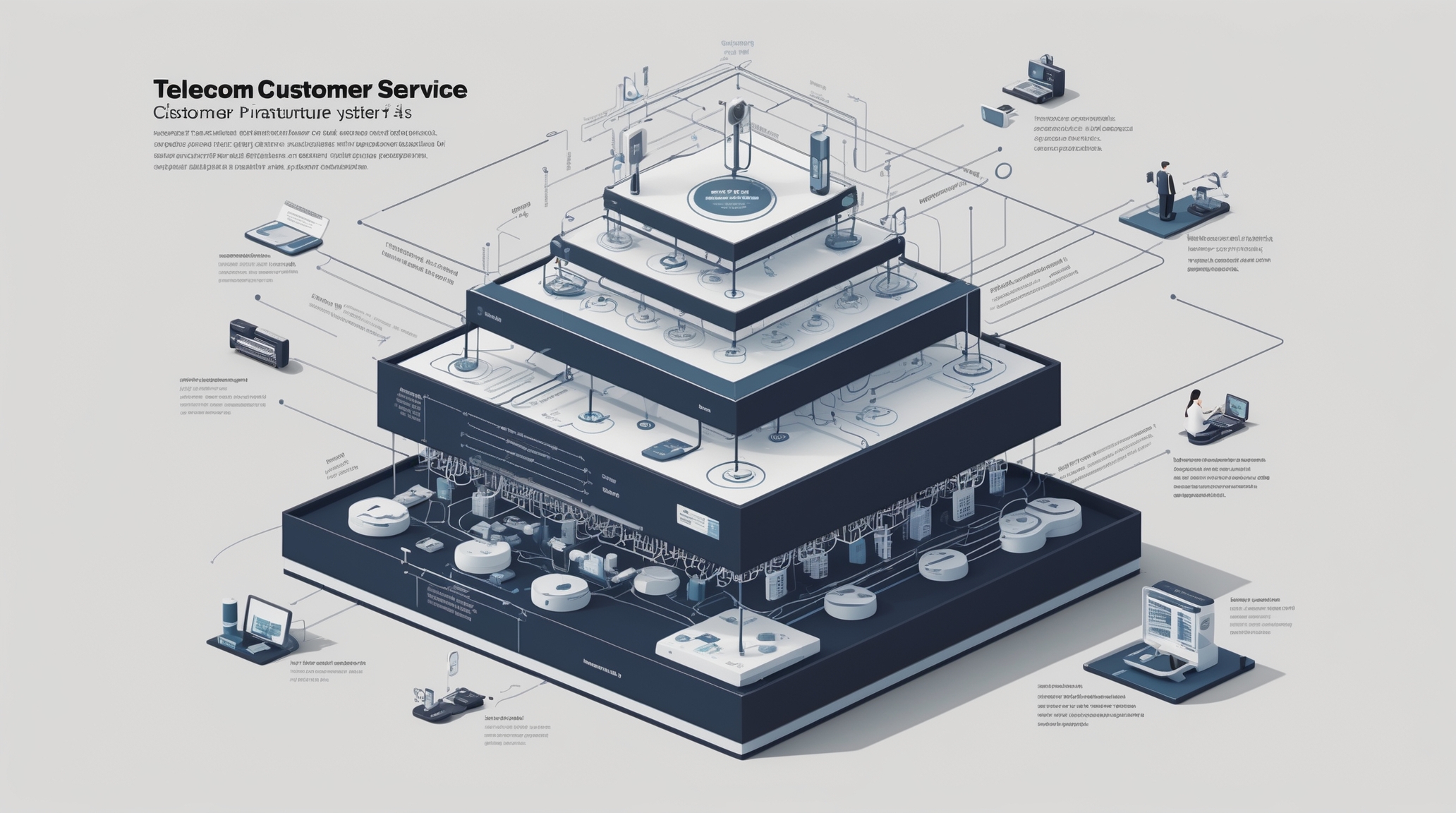
If you have ever tried to get help from a telecom company, you know. The hold times. The transfers. The agents who cannot solve your problem. The promises that are not kept. The bills that are wrong. The service that does not work. And the sinking feeling that no matter what you do, nothing will change. Because the company does not care. And you cannot leave. Because leaving is too hard.
This is not unique to one company. It is not unique to one country. Telecom customer service is universally terrible. Across providers. Across markets. Across continents. And this is not coincidence. It is structure. The telecom industry is built in a way that makes bad customer service rational. Profitable, even. And understanding why reveals everything we have discussed about the customer service system. All of it. In one industry.
Let me show you how telecom customer service works. And why it is the way it is.
The first thing to understand is market structure. In most countries, telecoms operate as oligopolies. A small number of providers control the market. Two. Three. Maybe four. And competition between them is limited. Not because they collude. But because the barriers to entry are enormous. Building a network requires massive capital investment. Laying cables. Installing towers. Securing spectrum licenses. Regulatory approval. It costs billions. And the return takes decades.
So new entrants do not appear. The market stays concentrated. And the existing providers know this. They know you do not have many alternatives. And the alternatives you do have are often just as bad. So switching does not help. You go from one terrible provider to another. And the providers know this too. So they do not compete on service quality. They compete on price. On bundled packages. On promotional offers. But not on service. Because service costs money. And bad service does not cost them enough customers to justify the investment.
This is the foundation. Limited competition. High switching costs. And rational neglect of service quality.
The second thing to understand is the revenue model. Telecoms make money from subscriptions. Monthly fees. Long-term contracts. And the most profitable customers are not the new ones. They are the ones who have been with the company for years. Paying full price. Not complaining. Not negotiating. These are the silent majority. And the company makes far more from them than it costs to serve them.
New customers are expensive. Acquisition costs are high. Promotional pricing is low. And churn, customers leaving within the first year, is common. So the company barely profits from new customers. Sometimes it loses money. The profit comes later. When the promotional period ends. When the price goes up. And the customer, inertia-bound, stays.
This creates a perverse incentive. The company does not need to keep you happy. It needs to keep you. And keeping you does not require good service. It requires friction. Friction that makes leaving harder than staying. Contracts with cancellation fees. Bundled services that are hard to untangle. Processes that require multiple phone calls, equipment returns, account closures. All of it designed to make you think, it is not worth the hassle. I will just stay.
And most people do. Not because they are happy. But because they are tired. And the company profits from that exhaustion.
The third thing to understand is cost structure. Customer service is one of the largest costs for a telecom. Millions of customers. Thousands of inquiries every day. Technical issues. Billing disputes. Service outages. Cancellation requests. All of it requires handling. And handling requires people. People cost money. So the company minimizes that cost. Aggressively.
They outsource. To the cheapest providers. Often offshore. Where wages are a fraction of domestic rates. The outsourcing company hires agents. Pays them poorly. Trains them minimally. And measures them on volume. Calls per hour. Tickets closed per shift. The incentive is speed. Not quality. So the agents rush. Follow scripts. And escalate anything outside the script. Which is almost everything.
The result is a system where the first agent you reach cannot help you. They can take a payment. Reset a password. Maybe. But anything complex, anything requiring judgment, they escalate. To a specialist. Who is also outsourced. Also script-bound. Also measured on speed. And the problem bounces. Between departments. Between agents. Between systems. Until you give up. Or until someone, somewhere, tired of the escalations, just fixes it. To make it go away.
The fourth thing to understand is the retention strategy. Telecoms do not invest in service. But they do invest in retention. Because retention is cheaper than acquisition. So when you call to cancel, the experience changes. You are transferred to the retention team. And the retention team has a budget. Discounts. Free upgrades. Contract extensions with better terms. Things the regular customer service team cannot offer.
This is the bait. The company has been ignoring you for months. Years, even. Overcharging you. Providing mediocre service. But the moment you try to leave, they offer you a deal. A better deal than you had. Sometimes a better deal than new customers get. And they do this because the math works. Offering you a discount costs less than replacing you.
But here is the trap. The discount is temporary. Six months. A year. And when it expires, the price goes back up. And you, having stayed, are now locked in again. With another contract. More friction. And the cycle repeats. The company does not improve the service. They just bribe you to tolerate it. And it works. Because most people take the deal. They stay. And the company profits.
The fifth thing to understand is regulatory failure. Telecoms are regulated. In most countries, there are rules. Standards for service quality. Response times for complaints. Compensation for outages. But enforcement is weak. The regulator is underfunded. Understaffed. And often captured by the industry it regulates. Regulators come from the industry. Return to the industry. And while in the regulatory role, they are lobbied. Heavily. By the very companies they are meant to oversee.
So the rules exist. But they are not enforced. Fines, when they happen, are small. A few million. Against companies making billions. The fine is a cost of doing business. Not a deterrent. And the companies know this. So they ignore the rules. Or comply minimally. Just enough to avoid the worst penalties. But not enough to actually improve.
And customers, most of them, do not know the rules exist. They do not know they can file a complaint with the regulator. They do not know they are entitled to compensation. So they do not claim it. And the company, happy to avoid the cost, does not tell them.
The sixth thing to understand is technical complexity. Telecom services are complex. Networks. Infrastructure. Protocols. When something goes wrong, diagnosing the problem requires expertise. And the frontline agents do not have that expertise. They have scripts. Decision trees. But not understanding. So when you call with a technical issue, they guess. They ask you to restart your router. Check your cables. Standard troubleshooting. And if that does not work, they escalate. To someone who might understand. Or they schedule a technician visit. Which might happen in a week. Or two.
Meanwhile, you have no service. Or degraded service. And no clarity on when it will be fixed. The company does not know. The systems do not talk to each other. The agent cannot see what the network team sees. The network team does not know what the agent promised. And you, caught in the middle, get conflicting information. Promises that are not kept. Timelines that are not met. And no accountability. Because no one person owns the problem. It is distributed. Across teams. Across systems. And accountability, in a distributed system, is diffuse. Which means it is nonexistent.
The seventh thing to understand is billing complexity. Telecom bills are deliberately confusing. Packed with line items. Fees. Charges. Discounts. Bundled services. Promotional pricing that expires. And almost no one understands their bill fully. This is intentional. Because complexity hides overcharges. Errors. Fees that should not be there. And most people do not check. They pay. And the company profits from the confusion.
When you do notice an error and call to dispute it, the process is exhausting. The agent cannot see the full billing history. Or they can see it but cannot explain it. Or they explain it but the explanation contradicts what you were told when you signed up. And resolving it requires escalation. Multiple calls. Emails. Documentation. Most people give up. They pay the incorrect bill. Because fighting it costs more, in time and frustration, than the overcharge.
And the company knows this. They know that most billing errors go unchallenged. So the errors persist. Sometimes they are genuine mistakes. Sometimes they are features. Either way, they generate revenue. And correcting them costs money. So the incentive is to make correction hard. And it is.
The eighth thing to understand is the contract lock-in. Telecoms sell contracts. Twelve months. Twenty-four months. Sometimes longer. And breaking the contract costs you. Early termination fees. Equipment charges. All designed to keep you locked in. Even when the service is terrible. Even when the company has not delivered what was promised.
The contract is one-sided. If you break it, you pay. But if the company fails to deliver, your recourse is limited. You can complain. File with the regulator. But getting out of the contract? Hard. Expensive. And most people, facing the termination fee, stay. They tolerate the bad service. Because paying to leave feels worse than staying and suffering.
And the company designs it this way. The lock-in is not about commitment. It is about friction. Making exit costly enough that you do not do it. And it works. Churn is lower in contract-based markets than in prepaid markets. Not because customers are happier. But because they are trapped.
So here is what telecom customer service looks like. An oligopoly with limited competition. A revenue model that profits from inertia. A cost structure that prioritizes cheapness over quality. A retention strategy that bribes you to stay rather than fixing the service. A regulator that does not enforce. Technical complexity that frontline agents cannot handle. Billing complexity that hides overcharges. And contract lock-ins that trap you.
Every element we have discussed is present here. Cost minimization. Outsourcing. Scripting. Metric distortion. Switching costs. Regulatory capture. Complexity. Friction. All of it. And the result is an industry where customer service is universally, systematically terrible.
But here is the important part. Despite all of this, customers have occasionally won. Not by fixing the system. But by exploiting its weaknesses. Public complaints that went viral forced telecoms to respond. Regulatory complaints, when filed in volume, triggered investigations. Class actions, in some countries, resulted in compensation. Collective campaigns forced policy changes. And customers who knew the rules, who cited the regulations, who persisted, got better outcomes than those who did not.
The system is terrible. But it is not invincible. It has pressure points. And pressure, applied correctly, works. Not always. Not for everyone. But enough. Enough to matter. Enough to show that leverage exists. Even in the worst customer service environment imaginable.
Telecoms will not fix their customer service voluntarily. The incentives do not support it. The structure does not allow it. But they will respond to pressure. Public pressure. Regulatory pressure. Legal pressure. Collective pressure. And individual pressure, when applied at the right point, in the right way, by someone who understands how the machine works.
This is the lesson. The system is designed to work against you. But it is not absolute. It has weaknesses. And understanding those weaknesses is how you navigate it. Not by hoping for better service. But by knowing where to push. When to push. And how hard.
Because the machine will not change. But your position within it can. And that is the only control you have.