The Incentives - Who Benefits From Bad Service
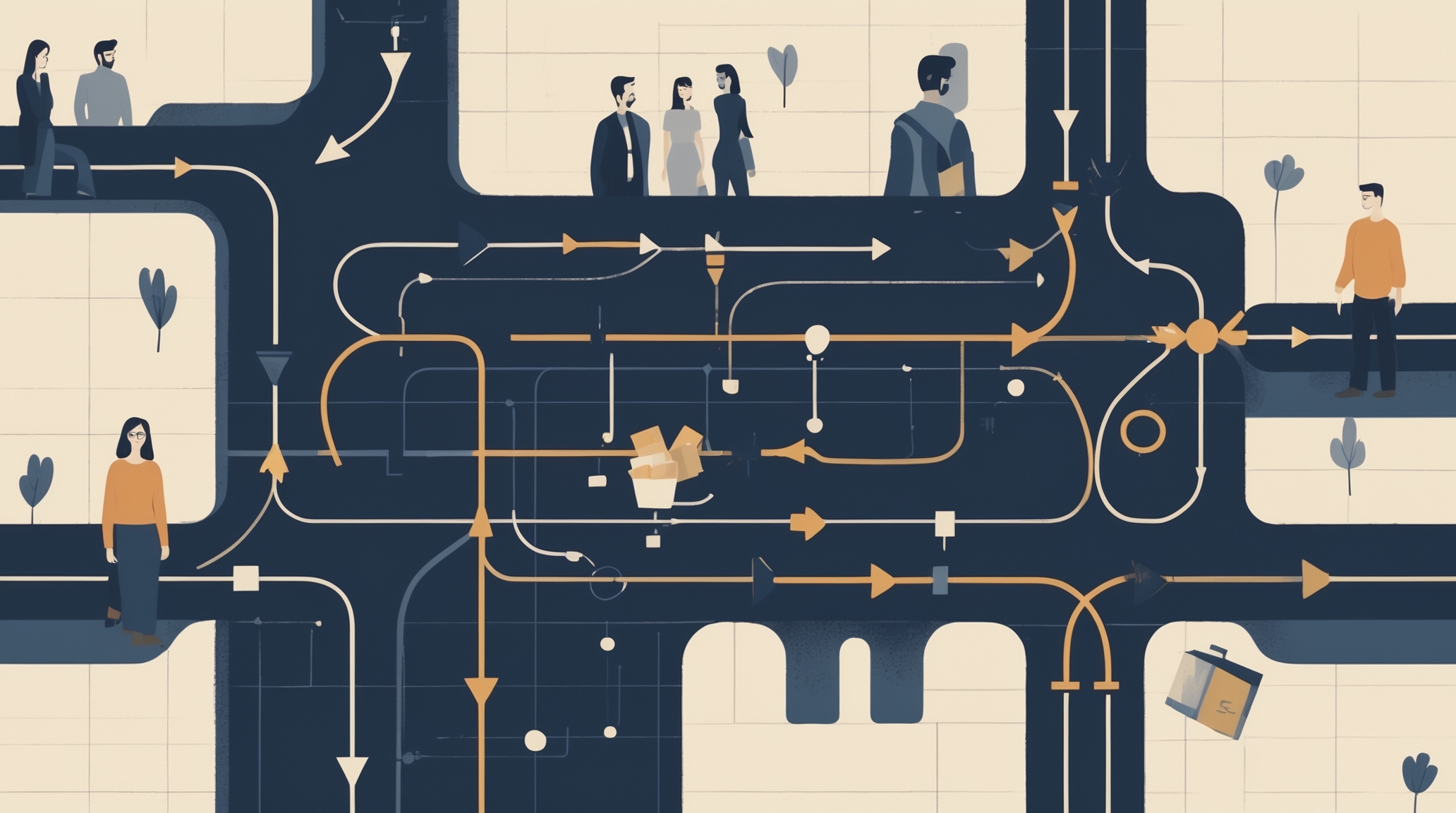
Bad customer service is not an accident. It is not the result of incompetence or indifference. It is the result of incentives. Incentives that reward cost reduction over problem resolution. Incentives that prioritize company profit over customer satisfaction. Incentives that make bad service rational. Profitable, even. And until you understand those incentives, you will keep thinking the system is broken. When in fact, the system is working exactly as the people who profit from it designed it to work.
Let me show you who benefits from bad customer service.
The first beneficiary is the company itself. Specifically, the finance department. Because customer service is a cost center. It does not generate revenue. It spends money. And companies, rationally, want to minimize costs. So the goal is not to provide excellent service. The goal is to provide the minimum acceptable service at the lowest possible cost. And minimum acceptable is not defined by what customers want. It is defined by what customers will tolerate before they leave.
This creates a very specific optimization target. Spend just enough on customer service to keep churn within acceptable limits. Not zero churn. Acceptable churn. Because some customers leaving is fine. As long as the cost of retaining them exceeds the cost of replacing them. If it costs fifty pounds to provide good service and thirty pounds to acquire a new customer, the rational choice is to let the customer leave. Provide bad service. Save twenty pounds. And replace them.
This is why customer service quality is so often terrible in industries with low switching costs. Retail. Hospitality. Food delivery. If customers can easily go elsewhere, companies compete on service. But in industries with high switching costs, utilities, telecoms, banking, airlines, the calculation is different. Customers cannot easily leave. Switching is expensive. Inconvenient. Time-consuming. So the company can provide worse service. Because the cost of leaving exceeds the cost of tolerating bad service. And the company saves money.
The second beneficiary is the outsourcing company. The third-party provider hired to handle customer service on behalf of the brand. These companies are paid based on volume. Calls handled. Tickets closed. Interactions processed. Not based on outcomes. Not based on customer satisfaction. Based on throughput. So they optimize for speed. Handle as many interactions as possible. As quickly as possible. Because that is how they maximize revenue.
The outsourcing company has no incentive to solve your problem well. They have an incentive to close your case quickly. If solving the problem takes ten minutes and closing the case without solving it takes three, they close it. Because closing three cases in ten minutes generates more revenue than closing one. The brand might care about quality. But the outsourcing company does not. They care about volume. And volume is what they get paid for.
This is why outsourced customer service is almost always worse than in-house customer service. Not because the agents are less capable. But because the incentive structure is different. An in-house agent works for the brand. They have some stake in the brand's reputation. An outsourced agent works for a company that has no stake in the brand. Just a contract. And the contract rewards speed. Not quality.
The third beneficiary is the senior management of the brand. Because bad customer service, when it does not cause unacceptable churn, looks good in the numbers. Lower costs. Higher margins. Better quarterly results. And senior management is evaluated on quarterly results. Not on long-term customer satisfaction. So cutting customer service budgets improves the metrics that determine bonuses. Promotions. Stock options. The executive who slashes customer service spending and increases profit margin gets rewarded. Even if the long-term cost is customer loyalty. Because the long-term cost shows up years later. After the executive has moved on.
This is short-termism. And it is baked into how companies are managed. Executives are incentivized to maximize short-term performance. Even at the expense of long-term health. And customer service is an easy target. Because the damage is slow. Diffuse. Hard to measure. Customers do not leave immediately. They tolerate bad service for months. Years, even. By the time the churn becomes a problem, the executive who cut the budget is gone. And someone else is left dealing with the consequences.
The fourth beneficiary is the retention team. Not customer service. Retention. These are different departments. With different incentives. Customer service is tasked with handling complaints cheaply. Retention is tasked with preventing cancellations. And retention has a budget. A budget to offer discounts. Waive fees. Provide perks. Because retaining a customer is cheaper than acquiring a new one. So when you call to cancel, you get transferred to retention. And suddenly, the experience changes. The agent is empowered. They can make decisions. Offer deals. Solve problems. Not because the company suddenly cares. But because you have crossed a threshold. You are about to leave. And now, preventing that is worth spending money on.
This is why customer service treats you badly until you threaten to leave. Because the incentive structure changes. Before you threaten to leave, you are a cost to be minimized. After you threaten to leave, you are a customer to be retained. And retention is worth investing in. So the company that would not help you yesterday offers you a discount today. Not because they value you. But because losing you is now more expensive than keeping you.
The fifth beneficiary is the software vendor. The company that sells the customer service platform. The CRM system. The ticket management software. The chatbot. These vendors profit from complexity. Because complex systems require expensive licenses. Ongoing support. Integration services. Training. The more features the system has, the more it costs. And the more it costs, the more the vendor makes.
But complexity does not help customers. It helps the company manage interactions at scale. Track metrics. Automate deflection. And the vendor is not selling to customers. They are selling to the company. So they optimize for what the company wants. Cost reduction. Efficiency. Metrics. Not for what customers want. Fast resolution. Helpful agents. Simple processes. The vendor profits when the company buys more software. Not when customers are happy.
The sixth beneficiary, perversely, is the bad customer. The person who complains loudly. Publicly. Aggressively. Because companies respond to public complaints. A private email gets ignored. A private phone call gets a scripted response. But a public tweet? A Facebook post? A review that gets traction? That gets attention. Because public complaints are visible. They damage the brand. So companies monitor social media. And they respond quickly to public complaints. Not because they care more about those customers. But because those complaints have a cost. Reputation damage. So they get prioritized.
This creates a perverse incentive. The customer who follows the proper channels, who is patient, who does not make a scene, gets ignored. The customer who complains publicly, who escalates, who threatens, gets helped. The system rewards bad behavior. And it punishes patience. Not intentionally. But structurally. Because the system responds to pressure. And public pressure is more costly to ignore than private frustration.
The seventh beneficiary is the competitor. When your customer service is bad, your competitor benefits. Because frustrated customers leave. And they go somewhere else. In competitive markets, this creates pressure. If your service is worse than the competition, you lose customers. So you improve. But in markets with limited competition, monopolies, oligopolies, regional dominance, there is nowhere else to go. So bad service does not cost you customers. It just frustrates them. And frustration without alternatives is powerless.
This is why customer service is worst in industries with limited competition. Telecoms. Utilities. Cable providers. Airlines on certain routes. If you only have one or two options, the companies know you are trapped. So they do not invest in service. Because they do not have to. You will tolerate it. Because you have no choice. And the savings from providing bad service go straight to profit. Which benefits shareholders. Executives. But not you.
The eighth beneficiary is the system itself. Because bad customer service creates a barrier. A barrier to complaints. A barrier to refunds. A barrier to cancellations. And barriers reduce costs. If getting a refund requires three phone calls, two emails, and an hour on hold, some people give up. Not because their claim is not valid. But because the effort exceeds the value. The company keeps the money. The customer, exhausted, moves on. The barrier worked.
This is friction by design. And it is everywhere. Complicated return processes. Hidden cancellation policies. Deliberately confusing terms and conditions. All of it designed to make exercising your rights just difficult enough that a percentage of people do not. And that percentage is profit. Profit extracted not by providing value. But by making it hard to get your money back.
Now think about what this means. The company benefits from low costs. The outsourcing company benefits from high volume. Executives benefit from short-term metrics. Retention teams benefit from having a budget to spend on people about to leave. Software vendors benefit from selling complex systems. Bad customers benefit from getting prioritized. Competitors benefit when you leave. And the system benefits from friction that prevents you from getting what you are owed.
Notice who is not on that list. You. The customer. You do not benefit. You pay for the service. You tolerate the frustration. You absorb the cost. The cost of your time. Your effort. Your patience. And the system extracts value from you at every step. Through bad service that you tolerate because leaving is harder. Through barriers that you give up on because fighting is exhausting. Through retention offers that you accept because they are better than nothing. Even though they are worse than what you should have had in the first place.
This is not conspiracy. This is structure. The system is designed to minimize cost. And minimizing cost means minimizing the resources spent on helping you. It means making you work harder to get help. It means deflecting you to self-service. Delaying resolution through tickets. Wearing you down through hold times. And offering you just enough, just late enough, to keep you from leaving. But not enough to make you happy.
And here is the uncomfortable part. The system works. For the people it is designed to serve. It keeps costs low. It maintains profit margins. It hits quarterly targets. And it does all of this while providing service that is, technically, functional. You can get help. Eventually. If you try hard enough. The system is not refusing to serve you. It is just making it hard enough that many people do not bother. And that is the point.
So who benefits from bad customer service? Everyone except the customer. The company saves money. The outsourcing company maximizes revenue. Executives hit their numbers. Retention teams justify their budgets. Software vendors sell licenses. Bad customers get prioritized. Competitors gain customers. And the system extracts value through friction. All of it rational. All of it profitable. All of it designed to work exactly this way.
The next article will show you the feedback loops that keep this system stable. Why, even when companies know service is bad, they do not fix it. Why complaints do not lead to improvement. Why satisfaction scores do not drive change. And why the system, once built, resists every attempt to make it better. Because the loops that stabilize bad service are stronger than the loops that would improve it. And understanding those loops is the key to understanding why customer service stays broken. Even when everyone agrees it should not be.