The Machine - How Customer Service Actually Operates
You have a problem. Your internet is not working. Your bill is wrong. A product you ordered never arrived. So you contact customer service. And what happens next feels frustrating. Random. Personal. As if the agent you reach just does not care. Or the company does not value you. Or the system is broken.
But it is not random. It is not personal. And the system is not broken. The system is working exactly as it was designed to work. And it was designed not to help you quickly. It was designed to help you eventually. Maybe. If you persist long enough. And if helping you costs less than the alternative.
This is customer service. And it is not what most people think it is. It is not a department dedicated to solving problems. It is a cost center tasked with managing complaints at the lowest possible expense. Every decision, every process, every metric, is shaped by that goal. Minimize cost. And the result is a machine that looks like it is built to help but is actually built to deflect, delay, and deter.
Let me show you how the machine actually works.
The first thing to understand is that customer service exists in layers. And the layers are designed as filters. The first layer is self-service. The website. The FAQ. The chatbot. The automated phone system. The company wants you to solve your problem here. Without ever reaching a human. Because humans are expensive. A chatbot costs almost nothing to run. An FAQ page costs nothing. But an agent on a phone costs money. Salary. Benefits. Training. Overhead. So the first goal is to make sure you never get to an agent.
This is why finding a phone number is hard. It is buried. Hidden behind help articles and knowledge bases and chatbots that loop you back to the same useless answers. The design is intentional. The harder it is to find the number, the fewer people call. And every call that does not happen is a cost avoided. Some people give up. Some people solve the problem themselves. Either way, the company does not pay.
Now, assume you find the number. You call. And you encounter the IVR. The interactive voice response system. Press one for billing. Press two for technical support. Press three for account changes. This is the second filter. And it has two jobs. Route you to the right department. And deflect you entirely.
The routing part is straightforward. Different issues go to different teams. The deflection part is more subtle. Embedded in the menu are options that do not require an agent. Check your balance. Make a payment. Update your address. And the system is designed to nudge you toward those options. To make them sound more relevant than they are. Because if you press one of those numbers, the system handles it. No agent needed. Cost avoided.
The menu is also deliberately complex. Multiple layers. Vague options. No clear path to a human. Because complexity is friction. And friction reduces demand. If navigating the menu requires patience and persistence, some people will hang up. Not because their problem is not real. But because the effort exceeds the perceived benefit. The system tests your resolve. And many people fail that test. Which, from the company's perspective, is exactly the point.
Now assume you navigate the menu. You reach the option that should connect you to an agent. And you are put on hold. The hold is not an accident. It is not because the company does not have enough agents. It is because the company has exactly the number of agents it wants. Which is the number that balances cost against acceptable customer frustration.
Here is how that calculation works. The company knows how long people will wait before they hang up. Five minutes. Ten. Fifteen. It varies by industry and by issue. But there is a number. And the company staffs just below that threshold. Not to zero hold time. To tolerable hold time. Tolerable is defined as the point where enough people stay on the line to avoid a PR problem but not so many that the company has to hire more agents. The hold time is deliberate. It is a feature. Not a bug.
And during the hold, the system talks to you. Your call is important to us. Please continue to hold. An agent will be with you shortly. This is not reassurance. This is management. Keeping you on the line just long enough that you do not hang up. But not so engaged that you expect immediate service. The message is designed to sound like progress while delivering none.
Eventually, someone answers. An agent. And now you are in the third layer. The agent is not there to solve your problem. The agent is there to handle your problem. And handling is different from solving. Solving means the problem goes away. Handling means the interaction ends. And the system optimizes for the latter.
The agent is working from a script. A decision tree. If the customer says this, you say that. If the problem is this, you do that. The script is designed to handle the most common issues quickly. And it works. For common issues. But your issue is not common. Or it does not fit neatly into the categories the script covers. So the agent escalates. Or creates a ticket. Or transfers you. Not because they do not want to help. But because the system has not given them the tools or the authority to do anything else.
Agents are measured on metrics. Average handle time. First call resolution. Customer satisfaction. And these metrics shape behavior. If an agent spends too long on a call, their handle time goes up. Their manager notices. They are told to speed up. So they rush. They cut corners. They close calls even when the problem is not fully resolved. Because the metric that matters is not whether you are happy. It is whether the call is closed.
First call resolution sounds good. It means solving the problem on the first interaction. But it is measured by whether the call is closed. Not by whether the problem is solved. So agents mark calls as resolved even when they are not. Because closure is what the system rewards. And what gets rewarded gets done. Even if it means lying. Not out of malice. But out of survival. Because the agent's job depends on hitting the numbers. And the numbers do not measure what you care about.
Customer satisfaction is measured too. Through surveys. After the call, you get a message. Rate your experience. One to five. And the company uses those scores to evaluate agents. But here is the problem. The survey measures satisfaction with the agent. Not with the outcome. You can have a polite, friendly, helpful agent who still cannot solve your problem because the system does not allow it. And you can give them a high score because they tried. Or you can give them a low score because you are frustrated. Either way, the score does not tell the company what is actually wrong. It just tells them whether the agent performed well within a broken system.
Now, the agent you speak to might be employed by the company. But more likely, they are not. They work for an outsourcing company. A third party. Hired to handle customer service on behalf of the brand. And the outsourcing company is paid based on volume. Calls handled. Tickets closed. Not outcomes. So the outsourcing company optimizes for throughput. Handle as many interactions as possible. As quickly as possible. Because that is how they make money.
The agents working for the outsourcing company are paid less than if they worked directly for the brand. They receive less training. They have less access to systems and information. And they have no loyalty to the brand. Why would they? They are not employed by it. They are employed by a company whose business model is to provide cheap labor. So they do the minimum required. Follow the script. Close the call. Move to the next one. And the quality suffers. But the cost is low. And for the company outsourcing the service, that is the trade-off. Lower quality. Lower cost. And as long as the quality does not drop so low that customers leave in large numbers, the trade-off is worth it.
Now assume the agent cannot help you. They escalate. They create a ticket. The ticket goes into a queue. And the queue is managed by a system. A ticket management system. Designed to prioritize, route, and track issues. In theory, this ensures that nothing gets lost. In practice, it ensures that nothing gets resolved quickly.
Here is how it works. The ticket is assigned a priority. Based on rules. Automated rules. If the issue is critical, it gets high priority. If it is minor, it gets low priority. And priority determines where it sits in the queue. High-priority tickets get looked at first. Low-priority tickets sit. Sometimes for days. Sometimes for weeks. And if you do not follow up, your ticket might never get looked at. Because the system does not care. It just processes. In order. Based on rules that were written to optimize efficiency. Not outcomes.
The ticket is also routed. To a team. Or to a specialist. And routing introduces delay. Because the ticket has to wait for someone in that team to pick it up. And if the team is backlogged, which it usually is, the ticket waits. The system sends you updates. Your ticket has been received. Your ticket is being reviewed. These updates are automated. They do not mean anyone has actually looked at your ticket. They just mean the system is logging time.
And here is the other problem. The person who eventually looks at your ticket is not the person you spoke to. They do not know you. They have not heard your frustration. They are just looking at a description. Written by the agent. Who may or may not have captured the issue accurately. And based on that description, the specialist decides what to do. Sometimes they solve it. Sometimes they ask for more information. Sometimes they close the ticket because they think it is resolved. Even when it is not.
If you are unhappy, you can escalate. Ask for a supervisor. And sometimes, that works. Because supervisors have more authority. They can override rules. Waive fees. Approve exceptions. But asking for a supervisor also marks you. As difficult. As high-maintenance. And the system does not like that. So the supervisor might help you. This time. But your account gets flagged. And the next time you call, the system remembers. And you get less flexibility. Not more.
Now layer on self-service portals. The company wants you to use the website. Or the app. To check your account. Update your details. Troubleshoot problems. Submit requests. All without talking to anyone. Because every interaction you handle yourself is an interaction the company does not have to staff for. So the portal is designed to look helpful. Comprehensive. But it is also designed to be just difficult enough that some people give up. Not so difficult that everyone complains. Just difficult enough that a percentage stop trying. And that percentage is savings.
The portal also funnels you. Away from expensive options. Toward cheap ones. Want to cancel? The website does not have a cancel button. You have to call. Why? Because calling gives the company a chance to retain you. To offer you a discount. To talk you out of leaving. And retention, when it works, is cheaper than acquiring a new customer. So the system makes cancellation hard. Deliberately. Because difficulty reduces churn. Not by making you happy. But by making you tired.
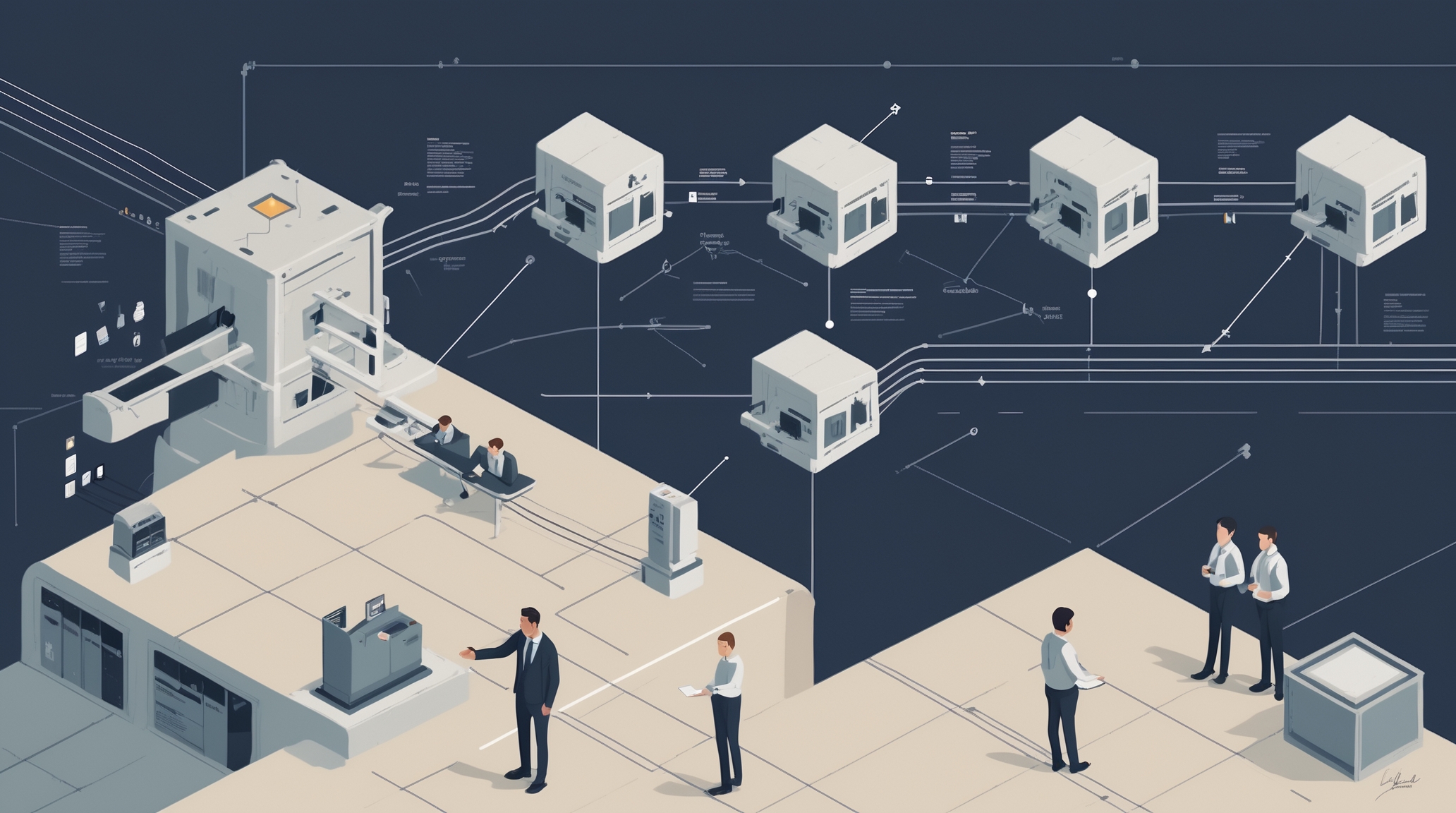
So here is what customer service looks like. A layered system designed to filter. Self-service to deflect. IVR to route and deter. Hold times to test patience. Agents scripted and measured on metrics that do not align with solving problems. Outsourcing to reduce cost at the expense of quality. Ticket systems that delay resolution. And portals that funnel you toward options the company prefers. Every piece optimized not for your satisfaction. But for the company's cost structure.
This is the machine. And it is not designed to help you. It is designed to manage you. To process your complaint at the lowest possible cost. To close your case as quickly as possible. And to make sure that the experience, while frustrating, is not quite frustrating enough to make you leave. Because leaving costs the company more than tolerating bad service costs you.
The next article will show you who benefits from this system. Because someone does. It is not you. It is not the agents. But someone is profiting. And understanding who, and how, is the key to understanding why customer service is the way it is. Because the system is not broken. It is working exactly as intended. Just not for you.