The Question - Why Does Housing Benefit Pay In Arrears (Article 3)
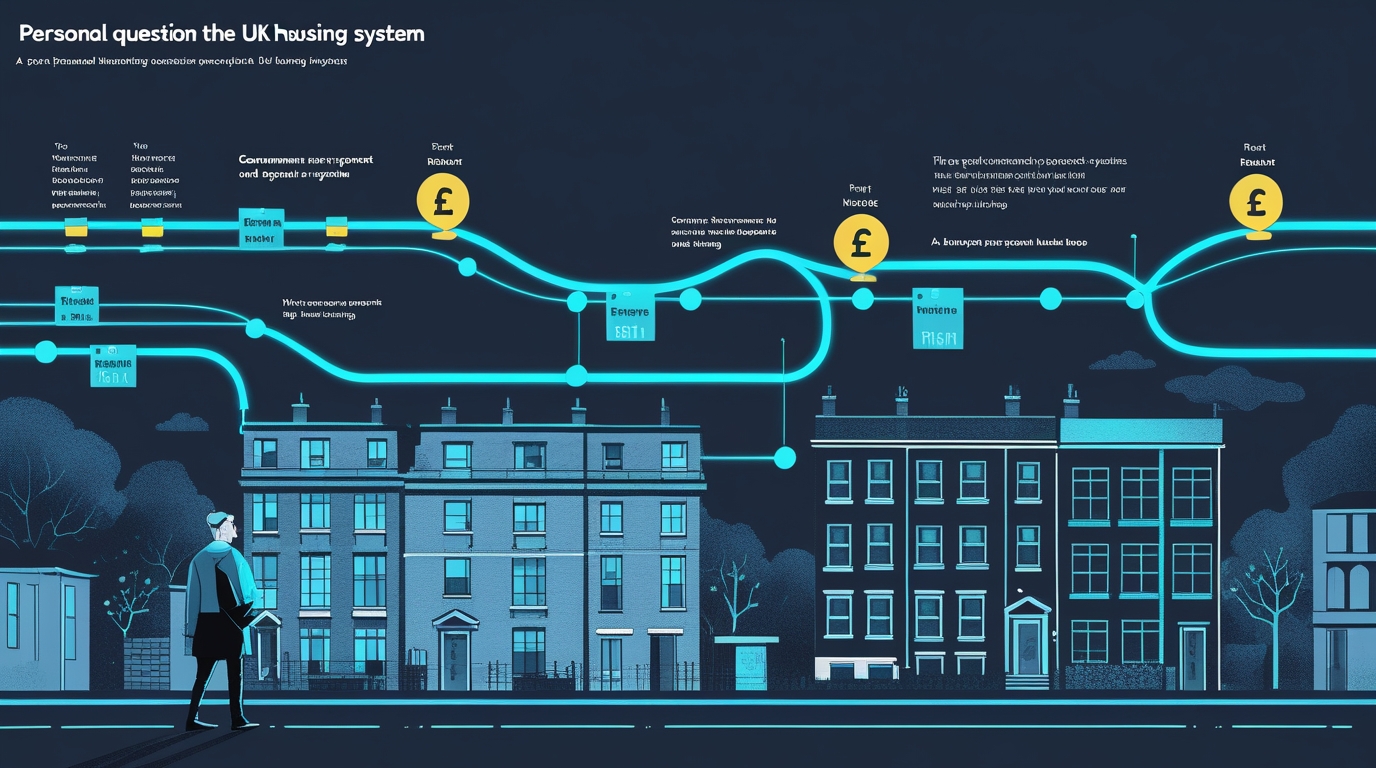
You have just made a Universal Credit claim. You need somewhere to live. You find a property, you apply, and you lose out to another applicant. Nobody tells you why. Nothing illegal has happened. And yet the system has already decided the outcome before anyone looked at your application properly.
To understand why, you need to understand one design decision buried inside Universal Credit — and what it does when it meets the private rental market.
Why Universal Credit pays in arrears
Universal Credit is paid monthly, in arrears. You claim, you wait five weeks for your first payment, and then you receive a monthly payment after each period has passed. The official reason given when the system was designed was that this mirrors the experience of employment. Workers are paid after they have worked. The government's stated intention was to reduce the psychological distance between being on benefits and being in work, making the transition feel more familiar.
The logic sounds reasonable until you examine what it ignores. Employers can pay in arrears because they have capital, cash flow, and credit facilities that allow them to operate for a month before payroll runs. An individual claimant has none of those things. They cannot ask their landlord to wait in arrears because that mirrors an employment philosophy. The landlord wants the money before you move in — a deposit, and the first month's rent, paid upfront.
The design assumed claimants would have savings or other resources to bridge the gap. A Universal Credit claim is most commonly triggered by losing a job, a relationship breakdown, a sudden health crisis, or losing a home. These are not situations in which people typically have savings. The assumption was wrong almost by definition, and the people designing the system were told so repeatedly during its passage through Parliament.
The fiscal mechanism behind the philosophy
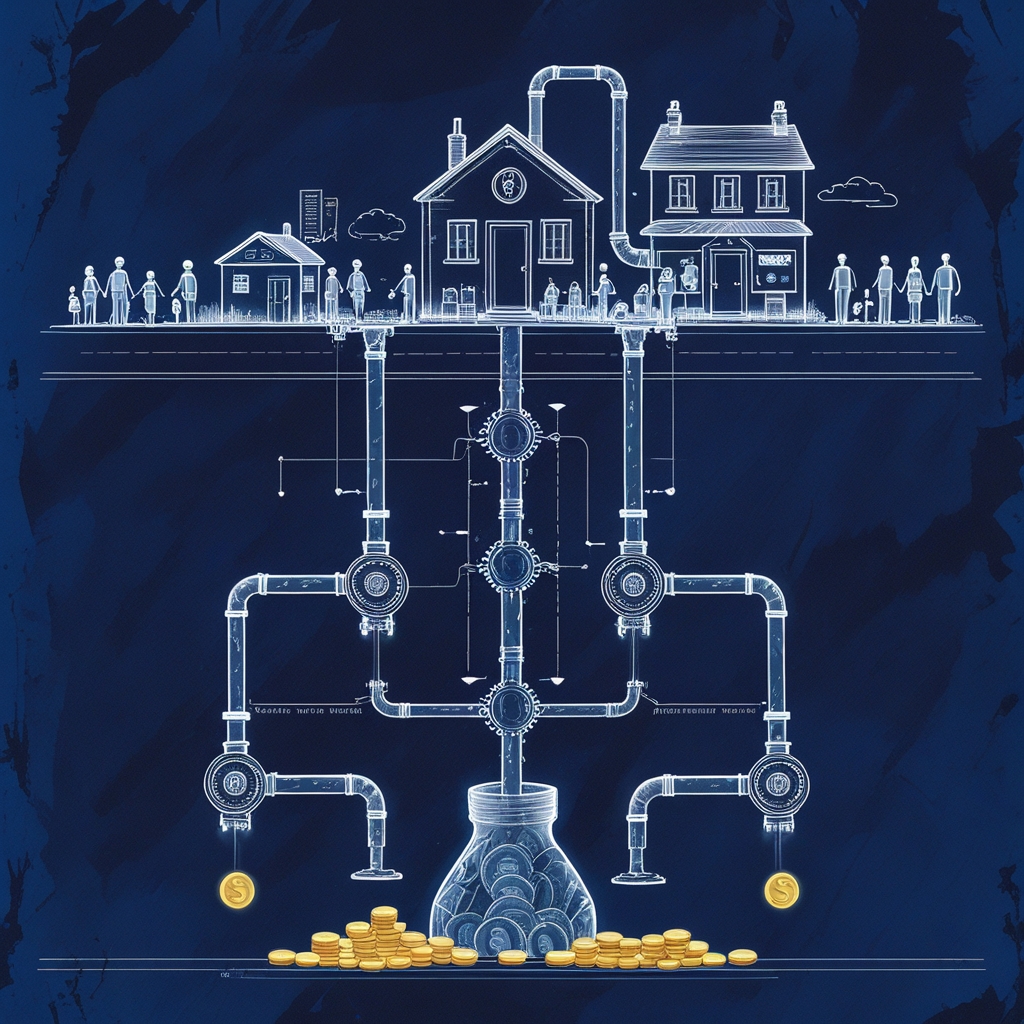
Here is the part that rarely gets reported. The five week wait was not simply an administrative choice dressed in behavioural philosophy. It was also a fiscal mechanism. If a million people claim Universal Credit in a given month and none of them receive a payment for five weeks, the Treasury has deferred five weeks of payments across a million claims. That is a significant sum that does not appear in that month's benefit expenditure.
The saving is real and it appears in one column of the public accounts. The costs it generates — rent arrears, lost tenancies, homelessness presentations to councils, temporary accommodation, food bank usage, mental health deterioration — appear in completely different columns, attributed to different budgets, on different days, in different departments. Nobody adds them up and compares them to the original saving. The delay looks efficient from inside the Universal Credit budget. The full cost is invisible because it is distributed across the rest of the public sector.
What a landlord actually sees
When a landlord or letting agent reviews a stack of applications, they are not reviewing people. They are reviewing payment patterns and risk profiles.
A salaried applicant presents bank statements showing a regular employer payment arriving on the same date every month. The income is predictable, verifiable, and arrives in a form that has supported tenancies for decades.
A Universal Credit claimant presents statements showing a benefit payment arriving in arrears, sometimes split between housing costs paid to the tenant and other elements, with the knowledge that if circumstances change — a new job, a change in household composition, a reassessment — the payment can be delayed, reduced, or interrupted while the claim is reviewed.
The landlord does not need to state a preference. They do not need to discriminate in any way that the law can see or challenge. They simply select the applicant they consider the lowest risk. The choice is made before the viewing, before the reference check, before any human judgement is exercised. The system has already ranked the applications by the time anyone reads them.
The protection that the mechanism defeats
Parliament passed legal protection making it unlawful to refuse a tenancy solely on the grounds that an applicant receives Universal Credit or housing benefit. That protection is real. It exists in law and it matters.
The same government that passed that protection also designed the payment system that makes it functionally useless in a competitive rental market. One hand wrote the equality protection. The other hand engineered a payment structure that ensures a Universal Credit claimant will almost always lose a competitive application to a salaried applicant on comparable income — not because of stated discrimination but because of how the money arrives.
Two policies. One government. An outcome that neither policy officially intended but that the combined structure makes almost inevitable. That is not an accusation. It is a description of how systems produce consequences that no single part of the system is responsible for.
What you can actually do
Understanding the structure does not make it disappear. But it does point to where the practical levers are.
The five week wait has a partial workaround that most claimants are not told about automatically. You can request an Advance Payment on the day you make your Universal Credit claim — this is an upfront loan against your future payments that can cover immediate costs including a deposit. You will repay it through deductions from subsequent Universal Credit payments, but it bridges the gap that the five week wait creates. Ask for it explicitly on day one. Do not wait to be told it exists.
In Scotland the system works differently. The Scottish Government has used its devolved powers to introduce a system where new claimants can receive an initial payment within days rather than weeks. The five week wait is not an immovable law of nature. It is a policy choice, and a different choice has already been made and tested elsewhere in the United Kingdom.
The full picture
This is the third piece in a series that started with a landlord losing a property and followed the chain to where it ends up. A Bank of England interest rate decision. A buy-to-let mortgage that stopped working. A Section 21 notice. A rental market with shrinking supply. A payment system with a five week structural hole. A legal protection that the mechanism defeats before it can operate.
At every stage the system produced a predictable outcome. At every stage that outcome was invisible to the person experiencing it because each step looked like a separate problem with a different name.
Now you can see it as one chain. That is where understanding begins — and where the ability to navigate it, challenge it, and demand something different starts.
*Source: Gov.uk Universal Credit advance payment — https://www.gov.uk/universal-credit/advance-payment
*Source: Shelter England housing benefit rights — https://england.shelter.org.uk/housing_advice/benefits/local_housing_allowance