Case Study - Sure Start and What We Lost
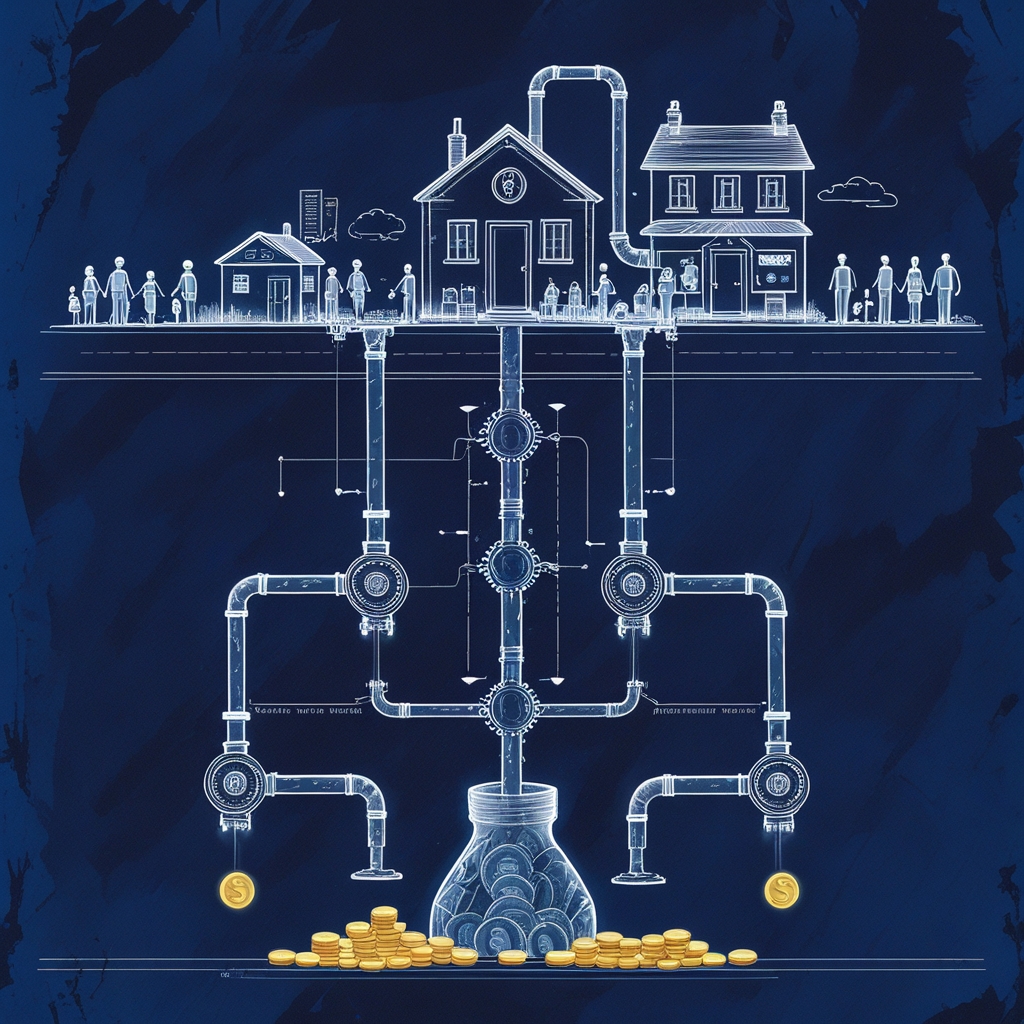
In 1999, the UK government launched Sure Start. It was ambitious, comprehensive, and based on evidence from early intervention programs that worked. The idea was simple but transformative: provide integrated support for families with young children in the areas that needed it most. Not just childcare, but health services, parenting support, employment advice, and community hubs where parents could meet, learn, and access help. All in one place, free at the point of use, and designed to give every child the best possible start in life regardless of their family's income.
Sure Start centers opened across the country, particularly in deprived areas where families faced multiple barriers to opportunity. By 2010, there were over three thousand centers serving hundreds of thousands of families. They provided childcare, they ran parenting classes, they offered health checks and speech therapy, they helped parents find work, and they created communities. Parents loved them, research showed they worked, and children who accessed Sure Start had better outcomes in health, in education, and in development.
And then, in 2010, the government changed. Austerity began. And Sure Start was cut. Heavily. Funding was slashed, centers were closed, and services were reduced. By 2020, over a thousand centers had closed, and many that remained were shadows of what they had been, offering limited services to fewer families. The integrated model was dismantled, and what replaced it was fragmented, underfunded, and inadequate.
This is not just history, it is a case study in how political decisions shape systems, how effective programs can be destroyed despite evidence, and how the consequences of those decisions are borne by the people least able to afford them. Understanding what happened to Sure Start is essential for understanding the current childcare crisis and for arguing that a better system is possible because it existed, it worked, and it was taken away.
Let me show you what happened to Sure Start and what we lost.
Sure Start was created by the Labour government in response to evidence that early intervention works. Research from the United States, from programs like Head Start and Perry Preschool, showed that investing in early childhood, particularly for disadvantaged children, produced long-term benefits. Children who received high-quality early education and support were more likely to succeed in school, less likely to be involved in crime, more likely to be employed, and more likely to be healthy. The returns, economic and social, far exceeded the costs.
So the UK government designed Sure Start to provide comprehensive support in the early years. The centers were located in deprived areas, the bottom twenty or thirty percent by deprivation, where families faced the greatest challenges. They offered childcare, often full-time or part-time depending on need, and the childcare was integrated with other services so that parents accessing childcare also had access to health visitors, to family support workers, to employment advisors, and to parenting programs.
The model was holistic rather than transactional. It recognized that families do not need just one thing, they need multiple things, and that providing them together in a trusted community space is more effective than expecting families to navigate fragmented services across different locations. A parent could drop their child at the Sure Start nursery, attend a parenting class, see a health visitor about concerns, and talk to an employment advisor about returning to work, all in one visit, all in one place.
And the centers were designed to be non-stigmatizing. They were open to all families in the area, not just those identified as needing help, which meant that middle-class and working-class families used them side by side, which reduced stigma and built community. Parents met other parents, formed friendships, supported each other, and the centers became hubs of social connection as well as service provision.
Research on Sure Start showed positive effects. Children who attended Sure Start centers had better language development, better social and emotional development, and better physical health than children in similar areas without access. Parents reported feeling more supported, more confident, and more connected to their communities. And the centers reduced pressure on other services, because early intervention prevented problems from becoming crises that required expensive reactive support from social services, from the NHS, or from the criminal justice system.
But Sure Start was expensive. Each center cost around one million pounds per year to run, and with over three thousand centers, the total cost was around three billion pounds annually. This was significant spending, and it was concentrated in deprived areas, which meant it was highly visible and politically contentious.
And then, in 2010, the financial crisis and the election brought austerity. The new Coalition government, Conservative and Liberal Democrat, committed to reducing the deficit by cutting public spending. And early years services, including Sure Start, were targeted. The government argued that the country could not afford the level of spending that Labour had committed to, that the deficit was unsustainable, and that cuts were necessary to restore fiscal stability.
Sure Start funding was not cut entirely, but it was reduced significantly and the way it was allocated changed. Instead of ring-fenced funding specifically for Sure Start centers, the money was given to local councils as part of a general early years grant, and councils were allowed to decide how to spend it. This sounds reasonable, like giving local areas more flexibility, but in practice it meant that Sure Start competed with other priorities for limited resources.
And councils, facing massive cuts to their overall budgets, made difficult choices. Some maintained Sure Start services, but many reduced them or closed centers entirely. The integrated model was dismantled because councils, needing to save money, stripped back services to the bare minimum, often keeping just childcare while cutting health visitors, family support, and community programs. The holistic approach that made Sure Start effective was lost, and what remained was often just basic childcare provision.
By 2020, over one thousand Sure Start centers had closed. In some areas, entire networks of centers disappeared, leaving communities with no early years support at all. And the closures were concentrated in the most deprived areas, the areas that had benefited most from Sure Start, because those areas were also the areas where councils faced the deepest budget cuts and had the fewest alternative resources.
The consequences were predictable and they were severe. Parents who had relied on Sure Start for childcare, for support, for community, lost access. Some stopped working because they could no longer afford private childcare or because they had no family support and nowhere to turn. Children lost access to early education and to health services that had been provided through the centers. And communities lost hubs that had provided not just services but social connection and mutual support.
And the closures had long-term effects that are still being felt. Children who would have attended Sure Start but could not because centers closed started school less prepared, with weaker language skills, with less social and emotional development, and with unmet health needs. Teachers reported that children were arriving in reception classes less ready to learn than they had been before the cuts, and schools, already under pressure, had to provide additional support that could have been delivered more effectively and more cheaply in the early years.
Parents, particularly mothers, faced barriers to work that had not existed when Sure Start was available. Without affordable childcare and without the integrated support that helped them find work, develop skills, and manage family life, many stayed at home or worked part-time in low-paid jobs. The gender pay gap, which Sure Start had helped to reduce by enabling mothers to work, widened again. And family poverty, which Sure Start had helped to reduce through employment support and early intervention, increased.
And the savings, the money supposedly saved by cutting Sure Start, were illusory. Because early intervention is cheaper than late intervention, and cutting early years services does not eliminate need, it just shifts costs to later in life and to more expensive services. Children who miss out on early support are more likely to need special educational support, more likely to have health problems, more likely to be involved with social services, and more likely to struggle in adolescence and adulthood. The costs are deferred, not eliminated, and they are higher because late intervention is always more expensive than early prevention.
But these costs are not visible immediately, and they fall on different budgets, so cutting Sure Start looked like a saving in the short term even though it created greater costs in the long term. The Treasury saved three billion per year, but schools, the NHS, social services, and the criminal justice system all paid more later. The decision was fiscally illiterate, but it was politically convenient because it reduced spending in the present and deferred the consequences to the future.
Now let us talk about what Sure Start reveals about the childcare system and about politics more broadly.
First, it reveals that effective models exist and have existed. Sure Start worked, the evidence showed it, families valued it, and it delivered outcomes. So the argument that nothing can be done, that childcare is too complex or too expensive or that public provision does not work, is false. It has worked, in the UK, in living memory, and it could work again if there were political will to fund it.
Second, it reveals that political decisions shape systems and that those decisions are driven by ideology and by short-term fiscal priorities rather than by evidence or by long-term outcomes. Sure Start was cut not because it failed but because austerity prioritized deficit reduction over early intervention, and because the people who suffered from the cuts, young children and parents in deprived areas, had no political power to resist.
Third, it reveals that cuts to early years services are false economies. The money saved in the short term is spent many times over in the long term on services that could have been avoided through early intervention. But short-term savings are politically attractive even when they are economically irrational, and politicians operating on electoral cycles make decisions that benefit them in the present even when they harm the country in the future.
Fourth, it reveals class and geographical inequalities in how cuts are distributed. Sure Start centers were concentrated in deprived areas, and closures were also concentrated in deprived areas, which means that the children and families who needed support most lost it first. Wealthier areas, where families could afford private childcare and private services, were less affected, and the gap between rich and poor areas widened.
And fifth, it reveals that once systems are dismantled, rebuilding them is very difficult. Sure Start centers were closed, buildings were sold, staff were made redundant, and expertise was lost. Recreating the integrated model would require not just funding but rebuilding infrastructure, recruiting and training staff, and re-establishing trust in communities that have been let down. The damage is not easily undone, and the longer it persists, the harder it becomes to reverse.
So here is what we lost when Sure Start was dismantled. We lost a model of early years support that worked, that was based on evidence, and that delivered outcomes for children, for parents, and for communities. We lost integrated services that recognized that families need comprehensive support, not fragmented interventions. We lost community hubs that provided not just services but social connection and mutual support. We lost accessible childcare that enabled parents, particularly mothers, to work. And we lost early intervention that prevented problems from becoming crises and that saved money in the long term.
And what replaced it was a fragmented, underfunded, privatized system that charges parents unaffordable fees, pays staff poverty wages, excludes families who cannot afford it, and fails to provide the comprehensive support that children and families need. The current childcare crisis is not an accident, it is the result of political decisions made over more than a decade to cut funding, to close centers, to marketize provision, and to shift costs from the state to individuals.
Sure Start could be rebuilt. The model exists, the evidence supports it, and the need is greater than ever. But rebuilding it requires political will, requires funding, and requires a recognition that early years investment is not a luxury or a nice-to-have but an economic and social necessity. Most governments do not have that will, so the ruins of Sure Start remain ruins, and families struggle without the support they need and deserve.
And that is the lesson of Sure Start: that good systems can be built, that they can work, and that they can be destroyed by political choices that prioritize ideology and short-term savings over evidence and long-term outcomes. And that understanding what was lost is essential for fighting to rebuild it.