The Feedback Loops - Why Costs Keep Rising
Childcare costs do not just stay high. They rise. Every year. Faster than wages. Faster than inflation. And parents, already struggling, struggle more. They cut spending elsewhere. Go into debt. Reduce hours. Or stop working entirely. Because the cost of childcare exceeds what they can earn. Or what they can afford. And the gap widens. Every year.
This is not random. This is not market forces operating neutrally. This is feedback loops. Loops that turn high costs into higher costs. That turn staff shortages into worse shortages. That turn supply constraints into tighter constraints. And once these loops are in motion, they reinforce themselves. They amplify. And they ensure that childcare, despite being essential, despite being in demand, becomes more expensive. Not less. Year after year.
Let me show you the feedback loops that keep UK childcare costs rising.
The first loop is the wage-fee spiral. Nurseries pay staff minimum wage. Or barely above. And staff, earning so little, cannot afford to stay. They leave. For other jobs. Retail. Hospitality. Care work. Anything that pays the same but is less stressful. Less regulated. Less demanding. And nurseries, losing staff, face shortages.
And here is the feedback. Staff shortages create pressure. On remaining staff. Who work harder. Cover more children. Take on more responsibility. And burn out. And leave. Which creates more shortages. And more pressure. And the cycle accelerates.
And nurseries, desperate for staff, offer slightly higher wages. Twelve pounds per hour instead of eleven. Thirteen instead of twelve. Not much. But enough to attract some workers. And those higher wages increase costs. Wage costs. Which are the largest cost for nurseries. And higher costs mean higher fees. Because nurseries, operating on thin margins, pass costs on. To parents.
So fees rise. And parents, paying higher fees, need higher wages. To afford childcare. So they demand raises. Or switch jobs. For better pay. And wages, in aggregate, rise. Slightly. But childcare costs rise faster. Because wage increases in the economy feed into nursery wage costs. Which feed into fees. Which require higher parent wages. And the spiral continues.
The second loop is the quality-cost loop. Parents want quality. Good Ofsted ratings. Well-trained staff. Low staff-to-child ratios. Safe, stimulating environments. And quality costs money. Training costs. Better-paid staff cost. Smaller ratios cost. Resources cost. And nurseries, wanting to attract parents, invest in quality.
And here is the feedback. Investing in quality increases costs. Which increases fees. And higher fees exclude some parents. Who cannot afford them. So demand shifts. Toward parents who can afford higher fees. Wealthier parents. And wealthier parents demand even higher quality. Private music lessons. Language classes. Organic food. Forest schools. And nurseries, responding, invest more. In premium quality.
And premium quality costs even more. Which raises fees even higher. Which excludes more parents. And concentrates demand among the wealthy. Who can afford it. And who demand more. And the loop spirals. Quality improves. For those who can afford it. And costs rise. Excluding those who cannot.
The third loop is the supply shortage loop. There is not enough childcare. Not enough nursery places. Waiting lists are long. Months. Years. And parents, desperate, register early. Before birth. Before they even know if they will need care. Just to secure a place.
And here is the feedback. Scarcity gives nurseries power. They do not need to compete on price. Because demand exceeds supply. So they charge what they want. And parents, needing a place, pay. They have no alternative. No choice. So prices rise. Because scarcity allows it.
And high prices attract new entrants. Investors. Private equity. Corporate chains. Who see childcare as profitable. So they open nurseries. Build capacity. And supply increases. Slightly. But not enough. Because opening a nursery is expensive. Capital-intensive. Risky. So new entrants are cautious. They open in affluent areas. Where parents can pay. Not in deprived areas. Where need is greatest but ability to pay is lowest.
So supply increases. But only in areas that are already served. Already have options. And deprived areas, underserved, stay underserved. And parents in those areas, unable to access childcare, cannot work. Cannot afford private nurseries. And the gap, between areas with supply and areas without, widens. And the loop continues. Scarcity persists. Prices stay high. And supply grows only where it is already adequate.
The fourth loop is the free hours underfunding loop. The government offers free hours. Fifteen hours for all three- and four-year-olds. Thirty hours for working parents. And this is supposed to increase access. Make childcare affordable. But the funding, the amount the government pays nurseries per hour, is inadequate. Four pounds per hour. Five. When nurseries charge six. Seven. Eight.
So nurseries, providing free hours, lose money. On every free-hours child. And here is the feedback. Losing money on free hours, nurseries limit free-hours places. They prioritize paying customers. Families who pay full fees. And free-hours children, harder to place, face longer waiting lists. Reduced access.
And parents, unable to access free hours, pay full fees. Which increases nursery revenue. From paying customers. And reduces reliance on underfunded free hours. So nurseries, rationally, minimize free-hours provision. Maximize paying customers. And the free hours policy, underfunded, fails to increase access. Fails to reduce costs. And parents, promised free hours, cannot access them. And pay full price.
And the government, seeing low take-up of free hours, concludes that demand is low. That parents do not need more hours. And maintains low funding. And the loop continues. Underfunding limits access. Limited access reduces take-up. Low take-up justifies continued underfunding.
The fifth loop is the staff turnover loop. Nursery staff are poorly paid. Eleven pounds per hour. Twelve. And poorly paid staff leave. Constantly. For better-paying jobs. Or for jobs that are less stressful. And turnover is high. Very high. Forty percent per year. Fifty percent. In some nurseries.
And here is the feedback. High turnover increases costs. Recruitment costs. Training costs. Lost productivity as new staff learn. And those costs are significant. And nurseries, facing those costs, respond. Not by raising wages. That would be expensive. Permanent. But by accepting turnover. As inevitable. And hiring cheaper staff. Less experienced. Less qualified. Who will also leave. Soon.
So the nursery operates with constant churn. New staff. Untrained staff. Who leave before they become skilled. Before they become expensive. And this churn reduces quality. Because continuity matters. For children. For parents. But churn is tolerated. Because it keeps wages low. And low wages, despite the turnover costs, are cheaper than high wages. So the loop continues. Poor pay. High turnover. Constant churn. Declining quality.
The sixth loop is the one-parent-stops-working loop. Childcare costs fifteen thousand pounds per year. Eighteen thousand. And many parents, particularly mothers, earn twenty thousand. Twenty-five thousand. After tax, that is sixteen thousand. Eighteen thousand. And childcare costs consume it. All of it. Or most of it.
So the financial calculation is simple. Working costs more than it earns. Or earns barely more. So one parent stops working. Usually the mother. Because mothers, on average, earn less than fathers. So the rational decision, financially, is for the mother to stop. And stay home. And provide care. Unpaid.
And here is the feedback. One parent stopping work reduces household income. Which increases financial pressure. Which makes childcare even less affordable. Which makes returning to work even harder. Because now, returning to work requires paying childcare. From reduced income. And the gap, between childcare cost and earnings, is even wider.
And the parent, having stopped working, loses skills. Loses experience. Loses career progression. And re-entering the workforce, years later, means lower wages. Lower-level jobs. Which makes childcare even less affordable. And the loop reinforces. Expensive childcare pushes mothers out of work. Leaving work reduces income and career prospects. Which makes childcare more unaffordable. Which keeps mothers at home.
The seventh loop is the grandparent dependency loop. Parents, unable to afford childcare, rely on grandparents. For free care. Or low-cost care. And grandparents, wanting to help, provide it. They retire early. Or delay retirement. Or work part-time. To care for grandchildren.
And here is the feedback. Relying on grandparents reduces demand for formal childcare. Which reduces nursery revenue. Which reduces investment in new places. Which keeps supply constrained. Which keeps prices high. Which makes parents rely more on grandparents. And the loop continues.
And grandparents, providing care, age. Become unable to continue. Through illness. Through exhaustion. Through their own care needs. And when grandparents can no longer help, parents, who relied on them for years, have no alternative. No nursery place. No backup. And they stop working. Or scramble. Desperately. For expensive, last-minute childcare. And the system, having depended on unpaid grandparent labor, fails them.
The eighth loop is the middle-class affordability loop. Middle-class parents can afford childcare. Just. It is painful. It consumes a large portion of income. But it is possible. And they pay. And by paying, they maintain dual incomes. Maintain careers. Maintain living standards.
And here is the feedback. Middle-class parents paying high fees validate those fees. Prove that the market will bear them. And nurseries, seeing that parents pay, do not reduce prices. They maintain them. Or raise them. Because the market supports it.
And middle-class parents, having paid, having maintained careers, advance. Earn more. Over time. And can afford higher fees. So they accept fee increases. Reluctantly. But they accept. And their ability to pay signals to nurseries that fees can rise. And they do. And the loop continues. High fees are paid. Which validates high fees. Which allows further increases. Which are also paid.
And the working class, unable to afford even initial fees, are excluded. Entirely. One parent stays home. The family falls behind. Economically. Socially. And the gap, between middle-class families with dual incomes and working-class families with one, widens. And childcare, expensive childcare, maintains that gap. Reinforces it. And ensures that class mobility, through work, through career, is blocked. By unaffordable childcare.
The ninth loop is the regulatory compliance loop. Ofsted inspects nurseries. Sets standards. Requires ratios. Requires training. Requires documentation. And nurseries comply. Because they must. Because failing an inspection means closure. Or a poor rating. Which means fewer parents. Less revenue.
And here is the feedback. Compliance costs money. Training. Paperwork. Resources. And those costs increase fees. And higher fees reduce accessibility. Which reduces the number of children in nurseries. Which reduces revenue per nursery. Which makes compliance, as a proportion of revenue, more expensive. Which increases fees further. And the loop continues.
And regulatory requirements increase. Over time. Not because of malice. But because each scandal, each failure, each tragic incident, prompts new rules. New requirements. To prevent recurrence. And those requirements, well-intentioned, add cost. And cost is passed on. To parents. Who pay more. For safety. For quality. But also for bureaucracy. For box-ticking. For covering the nursery against liability.
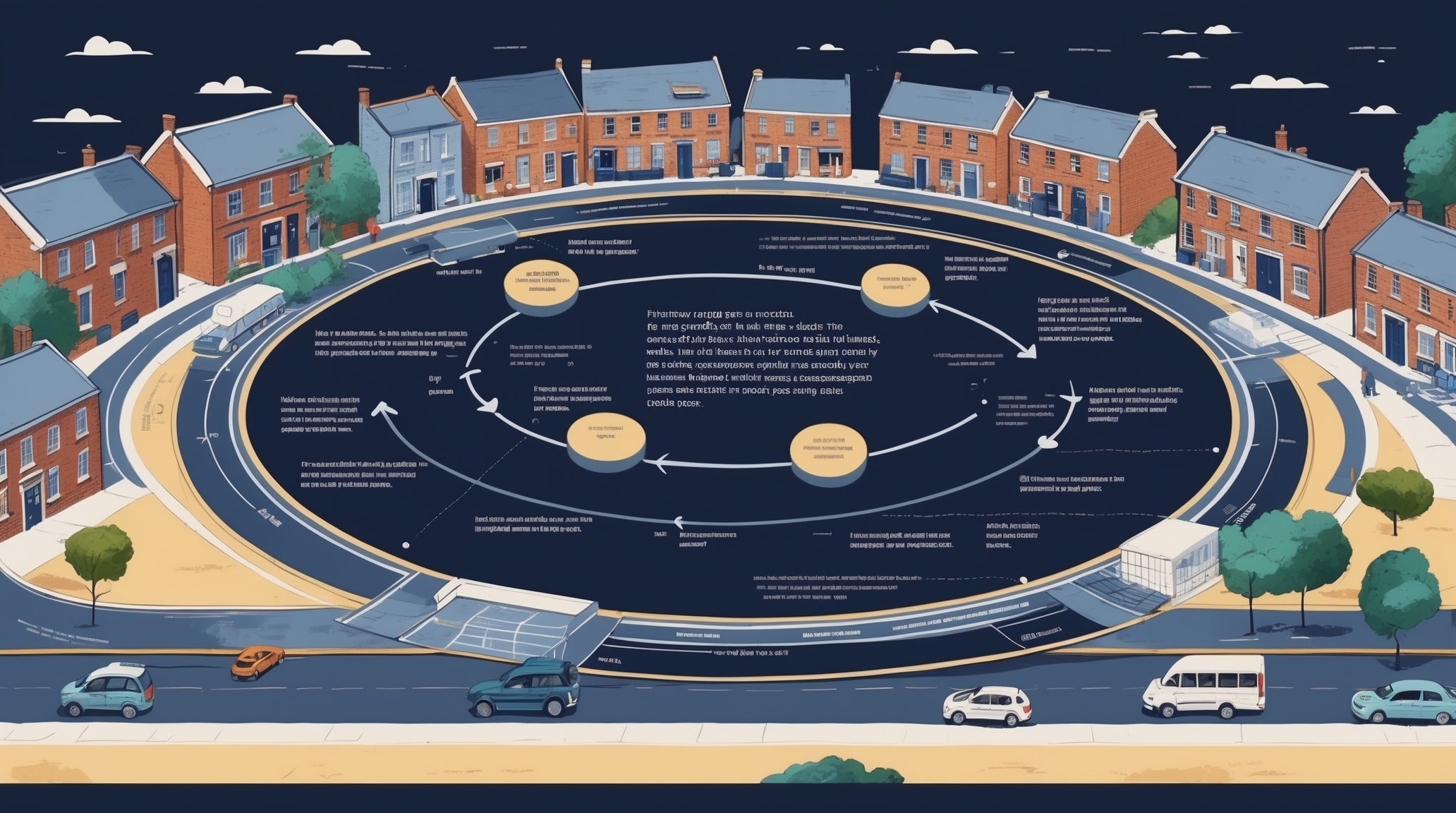
So here are the loops. Low wages drive turnover which increases costs which raises fees. Quality investments raise costs which raise fees which attract wealthier parents who demand more quality. Scarcity allows high prices which attract some new supply but only in affluent areas. Underfunded free hours limit access which reduces take-up which justifies continued underfunding. High turnover creates churn which reduces quality which is tolerated to keep wages low. Expensive childcare pushes mothers out of work which reduces income which makes childcare more unaffordable. Grandparent dependency reduces formal demand which constrains supply which maintains high prices. Middle-class affordability validates high fees which allows further increases. And regulatory compliance increases costs which raises fees which makes nurseries less viable which requires more regulation.
These loops interact. Reinforce each other. And together, they ensure that childcare costs rise. Relentlessly. Structurally. Not because nurseries are greedy. Though some are. But because the system is designed to extract. From parents. To pay landlords. To pay investors. To comply with regulation. And to maintain class divisions. Between those who can afford childcare and those who cannot. Between those who work and those who stay home. Between middle class and working class.
The next article will show you why the childcare system resists reform. Why, despite costs being unaffordable, despite parents being desperate, the structure does not change. Because the forces protecting expensive childcare are stronger than the forces demanding affordable childcare. And those forces are political. Economic. And ideological.