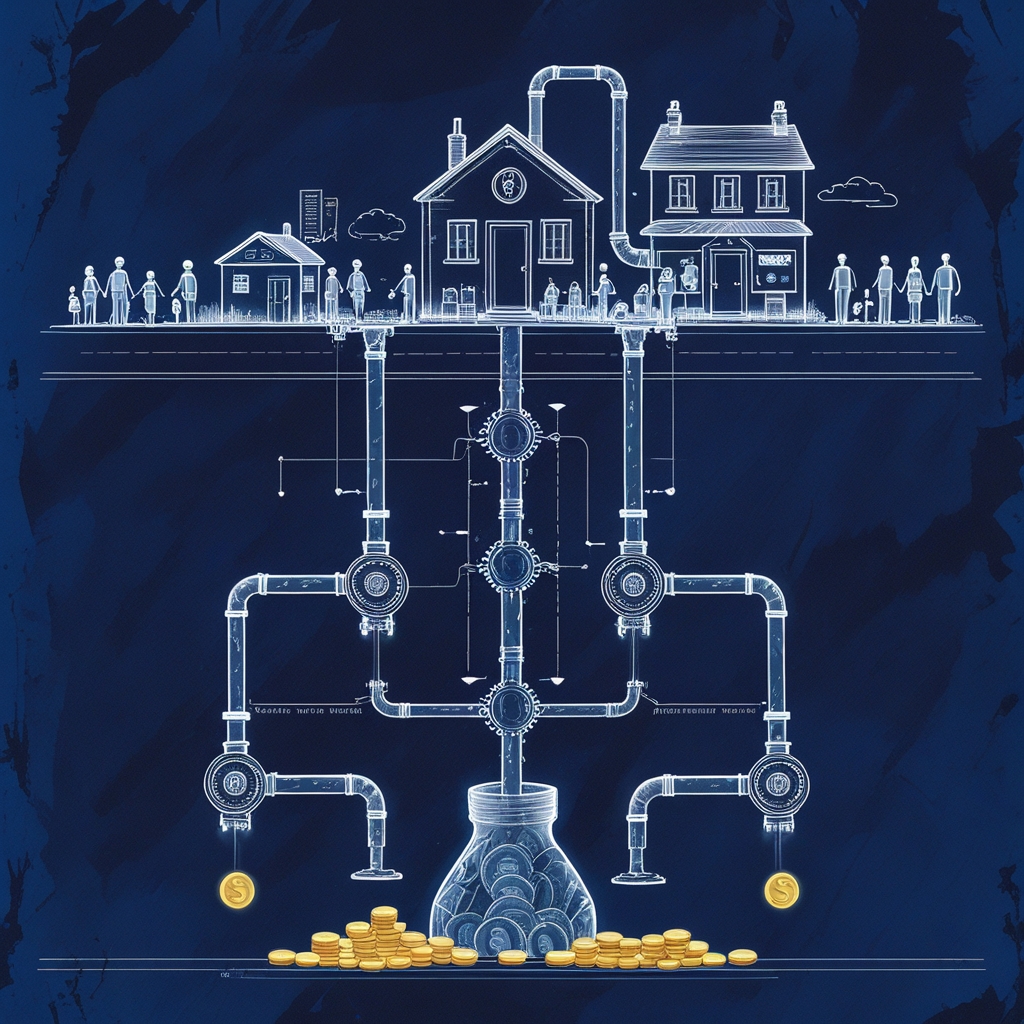
Where Policy Actually Has Leverage
The UK childcare system is resistant to reform, but it is not immovable. There are points where policy could shift outcomes, where intervention could reduce costs, increase access, or improve quality. Not easily, and not without political cost, but it is possible. The challenge is not that solutions do not exist, because they do. The challenge is that implementing them requires overcoming resistance from providers, from the Treasury, from ideological opposition, and from political inertia.
But leverage points exist, and understanding where they are and how to use them is essential for anyone who wants to see childcare become more affordable and more accessible. Some interventions are weak, delivering marginal improvements without changing the structure. Others are strong, reshaping the system fundamentally and creating lasting change. And the difference between wasting political capital and achieving meaningful reform is knowing which is which.
Let me show you where UK policy actually has leverage over childcare.
The first point of leverage is adequately funding the free hours. The government offers fifteen hours of free childcare for all three- and four-year-olds and thirty hours for working parents, but the funding rate paid to nurseries is inadequate. Nurseries receive four or five pounds per hour when they charge six, seven, or eight pounds, which means they lose money on every free-hours child. This creates perverse incentives where nurseries limit free-hours places, prioritize paying customers, and charge extras to parents who are supposed to be receiving free care.
Increasing the funding rate to match the actual cost of provision would help immediately and significantly. If nurseries received seven pounds per hour instead of four, they would not lose money on free-hours children, they would accept more of them, and parents would genuinely access free care without hidden charges for meals, nappies, or late pick-ups. This would reduce costs for families, increase access, and remove the distortion where free hours are anything but free.
The political obstacle is cost, because adequately funding free hours would require billions in additional spending. But the investment would pay returns through increased maternal employment, higher tax revenues, and reduced long-term costs from educational inequality. The economic case is strong, and the intervention is straightforward, which makes it one of the most accessible leverage points.
The second point of leverage is building state-run nurseries. The UK used to have extensive public childcare provision through Sure Start centers, which provided early years education, childcare, and family support in integrated community hubs. These were highly effective, particularly in deprived areas, but most were closed during austerity, and provision shifted almost entirely to the private sector. Rebuilding a network of state-run nurseries would provide an alternative to private provision, put downward pressure on private fees, and ensure access in areas where the market does not provide.
State nurseries could employ staff directly on better wages, which would improve quality and reduce turnover. They could operate on a cost-recovery basis rather than for profit, which would reduce fees. And they could prioritize access for low-income families, for whom private childcare is completely unaffordable. This is not a radical idea, it is how many European countries organize childcare, and it works.
The political obstacle is ideology and upfront cost. Building state nurseries requires capital investment in buildings and ongoing revenue funding for staff, which the Treasury resists. And it challenges the market orthodoxy that private provision is always better than public provision. But the evidence from countries with strong public childcare systems shows that they deliver better outcomes, better access, and lower costs than market-based systems, and the UK could learn from that.
The third point of leverage is raising staff wages and linking them to fees. Nursery staff earn minimum wage or barely above, which drives high turnover, reduces quality, and creates instability for children. Raising wages to fifteen pounds per hour or more would attract and retain better staff, reduce turnover, and improve outcomes. But nurseries cannot afford to raise wages without raising fees, which are already unaffordable, so wage increases must be funded either through higher government subsidies or through restructuring the system to reduce other costs like rent and profit extraction.
One approach is to mandate minimum wages for childcare workers and simultaneously increase government funding to cover the cost. Another is to cap fees while subsidizing the difference, ensuring that parents do not pay more while staff earn more. Both require public spending, but both would fundamentally improve the quality and sustainability of the workforce.
The political obstacle is cost and employer resistance. Childcare providers, particularly corporate chains, resist wage increases because they reduce profit margins. And the Treasury resists funding them. But staff wages are the foundation of quality, and without addressing them, all other reforms are built on sand.
The fourth point of leverage is capping fees and regulating profit extraction. In some countries, childcare fees are capped, either as a percentage of income or as an absolute amount, which prevents providers from charging whatever the market will bear. Fee caps protect families from exploitation, ensure affordability, and shift the burden of cost from individuals to collective funding through taxation or employer contributions.
Implementing fee caps in the UK would require compensating nurseries for lost revenue, either through higher government funding or through reducing their costs by regulating rents, capping profit margins, or limiting dividend extraction by corporate owners. This is complex but achievable, and it would make childcare genuinely affordable for working families.
The political obstacle is provider resistance and ideological opposition to price controls. Providers argue that fee caps will cause closures and reduce supply, and free-market ideologues argue that price controls distort markets and reduce quality. But the evidence from countries with fee caps shows that supply does not collapse and quality often improves because subsidies are tied to meeting standards.
The fifth point of leverage is reforming ratios carefully and strategically. Adult-to-child ratios are strict in the UK, stricter than in many other countries, and while they ensure safety and quality, they also drive up costs because more staff are required per child. Some argue that relaxing ratios would reduce costs and increase supply, but this is dangerous because it risks compromising safety and quality, which are non-negotiable.
A more nuanced approach is to allow flexibility within strict overall limits, for example permitting slightly higher ratios for older children while maintaining low ratios for babies, or allowing different ratios at different times of day based on activity rather than applying the same ratio constantly. This could reduce costs modestly without compromising safety, but it must be done carefully with strong regulatory oversight.
The political obstacle is that any discussion of changing ratios is politically toxic because it is framed as putting children at risk to save money. Providers support relaxing ratios because it would reduce their costs, but parents and child safety advocates oppose it, and the debate becomes polarized. The leverage exists, but using it requires careful, evidence-based reform rather than blanket relaxation.
The sixth point of leverage is reducing rents through public space provision. Rent is one of the largest costs for nurseries, particularly in cities, and landlords extract significant profit from leasing premises to childcare providers. Reducing rent costs would reduce fees without cutting quality or staff wages.
One approach is for local councils to provide space for nurseries in council-owned buildings, in schools, in libraries, or in community centers, either rent-free or at below-market rates. This would dramatically reduce operating costs for nurseries, allowing them to charge lower fees or pay staff better wages. Another approach is to regulate commercial rents for childcare premises, capping them at affordable levels to prevent extraction by landlords.
The political obstacle is that councils have limited space and limited budgets, and landlords resist rent controls. But the intervention is targeted, effective, and does not require massive central government spending, which makes it more politically feasible than some other reforms.
The seventh point of leverage is employer contributions to childcare costs. In some countries, employers are required to contribute to childcare costs for their employees, either through payroll levies or through direct provision of workplace nurseries. This shifts part of the cost from individual families to businesses, which benefit from having a stable workforce, and it recognizes that childcare is not just a private responsibility but an economic necessity.
Implementing an employer childcare levy in the UK, where businesses pay a small percentage of payroll into a fund that subsidizes childcare for workers, would generate significant revenue and distribute costs more fairly. Employers who benefit from parental labor should contribute to the costs of enabling that labor, and a levy would formalize that responsibility.
The political obstacle is business resistance. Employers argue that additional costs reduce competitiveness, threaten jobs, and burden small businesses. But many other countries impose similar levies without destroying their economies, and the benefits, in terms of workforce participation and gender equality, justify the cost.
The eighth point of leverage is universal free childcare funded through taxation. The most comprehensive reform would be to make childcare free for all children from a certain age, funded through general taxation just like schools. This would eliminate costs for families, ensure universal access, and allow both parents to work without financial penalty.
This is how schools work, and there is no principled reason why early years childcare should be different. Children benefit from high-quality early education, parents benefit from being able to work, and society benefits from higher employment, higher tax revenues, and reduced inequality. Funding it through progressive taxation would ensure that the cost is borne by those who can afford it rather than falling disproportionately on young families.
The political obstacle is cost and ideology. Universal free childcare would cost tens of billions per year, which the Treasury resists. And it challenges the belief that childcare is a private responsibility rather than a public good. But the investment would pay for itself through increased employment, higher tax revenues, and better outcomes for children, and countries that have implemented universal systems have not regretted it.
The ninth point of leverage is transparency about costs and profits. Parents pay high fees but have no clear understanding of where the money goes, and nurseries, particularly corporate chains, do not publish detailed breakdowns of costs, wages, rents, and profits. Mandating transparency, requiring nurseries to publish annually how much they spend on staff wages, on rent, on resources, and on profit distribution, would create accountability and public pressure.
If parents could see that staff are paid minimum wage while shareholders receive millions in dividends, or that rent consumes forty percent of fees, it would create demand for reform. Transparency does not change the system directly, but it changes the political dynamics by making extraction visible and generating pressure for intervention.
The political obstacle is provider resistance. Nurseries and particularly corporate chains do not want to publish detailed financial information because it would expose profit extraction and create reputational risk. But transparency is a relatively low-cost intervention that could shift public understanding and create momentum for deeper reform.
So here is where policy has leverage. Adequately fund the free hours to eliminate hidden costs and increase access. Build state-run nurseries to provide an alternative to private provision and reduce fees. Raise staff wages and fund them through subsidies to improve quality and reduce turnover. Cap fees and regulate profit extraction to protect families from exploitation. Reform ratios carefully to reduce costs without compromising safety. Reduce rents through public space provision to cut operating costs. Introduce employer contributions to distribute costs more fairly. Implement universal free childcare funded through taxation to eliminate costs for families. And mandate transparency to expose profit extraction and create pressure for change.
Each of these would help, some more than others, and some are easier to implement than others. But all are possible, and all would shift the system in the direction of affordability, accessibility, and quality. The obstacle is not technical, it is political, and it is ideological. The will to act, the courage to override provider resistance, and the willingness to prioritize families over profits.
Most governments do not have that will, so the levers exist but are not pulled, and the system continues expensive, inaccessible, and extractive. But the levers are there, and understanding them is the first step toward using them.
The final article will show you a case study, the story of Sure Start and what was lost when it was dismantled. Because Sure Start was a model that worked, that provided integrated support for families and children, and that was destroyed not because it failed but because it was politically expendable. Understanding what happened to Sure Start is essential for understanding what is possible and what is at stake.