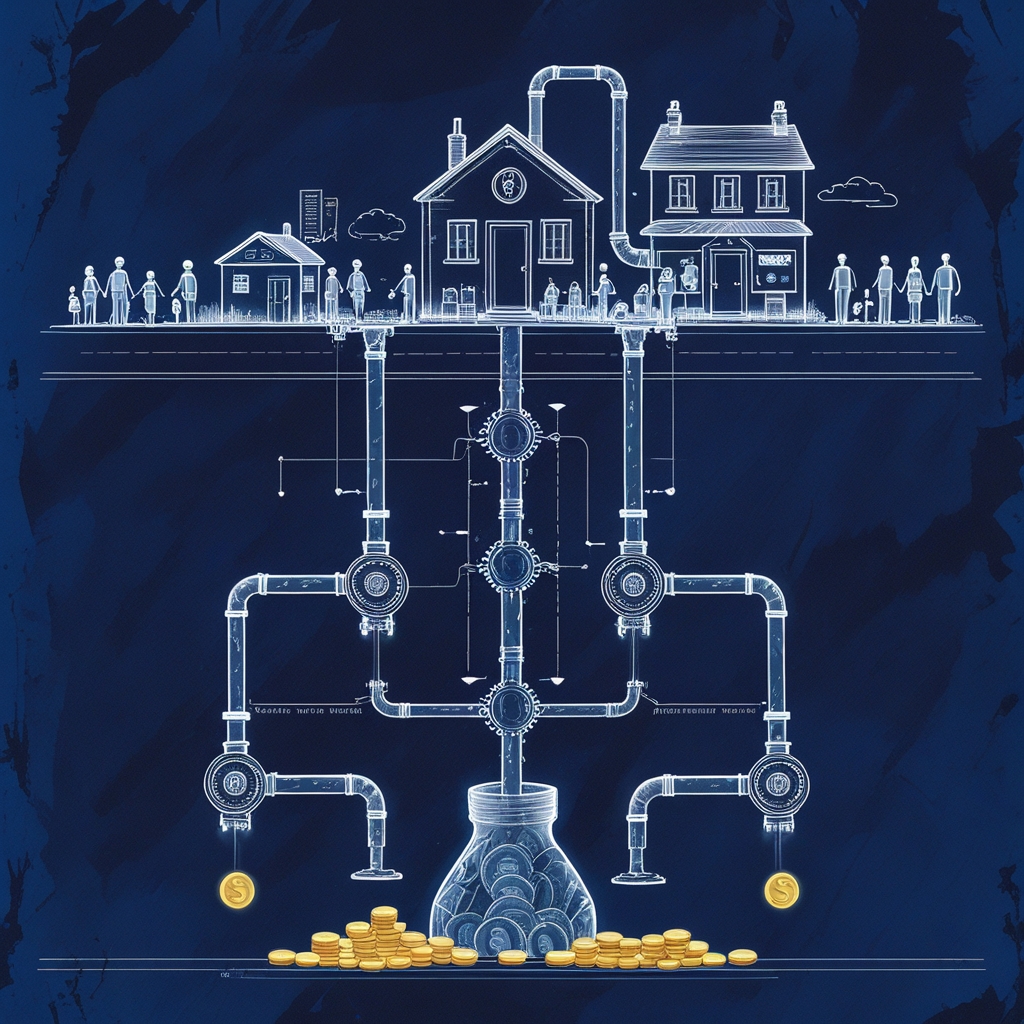
Case Study - From Envy of the World to Permanent Crisis

The NHS was founded in 1948. Free healthcare. For everyone. Funded by taxation. No bills. No insurance. No exclusions. Rich and poor. Healthy and sick. All treated the same. This was revolutionary. Radical. And it worked. The NHS delivered. Life expectancy rose. Infant mortality fell. Infectious diseases were controlled. And the British public, grateful, proud, came to love it. The NHS became more than a health service. It became a symbol. Of collective provision. Of fairness. Of what government could do when it chose to act.
But somewhere between 1948 and now, something changed. The NHS that was the envy of the world became a system in permanent crisis. Waiting lists. Staff shortages. Crumbling buildings. Services overwhelmed. And the public, still loving the NHS, watching it struggle. Angry. Frustrated. But not understanding how it happened. How the system that worked so well for so long became so broken.
This is not an accident. It is not inevitable decline. It is the result of decisions. Political decisions. Funding decisions. Structural decisions. Made over decades. Each one seeming reasonable at the time. Each one responding to pressures. But cumulatively, disastrous. Because the NHS we have now is not the NHS that was built in 1948. It has been reshaped. Restructured. Underfunded. Outsourced. And the reshaping, done incrementally, quietly, over years, has created the crisis we see today.
Let me show you how the NHS went from envy of the world to permanent crisis.
The story begins in the early years. The 1950s. 1960s. The NHS was new. Underfunded. But functional. GPs were independent contractors even then. Hospitals were a mix of old Poor Law infirmaries and voluntary hospitals. The system was patchy. Uneven. But it worked. Because demand was manageable. The population was younger. Healthier. Medical treatments were simpler. Less expensive. And expectations were lower. You saw a doctor. You got basic treatment. You were grateful.
And the NHS expanded. New hospitals were built. District general hospitals. In the 1960s and 1970s. Modern. Well-equipped. And the workforce grew. More doctors. More nurses. Training expanded. And the NHS, while never perfect, delivered. It treated. It cured. And it did so without bankrupting patients.
But then, in the 1970s, the economic context changed. Oil shocks. Inflation. Recession. And public spending came under pressure. The NHS, which had grown steadily, faced constraints. Budgets tightened. Pay stagnated. And the cracks began to show. Waiting lists appeared. Not long. Not crisis-level. But visible. And the government, rather than increasing funding, looked for efficiency. Do more with less. And the NHS, staffed by people who cared, tried. But efficiency has limits.
The 1980s brought a new government. A new ideology. Margaret Thatcher. And Thatcherism was skeptical of public services. Believed in markets. In competition. In private provision. And while Thatcher did not privatize the NHS, she could not, it was too popular, she reshaped it. She introduced internal markets. Trusts became purchasers and providers. They competed. For contracts. For patients. And this was supposed to drive efficiency. Improve quality.
But it did not. It created bureaucracy. Trusts spent money on billing each other. On contracts. On administration. Money that could have gone to patient care went to managing the market. And the clinical staff, doctors and nurses, resented it. They did not go into medicine to compete. They went in to treat. So morale fell. And the NHS, more complex, more fragmented, less efficient, struggled.
The 1990s brought New Labour. And New Labour loved the NHS. In principle. They increased funding. Significantly. From 2000 onward, NHS budgets grew. Year on year. Real-terms increases. And this helped. Waiting lists fell. Services improved. New hospitals were built. Staff were recruited. The NHS, properly funded, delivered.
But New Labour also continued the marketization. They expanded the internal market. Introduced patient choice. Encouraged private sector provision. Foundation Trusts were created. With more autonomy. More freedom to borrow. To invest. And PFI, Private Finance Initiative, was embraced. As a way to build hospitals without increasing public debt. Private companies financed the builds. And leased the hospitals back to the NHS. At inflated rates. For decades.
And PFI was a disaster. The hospitals were built. Modern. Shiny. But the cost was extortionate. Trusts locked into contracts paying far more than if they had borrowed publicly and built themselves. And the payments, annual lease payments, drained budgets. For decades. Money that should have gone to patient care went to PFI contractors. And the contractors, many offshore, tax-avoiding, profited. Enormously.
By the late 2000s, the NHS was running well. Funded generously. Delivering. Waiting times were at historic lows. Patient satisfaction was high. The NHS was working. And then, 2008. The financial crisis. The economy collapsed. Tax revenues fell. And the government, facing a deficit, cut spending. Austerity.
And austerity hit the NHS. Not immediately. The Coalition government, 2010 to 2015, claimed to protect NHS funding. But they did not. They froze budgets in real terms. Tiny increases. Below inflation. Below demand growth. And demand was growing. The population was aging. More elderly patients. With chronic conditions. Requiring more care. And medical treatments were advancing. New drugs. New procedures. All expensive. So costs rose. But funding did not keep pace.
And the NHS, which had been running well, started to struggle. Waiting lists grew. Deficits appeared. Trusts, unable to balance budgets, cut. Delayed maintenance. Froze recruitment. Reduced services. And staff, facing increasing pressure, started to leave. For private practice. For agencies. For emigration. The workforce, which had been stable, started to shrink.
And social care was decimated. Local councils, facing their own budget cuts, slashed social care funding. Care homes closed. Capacity shrank. And people who needed care could not get it. So they stayed in hospital. Blocking beds. And the NHS, unable to discharge, had no capacity for new patients. A&E started to overflow. The four-hour target, once routinely met, was routinely missed. And the crisis became visible.
The government, seeing the crisis, blamed inefficiency. Blamed management. Blamed bureaucracy. And reorganized. The 2012 Health and Social Care Act. The biggest reorganization in NHS history. PCTs, Primary Care Trusts, were abolished. CCGs, Clinical Commissioning Groups, were created. The structure was redrawn. And the reorganization cost billions. Billions that could have gone to patient care. And it achieved nothing. Or worse than nothing. It created chaos. Confusion. And while the NHS was reorganizing, patients waited.
And marketization accelerated. The 2012 Act opened the NHS to competition. Any qualified provider. Private companies could bid for NHS contracts. And they did. Virgin Care. Circle. Serco. And they won contracts. For community services. For diagnostics. For out-of-hours care. And the NHS, fragmented further, became a patchwork. Public. Private. Outsourced. And coordination, already difficult, became impossible.
By 2015, the NHS was in trouble. Deep trouble. Waiting lists at record highs. A&E in crisis. Staff leaving. And funding still constrained. The Conservative government, re-elected, promised more money. The NHS would get whatever it needed. But the money did not come. Or it came inadequately. Below what was needed. Below what was promised. And the NHS, underfunded, understaffed, overwhelmed, deteriorated further.
And then, 2020. COVID. The pandemic. And the NHS, already on its knees, faced the greatest challenge in its history. Hospitals overwhelmed. ICUs full. Staff exhausted. And the public, locked down, watching, saw the NHS struggle. Saw the heroism. The dedication. The sacrifice. And the love for the NHS deepened. The Thursday claps. The gratitude. The recognition.
But COVID also revealed the fragility. The lack of capacity. The lack of resilience. The lack of investment. Decades of underfunding. Decades of neglect. All exposed. And the backlog, the treatments delayed during COVID, lockdowns, deferrals, created a crisis on top of a crisis. Waiting lists exploded. Seven million people. Waiting. For operations. For appointments. For treatment. And the NHS, trying to recover, could not. Because the capacity was not there. The staff were burnt out. And the funding was still inadequate.
And the government, which had promised to protect the NHS, which had stood on doorsteps clapping, cut pay in real terms. Froze it below inflation. And staff, nurses, doctors, paramedics, who had worked through the pandemic, who had risked their lives, were told their pay rise would be one percent. Below inflation. A real-terms cut. And they were angry. Betrayed. And they left. In record numbers. For agencies. For private practice. For abroad. And the workforce crisis, already severe, became catastrophic.
By 2024, the NHS is in the worst crisis in its history. Waiting lists at eight million. A&E missing targets by the widest margin ever. Ambulances queuing outside hospitals. Patients dying waiting for care. Staff burnt out, demoralized, leaving. Buildings crumbling. Equipment obsolete. And the public, still loving the NHS, watching it die.
This did not happen by accident. It happened through choices. The choice to introduce markets. The choice to use PFI. The choice to impose austerity. The choice to freeze pay. The choice to underfund. The choice to reorganize rather than invest. Each choice, at the time, seemed reasonable. Or necessary. Or inevitable. But cumulatively, they dismantled the NHS. Not explicitly. Not through privatization. But through neglect. Through fragmentation. Through underfunding. Through expecting staff to do more with less. Year after year. Until the system broke.
And here is the tragedy. The NHS can be fixed. The solutions are known. Fund it properly. Pay staff properly. Invest in buildings. Integrate social care. Expand training. Increase capacity. None of this is mysterious. None of this is impossible. Other countries do it. Germany. France. Scandinavia. They fund their healthcare systems properly. And they work.
But the UK does not. The UK under-funds. Chronically. Relative to comparable countries. Relative to need. And the under-funding is political. It is a choice. A choice to prioritize other things. Tax cuts. Debt reduction. Other spending. And the NHS, starved of resources, deteriorates.
And the public does not understand this. The public thinks the NHS is failing because of inefficiency. Because of bureaucracy. Because of waste. And there is some waste. Some inefficiency. But the primary problem is not waste. It is under-funding. And until the funding is adequate, sustained, long-term, the NHS will continue to struggle. Will continue to deteriorate. And will continue to fail the people it was built to serve.
The NHS was the envy of the world. It can be again. But that requires political will. Will to fund it. Will to invest in it. Will to protect it from marketization. From fragmentation. From ideology. And will to prioritize patients over politics. Over short-term fiscal targets. Over vested interests.
Most governments do not have that will. So the NHS continues. In crisis. And the public, watching, loving, grieving, does not understand why. Because they have been told the NHS is inefficient. Wasteful. In need of reform. When in reality, the NHS is underfunded. Understaffed. And in need of investment. Investment that, for political reasons, it will not get.
And that is how the NHS went from envy of the world to permanent crisis. Not through failure. But through neglect. Deliberate. Sustained. Political neglect. And until that changes, the crisis will continue.