The Machine - How the NHS Actually Works
You get sick. You see a doctor. You get treatment. You do not pay. This is the NHS. Free at the point of use. A national treasure. The envy of the world. And for most people, that is all they know. They know it exists. They know it is free. And they know it is struggling. Waiting lists. Staff shortages. Crumbling buildings. But they do not know how it works. How the money flows. How decisions get made. How the pieces fit together. And why, despite consuming more money every year, the system feels like it is falling apart.
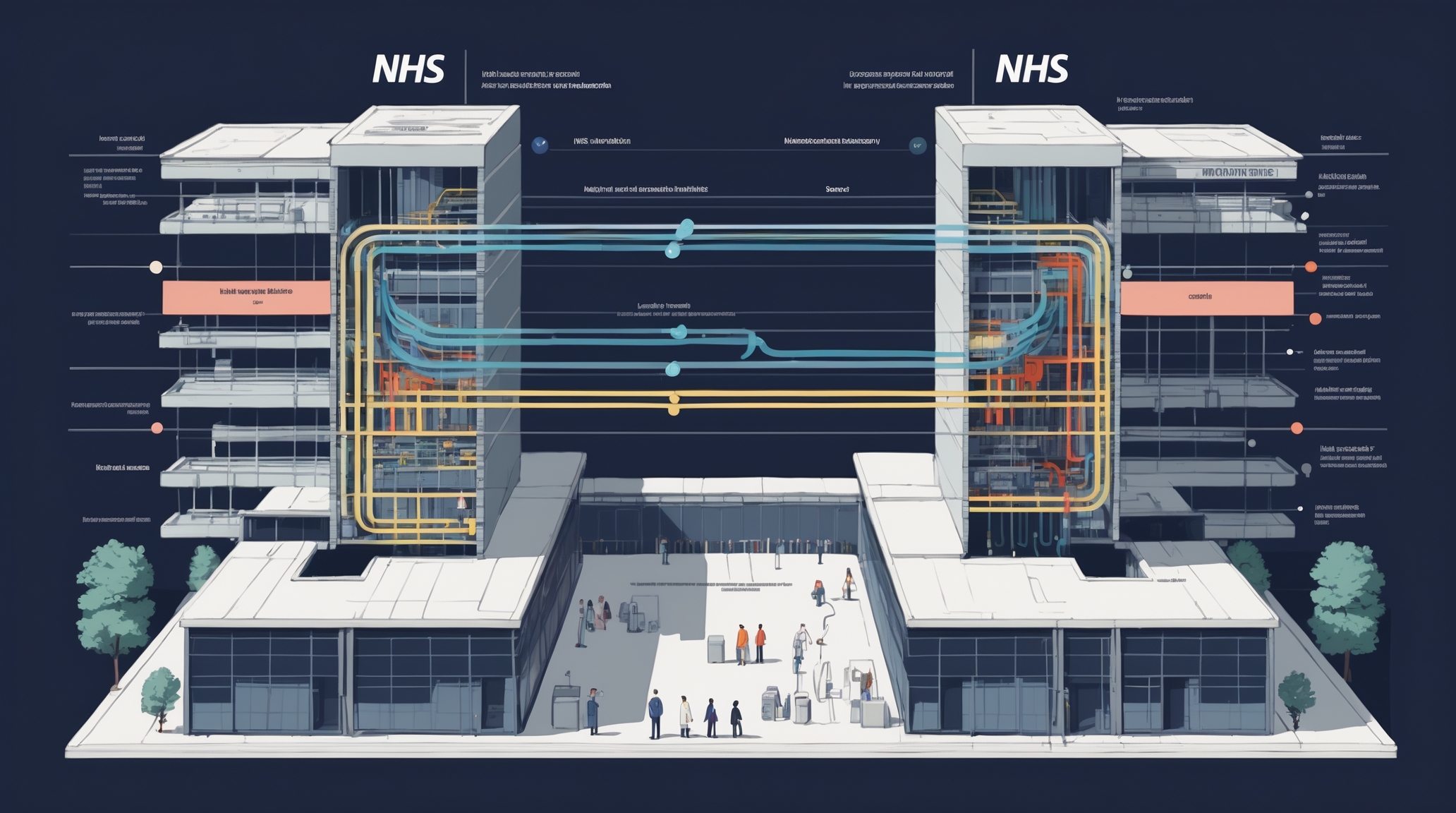
The NHS is not one thing. It is many things. Hospitals. GP surgeries. Ambulances. Mental health services. Community care. All under one name. But each part operates differently. With different funding. Different incentives. Different pressures. And understanding how the machine works is the only way to understand why it is broken.
Let me show you how the NHS actually works.
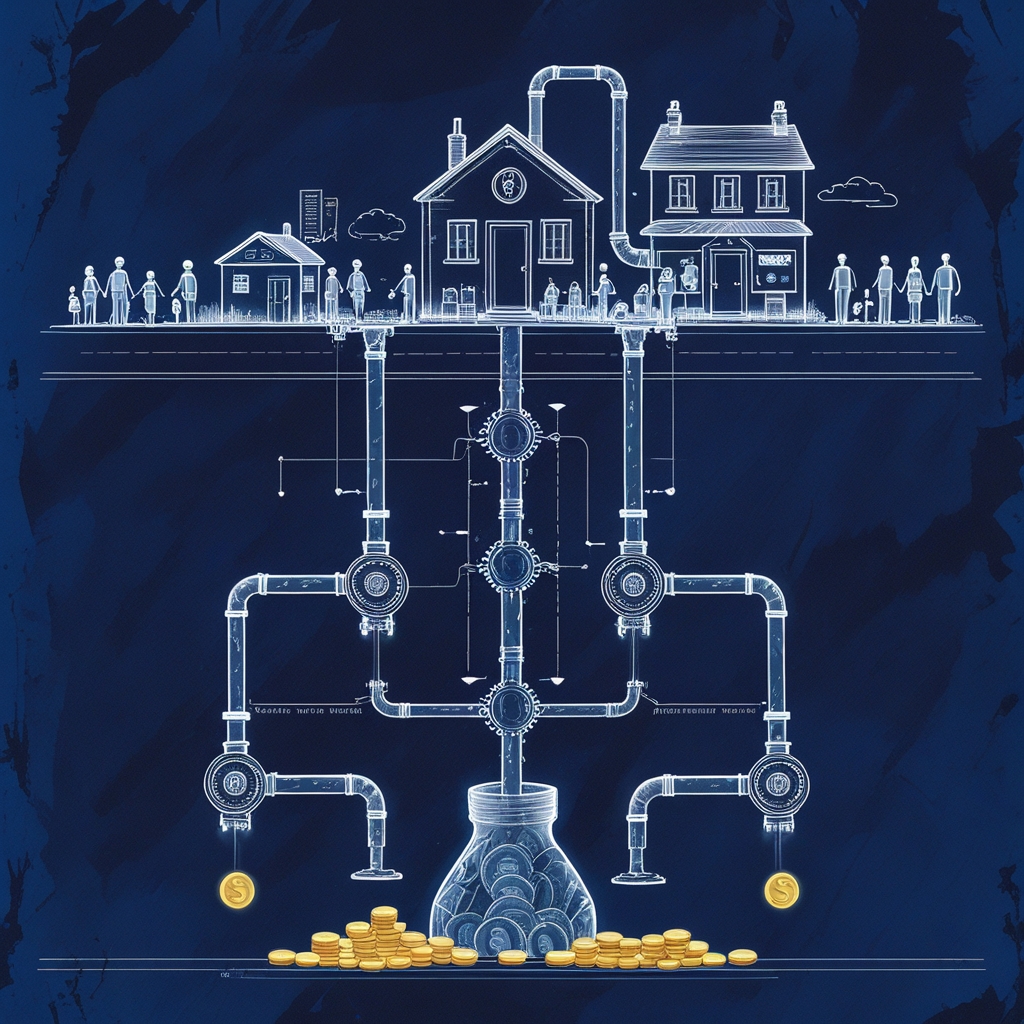
The first thing to understand is funding. The NHS is funded by general taxation. Income tax. National Insurance. VAT. All of it goes into the Treasury. And the Treasury decides how much the NHS gets. Not based on need. Based on politics. On what is affordable. On what the government can justify to voters. The NHS budget is set. Annually. Through the spending review. And once set, that is what the NHS has to work with.
The money flows from the Treasury to NHS England. NHS England is the central body. It oversees the system. Sets priorities. Allocates budgets. And holds the purse strings. But NHS England does not deliver care. It commissions it. It pays other organizations to deliver. Hospitals. GP practices. Mental health trusts. All of them funded, directly or indirectly, by NHS England. And each of them operating semi-independently.
The NHS is divided into two main parts. Primary care and secondary care. Primary care is GPs. General practitioners. Your local surgery. The first point of contact. If you are sick, you see your GP. And the GP decides what happens next. Do you need a prescription? A referral? A test? The GP is the gatekeeper. And the gatekeeper controls access to everything else.
GPs are not NHS employees. They are private contractors. They run businesses. Small businesses. And they are paid by NHS England. Through a contract. The contract pays per patient. A capitation fee. The more patients registered, the more the practice earns. But the payment is fixed. Whether the patient visits once a year or once a week. So the GP practice has an incentive to register as many patients as possible. And to spend as little time as possible with each one.
This creates pressure. GPs are overworked. Underpaid relative to the demand. And stretched thin. Appointments are short. Ten minutes. Fifteen if you are lucky. The GP cannot do a thorough assessment in that time. So they manage. They prescribe. They refer. And they move on to the next patient. And patients, frustrated by the brevity, often feel unheard. Dismissed. But the GP is not being dismissive. The GP is operating within a system that does not give them time.
Secondary care is hospitals. Accident and Emergency. Specialists. Surgery. Scans. Tests. Everything that the GP cannot do. And hospitals are organized into Trusts. NHS Trusts. Foundation Trusts. Each Trust runs one or more hospitals. And each Trust is semi-autonomous. It has its own management. Its own budget. Its own priorities. And it is accountable to NHS England. But it operates independently. Within limits.
Trusts are funded through a combination of block grants and activity-based payments. Block grants are fixed. A set amount per year. To cover core costs. Staffing. Buildings. Equipment. Activity-based payments are for specific treatments. If a Trust performs a hip replacement, it gets paid. The payment is standardized. A tariff. Set nationally. And the tariff is supposed to cover the cost. But often, it does not. So Trusts lose money on some treatments. And make money on others. And they have to balance the books. Or face deficit.
And here is the problem. Trusts are not allowed to run deficits indefinitely. They are expected to break even. Or make a surplus. But demand is rising. Costs are rising. And funding is not keeping pace. So Trusts cut. They delay maintenance. They freeze recruitment. They close wards. And they struggle. Constantly. To stay solvent.
Now add in commissioning. Commissioning is the process of deciding what services to fund. And who should provide them. This used to be done by Clinical Commissioning Groups. CCGs. Local bodies. Run by GPs. Who decided what their area needed. And purchased it. From hospitals. From private providers. From community services. But CCGs were abolished. Replaced by Integrated Care Boards. ICBs. Larger. Regional. And still doing the same thing. Deciding what to commission. And from whom.
Commissioning is supposed to drive efficiency. Competition. Quality. If a hospital is underperforming, the ICB can commission from somewhere else. A private hospital. A neighboring Trust. This is supposed to incentivize improvement. But in practice, it does not work that way. Because there is limited capacity. Limited choice. And patients do not want to travel. So the ICB, even if unhappy with a provider, often has no alternative. The provider knows this. And the incentive to improve is weak.
Now add in the private sector. The NHS is not entirely public. It outsources. Contracts. Hires private companies to deliver services. Diagnostics. Scans. Operations. Community care. This is not new. It has been happening for decades. And it is growing. Because the NHS cannot meet demand. Cannot recruit enough staff. Cannot build enough capacity. So it buys from the private sector. At a premium. Because private providers charge more than the NHS tariff. They have to. They are profit-making. So the NHS pays. And the private sector profits.
And here is the other piece. PFI. Private Finance Initiative. This was a scheme. Introduced in the 1990s. Expanded in the 2000s. Where private companies built hospitals. And leased them back to the NHS. The NHS did not pay upfront. It paid annually. Over decades. Thirty years. Forty years. And the payments, the lease payments, were high. Far higher than if the NHS had borrowed and built the hospitals itself. But PFI kept the debt off the government's books. So it looked like the NHS was getting new infrastructure without increasing public debt. But the cost was deferred. And inflated. And Trusts, locked into PFI contracts, are still paying. Billions. Every year. For buildings that are now outdated.
Now let us talk about staff. The NHS is the largest employer in the UK. Over one point five million people. Doctors. Nurses. Paramedics. Therapists. Porters. Cleaners. Administrators. All essential. And all underpaid. Relative to demand. Relative to private sector equivalents. Relative to the cost of living.
Doctors train for years. Medical school. Foundation years. Specialty training. A decade. Or more. And they graduate with debt. Student loans. And they enter a system that pays them modestly. Junior doctors earn thirty thousand pounds. Consultants earn more. But not enough to reflect the responsibility. The hours. The stress. So doctors leave. They go to Australia. To Canada. To private practice. And the NHS, having trained them, loses them.
Nurses face the same problem. Three years of training. Degree-level. And they start on twenty-eight thousand pounds. In London, where rent consumes half their salary, this is not enough. So nurses leave. They go agency. Where they earn more. For the same work. Because the NHS, desperate for staff, pays agencies. Premium rates. To fill gaps. Gaps created by losing permanent staff. Who left because the pay was too low. The system is cannibalizing itself.
And here is the recruitment problem. The NHS cannot train enough staff. Medical school places are limited. Nursing school places are limited. Not because there are not enough applicants. But because there are not enough training places. Not enough clinical placements. Not enough funding. So the pipeline is constrained. And the NHS, unable to train domestically, recruits internationally. From the Philippines. From India. From across Europe. And this works. Temporarily. But it is not sustainable. And it is not fair. Because the countries the NHS recruits from need those staff too.
Now add in social care. Social care is not part of the NHS. It is separate. Funded separately. Delivered separately. By local councils. And by private care homes. And it is means-tested. If you have assets above a threshold, you pay. For care. Out of pocket. And social care is expensive. Residential care costs forty thousand pounds per year. Nursing care costs more. So people, particularly older people, pay until their savings are gone. And then, only then, the state pays.
But here is the problem. Social care is underfunded. Councils do not have enough money. And care homes, trying to make a profit on state-funded residents, are squeezed. They cut corners. They reduce staff. They lower quality. And many go out of business. So capacity is shrinking. And people who need care cannot get it. They stay in hospital. Even though they do not need hospital care. They just need somewhere to go. And the hospital, which cannot discharge them, is stuck. Beds are occupied. By people who should not be there. And new patients, who need those beds, wait. In A&E. On trolleys. For hours. Sometimes days.
This is called bed-blocking. And it is not the fault of the patient. It is the fault of the system. Because social care is not integrated with healthcare. They are separate. With separate budgets. Separate accountability. And the gap between them is where people fall. And where the NHS breaks.
Now let us talk about targets. The NHS is measured. Constantly. Waiting times. A&E performance. Cancer treatment. Referral to treatment. All tracked. All published. And Trusts are judged on them. If a Trust misses targets, it is sanctioned. Named. Shamed. Put in special measures. And the pressure to hit targets is enormous.
But here is the problem. Targets distort behavior. If a Trust is penalized for A&E breaches, patients waiting more than four hours, it focuses on A&E. It diverts resources. Staff. Money. To hit the target. But that means other areas suffer. Elective surgery. Outpatient appointments. Diagnostics. So one target is met. And others are missed. The system optimizes for the measured. Not for the needed.
And gaming happens. Trusts manipulate. They hold patients in ambulances. Because if the patient is not admitted, the clock does not start. They cancel operations. To free up beds for emergencies. To hit the A&E target. They discharge patients prematurely. Before they are ready. To clear beds. To meet flow targets. None of this is malicious. It is survival. The Trust is doing what the system incentivizes. Meeting targets. At any cost.
So here is what the NHS looks like. Funded by taxation. Allocated by NHS England. Split between primary care, independent GP practices paid per patient, and secondary care, Trusts running hospitals on tight budgets. Commissioning done by regional ICBs. Private sector filling gaps at a premium. PFI contracts draining budgets. Staff underpaid, overworked, and leaving. Social care separate, underfunded, and creating bed-blocking. And targets driving behavior that meets metrics but not needs.
This is the machine. And it is not working. Not because the people inside it do not care. They do. Doctors. Nurses. Staff at every level are working harder than ever. Doing more with less. But the structure is broken. The funding is inadequate. The integration is missing. And the pressure is relentless. So waiting lists grow. Services deteriorate. And the NHS, despite being free at the point of use, feels like it is failing.
The next article will show you who profits from this. Because the NHS is in crisis. And crises create opportunities. For private providers. For outsourcing companies. For consultants. For landlords. For agencies. And understanding who benefits from the NHS struggling is the key to understanding why the struggle persists.