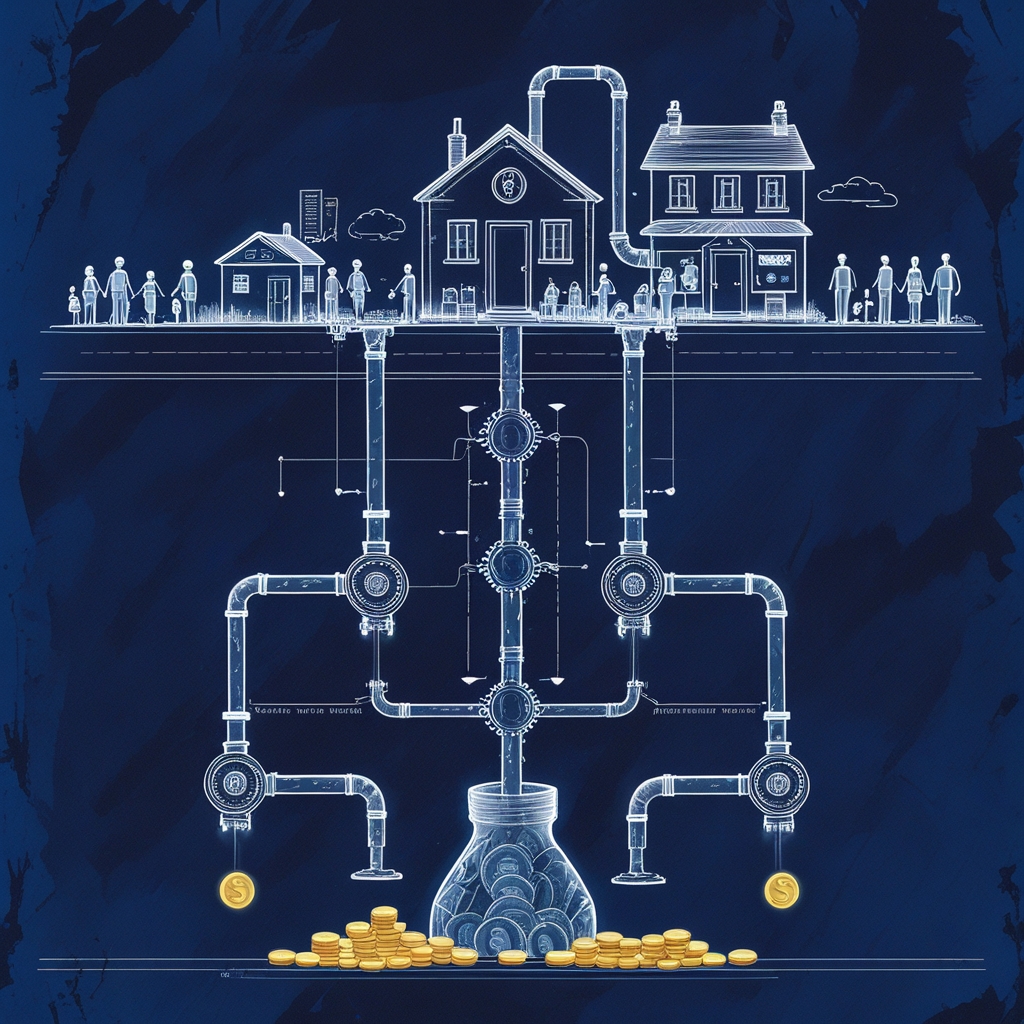
Where Policy Actually Has Leverage
The NHS is resistant to reform. But it is not immovable. There are points where policy could shift outcomes. Where intervention could reduce pressure. Where changes, even incremental ones, would make a real difference to patients, to staff, to the system. Not by transforming the NHS entirely. That is politically impossible. The cultural attachment is too strong. The complexity is too great. The vested interests are too powerful. But incremental change is possible. If the political will exists.
Because every dysfunction in the NHS is the result of choices. Funding choices. Staffing choices. Structural choices. And what was chosen can be changed. The question is not whether solutions exist. They do. The question is whether there is will to implement them. And whether that will is stronger than the resistance.
Let me show you where UK policy actually has leverage over the NHS.
The first point of leverage is workforce planning. The NHS does not train enough staff. Medical school places are limited. Nursing school places are limited. Not because of lack of applicants. But because of lack of funding. For training places. For clinical placements. For teaching staff. And this constraint creates a perpetual shortage.
Expanding training capacity would help. Double medical school places. Double nursing school places. Fund more clinical placements. In hospitals. In GP practices. In community settings. And remove the cap on training numbers. So that everyone who is qualified and wants to train can train.
This would cost money. Upfront. Significant money. Training doctors costs hundreds of thousands per student. But the return is enormous. A trained doctor works for forty years. Treats thousands of patients. Generates economic value far exceeding the training cost. And every doctor trained domestically is a doctor the NHS does not have to recruit internationally. From countries that need them more.
The political obstacle is cost. And time. Training takes years. A doctor takes ten years. A nurse takes three. So the benefits are delayed. And politicians, focused on electoral cycles, resist long-term investments. But this is the most important lever. Because without staff, nothing else works. No amount of funding. No amount of reorganization. Without people, the NHS cannot function.
The second point of leverage is pay. NHS staff are underpaid. Relative to responsibility. Relative to private sector equivalents. Relative to cost of living. And underpayment drives attrition. Doctors leave. Nurses leave. Therapists leave. For private practice. For agencies. For emigration. And the NHS, having trained them, loses them.
Raising pay would help. Not marginally. Substantially. Nurses should earn forty thousand. Fifty thousand. Junior doctors should earn fifty thousand. Consultants should earn more. Competitive with private practice. So that staying in the NHS is financially viable. And leaving is not the default.
The political obstacle is cost. Raising pay for one point five million employees is expensive. Billions per year. And the Treasury resists. But here is the counter-argument. The NHS already pays for staff. Through agencies. At three times the cost. Paying permanent staff properly costs less than paying agencies. And it retains expertise. Builds teams. Improves continuity. All of which improve care.
And pay is not just financial. It is respect. It is recognition. And recognition reduces burnout. Improves morale. And makes the NHS a place people want to work. Rather than a place they endure until they can leave.
The third point of leverage is social care integration. Social care is separate from the NHS. Separately funded. Separately managed. And the gap between them creates bed-blocking. People who need care but cannot access it stay in hospital. And the hospital, unable to discharge them, has no capacity for new patients.
Integrating social care with the NHS would help. Fund it from general taxation. Like the NHS. Make it free at the point of use. Like the NHS. And manage it as part of the NHS. So that discharge planning is seamless. So that patients move from hospital to care without delay. And so that beds are freed for new patients.
This would cost money. Social care is expensive. Residential care costs forty thousand pounds per person per year. And there are hundreds of thousands of people who need it. So the total cost is tens of billions. But here is the argument. The NHS is already paying. Through bed-blocking. Through delayed discharge. Through acute beds occupied by people who do not need acute care. Integrating social care would shift that cost. From expensive acute beds to cheaper care settings. And improve outcomes. Because people would be in the right place. Not stuck in hospital.
The political obstacle is ideology. Social care is means-tested. You pay if you have assets. And removing means-testing, making it free, looks like a subsidy for the wealthy. For people who can afford to pay. So the right opposes it. But the current system is broken. And integration is the only way to fix it.
The fourth point of leverage is capital investment. NHS buildings are crumbling. Hospitals built in the 1960s. 1970s. Never properly maintained. Roofs leak. Wards are outdated. Equipment is obsolete. And this creates inefficiency. Staff spend time working around broken equipment. Patients are treated in substandard facilities. And the buildings, unsafe, are closed. Reducing capacity.
Investing in capital, building new hospitals, renovating old ones, replacing equipment, would help. Immediately. More capacity. Better facilities. More efficient workflows. And staff morale would improve. Because working in a modern, well-equipped hospital is better than working in a crumbling one.
The political obstacle is debt. Capital investment requires borrowing. And borrowing increases public debt. And the Treasury resists. But here is the counter-argument. The cost of not investing is higher. PFI contracts, which were used to avoid public borrowing, cost far more. And crumbling buildings create inefficiency. Which costs more in the long run. So investing now, even with borrowing, is cheaper than deferring.
And capital investment creates jobs. Construction jobs. Manufacturing jobs. Economic activity. Which generates tax revenue. Which offsets some of the cost. So the net cost is lower than the headline figure suggests.
The fifth point of leverage is prevention. The NHS is reactive. It treats illness. It does not prevent it. And prevention, stopping people from getting sick in the first place, is far cheaper than treatment. Obesity prevention costs less than treating diabetes. Smoking cessation costs less than treating lung cancer. Screening costs less than late-stage treatment.
Investing in prevention would help. Public health campaigns. Screening programs. Early intervention. Lifestyle support. And the return is enormous. Every pound spent on prevention saves multiple pounds in treatment. And improves quality of life. Keeps people healthy. Productive. Independent.
The political obstacle is visibility. Prevention does not generate headlines. Does not create grateful voters. Does not deliver immediate results. It delivers savings. Years later. Decades later. And politicians, focused on short-term wins, do not invest. But prevention is the highest-return intervention available. And neglecting it is economically irrational.
The sixth point of leverage is diagnostic capacity. Diagnostic delays create treatment delays. And treatment delays worsen outcomes. So expanding diagnostic capacity, more scanners, more labs, more radiologists, more pathologists, would help. Reduce waiting times. Catch diseases earlier. Improve outcomes.
This is not expensive. Relative to the cost of the NHS overall. A CT scanner costs a million pounds. An MRI costs two million. Hire radiologists. Train more. Import if necessary. And the return is immediate. Faster diagnoses. Faster treatment. Better outcomes. And reduced long-term costs. Because early treatment is cheaper than late treatment.
The political obstacle is workforce. You can buy scanners. But you need people to operate them. To maintain them. To read the scans. And those people are in short supply. So expanding diagnostic capacity requires expanding diagnostic workforce. Which takes time. And investment. But it is achievable. And it is one of the highest-impact interventions available.
The seventh point of leverage is primary care investment. GPs are the gatekeepers. And GP access is collapsing. Practices are closing. GPs are retiring. And the remaining GPs are overwhelmed. So patients cannot access primary care. And they go to A&E. Or they wait. And conditions worsen.
Investing in primary care would help. Recruit more GPs. Pay them more. Make general practice attractive. Expand practice teams. Nurses. Pharmacists. Physician associates. So that the GP is not doing everything. Delegate. Distribute workload. And improve access.
And shift funding. The NHS spends eighty percent on secondary care. Hospitals. And twenty percent on primary care. This is backwards. Primary care prevents hospital admissions. Manages chronic conditions. Keeps people healthy. So it should be funded properly. Shift the balance. Forty percent primary. Sixty percent secondary. And watch demand for hospitals fall.
The political obstacle is hospitals. Hospitals are visible. They employ thousands. They are politically important. And shifting funding from hospitals to GPs looks like cutting hospitals. So politicians resist. But the logic is clear. Invest in primary care. Reduce hospital demand. Save money. And improve outcomes.
The eighth point of leverage is integration. The NHS is fragmented. GPs are separate from hospitals. Mental health is separate from physical health. Social care is separate from healthcare. And this fragmentation creates gaps. People fall through. Conditions are missed. Care is duplicated. And resources are wasted.
Integrating services would help. Shared records. Shared teams. Shared budgets. So that the GP knows what the hospital is doing. The hospital knows what social care is doing. And the patient gets coordinated care. Not fragmented care. Not multiple appointments with multiple professionals who do not talk to each other.
The political obstacle is governance. Integration requires merging budgets. Merging accountability. And organizations resist. Because they lose autonomy. Lose control. So integration, while obviously beneficial, is politically and organizationally difficult. But it is necessary. And pilots, where integration has been tried, show it works. Reduces admissions. Improves outcomes. Saves money.
The ninth point of leverage is transparency. The NHS is opaque. Waiting times vary wildly between Trusts. Outcomes vary. Costs vary. And patients do not know. Cannot compare. Cannot choose. So poor-performing Trusts are not held accountable. And high-performing Trusts are not rewarded.
Publishing data would help. Waiting times by Trust. Outcomes by procedure. Complication rates by surgeon. And allowing patients to choose. Based on data. This would create pressure. On poor performers to improve. And reward high performers with more patients. More funding.
The political obstacle is professional resistance. Clinicians resist being judged. Being compared. Being ranked. They argue that data is misleading. That outcomes are affected by case mix. By deprivation. By factors beyond their control. And some of this is true. But transparency is still valuable. Because it reveals variation. And variation suggests opportunity. To learn. To improve. To spread best practice.
So here is where policy has leverage. Expand workforce training to end shortages. Raise pay to retain staff. Integrate social care to free beds. Invest in capital to modernize infrastructure. Fund prevention to reduce demand. Expand diagnostic capacity to catch disease early. Invest in primary care to reduce hospital admissions. Integrate services to coordinate care. And publish data to drive improvement.
Each of these would help. Some more than others. Some are expensive. Some are cheap. But all are achievable. The obstacle is not technical. It is political. The will to act. The courage to override resistance. The willingness to prioritize patients over politics. Over ideology. Over vested interests.
Most governments do not have that will. So the levers exist. But they are not pulled. And the NHS continues. Struggling. Stretched. Deteriorating. Not because solutions are unavailable. But because the will to implement them is absent.
The final article will show you how we got here. How the NHS, which was once the envy of the world, became a system in permanent crisis. Not through accident. But through decisions. Policy decisions. Funding decisions. Structural decisions. Made over decades. And understanding those decisions is the only way to understand why the NHS is the way it is. And why fixing it is so hard.