How We Got Here - The UK Housing Crisis Explained
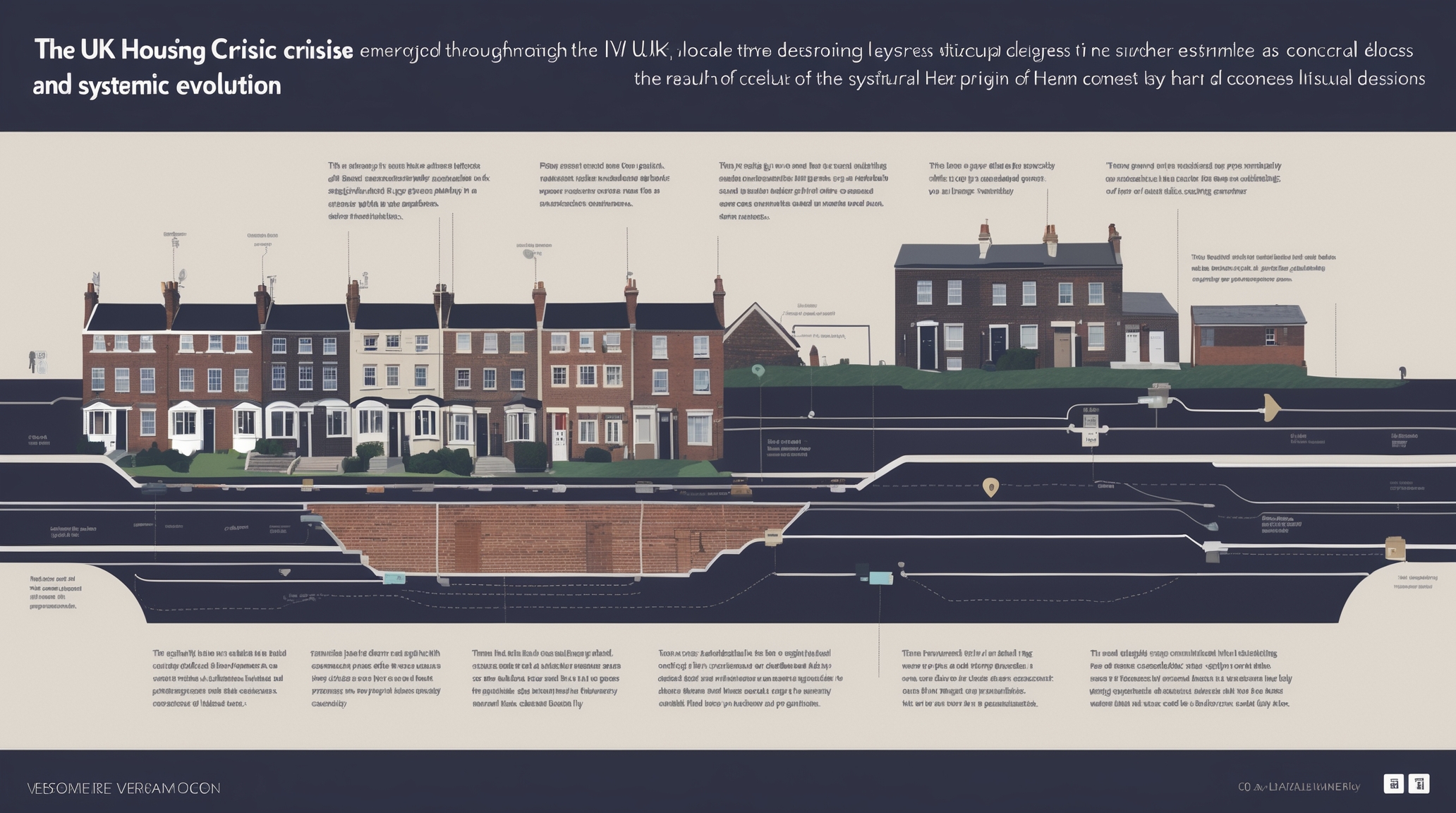
The UK housing crisis did not appear overnight. It was not caused by a single policy failure. Or a single government. It was built. Slowly. Over decades. Through decisions that seemed reasonable at the time. Through pressures that seemed urgent. Through trade-offs that seemed necessary. And each decision, each policy, each reform, moved the system in a direction. Away from affordability. Toward wealth accumulation. Toward treating housing as an asset. Not as shelter. And the cumulative effect of those decisions is the crisis we have now.
Understanding how we got here is not just history. It is structure. Because the system we have now is the result of incentives, politics, and choices made decades ago. And those choices created feedback loops. Loops that reinforced the trajectory. That made reversal harder. That locked the system into a path. And until we understand that path, we cannot understand why housing is the way it is. Or why changing it is so difficult.
Let me show you how the UK housing crisis was built.
The story begins after the Second World War. Britain was rebuilding. Housing stock had been destroyed. Millions of homes lost to bombing. And the population needed housing. Urgently. So the government built. Massively. Council housing. Homes owned by local authorities. Rented at affordable rates. Managed by the council. This was not charity. It was policy. Social housing as a pillar of the welfare state. And it worked.
By the 1970s, nearly a third of households in England lived in council housing. Millions of homes. Affordable. Secure. Accessible to working-class families. To people who could not afford to buy. And the private rental sector, by contrast, was small. Declining. Because council housing provided an alternative. A better alternative. Cheaper rents. Better conditions. Security of tenure. So people chose it. And the system, for a time, worked. Housing was not unaffordable. Because supply, particularly social housing supply, was abundant.
But then, in 1980, the Right to Buy policy was introduced. Council tenants were given the right to buy their homes. At a discount. Up to seventy percent off market value. This was popular. Very popular. It created homeowners. It gave people an asset. Wealth. And politically, it was a triumph. Millions of people bought. And the Conservative government, which introduced it, was rewarded. Electorally. Ideologically. Right to Buy was seen as empowering. Aspirational. A success.
But it had a consequence. The homes that were sold were not replaced. Councils were not allowed to use the proceeds to build new homes. The money went to the Treasury. Or was used for other purposes. Not housing. So the social housing stock declined. And continued to decline. Every year, more homes were sold. Fewer were built. And the stock, which had been a buffer, a non-market alternative, shrank. By 2020, the stock was less than half what it had been in 1980. And waiting lists, which had been manageable, became years long.
This shift had another effect. It turned homeownership into the norm. The aspiration. The goal. Renting, particularly social renting, became stigmatized. Associated with poverty. With failure. And the political consensus shifted. All parties supported homeownership. Promoted it. Subsidized it. And social housing, once a pillar, became a residual. A safety net for the poorest. Not a mainstream option.
And as council housing declined, the private rental sector grew. Landlords bought properties. Rented them out. And filled the gap left by the loss of social housing. But private rents were higher. Much higher. Because landlords needed to cover their mortgage and make a profit. So rents rose. And people who could not afford to buy, and could not access social housing, were stuck. Paying high rents. Unable to save for a deposit. Trapped.
The second major shift was financial deregulation. In the 1980s and 1990s, mortgage lending was liberalized. Building societies, which had been mutual, member-owned, were allowed to demutualize. To become banks. To compete. And competition drove lending. Banks offered bigger mortgages. Longer terms. Higher multiples of income. Because bigger mortgages meant more interest. More profit.
And people borrowed. Because they could. And because house prices were rising. So borrowing felt safe. The asset was appreciating. The debt was being covered by capital gains. And the availability of credit inflated prices. Because buyers, armed with bigger loans, could bid more. And sellers, seeing higher bids, raised their prices. The loop reinforced. Lending drove prices. Prices justified more lending. And the cycle accelerated.
This was not seen as a problem. It was seen as growth. Economic growth. Activity. Homeownership rates increased. People felt wealthier. Consumer spending rose. The economy boomed. And politicians, seeing the boom, celebrated it. Encouraged it. Supported it. Because growth won elections. And housing, as an engine of growth, was politically valuable.
But the debt was accumulating. Household debt. Relative to income. And the system was becoming more fragile. More dependent on rising prices. Because if prices stopped rising, the debt would become unsustainable. Borrowers would default. Banks would face losses. And the system would crack. But as long as prices kept rising, the risk was invisible. So the lending continued.
The third major shift was planning restriction. In the 1980s and 1990s, as homeownership increased, existing homeowners became a powerful political force. And they opposed development. New homes near them. In their neighborhoods. Because they feared it would reduce their property values. Increase traffic. Change the character of the area. This was NIMBYism. Not in my back yard. And it was effective.
Councils, responding to local voters, tightened planning rules. Made development harder. Required more consultation. More conditions. And the result was that supply, which needed to increase to meet rising demand, did not. It stagnated. The number of homes built per year fell. From over three hundred thousand in the 1960s to under two hundred thousand by the 1990s. And the gap between supply and demand widened.
And the planning system, already discretionary, became even more restrictive. Green belt protections were strengthened. Brownfield-first policies prioritized redevelopment over greenfield. And while this sounded sensible, environmentally responsible, it constrained supply. Because brownfield land is expensive to develop. Contaminated. Complex. And there is not enough of it to meet demand. So supply stayed limited. And prices kept rising.
The fourth shift was the rise of buy-to-let. In the late 1990s and early 2000s, buy-to-let mortgages became widely available. And investors, seeing property as a safe, profitable investment, bought. They bought homes. Rented them out. And watched values rise. The rental income covered the mortgage. And the capital appreciation, when they eventually sold, was profit. This was low-risk. High-return. And it became popular.
But every home bought by a landlord was a home not available to an owner-occupier. And landlords, with larger deposits, could outbid first-time buyers. So investor demand pushed prices higher. And first-time buyers, already struggling, were pushed further out. Prices rose. Deposits rose. And the proportion of young people able to buy fell.
And rents rose too. Because landlords, who had bought at high prices, needed high rents to cover their costs. So renters paid more. And could save less. And the gap, between those who owned property and those who did not, widened. Wealth concentrated. And housing became a marker of class. Intergenerational class.
The fifth shift was government policy during the 2000s. The Labour government, committed to increasing homeownership, introduced schemes. Shared ownership. Help to Buy, in its early forms. Low-deposit mortgages. All designed to help people buy. But what these schemes actually did was increase demand. More buyers. Competing for the same limited supply. So prices rose. The schemes helped some people buy. But they made housing less affordable overall. Because demand increased faster than supply.
And the government, seeing homeownership as a good, as a social good, did not see this as a problem. They saw it as progress. More people owning. More people with assets. And the political rewards were immediate. Grateful buyers. Economic activity. Growth. So the schemes continued. And prices continued to rise.
Then came 2008. The financial crisis. House prices fell. Not by much. Not for long. But enough to cause panic. Banks stopped lending. Transactions froze. And the economy contracted. The government, fearing collapse, intervened. Massively. The Bank of England cut interest rates to near zero. Quantitative easing injected money into the economy. And schemes like Help to Buy were expanded. All designed to stabilize prices. To prevent them from falling further.
And it worked. Prices stabilized. Then recovered. And within a few years, they were rising again. But the intervention had a cost. Interest rates stayed low. For over a decade. And low rates made borrowing cheap. So people borrowed more. Prices rose higher. And the system became even more dependent on cheap credit. And even more vulnerable to a rise in rates.
The sixth shift was austerity. After 2010, the government cut spending. Public spending. And local councils, facing budget cuts, stopped building. Social housing construction collapsed. From tens of thousands per year to almost nothing. And the gap, between the homes needed and the homes built, widened further.
And private developers, while building, were not building enough. Or building the right homes. They focused on high-margin properties. Large homes. Expensive homes. Not affordable ones. And the affordable housing requirements, negotiated down during planning, were not delivering. So supply stayed inadequate. Demand stayed high. And prices kept rising.
By the 2010s, the system was locked in. Homeowners were a majority. And they opposed policies that would reduce prices. Banks were dependent on high prices to avoid losses on mortgages. Developers profited from scarcity. Landlords accumulated wealth from rising values. The government relied on housing for revenue. And young people, renters, the excluded, did not have the political power to force change.
So here is how we got here. Council housing was sold off and not replaced. Mortgage lending was deregulated and credit expanded. Planning became restrictive and supply stagnated. Buy-to-let inflated demand and pushed first-time buyers out. Government schemes increased demand without increasing supply. The 2008 crisis led to intervention that protected prices rather than affordability. And austerity stopped public housebuilding.
Each decision made sense. At the time. To the people making it. Right to Buy was popular. Deregulation drove growth. Planning restrictions protected homeowners. Buy-to-let provided rental housing. Help to Buy supported buyers. Crisis intervention prevented collapse. And austerity was seen as fiscally necessary.
But cumulatively, these decisions built a system. A system where housing is unaffordable. Where prices rise faster than incomes. Where young people cannot buy. Where renters are trapped. Where wealth concentrates among those who bought decades ago. And where reform is politically impossible. Because the system serves the people with power. Homeowners. Banks. Developers. Landlords. Government. And those people resist change. Because change threatens their interests.
The crisis was not inevitable. It was constructed. Through policy. Through politics. Through choices. And those choices created feedback loops. Loops that made the problem worse. And harder to fix. And until those loops are broken, until the political will exists to override the interests that benefit from high prices, the system will stay as it is.
Expensive. Unaffordable. And broken. Not for everyone. But for the people who need it most. And that is how we got here.