The Feedback Loops - Why UK Prices Keep Rising
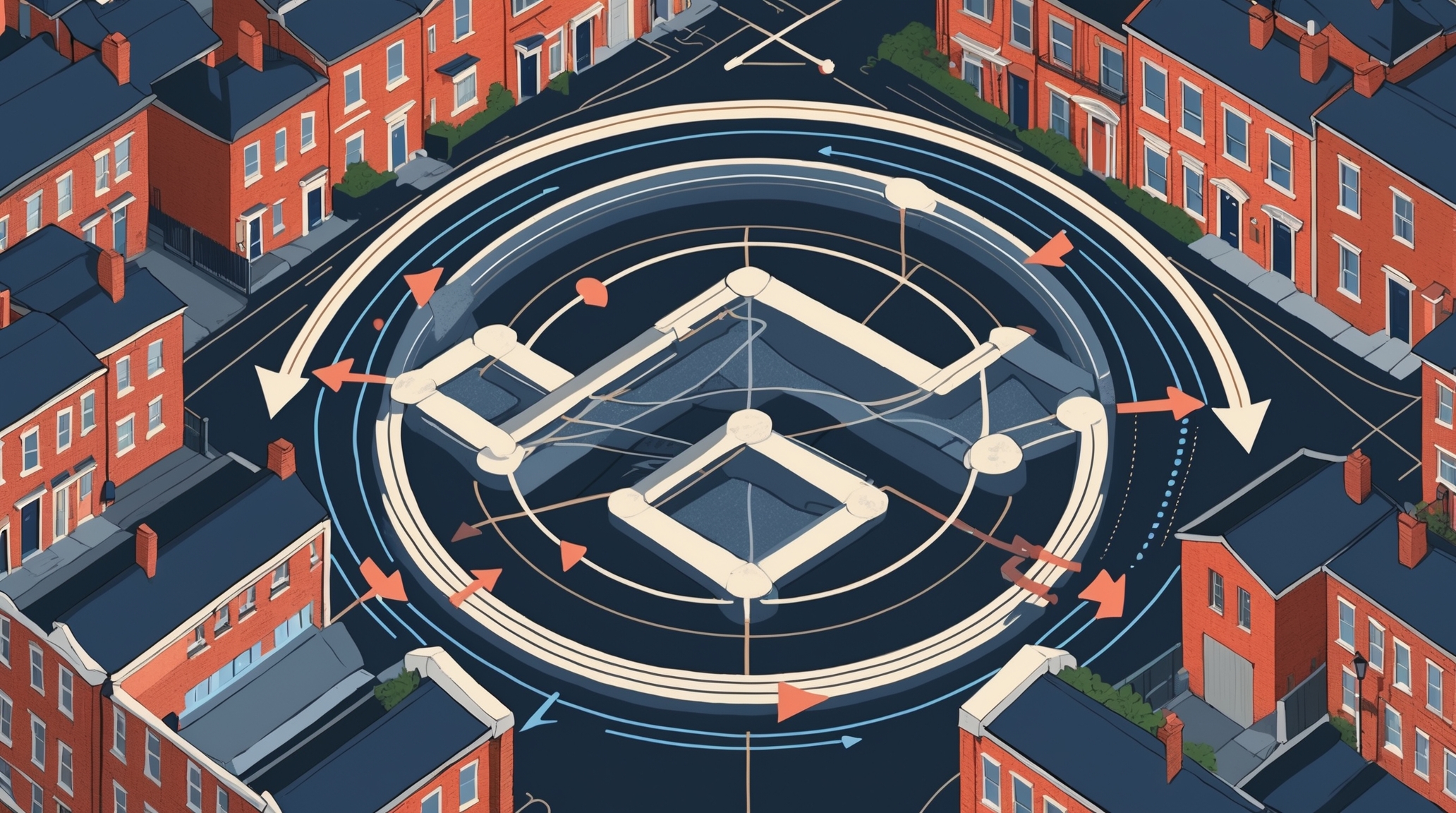
UK house prices do not just rise. They rise relentlessly. Year after year. Decade after decade. With occasional pauses. Brief corrections. But the long-term trend is unmistakable. Up. Always up. And this is not random. It is not market forces operating freely. It is feedback loops. Loops that reinforce rising prices. Loops that turn small increases into large ones. Loops that ensure that once prices start climbing, they keep climbing. Until something breaks.
And even when something breaks, when prices fall, the loops reverse them. Push them back up. Because the system is structured to prevent sustained price falls. The loops stabilize high prices. They resist downward pressure. And they ensure that housing, in the UK, becomes more expensive over time. Not less.
Let me show you the loops that drive UK house prices upward.
The first loop is the wealth effect loop. This is a reinforcing loop. And it works like this. House prices rise. Homeowners feel wealthier. Wealthier people spend more. They buy cars. They renovate. They go on holiday. Consumer spending increases. Economic activity increases. Incomes rise. And rising incomes mean people can borrow more. Bigger mortgages. So they bid more for houses. Prices rise further. Homeowners feel even wealthier. The loop accelerates.
This is why rising house prices stimulate the economy. Not for everyone. But for homeowners. And homeowners are a large portion of the population. Large enough that their spending matters. So when house prices rise, GDP grows. Employment grows. And the government, seeing growth, supports policies that keep prices rising. Or at least prevent them from falling. Because falling prices would reverse the loop. Reduce spending. Contract the economy. And cause political pain.
But here is the problem. The wealth is not real. Not until the house is sold. A homeowner whose house has doubled in value has not actually gained wealth. They have gained paper wealth. Unrealized wealth. If they sell, they have to buy another house. Which has also doubled in price. So unless they downsize or move to a cheaper area, the gain is illusory. But the feeling is real. And the feeling drives behavior. People borrow against the rising value. Equity release. Remortgaging. And they spend the borrowed money. Which stimulates the economy. But also increases debt. Personal debt. Which, if prices ever fall, becomes unsustainable.
The second loop is the lending loop. Banks lend based on house prices. The higher the price, the larger the mortgage. And larger mortgages mean buyers can bid more. Which pushes prices higher. Which allows banks to lend even more. The loop reinforces.
Here is how it works. A bank lends you four times your income. If you earn fifty thousand pounds, you can borrow two hundred thousand. You bid on a house. But you are competing with other buyers. Also borrowing multiples of income. So the price gets bid up. To two hundred and fifty thousand. The seller, seeing higher bids, raises the asking price. Now the house is worth two hundred and fifty thousand. And the bank, seeing the higher valuation, is willing to lend more. Five times income. Two hundred and fifty thousand. You borrow the full amount. The price rises. The loop continues.
This is credit-driven inflation. And it is structural. As long as banks are willing to lend large multiples of income, prices will rise to meet that lending capacity. Because buyers, rationally, borrow as much as they can. And sellers, rationally, price to the limit of what buyers can afford. The availability of credit becomes the ceiling. And the ceiling keeps rising.
And here is the insidious part. When prices rise, people feel they need to borrow more just to get on the ladder. So they stretch. They borrow the maximum. They take longer terms. Thirty-five years. Forty years. And the debt burden grows. But as long as prices keep rising, the debt feels manageable. Because the asset is appreciating. The problem is that debt levels, relative to income, have increased. And if prices ever stop rising, or fall, the debt becomes a trap.
The third loop is the supply restriction loop. This is also reinforcing. Planning restrictions limit supply. Limited supply pushes prices up. High prices increase the value of land with planning permission. Landowners, seeing the value, resist releasing land. They hold it. Speculate on it. Wait for prices to rise further before selling or developing. Meanwhile, existing homeowners, seeing high prices, oppose new development. NIMBYism. Not in my back yard. Because new homes, they fear, will reduce the value of their property. So they lobby councils to refuse planning applications. The council, responding to local voters, restricts development. Supply stays limited. Prices stay high. The loop continues.
This is scarcity by design. And it is self-reinforcing. The higher prices go, the more homeowners have to lose from new supply. So opposition to development intensifies. Councils, under pressure, tighten restrictions. And supply, already limited, becomes even more constrained. Meanwhile, developers, seeing high prices, focus on high-margin homes. Not affordable homes. Because the profit is better. So even when homes are built, they do not help the people who need them most.
And here is the political dimension. Homeowners are a majority of voters. And they vote to protect their wealth. So politicians, who need votes, side with homeowners. Not with renters. Not with young people trying to buy. Homeowners. And homeowners want supply restricted. Because restriction protects prices. So planning reform, which could increase supply, gets blocked. By homeowners. By councils. By MPs in constituencies where homeownership is high. The loop is political as much as economic. And it ensures that supply never catches up with demand.
The fourth loop is the buy-to-let loop. Investors buy properties. Rent them out. Prices rise. Rising prices make property look like a good investment. More investors buy. Demand increases. Prices rise further. Investors, seeing capital appreciation and rental income, buy more. The loop accelerates.
This loop took off in the late 1990s and 2000s. Mortgage interest rates were low. Buy-to-let mortgages became widely available. And investors, seeing property as safer than stocks, bought. Some bought one property. Some bought ten. Some built portfolios. And each purchase removed a home from the owner-occupier market. Reduced the supply available to first-time buyers. And pushed prices up.
Renters, unable to buy because prices were too high, paid rent to landlords. And the rent, in many cases, was higher than a mortgage would have been. But renters could not get a mortgage. Because they could not save a deposit. Because they were paying high rent. The loop trapped them. Renters stayed renters. Landlords accumulated property. Wealth concentrated. And the gap between those who owned and those who did not widened.
And even when the government introduced tax changes to cool the buy-to-let market, stamp duty surcharges, removal of mortgage interest tax relief, the effect was limited. Because prices had already risen. Landlords who bought early had already accumulated wealth. And new investors, deterred by the tax changes, were replaced by cash buyers. Wealthier investors. Who did not need mortgages. So demand from investors persisted. And the loop continued.
The fifth loop is the Help to Buy loop. This was a government scheme. Designed to help first-time buyers. It provided a loan, up to twenty percent of the purchase price, to top up the deposit. The idea was to make homeownership accessible. But what it actually did was increase demand. More buyers. With bigger budgets. Competing for the same limited supply. So prices rose.
Here is how the loop worked. A buyer qualifies for Help to Buy. They can now afford a more expensive house. They bid higher. Sellers, seeing higher bids, raise asking prices. Prices rise. Other buyers, seeing prices rise, fear being priced out. So they use Help to Buy too. More demand. Prices rise further. The loop accelerates. And the scheme, intended to make housing affordable, made it less affordable. Because it increased demand without increasing supply.
And developers loved it. Because it created buyers for new-build homes. Homes that were often overpriced compared to existing stock. But buyers, using Help to Buy, paid the premium. Because they could. And developers, seeing the demand, kept prices high. The scheme subsidized developers as much as it helped buyers. And the net effect was inflation. Not affordability.
The sixth loop is the expectation loop. People expect house prices to rise. And expectations shape behavior. If you believe prices will keep rising, you buy now. Rather than waiting. Because waiting means paying more later. So you stretch. Borrow the maximum. Accept a smaller home. Or a longer commute. Anything to get on the ladder. Because getting on the ladder, even at a high price, is better than being priced out entirely.
Sellers, seeing this urgency, hold firm on prices. Or raise them. Because they know buyers are desperate. And buyers, knowing sellers are firm, do not negotiate hard. They accept the asking price. Or bid over it. So prices rise. And the expectation that prices will rise is confirmed. Which reinforces the expectation. The loop feeds itself.
This is a self-fulfilling prophecy. As long as people believe prices will rise, they act in ways that make prices rise. And as long as prices rise, the belief is validated. The loop is psychological as much as economic. And it is very hard to break. Because breaking it requires people to believe prices will fall. And believing that requires seeing prices fall. But prices do not fall as long as people believe they will not. The expectation stabilizes the system.
The seventh loop is the inheritance loop. Older generations, who bought property decades ago, accumulated wealth. And they pass that wealth to their children. Through inheritance. Through gifted deposits. The bank of mum and dad. And children who receive help can afford to buy. Which keeps demand high. Prices high. And homeownership concentrated among those whose parents own property.
This creates a hereditary system. If your parents own a home, you can access the wealth needed to buy. If your parents do not, you cannot. So homeownership becomes intergenerational. Passed down. Not earned. And the children of renters stay renters. Because they do not have access to the deposits required. The loop entrenches inequality. Wealth concentrates. And housing becomes a marker of class.
And here is the feedback. Parents, seeing how hard it is for their children to buy, help more. Larger gifts. Larger deposits. Which allows their children to bid higher. Which pushes prices up. Which makes it even harder for children without parental help. So the gap widens. The loop accelerates. And the system, rather than equalizing opportunity, perpetuates advantage.
The eighth loop is the downsizing resistance loop. Older homeowners, whose children have moved out, live in large family homes. Homes with spare bedrooms. Spare space. These homes, if released, could house younger families. But older homeowners do not downsize. Not in large numbers. Why? Because downsizing is not financially attractive. Stamp duty on the new purchase. Moving costs. Emotional attachment. And smaller homes, per square foot, are often more expensive than larger ones. So downsizing does not save money. And it costs effort. So people stay. Underoccupying. And the family homes that could be used by families are locked up. Supply is constrained. Prices stay high. The loop persists.
So here are the loops. The wealth effect loop, where rising prices stimulate spending which supports further rises. The lending loop, where bigger mortgages push prices higher which enables bigger mortgages. The supply restriction loop, where high prices incentivize NIMBYism which restricts supply which keeps prices high. The buy-to-let loop, where investor demand pushes prices up which attracts more investors. The Help to Buy loop, where subsidies increase demand which inflates prices. The expectation loop, where belief in rising prices drives behavior that makes prices rise. The inheritance loop, where parental wealth enables purchases which keeps demand high. And the downsizing resistance loop, where older homeowners stay in large homes which constrains supply.
These loops interact. They reinforce each other. And together, they create a system where prices rise. Relentlessly. And where efforts to increase affordability, building more homes, capping mortgages, taxing investors, are overwhelmed by the loops. Because the loops are structural. They are baked into the incentives. The expectations. The politics. And they ensure that the UK housing market does one thing. And one thing only. It gets more expensive.
The next article will show you why this system resists change. Why, even when everyone agrees housing is unaffordable, reform does not happen. Why governments promise action and deliver inertia. And why the forces protecting high prices are stronger than the forces pushing for affordability. Because the system is not broken. It is working. Just not for you.