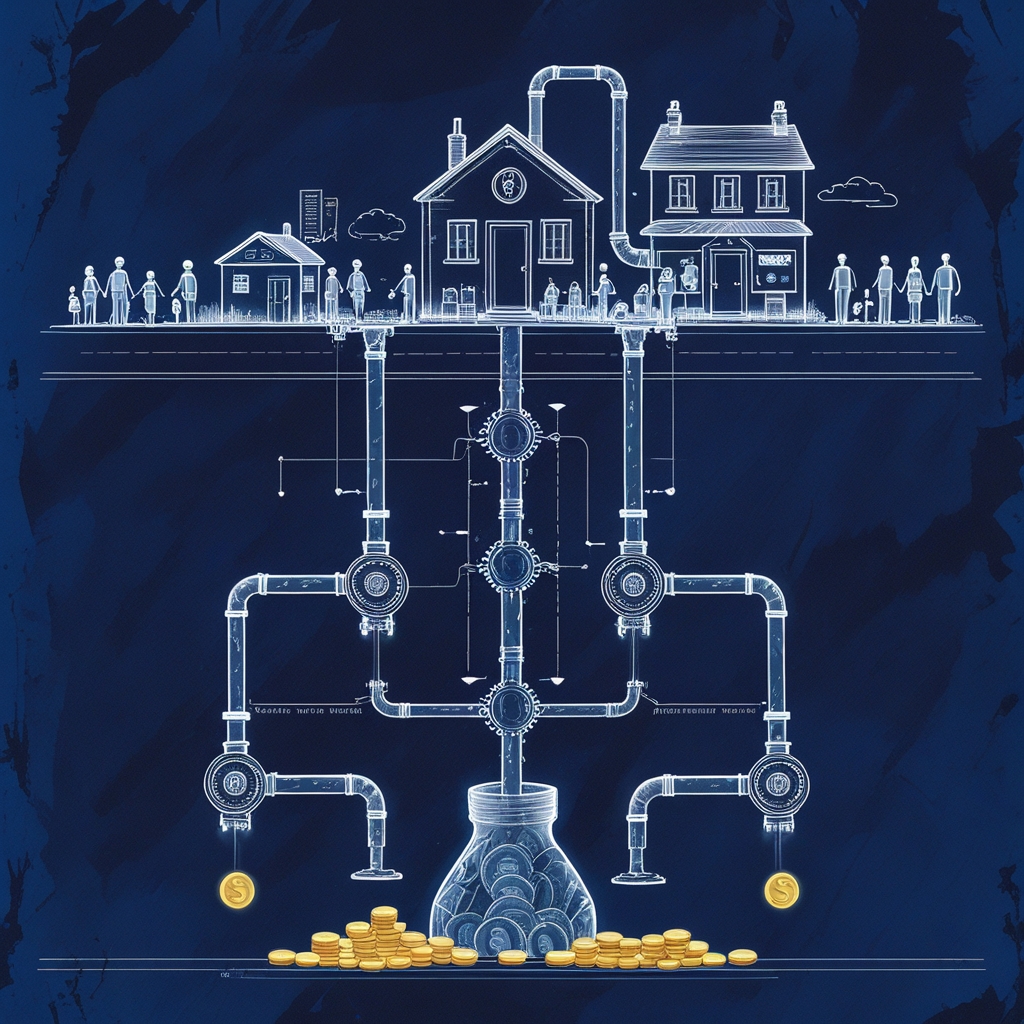
Where UK Policy Actually Has Leverage

The UK housing system is resistant to change. But it is not immovable. There are points where policy could shift outcomes. Where intervention could increase supply, reduce prices, or improve affordability. Not easily. Not without political cost. But possible. The question is not whether solutions exist. They do. The question is whether there is political will to implement them. And whether the will is strong enough to overcome the resistance.
Because every point of leverage creates losers. Homeowners who see their wealth fall. Developers who see their profits shrink. Banks who face increased risk. And losers resist. They lobby. They vote. They threaten. And unless the political will is stronger than the resistance, the leverage goes unused. The system stays as it is.
But let me show you where UK policy actually has leverage. Where intervention could work. If the will existed.
The first point of leverage is planning reform. Specifically, removing local discretion and granting permission by right. If a development meets clear, objective criteria, density, design, sustainability, infrastructure, it gets approved. Automatically. No local veto. No lengthy consultation. No appeals. Just approval.
This would transform supply. Because the main constraint on housing supply is not land. It is permission. Developers have land. Landowners have land. But they cannot build because councils, responding to local homeowners, refuse permission. Or delay it. Or attach conditions that make development unviable. Planning by right removes that barrier. And unleashes supply.
Japan does this. In Japan, if a development meets zoning rules, it gets approved. Councils cannot block it. And the result is abundant housing. Stable prices. And affordability. Even in Tokyo, one of the most densely populated cities in the world, housing is more affordable than in London. Because supply is not artificially constrained by discretionary planning.
The political obstacle is homeowners. They see planning by right as a loss of control. A threat to their property values. And they oppose it. Loudly. So implementing this requires overriding them. Centralizing planning decisions. And accepting the political backlash. Few governments are willing to do that. But it is the most effective lever for increasing supply.
The second point of leverage is land value taxation. Currently, when planning permission is granted, the landowner captures most of the uplift. The difference between agricultural value and development value. This is unearned wealth. The landowner did nothing to create it. The community created it. By allowing development. By building infrastructure. But the landowner keeps it. And this incentivizes land hoarding. Speculation. Holding land and waiting for permission. Or waiting for values to rise further before selling.
A land value tax captures that uplift for the public. The landowner still profits. But the majority of the gain goes to the public. And because the tax is based on the potential value of the land, not what is built on it, it incentivizes development. If you hold land and do not develop it, you still pay tax. So holding land becomes costly. And landowners, to avoid the cost, develop. Or sell to someone who will.
This increases supply. Because land gets released faster. And it funds infrastructure. Schools. Transport. Utilities. Which makes development more viable in more locations. The political obstacle is landowners. Who see this as confiscatory. And who lobby against it. But the economic case is strong. And countries that use land value taxes, Singapore, Taiwan, have more affordable housing.
The third point of leverage is public housing investment. The government, through councils or housing associations, could build homes. Directly. At scale. Hundreds of thousands per year. And rent them at affordable rates. Or sell them at cost. This would increase supply. Provide an alternative to the private market. And put downward pressure on private rents and prices.
The UK used to do this. Council housing. Built after the war. Built through the 1970s. Millions of homes. Affordable. Secure. And it worked. It housed people. It stabilized communities. And it provided a non-market option. Then Right to Buy sold off the stock. And it was not replaced. And now, social housing waiting lists are years long. Because there is not enough. But there is no structural reason the government could not build again.
The obstacle is cost. Building homes requires upfront investment. Billions. And the return, affordable rent, does not cover the cost quickly. So the Treasury sees it as spending. Not investment. And spending is hard to justify when budgets are tight. But the long-term return is enormous. Lower housing benefit costs. Lower homelessness. Higher productivity because people can live near jobs. The case is sound. But short-term fiscal pressures dominate.
The fourth point of leverage is mortgage lending restrictions. Banks lend multiples of income. Four times. Five times. Sometimes more. And the amount people can borrow determines the amount they can pay. So house prices rise to meet lending capacity. If lending were restricted, say to three times income, buyers could not bid as high. Prices would moderate. Or at least, price growth would slow.
This is not hypothetical. The Bank of England has tools to restrict lending. Loan-to-income limits. Loan-to-value limits. Stress tests. And they use them. But cautiously. Because restricting lending reduces demand. And reducing demand risks a price correction. Which would hurt homeowners. And destabilize banks. So the restrictions are gentle. Just enough to prevent reckless lending. But not enough to seriously cool prices.
Stronger restrictions would work. But they would also cause pain. First-time buyers would struggle to borrow enough. Sellers would see fewer buyers. Prices would fall. And the political backlash would be severe. Homeowners would blame the government. Banks would warn of credit contraction. And the government, fearing the fallout, would relent. So this lever exists. But using it requires courage. And willingness to accept short-term pain for long-term gain.
The fifth point of leverage is reforming Right to Buy. Or stopping it. Right to Buy allows council tenants to buy their homes at a discount. This was popular. It created homeowners. But it gutted the social housing stock. And the homes sold were not replaced. So the stock declined. And continues to decline.
Stopping Right to Buy would preserve what remains. And allowing councils to build again, using the proceeds from sales, would increase supply. This is not radical. It is restoration. Returning to a policy that worked. But it is politically difficult. Because Right to Buy is popular. Homeowners support it. Aspirational voters support it. And opposing it looks like opposing aspiration. So no major party proposes it. But the policy is a direct cause of the social housing shortage. And reversing it would help.
The sixth point of leverage is taxing buy-to-let more heavily. Currently, buy-to-let investors compete with first-time buyers. They have larger deposits. They can outbid. And every home they buy is a home a first-time buyer does not get. Taxing buy-to-let more heavily, through stamp duty, through capital gains tax, through restricting mortgage interest relief, reduces investor demand. And shifts the balance toward owner-occupiers.
The government has done some of this. Stamp duty surcharge on second homes. Removal of mortgage interest tax relief. And it worked. Buy-to-let purchases declined. But not enough to significantly shift the market. Because wealthy investors, paying cash, are not affected by mortgage restrictions. And stamp duty, while a deterrent, is not prohibitive for high-value investors.
Stronger measures would work. Higher capital gains tax on second properties. Restrictions on short-term lets. Limits on the number of properties one person can own. But each of these faces resistance. Landlords lobby. They argue they provide rental housing. That restricting them reduces supply. And that renters would be hurt. Some of this is true. Restricting buy-to-let does reduce rental supply. But it increases owner-occupier supply. And the trade-off favors owner-occupiers. The obstacle is political. Landlords vote. They donate. And they have influence.
The seventh point of leverage is green belt release. Not abolishing the green belt. But releasing a small percentage of it. Particularly around high-demand areas. London. The South East. Cambridge. Oxford. Where land is scarcest and prices are highest. Even releasing five percent of green belt land would unlock enormous supply. Hundreds of thousands of homes. And because the land is already near infrastructure, near jobs, it is ideal for housing.
The opposition is fierce. Environmental groups oppose it. Rural communities oppose it. Homeowners oppose it. And the green belt is politically sacred. But much of the land designated as green belt is not environmentally valuable. It is intensive farmland. Golf courses. Horse paddocks. Releasing the least valuable parts, the parts closest to existing development, would do minimal environmental harm. And it would transform supply.
This requires political courage. Overriding opposition. Making the case that housing people is more important than protecting underutilized land. And accepting the backlash. Few politicians are willing. But the lever is there. And it is powerful.
The eighth point of leverage is use-it-or-lose-it planning permission. Currently, developers can get planning permission and sit on it. Land banking. Waiting for the market to improve. Or for land values to rise. And there is no penalty. The permission lasts years. Sometimes indefinitely if renewed. This allows developers to control supply. To drip-feed homes. And to keep prices high.
A use-it-or-lose-it rule would change this. If you do not start building within, say, two years, the permission expires. And you lose it. This would pressure developers to build faster. To release land faster. And it would increase supply. Not dramatically. But meaningfully.
The obstacle is developers. They argue that building takes time. That delays are often beyond their control. Planning conditions. Infrastructure requirements. Market conditions. And that punishing them for delays would discourage development. Some of this is legitimate. But much of it is strategic. Developers benefit from delay. And they resist policies that force them to build faster.
The ninth point of leverage is restricting foreign investment. In high-demand areas, particularly London, foreign investors buy property. Not to live in. Not to rent out long-term. But as an asset. A store of wealth. And these properties often sit empty. Or are used occasionally. Meanwhile, local buyers are priced out. Because they are competing with global capital.
Restricting foreign ownership, or taxing it heavily, would reduce this demand. And free up supply for local buyers. Some cities have done this. Vancouver. Singapore. And it worked. Prices moderated. Supply increased. The political obstacle is that foreign investment brings money into the country. It supports construction. It generates economic activity. And the financial services industry, which profits from facilitating these transactions, lobbies against restrictions. But the trade-off is clear. Foreign investment inflates prices. And local buyers lose.
So here is where UK policy has leverage. Planning by right to increase supply. Land value taxation to capture uplift and incentivize development. Public housing investment to provide non-market supply. Mortgage lending restrictions to cool demand. Reforming Right to Buy to preserve social housing. Taxing buy-to-let to shift the market toward owner-occupiers. Green belt release to unlock land near high-demand areas. Use-it-or-lose-it planning to pressure developers to build faster. And restricting foreign investment to prioritize local buyers.
Each of these would work. Each would shift the system. Some more than others. But none of them are easy. Because each creates losers. And the losers resist. Homeowners resist planning reform and green belt release. Landowners resist land value taxation. Developers resist use-it-or-lose-it. Banks resist lending restrictions. Landlords resist buy-to-let taxes. And foreign investors resist ownership restrictions.
The system is not broken. It is working. For the people who benefit from high prices. And those people have power. So the levers exist. But using them requires political will. Will to override homeowners. Will to face down developers. Will to accept short-term pain for long-term gain. And will to prioritize affordability over wealth protection.
Most governments do not have that will. They promise reform. But they deliver tweaks. Marginal changes. Symbolic gestures. Because real reform is too costly. Politically. Electorally. So the system persists. And prices keep rising.
The final article will show you how we got here. How the UK housing system became what it is. Not through conspiracy. But through decisions. Policy decisions. Made over decades. Each one rational at the time. Each one responding to pressures. But cumulatively, disastrous. Because the system we have now is the result of those decisions. And understanding them is the only way to understand why housing, in the UK, is broken.