The Feedback Loops - Why Debt Keeps Growing
Student loan debt in the UK does not just exist. It grows. Relentlessly. The total outstanding balance increases every year. Not just because more students are borrowing. But because existing debt is compounding. Interest accrues faster than repayments. Balances balloon. And what starts as thirty thousand pounds can end up as sixty thousand. Eighty thousand. More. Even though the borrower has been making payments for years.
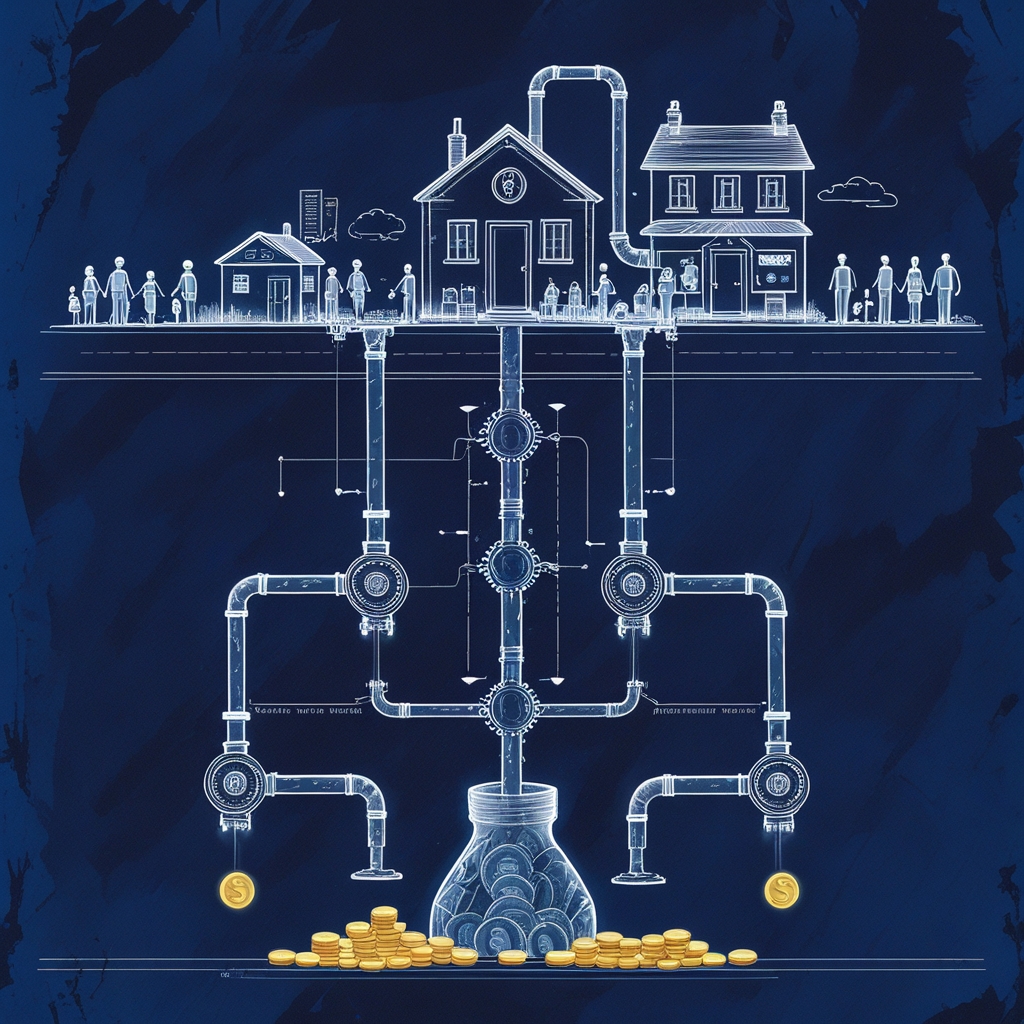
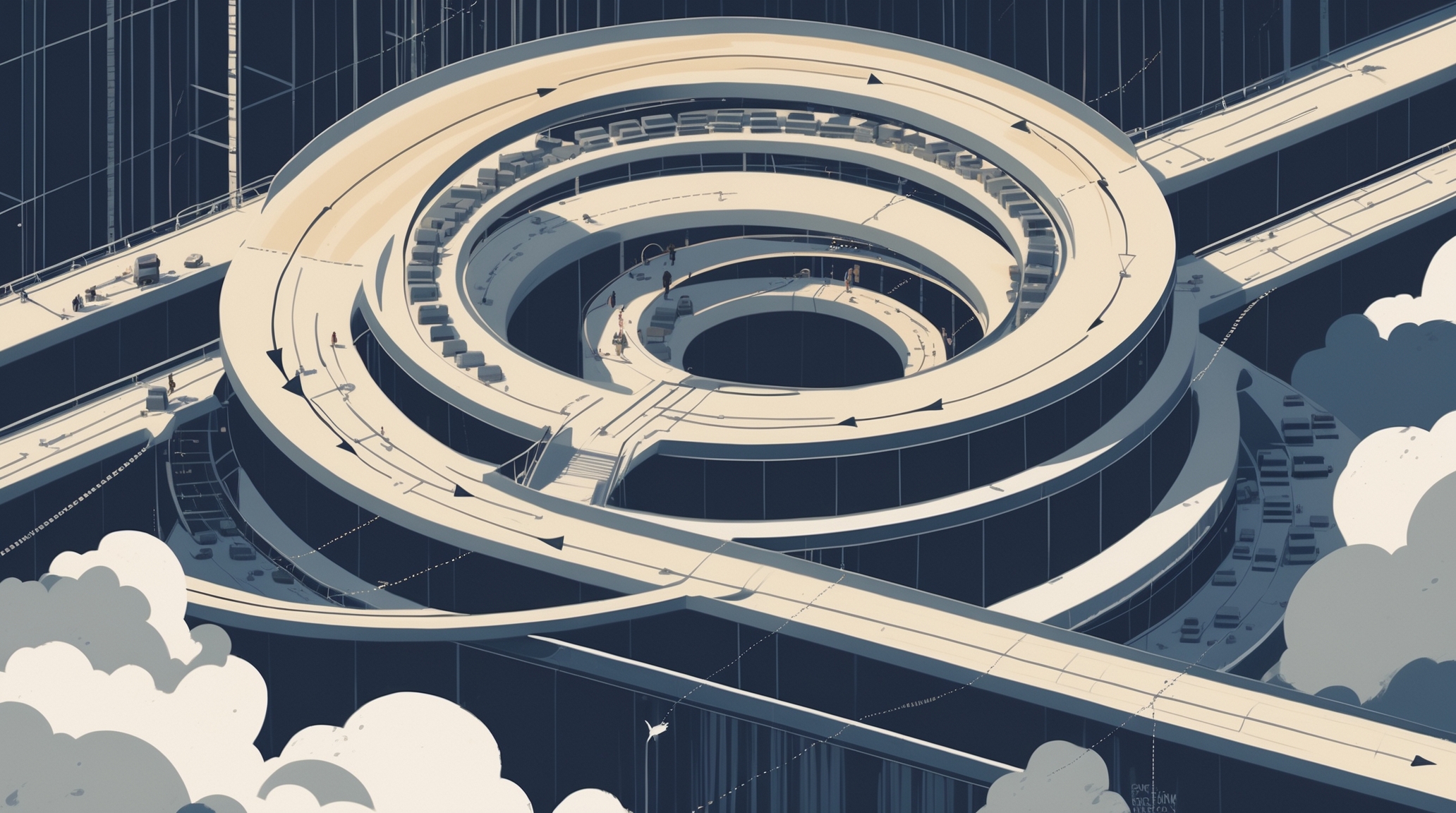
This is not random. It is not accidental. It is feedback loops. Loops that ensure debt grows. Loops that make repayment impossible for most borrowers. Loops that benefit the institutions and trap the individual. And once these loops are in motion, they are very hard to stop. Because they feed themselves. Each element reinforces the others. And the system spirals. Not toward resolution. Toward expansion.
Let me show you the loops that make UK student debt grow.
The first loop is the interest accumulation loop. This is the most direct. The most punishing. And the most misunderstood. Interest accrues on student loans from the moment the money is disbursed. Not from when you start repaying. From when the university receives the money. So if you start university in September, interest starts in September. And it compounds. Every year. At RPI plus three percent while you study.
Let me show you how this works. You borrow nine thousand two hundred and fifty pounds in year one. Interest accrues at six percent, assuming RPI is three percent. By the end of year one, your balance is nine thousand eight hundred and five pounds. You borrow another nine thousand two hundred and fifty in year two. Now your total is nineteen thousand and fifty-five pounds. Interest accrues on that. At six percent. By the end of year two, your balance is over twenty thousand pounds. You borrow another nine thousand two hundred and fifty in year three. And by the time you graduate, you owe over thirty-two thousand pounds. Even though you only borrowed twenty-seven thousand seven hundred and fifty.
You have not started working. You have not earned anything. But you already owe more than you borrowed. And the loop continues. Because once you graduate, the interest does not stop. It changes. Based on your income. But unless you are earning significantly above the threshold, your repayments will not cover the interest. So the balance grows. Even though you are paying.
Here is an example. You graduate with thirty-five thousand pounds of debt. You earn thirty thousand pounds. You are two thousand seven hundred and five pounds above the threshold. You repay nine percent of that. Two hundred and forty-three pounds per year. Twenty pounds per month. Meanwhile, your interest is four percent. Four percent of thirty-five thousand is one thousand four hundred pounds. You are repaying two hundred and forty-three. The interest is one thousand four hundred. Your balance grows by over one thousand pounds per year. Every year. For as long as your income stays at that level.
And this is structural. The repayment threshold is set low. The interest rate is set high. And the result is that for most borrowers, the debt grows. It is not designed to be repaid. It is designed to compound. Until it is written off. But while it exists, while it grows, it creates pressure. Psychological pressure. Financial pressure. And that pressure shapes behavior.
The second loop is the wage stagnation loop. Graduates enter the workforce with debt. Significant debt. And they need to start earning. To start repaying. So they take jobs. Any jobs. Even if the pay is low. Even if the conditions are poor. Because they need income. And income, even modest income, triggers repayment.
Employers know this. They know graduates are desperate. Burdened. So they offer lower wages. Worse conditions. And graduates accept. Because the alternative is unemployment. And unemployment means the debt sits. Growing. Accruing interest. So they take the job. And the low wage.
But here is the feedback. Low wages mean low repayments. And low repayments mean the debt grows. Which means the burden persists. Which means the graduate cannot afford to leave. Cannot afford to retrain. Cannot afford to take risks. So they stay in the low-paying job. The wage stays low. The debt grows. And the loop reinforces.
And the debt suppresses wage growth. Because the graduate, carrying debt, cannot negotiate. Cannot threaten to walk. Cannot afford to be unemployed while searching for better opportunities. So they accept stagnant wages. And wage stagnation, across the graduate workforce, keeps repayments low. Which keeps debt growing. The loop spirals.
The third loop is the fee inflation loop. Universities are funded by tuition fees. Nine thousand two hundred and fifty pounds per student. And that income is protected. Politically. Institutionally. Because universities depend on it. If fees were cut, universities would face a funding crisis. So they lobby to keep fees high. And to raise them. In line with inflation. Or above.
And here is the loop. High fees mean students borrow more. More borrowing means more debt. More debt means more repayment pressure. More pressure means more demand for policies that help graduates. Help to Buy. Mortgage subsidies. Anything to ease the burden. But these policies do not reduce the debt. They just make it easier to live with. Which reduces the political pressure to cut fees. So fees stay high. Students keep borrowing. Debt keeps growing. The loop continues.
And universities, seeing guaranteed income, spend. They build. They expand. They hire. And the cost base rises. So even if there were political will to cut fees, universities would argue it is impossible. They cannot afford it. Their costs are too high. And cutting fees without replacing the income would mean closures. Job losses. Reduced access. So fees stay. The students borrow. And the debt accumulates.
The fourth loop is the political inaction loop. Student loan reform is politically toxic. Because any reform costs someone. If you cut fees, universities lose income. If you reduce interest rates, the government loses revenue. If you raise the repayment threshold, fewer people repay. If you write off debt, taxpayers pay. Every option creates losers. And losers resist.
So politicians avoid it. They promise reviews. Consultations. But nothing changes. Because changing the system requires political capital. And the people most affected, current students and recent graduates, do not vote in sufficient numbers to create pressure. They are outnumbered by older voters. Homeowners. People who are not affected by student loans. So the political cost of reform exceeds the benefit. And reform does not happen.
But here is the feedback. Inaction means the debt grows. More students borrow. More debt accumulates. The problem gets bigger. And the bigger the problem, the more expensive reform becomes. So the political cost increases. Which makes inaction more likely. Which allows the problem to grow further. The loop reinforces. And the system becomes harder to fix.
The fifth loop is the RAB charge loop. The RAB charge, Resource Accounting and Budgeting charge, is the percentage of loans the government expects to write off. Currently around fifty percent. This is a cost. A cost to the taxpayer. But it is deferred. Hidden. Not immediate.
And here is the loop. High interest rates increase the RAB charge. Because more borrowers never repay. Low repayment thresholds also increase the RAB charge. Because fewer borrowers earn enough to clear the debt. So the policies that make the debt grow, high interest, low thresholds, also increase the cost to government. Which should create pressure to reform. But it does not. Because the cost is deferred. Thirty years away. So current governments do not feel it. And future governments, who will bear the cost, are not here to object.
So the RAB charge grows. The write-off liability increases. And the system continues. Because the people making decisions today do not pay the cost. The cost is pushed onto future taxpayers. Future governments. And by the time the bill arrives, the politicians who created the problem are long gone.
The sixth loop is the complexity and error loop. The student loan system is complex. Plan 1. Plan 2. Plan 5. Different thresholds. Different interest rates. Different write-off periods. And the Student Loans Company, which administers the system, makes errors. Balances are miscalculated. Repayments are misapplied. Interest is charged incorrectly.
And borrowers, who are not financial experts, do not notice. Or if they notice, they do not know how to challenge it. The SLC is difficult to contact. Slow to respond. And dismissive of complaints. So errors persist. And borrowers overpay. Or underpay. And the underpayments accumulate interest. Which increases the balance. Which increases future repayments. The loop compounds.
And complexity justifies the SLC's existence. The more complex the system, the more infrastructure is needed to manage it. So the SLC grows. Expands. And complexity, rather than being a problem, becomes a feature. Because it justifies budgets. Staffing. Systems. And the SLC, having no incentive to simplify, does not. The system stays complex. Errors continue. And borrowers pay.
The seventh loop is the expectation normalization loop. Student debt used to be unusual. Shameful, even. But now it is normal. Expected. Everyone has it. Fifty thousand pounds. Sixty thousand. Eighty thousand. It is just part of going to university. So students borrow without hesitation. Without understanding the terms. Without calculating the long-term cost. Because everyone else is doing it. And if everyone else is doing it, it must be fine.
This normalization reduces resistance. Students do not protest. They do not demand reform. Because debt is just what happens. It is the price of access. And they accept it. So political pressure does not build. And the system continues. Unchallenged.
But normalization also increases borrowing. Because if debt is normal, there is no stigma in borrowing more. Maximum maintenance loans. Overdrafts. Credit cards. All of it piles on. And the total debt, student loans plus other borrowing, grows. Which increases financial stress. Which reinforces the normalization. Because if everyone is struggling, struggling must be normal. The loop feeds itself.
The eighth loop is the international comparison loop. The UK looks at other countries. The US. Australia. And sees student loan systems that are worse. Higher fees. Higher debt. More punitive repayment terms. And the UK government, seeing this, concludes that the UK system is reasonable. Even generous. Because it could be worse.
This creates complacency. The system does not need reform. Because compared to the US, where students graduate with six-figure debt and no income-contingent repayment, the UK system looks fair. So pressure to improve is deflected. The comparison is always to worse systems. Never to better ones. Never to countries where university is free. Germany. Norway. Scotland, for Scottish students. The comparison is selective. And it justifies inaction.
But here is the feedback. Inaction allows the problem to grow. And as the problem grows, the comparison shifts. The UK starts to look more like the US. More debt. More interest. More burden. And the government, instead of reversing course, points to the US and says, see, it could be worse. The loop continues. And the system degrades.
So here are the loops. Interest accrues faster than repayment. Low wages suppress repayment which allows debt to grow. High fees require more borrowing which perpetuates high fees. Political inaction allows the problem to expand which makes reform more expensive. The RAB charge grows but the cost is deferred so no one acts. Complexity creates errors which increase balances which justify complexity. Normalization reduces resistance which allows more borrowing which reinforces normalization. And international comparisons create complacency which allows the system to degrade.
These loops interact. They reinforce each other. And together, they ensure that student debt, in the UK, grows. For individuals. For the system. And for the state. The debt that was supposed to be manageable, income-contingent, fair, becomes a lifetime burden. A tax. A weight that never lifts. And the people carrying it, the graduates making repayments, are trapped. Not by choice. But by structure. By a system designed to grow debt. Not to resolve it.
The next article will show you why this system resists reform. Why, despite being obviously broken, despite trapping millions in debt, despite costing taxpayers billions, nothing changes. Because the forces protecting the system are stronger than the forces trying to fix it. And those forces are structural. Political. And very, very powerful.