The Machine - How UK Student Loans Actually Work
You go to university. You are told not to worry about the cost. The loans are different. Not like normal debt. You only repay if you earn enough. And if you do not repay it all, it gets written off. So do not let the debt put you off. Everyone has it. It is normal. Just sign the forms.
And you sign. Because what choice do you have? University is the expected path. The route to a decent job. To social mobility. To not being left behind. So you borrow. Fifty thousand pounds. Sixty thousand. More, if you are in London or studying longer courses. And you do not think about it much. Because it does not feel like real debt. You do not see the money. You do not make payments while studying. It is abstract. Distant. A problem for future you.
But then you graduate. You start working. And a chunk of your salary disappears. Every month. Nine percent of everything you earn above a threshold. Deducted automatically. Like tax. And you realize the loan is real. Very real. And it is not going away. Not quickly. Maybe not ever. Because the balance is not shrinking. It is growing. Even though you are paying. Because the interest is higher than your repayments. And the debt, which you were told not to worry about, is now a weight. A permanent fixture. For decades.
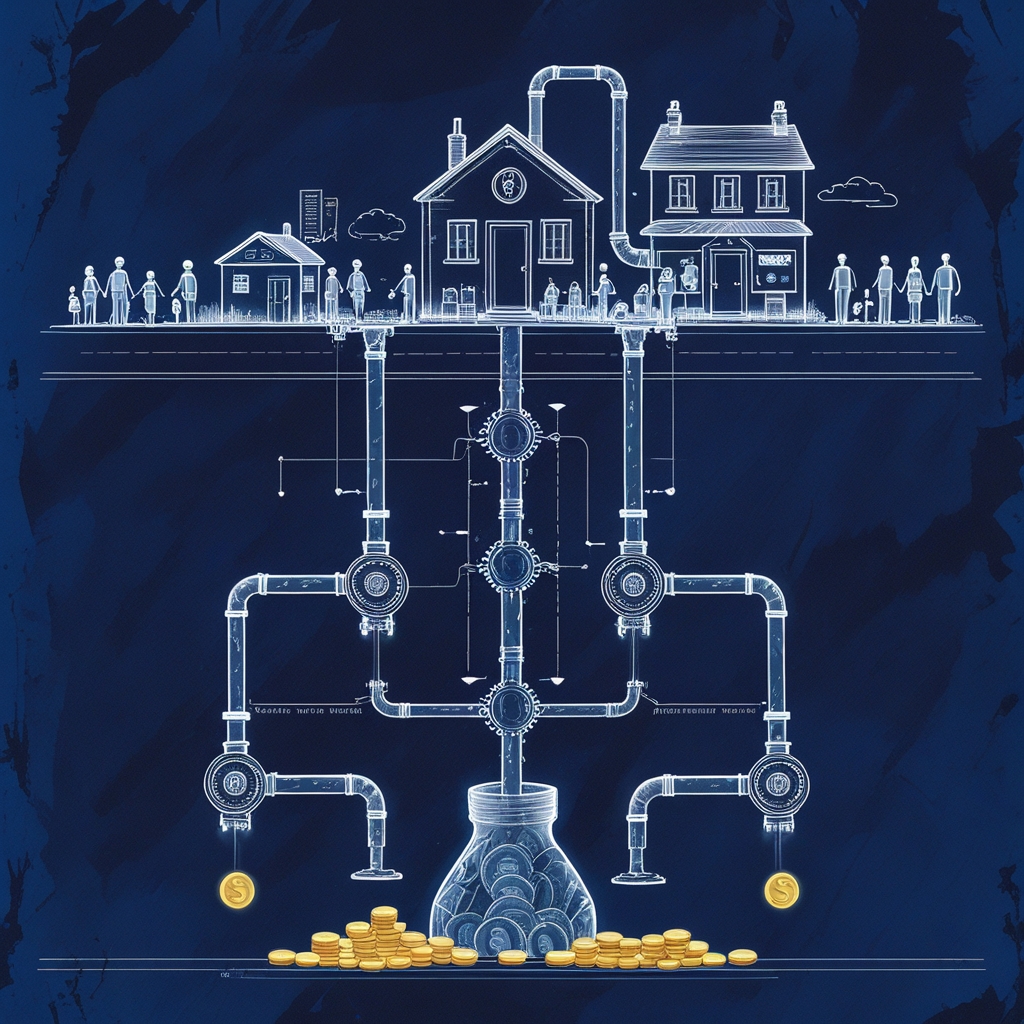
This is the UK student loan system. And it is not what you were told it was. It is not a loan in any conventional sense. It is a graduate tax. Disguised as debt. With interest rates that make it expensive. Repayment terms that make it inescapable. And a structure that benefits everyone except the borrower.
Let me show you how the machine actually works.
The first thing to understand is that there are different loan plans. Plan 1. Plan 2. Plan 5. Each with different terms. Different thresholds. Different interest rates. And which plan you are on depends on when you started university. And where. England. Scotland. Wales. Northern Ireland. Each has its own system. But the majority of current students and recent graduates in England are on Plan 2. So that is what I will focus on. Because that is where the worst of the system sits.
Plan 2 loans were introduced in 2012. When tuition fees were tripled. From three thousand pounds per year to nine thousand. The government sold this as fair. Because repayment would be income-contingent. You only repay if you earn above a threshold. Currently twenty-seven thousand two hundred and ninety-five pounds per year. And you repay nine percent of everything above that threshold. Not nine percent of your salary. Nine percent of the amount above the threshold.
So if you earn thirty thousand pounds, you are two thousand seven hundred and five pounds above the threshold. Nine percent of that is two hundred and forty-three pounds. Per year. Deducted monthly. About twenty pounds per month. That does not sound like much. And it is not. If your debt were small. Or if the interest were low. But your debt is not small. And the interest is not low.
Here is how the interest works. While you are studying, interest accrues at RPI plus three percent. RPI is the Retail Price Index. A measure of inflation. And it varies. But let us say RPI is three percent. Then your interest rate, while studying, is six percent. On a loan of nine thousand two hundred and fifty pounds per year, for three years, that is twenty-seven thousand seven hundred and fifty pounds borrowed. But by the time you graduate, interest has been accruing. For three years. At six percent. So your balance, on graduation, is not twenty-seven thousand seven hundred and fifty. It is over thirty thousand. Before you have earned a penny.
And then, once you graduate, the interest rate changes. It depends on your income. If you earn below the threshold, the interest is RPI. Just inflation. If you earn above the threshold, the interest increases. Up to RPI plus three percent once you earn forty-nine thousand one hundred and thirty pounds or more. So the more you earn, the more interest you pay. This is supposed to be progressive. High earners pay more. But it also means that even if you are repaying, the balance can still grow. Because nine percent of your income above the threshold might not cover the interest.
Let me give you an example. You graduate with thirty-five thousand pounds of debt. You earn thirty-five thousand pounds per year. You are seven thousand seven hundred and five pounds above the threshold. So you repay nine percent of that. Six hundred and ninety-three pounds per year. About fifty-eight pounds per month. Meanwhile, your interest rate, because you earn above the threshold but below forty-nine thousand, is somewhere between RPI and RPI plus three percent. Let us say four percent. Four percent of thirty-five thousand is one thousand four hundred pounds per year. You are repaying six hundred and ninety-three. The interest is one thousand four hundred. Your balance is growing. By seven hundred pounds per year. Even though you are making payments.
This is the trap. Unless you earn significantly above the threshold, your repayments do not cover the interest. So the debt grows. And keeps growing. Until either your income increases enough that repayments exceed interest. Or until thirty years pass and the debt is written off. For most borrowers, it will be the latter. The debt will never be repaid. It will just grow. For three decades. And then disappear.
Now add maintenance loans. Because tuition is not the only cost. You need somewhere to live. Food. Books. Transport. So you borrow more. Maintenance loans. The amount depends on household income. And where you study. If you are from a low-income household and studying in London, you can borrow over thirteen thousand pounds per year. For three years, that is nearly forty thousand pounds. On top of the tuition loan. So you graduate with seventy thousand pounds of debt. Or more.
And maintenance loans work the same way. Same interest. Same repayment terms. Same threshold. They are just added to the total. And the total is what matters. Because the bigger the debt, the longer it takes to repay. And the more interest accrues.
Here is the other piece. The debt is sold as not affecting you. Because it does not appear on credit checks the way normal debt does. Mortgage lenders are supposed to ignore it. Or treat it differently. But they do not. Not entirely. Because when you apply for a mortgage, the lender looks at your income. And your outgoings. And nine percent of your income, every month, going to student loan repayments, reduces what you can borrow. It is not formal debt. But it is a permanent deduction from your disposable income. And that affects affordability.
So the loan does affect you. It affects how much you can borrow for a house. How much you have left after bills. How much you can save. It is a tax. A graduate tax. Nine percent of your income above the threshold. For thirty years. Unless you are one of the few who earns enough to repay it early. And repaying early is not even necessarily a good idea. Because if the loan is going to be written off anyway, overpaying just means you pay more for no benefit.
Now let us talk about the Student Loans Company. The SLC. This is the body that administers the loans. Tracks repayments. Calculates balances. And communicates with borrowers. And the SLC is not a bank. It is a government-owned company. But it operates like a debt collector. It sends statements. It chases payments. And it has powers. If you move abroad, you are supposed to inform the SLC. And repay based on your overseas income. If you do not, the SLC can charge you penalties. Take legal action. Even though the loan was supposed to be income-contingent. If you are abroad and not earning, the SLC does not care. It wants payments.
And the SLC makes mistakes. Frequently. Balances are miscalculated. Repayments are misapplied. Interest is charged incorrectly. And fixing these mistakes is hard. The SLC is slow to respond. Difficult to contact. And often dismissive of complaints. Borrowers, who are not financial experts, struggle to verify whether their balance is correct. Because the calculations are opaque. The statements are confusing. And the SLC does not explain clearly.
Here is the final piece. The government does not expect most loans to be repaid. This is called the RAB charge. Resource Accounting and Budgeting charge. It is the percentage of loans that the government expects to write off. Currently, it is around fifty percent. Maybe higher. This means that for every pound lent, the government expects to get back about fifty pence. The rest is a loss. A cost to the taxpayer.
But here is the trick. The government pretends the loans are assets. It books them as assets on the national accounts. Even though it knows half will never be repaid. So the debt looks like an investment. Revenue. When in reality, it is spending. Deferred spending. That will eventually be written off. This allows the government to fund universities without it appearing as public expenditure. Because the loans are classified as financial transactions. Not spending. Even though, economically, they are spending.
So here is what the UK student loan system looks like. You borrow for tuition. Nine thousand two hundred and fifty pounds per year. You borrow for maintenance. Up to thirteen thousand pounds per year. Interest accrues while you study. At RPI plus three percent. You graduate with thirty thousand. Fifty thousand. Seventy thousand pounds of debt. You repay nine percent of income above twenty-seven thousand two hundred and ninety-five pounds. For thirty years. The interest continues. At up to RPI plus three percent. For most people, repayments do not cover interest. So the debt grows. The balance balloons. And after thirty years, whatever is left is written off. The government, which knew this would happen, absorbs the loss. The taxpayer pays.
But while the debt exists, while you are repaying, it is a tax. Nine percent. On top of income tax. On top of National Insurance. Deducted automatically. For decades. It limits what you can borrow for a house. What you can save. What you can spend. And it disproportionately affects middle earners. Because high earners repay quickly and escape. Low earners never earn enough to repay much. But middle earners, those earning thirty thousand to fifty thousand, pay for decades. And never clear the balance.
This is the machine. And it was designed this way. Not by accident. Not through incompetence. But through deliberate policy. To shift the cost of higher education from general taxation to graduates. To make it look like the cost was covered by loans. When in reality, much of it is still covered by the state. Just deferred. Hidden. And structured in a way that looks fair. Income-contingent. Progressive. But operates as a regressive tax on middle earners.
The next article will show you who profits from this system. Because someone does. Universities. Government. Loan servicers. And understanding who benefits is the key to understanding why the system is designed this way. And why it does not change. Because the people who benefit have power. And the people who pay do not.