Why the Student Loan System Resists Reform

Every political party, at some point, promises to address student loans. Labour promises to abolish fees. Conservatives promise to review the system. Liberal Democrats promise to reduce the burden. The language is always the same. Unfair. Unsustainable. Needs fixing. And then, once in power, nothing happens. Or what happens is marginal. A tweak to the interest rate. A freeze on the repayment threshold. But the fundamental structure stays the same. Fees stay at nine thousand two hundred and fifty. Interest stays punitive. Repayment stays a thirty-year burden. And the next election brings the same promises. The same disappointment. The same inaction.
This is not incompetence. This is resistance. The student loan system resists reform. Not because reform is impossible. But because the forces protecting the system are stronger than the forces pushing for change. And those forces are structural. Financial. Political. They are embedded in the system. And they ensure that student loans, despite being a crisis, despite trapping millions, despite costing billions, stay exactly as they are.
Let me show you why the UK student loan system resists reform.
The first reason is university dependence. Universities are entirely dependent on tuition fees. Nine thousand two hundred and fifty pounds per student. Per year. That is their primary income. Government grants have been slashed. Research funding is competitive. Endowments, outside of Oxford and Cambridge, are small. So the fees are essential. Without them, universities cannot function.
And universities know this. They know that any reduction in fees, without equivalent replacement funding from government, would be catastrophic. They would have to cut staff. Close departments. Reduce student numbers. Some universities, particularly post-1992 universities with fewer resources, would face insolvency. So they resist. Loudly. Aggressively. They lobby government. They warn of closures. Job losses. Damage to the UK's international reputation. And they mobilize students. Staff. Alumni. To defend the status quo.
This creates political pressure. MPs hear from universities. From vice-chancellors. From local communities that depend on university employment. And the message is clear. Do not touch the fees. Because touching the fees means cutting our income. And cutting our income means disaster. So politicians, fearing the backlash, do nothing. The fee stays at nine thousand two hundred and fifty. The universities stay funded. And the students keep borrowing.
And here is the deeper problem. Universities have built their cost structures around nine thousand two hundred and fifty pounds per student. They have hired staff. Built buildings. Expanded administration. All based on that income. So even if fees were cut modestly, to seven thousand, to five thousand, universities would face a funding gap. And filling that gap would require either government funding, which means raising taxes, or cutting costs, which means redundancies and closures. Both are politically unpalatable. So the fee stays. And the system stays broken.
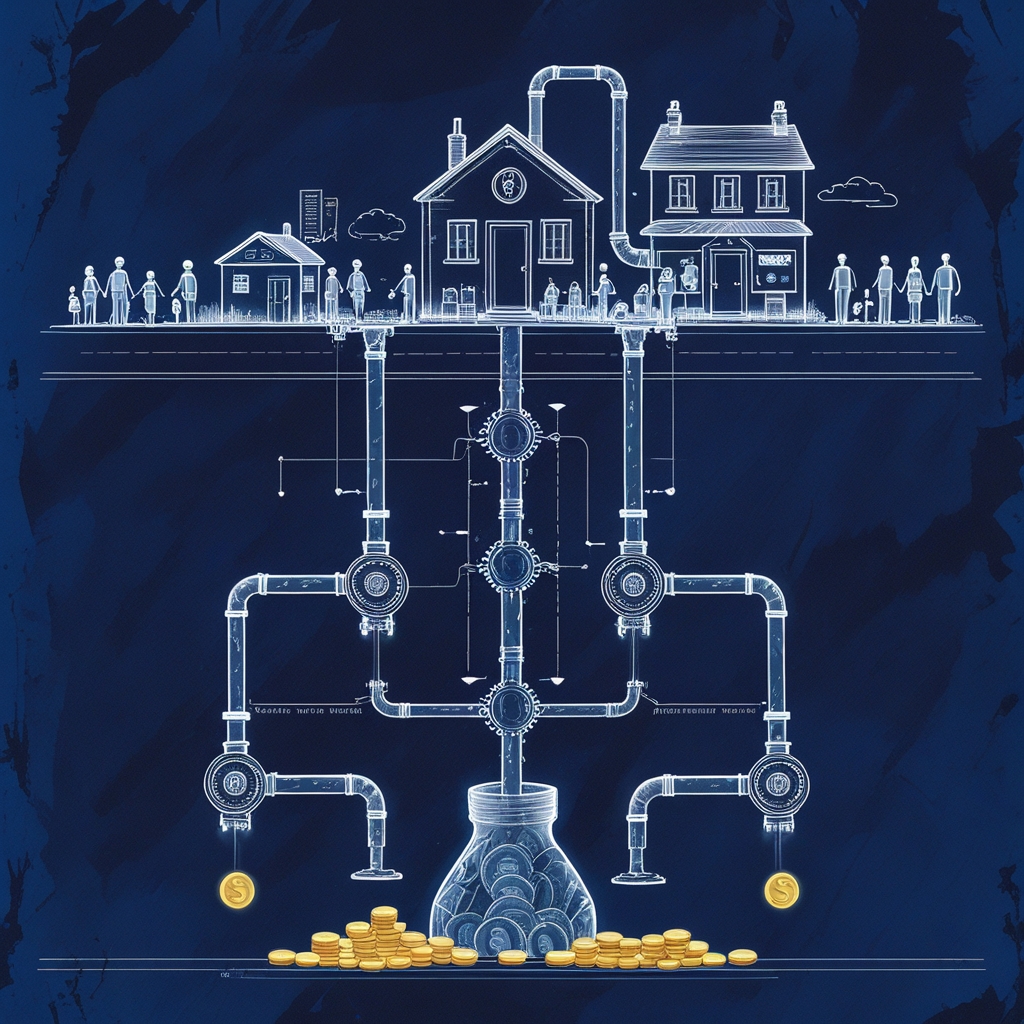
The second reason is fiscal illusion. Student loans do not appear as public spending. They are classified as financial transactions. Assets. Not expenditure. So when the government lends fifty billion pounds per year to students, it does not count toward the deficit. It does not count as spending. It is off-budget. This allows the government to fund higher education without it looking like they are spending money.
Abolishing fees, or replacing loans with grants, would change this. The cost would move on-budget. It would become public spending. And public spending requires either raising taxes or cutting other programs. Both are politically difficult. Raising taxes is unpopular. Cutting spending means choosing which services to reduce. Health? Education? Defence? There is no easy answer. So the government avoids the decision. It keeps the loans. Keeps the cost off-budget. And defers the problem.
But here is the trick. The loans are not actually free. The government knows that about fifty percent will never be repaid. That is the RAB charge. So the real cost, the eventual cost, is roughly half of what is lent. Twenty-five billion per year. Eventually. But that cost is deferred. Thirty years into the future. When the loans are written off. So current governments do not pay it. Future governments do. And future governments are not here to object.
This fiscal illusion makes reform unattractive. Because reform would make the cost visible. Immediate. And no government wants to be the one that adds twenty-five billion to the spending total. Even if that twenty-five billion is already being spent. Just hidden. So the illusion persists. The loans stay. And the cost stays off-budget.
The third reason is intergenerational conflict. Older generations, those who went to university before fees existed, or when fees were low, did not borrow. They graduated debt-free. And they do not understand the burden current students carry. To them, student loans are a fair contribution. A reasonable expectation. You benefit from university. You should pay.
And older generations vote. In higher numbers than young people. And they vote for parties that do not prioritize student loan reform. Because it is not their issue. It does not affect them. So when politicians weigh the political cost of reform, they see that the people who would benefit, students and recent graduates, vote less. And the people who oppose reform, older voters who see it as unfair subsidy, vote more. So the political calculus favours inaction.
This is generational inequity. The people who benefited from free or low-cost university oppose helping the next generation. Not out of malice. But out of a belief that the current system is fair. Or at least, fairer than giving young people something they did not have. So reform, which would help young people, is blocked by older voters. Who have the numbers. And the turnout.
The fourth reason is the middle-class trap. Middle-class families, those earning enough to be comfortable but not wealthy, face a dilemma. Their children do not qualify for full maintenance loans. Because household income is too high. So the family has to contribute. Out of savings. Out of current income. And that is hard. Because middle-class families are not wealthy. They have mortgages. Bills. Retirement to save for. So supporting a child through university is a strain.
But they do it. Because university is seen as essential. The path to a good job. To social mobility. So they sacrifice. And having sacrificed, they resist reform that would have made it easier. Because reform would mean they paid when others did not. That their child borrowed when others got grants. And that feels unfair. So they oppose retrospective reform. They oppose abolishing fees for future students while their child, who just graduated, carries debt.
This creates a constituency against reform. Parents who have just put children through university. Who have just absorbed the cost. And who do not want to see the system change now. After they have paid. So they resist. And politicians, seeing this resistance, avoid reform. Because reforming now means angering the people who have just navigated the current system. And those people vote.
The fifth reason is ideological commitment to user-pays. There is a belief, widespread in UK politics, that university is a private benefit. It increases your earning potential. So you should pay for it. Not taxpayers. This is the user-pays principle. And it dominates thinking across the political spectrum.
Even parties on the left, who might support free university in principle, struggle to argue for it in practice. Because the counter-argument is powerful. Why should a plumber, who did not go to university, pay taxes to fund a lawyer's degree? Why should low earners subsidize high earners? This argument resonates. And it makes defending free university politically difficult.
So the ideological consensus supports fees. Loans. Contributions. And that consensus is hard to shift. Because it is not just about money. It is about fairness. About who should pay. And the current system, flawed as it is, aligns with the belief that individuals should bear the cost of their own education. So reform, which would shift the cost to taxpayers, is seen as unfair. And fairness, or the perception of it, is politically powerful.
The sixth reason is Treasury control. The Treasury controls the purse strings. And the Treasury is conservative. Fiscally conservative. It resists spending. It resists anything that increases the deficit. And student loan reform, unless it is purely cosmetic, costs money. Cutting interest rates costs money. Raising the repayment threshold costs money. Writing off debt costs money. And the Treasury, seeing the cost, blocks it.
The Treasury argues that the money is needed elsewhere. Health. Social care. Defence. And that student loan reform benefits a relatively small, relatively privileged group. University graduates. Who will, on average, earn more than non-graduates. So why should they be prioritized? Why should scarce resources go to them? This argument carries weight. Inside government. Inside the Treasury. And it ensures that student loan reform, no matter how loudly demanded, does not get funded.
And here is the deeper problem. The Treasury sees student loans as revenue. Not as debt. Because the loans are classified as assets. So reducing the loan burden, cutting interest, raising thresholds, looks like losing revenue. Even though the revenue is illusory. Most of it will never be collected. But the accounting treats it as real. So the Treasury resists. And reform, which requires Treasury approval, does not happen.
The seventh reason is political short-termism. Student loan reform does not deliver immediate political benefits. If you cut fees today, the people who benefit are future students. People who are not yet voters. Meanwhile, the cost is borne by current taxpayers. Who are voters. So the political reward is delayed. And the political cost is immediate.
This makes reform unattractive. Politicians operate on electoral cycles. Four years. Five years. They need wins that deliver before the next election. Student loan reform, even if successful, takes years to show results. Years for the debt burden to ease. Years for public opinion to shift. And by then, the politician who implemented it might be out of office. Someone else gets the credit. Or no one does. Because the benefit is diffuse. Spread across millions of graduates. Not concentrated in a way that builds political capital.
So politicians avoid it. They focus on issues that deliver immediate, visible benefits. That generate grateful voters. Student loan reform does not. So it gets pushed down the list. Indefinitely.
The eighth reason is fear of retrospective unfairness. Any reform creates winners and losers. If you abolish fees, future students benefit. But current students, who are borrowing now, do not. Unless the reform is retrospective. And retrospective reform is expensive. Very expensive. Writing off existing debt would cost hundreds of billions. The government cannot afford it. And taxpayers would not accept it.
But not making reform retrospective creates resentment. Current students see future students getting free university. While they are saddled with debt. That feels unfair. And they protest. They demand equal treatment. But equal treatment is impossible. Because the cost is too high. So the government is trapped. Reform that is not retrospective creates anger. Reform that is retrospective is unaffordable. So they do nothing. And the system stays as it is.
The ninth reason is international precedent. The UK looks at other countries. And sees that student loans are common. The US. Australia. New Zealand. All have them. So the UK concludes that loans are normal. Acceptable. Not ideal. But not unusual. This creates complacency. The system does not need radical reform. Because other countries have similar systems. Or worse ones.
This comparison is selective. The UK does not compare itself to Germany. Or Norway. Or Scotland. Countries where university is free or heavily subsidized. Instead, it compares itself to countries with worse systems. And concludes that the UK is doing fine. Or at least, not doing badly enough to justify radical change. So reform is incremental. Marginal. Never transformative.
So here is why the UK student loan system resists reform. Universities depend on fees and cannot survive without them. Fiscal illusion keeps the cost off-budget and visible reform would be expensive. Older voters outnumber younger ones and oppose helping the next generation. Middle-class families who have just paid resist changes that would have helped them. Ideological commitment to user-pays dominates political thinking. The Treasury blocks anything that costs money or looks like losing revenue. Politicians prioritize short-term wins over long-term reform. Retrospective reform is unaffordable and non-retrospective reform creates resentment. And international comparisons create complacency.
These are not individual failures. They are structural forces. And they interact. They reinforce each other. And they ensure that student loan reform, despite being promised, despite being needed, does not happen. The system stays expensive. Stays punitive. Stays broken. Because the people who benefit from it have power. And the people who suffer do not.
The next article will show you where policy could actually have leverage. Not to abolish the system. That is politically impossible. But to shift it. To reduce the burden. To make it less punitive. Because leverage exists. If the will existed to use it.