How to Find the Leverage Points
You have mapped the system. You have identified who profits. You have traced the feedback loops. You have analyzed the resistance. And now you understand. You see why the system is broken. Why it hurts people. Why it persists. And why it resists change.
And you might feel defeated. Overwhelmed. Because the resistance is strong. The interests are powerful. The structure is entrenched. And changing it feels impossible.
But it is not impossible. It is just hard. Very hard. And the difference between wasting effort and achieving change is knowing where to push. Where to intervene. Where leverage exists.
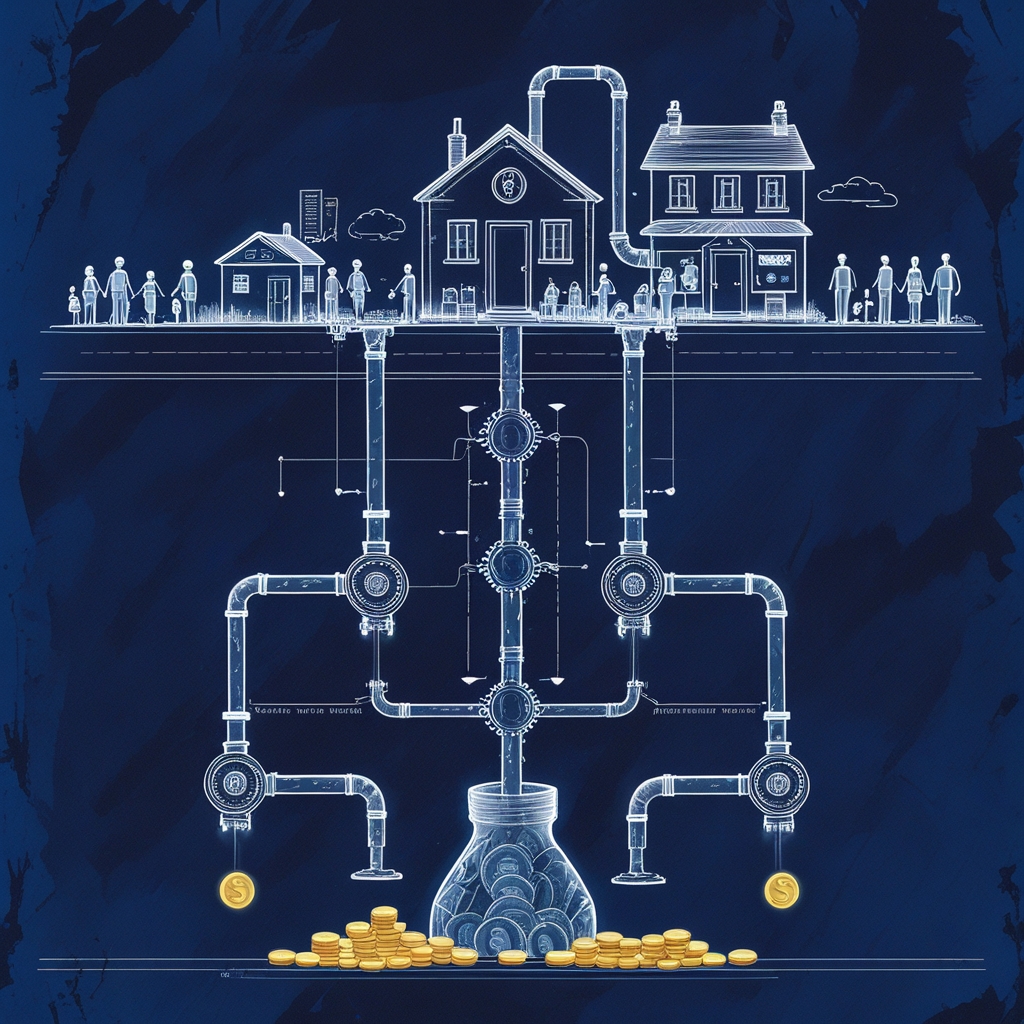
A leverage point is a place in a system where a small intervention can create a large effect. Where pushing shifts the whole system. Not just one part. The whole thing. And leverage points exist. In every system. Even broken ones. Even resistant ones. The challenge is finding them. And understanding how to use them.
Some leverage points are weak. Tweaking numbers. Adjusting subsidies. Changing tax rates. These shift outcomes slightly. Marginally. But do not change the structure. Do not change the dynamics. So the system, nudged slightly, continues largely as before.
Other leverage points are strong. Changing incentives. Breaking feedback loops. Shifting power. Changing goals. These reshape the system. Fundamentally. And create lasting change. But they are also harder to access. Because they threaten interests. Trigger resistance. And require political will.
Let me show you how to find leverage points. How to distinguish weak from strong. And how to prioritize. So that your effort, your organizing, your advocacy, focuses on what actually matters.
The weakest leverage points are numbers. Constants. Parameters. Subsidies. Tax rates. Standards. Caps. These are the easiest to change. Politically. Technically. But they are also the least impactful. Because they do not change the structure. Just the magnitude.
Raising the minimum wage is a number change. It increases income. For low-paid workers. And that helps. Marginally. But it does not change the power imbalance between workers and employers. Does not change the fact that workers, needing jobs, have little bargaining power. So the improvement is temporary. Modest. And easily eroded. By inflation. By employers cutting hours. By automation.
Increasing renewable subsidies is a number change. It makes renewables more profitable. Attracts investment. And increases renewable generation. Which is good. But it does not change the pricing mechanism. Does not decouple electricity prices from gas. So when gas prices spike, electricity prices spike. And consumers still pay. The subsidy helps. But it does not fix the structure.
So numbers are weak leverage. Use them if they are easy to achieve. If they deliver immediate relief. But do not expect them to solve the problem. Because they do not change the system. Just the settings.
The next level of leverage is buffers. Stocks. Reserves. Safety margins. These stabilize systems. Absorb shocks. And prevent crises. But they do not prevent the shocks. Just mitigate them.
Gas storage is a buffer. If the UK had large gas storage, it could buy gas when prices are low. Store it. And release it when prices spike. This would smooth prices. Reduce volatility. And protect consumers. Partially. But it would not eliminate dependency on gas. Would not prevent future price spikes. Just reduce their impact.
Emergency funds are buffers. Savings. Reserves. That households or governments hold. To absorb shocks. Job loss. Illness. Recession. And buffers help. They prevent crises from becoming catastrophes. But they do not prevent the crises. Just make them survivable.
So buffers are useful. Build them if you can. But recognize that they are defensive. Protective. Not transformative. They do not change the system. Just make it less volatile.
The next level is structure. Physical infrastructure. Networks. Flows. Changing structure is more powerful than changing numbers or buffers. Because structure determines capacity. Determines what is possible.
Building social housing is a structural change. It increases supply. Permanently. And provides an alternative to the private rental market. Which puts downward pressure on private rents. And gives tenants options. Power. This is more impactful than rent subsidies. Which are numbers. Because social housing changes the market. Changes the balance. Durably.
Insulating homes is a structural change. It reduces energy demand. Permanently. And lowers bills. For decades. This is more impactful than subsidizing bills. Which is a number. Because insulation changes the system. Reduces dependency on energy. Reduces vulnerability to price spikes.
Building renewable generation is a structural change. It adds capacity. Diversifies supply. And reduces dependency on gas. Over time. This is more impactful than subsidizing renewables. Because it changes the energy mix. Changes the balance. And, if done at scale, changes who has power.
So structure is strong leverage. Focus on it. Advocate for it. Organize around it. Because structural changes last. And compound. And shift the system fundamentally.
The next level is information flows. Transparency. Visibility. Feedback. Making the invisible visible. And speeding up the connection between action and consequence.
Transparent energy bills are an information change. Breaking down the bill. Showing generation cost. Network cost. Supplier margin. Green levies. VAT. Line by line. This does not change the costs. But it changes visibility. And visibility creates accountability. Pressure. Because consumers, seeing that network costs are high, that standing charges are rising, demand action. And politicians, facing that pressure, respond.
Transparent political donations are an information change. Publishing who donates to whom. How much. And what policies they lobby for. This does not stop donations. But it exposes them. And exposure creates pressure. Because voters, seeing that energy companies donate to politicians who oppose windfall taxes, make connections. And vote accordingly.
Real-time feedback on energy usage is an information change. Smart meters. Apps. That show usage. Cost. As it happens. This does not reduce cost. But it changes behavior. Because people, seeing usage in real time, adjust. Turn off lights. Turn down heating. And consumption falls. Not because of price. But because of visibility.
So information is powerful leverage. It does not change the structure. But it changes behavior. Changes pressure. Changes accountability. And often, information changes are easier to implement than structural ones. Because they threaten less. Cost less. And can be introduced incrementally.
The next level is feedback loops. Balancing loops that should stabilize but do not. Or reinforcing loops that amplify problems. Changing loops is very strong leverage. Because loops drive dynamics. And changing the loop changes the trajectory.
Breaking the rent-rises-prevent-saving loop requires intervention. One option: deposit-free rentals. Or rent-to-own schemes. That allow tenants to build equity. While renting. This breaks the loop. Because tenants, building equity, can eventually buy. Exit the rental market. And demand for rentals falls. Rents moderate. The loop reverses.
Another option: cap rent increases. Link them to wage growth. Not to market rates. This slows the loop. Because rents, capped, rise slower. And tenants, paying less, can save more. Can exit rental faster. The loop weakens.
Breaking the energy price-gas dependency loop requires decoupling. Zonal pricing. Or split markets. So that renewable electricity is priced separately from gas. This breaks the loop. Because renewable prices no longer follow gas. And consumers, buying renewables, are insulated from gas price spikes.
So targeting loops is powerful. Identify the loop. And ask: where can we break it? Slow it? Reverse it? And focus intervention there. Because breaking a loop changes the dynamic. Permanently.
The next level is rules. Laws. Regulations. Incentives. Punishments. Constraints. Rules shape behavior. And changing rules changes what people do. What companies do. What is allowed. What is rewarded.
Abolishing Section 21 is a rule change. It removes the landlord's power to evict without reason. And shifts the balance. Toward tenants. This does not lower rents. Not directly. But it changes power. Changes security. And allows tenants to complain. To demand repairs. Without fearing eviction. And over time, that changes the market. Changes landlord behavior.
Banning no-fault dismissals is a rule change. It removes employer power to fire without cause. And shifts the balance. Toward workers. This does not raise wages. Not directly. But it changes security. Changes leverage. And allows workers to organize. To negotiate. Without fearing dismissal.
Mandatory social tariffs for energy is a rule change. It requires suppliers to offer lower rates to low-income households. This does not reduce energy costs overall. But it targets support. At those who need it. And reduces energy poverty. Directly.
So rules are strong leverage. They change incentives. Change constraints. And force behavior change. Even when actors resist. Because rules, if enforced, are binding.
The next level is self-organization. The ability of a system to change its own structure. To evolve. To adapt. And self-organization is very strong leverage. Because it empowers actors. Gives them agency. And allows bottom-up change. Not just top-down.
Tenant unions are self-organization. Tenants organizing. Collectively. To demand better conditions. To resist rent increases. To challenge landlords. And tenant unions, when strong, shift power. Because landlords, facing collective action, cannot ignore tenants. Cannot evict all of them. Cannot dismiss demands. So they negotiate. And conditions improve.
Worker cooperatives are self-organization. Workers owning and managing the enterprise. Collectively. And cooperatives change incentives. Because workers, owning the business, prioritize sustainability. Fair wages. Good conditions. Not just profit. So the business operates differently. More equitably.
Community energy projects are self-organization. Communities owning renewable generation. Locally. And selling electricity. Locally. At cost. This decentralizes power. Literally and figuratively. And reduces dependency on large generators. On volatile markets.
So self-organization is powerful leverage. Support it. Enable it. Organize it. Because self-organization creates alternatives. Creates counter-power. And changes the system from within.
The strongest leverage points are goals. The purpose of the system. What it is trying to achieve. And changing goals changes everything. Because goals determine structure. Determine rules. Determine outcomes.
The goal of the energy system is profit. For generators. For networks. For investors. And this goal shapes everything. Marginal pricing. Guaranteed returns. Privatization. All serve that goal. Maximize profit.
Changing the goal to universal access. To affordable energy for all. To decarbonization. Would change the system. Fundamentally. It would require different structures. Public ownership. Cost-based pricing. Investment in insulation. In renewables. All aligned with the new goal.
The goal of the housing system is wealth accumulation. For homeowners. For landlords. For developers. And this goal shapes everything. Undersupply. High prices. Insecurity for renters. All serve that goal. Maximize wealth for owners.
Changing the goal to housing as a right. To stable, affordable housing for all. Would change the system. It would require different structures. Social housing. Rent controls. Security of tenure. All aligned with the new goal.
So changing goals is the ultimate leverage. But it is also the hardest. Because goals are ideological. Cultural. Political. And changing them requires changing minds. Changing beliefs. Changing what society values. And that takes time. Generations. But it is possible. And it is necessary. For fundamental change.
Now let me give you a framework. For prioritizing leverage points. Based on impact and feasibility.
High impact, high feasibility: Do these first. They shift the system meaningfully. And they are politically achievable. Transparent bills. Deposit-free rentals. Mandatory social tariffs. Focus here.
High impact, low feasibility: Organize for these. Long-term. They shift the system fundamentally. But they face strong resistance. Public ownership. Abolishing marginal pricing. Changing system goals. Build coalitions. Build pressure. Over years.
Low impact, high feasibility: Use these for quick wins. For momentum. For demonstrating progress. Subsidies. Number tweaks. They do not solve the problem. But they help. And they show that change is possible.
Low impact, low feasibility: Avoid these. They cost effort. And deliver little. And face resistance. Not worth it.
And when you analyze a system, map leverage points on this grid. Impact versus feasibility. And prioritize accordingly. Because leverage points are not equal. And effort is finite. So focus where it matters most.
And remember: leverage points interact. Structural changes enable rule changes. Information changes create pressure for structural changes. Self-organization amplifies all of it. So do not just pick one. Build a strategy. That combines multiple leverage points. That creates momentum. That compounds.
You have mapped the system. You understand the structure. The profit. The loops. The resistance. And now you know where to push. Where leverage exists. And this knowledge is power. Because systems are not immovable. They are just resistant. And resistance can be overcome. With the right strategy. The right pressure. The right intervention. At the right point.
The final article will show you how to build your case study. How to trace history. How to show how we got here. Because understanding the past is essential. For arguing for change. For showing that the current system is not natural. Not inevitable. But constructed. Through decisions. And that different decisions, better decisions, are possible.