How To Find Who Profits
You have mapped the system. You have identified the actors. Traced the flows. Found the chokepoints. And now you see the structure. You see how it works. But seeing the structure is not enough. Because structure alone does not explain behavior. Does not explain why the system operates the way it does. Why it produces the outcomes it produces. Why it hurts some people and enriches others.
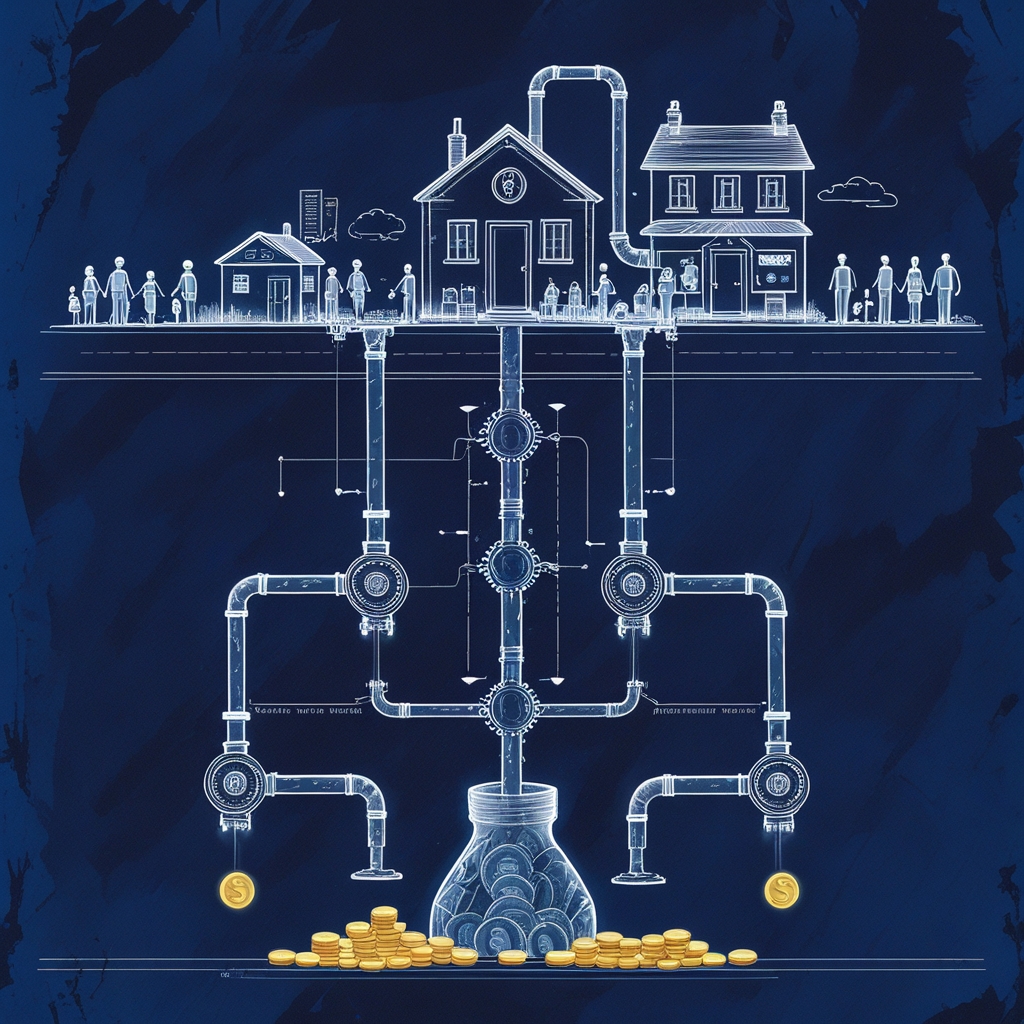
To understand that, you need to follow the money. You need to identify who profits. Who benefits. Who extracts value. And who pays. Because systems are not neutral. They are not random. They serve interests. And those interests, the people who benefit, are the ones who defend the system. Who resist change. Who lobby to keep it exactly as it is.
And finding who profits is not always obvious. Because profit is often hidden. Disguised. Justified. The people extracting value do not advertise it. They do not say, we are profiting from your need, from your desperation, from your lack of alternatives. They say, we are providing a service. We are taking a risk. We are adding value. And sometimes, that is true. But often, it is not. Often, they are extracting. Rent-seeking. Taking without giving. And understanding who is doing that, and how, is essential.
Let me show you how to find who profits.
The first step is to follow the money. At every transaction. At every exchange. Someone pays. Someone receives. And the person receiving is profiting. Not always excessively. Not always unfairly. But profiting. And you need to identify them.
Go back to your map. The one you drew in the previous step. Look at the money flows. The arrows. Who is paying? And who is receiving? Write it down. List every payment. Every fee. Every charge. Every commission. Every margin.
Let me use an example. You are analyzing your energy bill. You pay the energy supplier. The supplier pays the generator. For wholesale electricity. The generator sells at market prices. The supplier also pays the National Grid. For transmission. And pays the DNO. The distribution network operator. For local delivery. And the supplier charges you. A unit rate. For the electricity. And a standing charge. A daily fee. For being connected.
So who profits? The generator profits. They sell electricity at market prices. Which, because of marginal pricing, are often far above their cost of generation. The National Grid profits. They charge for transmission. And earn regulated returns. Guaranteed returns. On their infrastructure. The DNO profits. Same structure. Regulated returns on distribution infrastructure. And the supplier profits. Slightly. A small margin. Between what they pay and what they charge.
So at every stage, someone is profiting. And you, the consumer, are paying all of them. Through your bill.
Now ask: is this profit reasonable? Or excessive? And that requires comparing. Comparing what they charge to what it costs them. And if the gap, the margin, is large, disproportionate, that is extraction. That is profit beyond what is justified by the service provided.
In the energy example, the National Grid earns seven or eight percent returns. On assets. Infrastructure. That is high. Compared to government bonds. Compared to inflation. And it is guaranteed. Regulated. So the risk is low. But the return is high. That is excessive profit. Extraction.
Generators selling wind power at gas prices are profiting excessively. Because their cost is near zero. Wind is free. But they sell at the price set by gas. Which is expensive. So the gap, the margin, is enormous. That is windfall profit. Unearned profit. And it is extraction.
So the first step is simple. Follow the money. Identify who receives payment. And compare what they receive to what it costs them. And if the gap is large, unjustified, that is where profit, excessive profit, is being extracted.
The second step is to identify intermediaries. Intermediaries are actors who sit between two parties. And extract value. Without producing anything. They facilitate. They connect. They process. But they do not create. And their profit comes not from adding value. But from controlling access.
Estate agents are intermediaries. They sit between buyers and sellers. And they charge. One percent of the sale price. Sometimes more. For what? For listing the property. For showing it. For facilitating the transaction. But the buyer and seller could do this themselves. Directly. Without the agent. And some do. But most do not. Because agents control information. They have the listings. The databases. The networks. So buyers go through agents. Because they have to. Not because agents add significant value. But because agents control access.
And agents profit. From that control. From that position. Between buyer and seller. And their profit is extracted. From the transaction. From the buyer. Or the seller. Or both.
Letting agents are intermediaries. They sit between landlords and tenants. And charge. The landlord. Eight to twelve percent of the rent. Every month. For managing the property. For finding tenants. For handling maintenance. But landlords could do this themselves. Many do. But many do not. Because agents make it easy. Handle the hassle. And landlords, busy, willing to pay for convenience, use agents. And agents profit. From that intermediation. From sitting between landlord and tenant. And extracting a cut.
So when you map, look for intermediaries. Actors who do not produce. Who do not generate. But who sit between. And extract. Recruitment agencies. Brokers. Platforms. Aggregators. All of them profit from intermediation. From controlling access. From being in the middle.
And ask: is this intermediation necessary? Does it add value? Or is it just extraction? Rent-seeking? Taking a cut for being in the right place?
The third step is to identify monopolies and oligopolies. Because monopolies, companies with no competition, can charge whatever they want. And they do. They maximize profit. Because consumers have no alternative. No choice. And oligopolies, markets dominated by a few companies, operate similarly. They do not compete on price. They compete on brand. On marketing. And prices stay high. Because all the companies benefit from high prices.
Energy networks are monopolies. The National Grid. The DNOs. You cannot choose your transmission network. Your distribution network. You get the one that serves your area. And that network, because it is a monopoly, is regulated. To prevent excessive pricing. But regulation is often weak. Generous. And the monopoly profits. Through allowed returns. Through guaranteed revenue.
Water companies are regional monopolies. You cannot choose your water supplier. You get the one in your area. And they profit. Enormously. Through dividends. Through debt. Through financial engineering. And regulation, which is supposed to constrain them, fails. Because the regulator is captured. Aligned with the industry.
Supermarkets are an oligopoly. Four companies. Tesco. Sainsbury's. Asda. Morrisons. Control most of the market. And they do not compete on price. Not really. They compete on loyalty schemes. On branding. And prices, for most goods, are similar across all four. Because lowering prices would start a price war. Which would hurt all of them. So they keep prices high. Stable. And profit.
So when you analyze a system, ask: is this a monopoly? An oligopoly? And if it is, the companies involved are profiting. Excessively. Because they face no competitive pressure. No threat. And they can extract. Without consequence.
The fourth step is to identify misaligned incentives. An incentive is what motivates behavior. What someone is rewarded for. And in well-designed systems, incentives align with outcomes. If you are rewarded for helping people, you help people. If you are rewarded for efficiency, you are efficient.
But in badly designed systems, incentives misalign. You are rewarded for things that make the system worse. And those misaligned incentives create perverse outcomes. And profit. For the people whose incentives are misaligned.
Letting agents are paid a percentage of rent. So they have an incentive to maximize rent. Not to find affordable housing for tenants. Not to be fair. But to maximize. Because the higher the rent, the higher their fee. And this incentive, maximizing rent, misaligns with the tenant's interest. Which is affordable rent. So the agent profits. And the tenant pays.
Recruitment agencies are paid a percentage of the salary. Of the person they place. So they have an incentive to maximize salary. To negotiate higher pay. Which sounds good. For the candidate. But the incentive also encourages placing people in roles they are not suited for. In companies that will churn them. Because the agency gets paid on placement. Not on retention. So the incentive misaligns. And the agency profits. From placement. Even if the placement fails.
NHS agencies, staffing agencies, are paid per shift. Per worker supplied. So they have an incentive to maximize shifts. To maximize the number of agency workers. Not to help the NHS recruit permanent staff. Because permanent staff reduce the need for agencies. So the agency's incentive, maximizing agency shifts, misaligns with the NHS's interest. Which is a stable, permanent workforce. And the agency profits. From the NHS's failure to recruit.
So when you map incentives, ask: what is this actor rewarded for? And does that reward align with good outcomes? Or does it misalign? And if it misaligns, the actor is profiting from making things worse. From perpetuating the problem. And that is extraction.
The fifth step is to identify who lobbies. Lobbying is not neutral. You do not lobby to make things worse for yourself. You lobby to protect your interests. To protect your profit. Your position. Your power. So the people lobbying, the organizations lobbying, are the people profiting. Or expecting to profit. And their lobbying reveals their interests.
Energy companies lobby. Against windfall taxes. Against tighter regulation. Against price controls. Why? Because those policies would reduce their profit. Would constrain their revenue. So they lobby. Spend money. Hire consultants. Fund think tanks. To oppose those policies. And their lobbying, the intensity of it, the scale of it, reveals how much they profit. And how much they have to lose.
Landlords lobby. The NRLA. The National Residential Landlords Association. Against tenant protections. Against abolishing Section 21. Against rent controls. Why? Because those policies would reduce landlord power. Would reduce rental income. Would constrain profit. So landlords lobby. And their lobbying reveals their interest. Which is maintaining power. Maintaining profit. At the expense of tenants.
Developers lobby. Against affordable housing requirements. Against Section 106 contributions. Against planning restrictions that limit what they can build. Why? Because those requirements reduce their profit margin. Reduce what they can extract from development. So they lobby. And their lobbying, loud, persistent, well-funded, reveals how much they profit. And how much they fear losing.
So when you want to know who profits, look at who lobbies. Who funds campaigns. Who hires PR firms. Who meets with ministers. Because the people doing that are protecting something. And that something is profit. Power. Position.
The sixth step is to identify who would lose if the system changed. Because the people who would lose are the people currently winning. Currently profiting. And they resist change. Fiercely.
If marginal pricing in energy were reformed, generators would lose. Wind farms would lose windfall profits. Nuclear plants would lose. Because they would no longer get paid gas prices. They would get paid based on their cost. Or on local supply and demand. And their revenue would fall. So they resist. They lobby. They argue that reform would reduce investment. Would threaten security. But what they really mean is: reform would reduce our profit.
If Section 21 were abolished, landlords would lose. They would lose the power to evict without reason. Without cause. And that power is valuable. It keeps tenants compliant. Keeps them paying. Keeps them silent. So landlords resist. They lobby. They argue that abolition would trap them. Would prevent them from removing problem tenants. But what they really mean is: we would lose leverage. We would lose control.
If standing charges in energy were abolished, networks would lose. Because standing charges are guaranteed revenue. Fixed. Daily. Regardless of usage. And networks depend on that revenue. To fund their guaranteed returns. So they resist. They argue that standing charges recover fixed costs. That abolishing them would shift costs unfairly. But what they really mean is: we would lose guaranteed income.
So identifying who would lose if the system changed tells you who is profiting now. And who will resist. And how hard.
Now let me give you a checklist. A practical tool. For identifying who profits.
One: List every transaction. Every payment. In the system. Who pays? Who receives?
Two: Compare cost to price. What does it cost the receiver to provide the service? What do they charge? If the gap is large, they are profiting excessively.
Three: Identify intermediaries. Who sits between parties? Who facilitates without producing? They are extracting.
Four: Check for monopolies. Is there competition? Or is this actor the only option? Monopolies extract.
Five: Map incentives. What is this actor rewarded for? Does it align with good outcomes? Or does it misalign? Misalignment creates perverse profit.
Six: Look at lobbying. Who lobbies? What are they lobbying for? Or against? They are protecting profit.
Seven: Ask who would lose if the system changed. The people who would lose are the people currently winning.
And once you have done this, you will see. You will see who profits. Who extracts. Who benefits from the system working the way it does. And you will understand why the system is the way it is. Because it serves them. Not you. Them.
And this understanding is power. Because once you see who profits, you see who to hold accountable. You see who to pressure. You see who to organize against. And you see why change is hard. Because the people profiting are the people with power. With resources. With influence. And they use that power to protect their profit. To block reform. To preserve the system.
The next article will show you how to trace the feedback loops. Because systems do not just exist. They evolve. They reinforce. They amplify. And understanding the loops, the dynamics that make problems worse, is the key to understanding why systems spiral. Why small issues become crises. And why, once a loop is in motion, it is very hard to stop.