How to Identify Why Systems Resist Change
You have mapped the system. You have identified who profits. You have traced the feedback loops. And now you see it. You see the structure. You see the extraction. You see the dynamics. You see why the problem exists. Why it persists. Why it gets worse.
And you think: this is obvious. The solution is clear. We should do X. We should stop doing Y. We should regulate Z. And if we did those things, the problem would improve. Maybe not disappear. But improve. Significantly.
And then nothing happens. No reform. No change. No action. Or worse, there is action. But it is weak. Symbolic. Ineffective. A consultation. A working group. A pilot scheme that goes nowhere. And the problem continues. Exactly as it was. Or worse.
And you are confused. Frustrated. Angry. Because the solution is obvious. The evidence is clear. And yet, the system does not change. And you do not understand why.
This is resistance. And resistance is not random. It is structural. It is political. It is economic. And it is predictable. Because every system that serves certain interests will be defended by those interests. And those interests, the people who profit, the people who benefit, have power. And they use that power to block change. To delay it. To water it down. Until it is meaningless.
Understanding why systems resist change is the key to realistic strategy. Because if you do not understand the resistance, you will waste effort. Propose solutions that have no chance. Build coalitions that cannot win. And burn out. Frustrated. Defeated. But if you understand the resistance, you can plan around it. Counter it. Or, at least, understand why change is hard. And adjust your expectations.
Let me show you how to identify why systems resist change.
The first reason systems resist change is concentrated benefits and diffuse costs. This is a core dynamic. And it appears everywhere.
A system that benefits a small group, concentrated, and harms a large group, diffused, is very hard to change. Because the small group, the beneficiaries, care intensely. Their livelihoods depend on the system. Their wealth. Their power. So they organize. They lobby. They resist. Fiercely.
But the large group, the harmed, care less. Individually. Because the harm, while real, is spread. Diluted. Each person loses a little. Not enough to organize around. Not enough to prioritize. So they do not resist. Do not mobilize. And the small group wins.
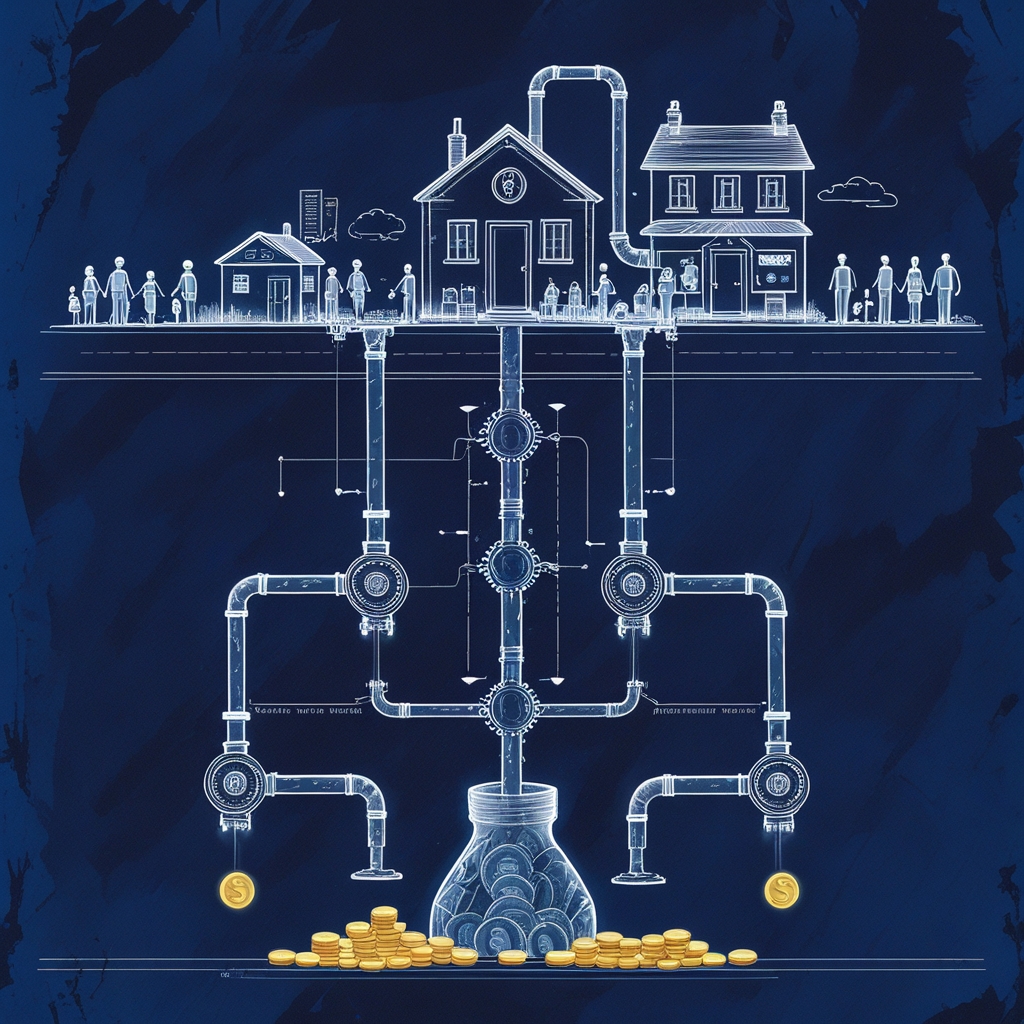
Let me give you an example. Energy networks. The National Grid. DNOs. They earn guaranteed returns. Seven or eight percent. On billions in assets. This benefits them. Enormously. And benefits their shareholders. Pension funds. Sovereign wealth funds. Investors. A small, concentrated group.
But the cost is spread. Across millions of energy consumers. Who pay network charges. Through standing charges. Through unit rates. And each consumer pays, maybe, a few hundred pounds per year. Annoying. But not catastrophic. Not enough to organize a protest. Not enough to make it a voting issue.
So the networks, concentrated beneficiaries, lobby. Protect their returns. And consumers, diffuse losers, do not organize. Do not resist. And the system stays as it is. Networks profit. Consumers pay.
So when you analyze resistance, ask: are the benefits concentrated? And are the costs diffuse? If yes, the system will resist change. Because the concentrated beneficiaries have more to lose. And more power to defend.
The second reason is regulatory capture. Regulators are supposed to protect the public. To constrain industries. To ensure fairness. But often, regulators are captured. Aligned with the industry they regulate. Not through corruption. But through shared worldviews. Through career incentives. Through dependence.
Regulatory capture happens through the revolving door. Regulators come from industry. Or go to industry. After their time in regulation. So they understand industry concerns. Sympathize with them. And regulate gently. To maintain relationships. To protect future employment.
Capture also happens through information asymmetry. Regulators depend on industry for data. For forecasts. For technical expertise. And industry provides it. But selectively. Framing it to support their interests. And regulators, lacking independent capacity, accept it. And regulate based on industry assumptions.
And capture happens through funding. Industry funds research. Funds think tanks. Produces reports. All arguing for lighter regulation. For industry-friendly policies. And those reports are cited. By regulators. By politicians. As evidence. Even though they are biased. Funded by the very interests they claim to analyze.
So when you analyze resistance, look at the regulator. Ask: where do they come from? Where do they go? Who funds their research? Who provides their data? And if the answers point to industry, the regulator is captured. And reform, which threatens industry, will be resisted. By the regulator. Who should be supporting it.
The third reason is ideological commitment. Systems are defended not just by interests. But by ideas. By beliefs. By ideologies. And those ideologies, even when wrong, are powerful. Because they are not just economic. They are moral. They are identity. And attacking a system that someone believes in feels like attacking them. Personally.
Markets are an ideology. The belief that markets are efficient. Fair. The best way to allocate resources. And this belief is widespread. Particularly among elites. Politicians. Economists. Business leaders. And any reform that moves away from markets, toward regulation, toward public ownership, toward planning, is seen as wrong. As going backward. As socialism.
So even when markets fail, even when the evidence is clear, the ideology persists. Because admitting that markets failed feels like admitting that the core belief is wrong. And people resist that. Emotionally. Intellectually. So they deny the failure. Or they argue that the market was not free enough. That more market would solve it. And reform, real reform, is blocked.
Property rights are an ideology. The belief that owning property is fundamental. Sacred. That government should not interfere. Should not tell owners what they can do. What they can charge. And this ideology protects landlords. Protects developers. Protects landowners. Because interfering with property rights, even to protect tenants, even to provide affordable housing, feels wrong. To people who hold this ideology.
So when you analyze resistance, ask: what ideology protects this system? What belief makes reform feel wrong? And if that ideology is strong, widely held, reform will be hard. Because you are not just fighting interests. You are fighting beliefs.
The fourth reason is complexity and fear of unintended consequences. Systems are complex. Interconnected. And changing one part affects others. Unpredictably. And this creates fear. Fear that reform will backfire. Will make things worse. And this fear, whether justified or not, blocks action.
Politicians are risk-averse. They fear being blamed. For disasters. For failures. And reforming complex systems is risky. Because prediction is hard. Because experts disagree. Because industry warns of catastrophe. And politicians, hearing those warnings, hesitate. Delay. Or water down the reform. Until it is safe. Ineffective.
And industry exploits this fear. They do not just say: this reform will hurt us. They say: this reform will hurt you. Will hurt consumers. Will reduce supply. Will increase prices. Will cause blackouts. Or homelessness. Or unemployment. And they produce reports. Models. Forecasts. All showing disaster. And politicians, confronted with these predictions, cannot dismiss them. Even if they are self-serving. Even if they are wrong.
So when you analyze resistance, ask: is complexity being weaponized? Are warnings of unintended consequences plausible? Or are they scare tactics? And if the warnings are vague, exaggerated, or funded by the industry that would lose, they are tactics. Not genuine concerns.
The fifth reason is political short-termism. Reform takes time. Years. Decades. To build social housing takes decades. To insulate every home takes decades. To train doctors takes a decade. But elections happen every four or five years. And politicians need wins. Visible wins. Before the next election.
So reforms that deliver long-term benefits but short-term disruption are avoided. Because the politician who implements them takes the blame. For the disruption. The complaints. The headlines. And someone else, years later, gets the credit. For the benefits. If there are benefits.
This creates a bias. Toward short-term fixes. Subsidies. Price caps. Symbolic gestures. Things that look like action. That generate headlines. That placate voters. But that do not solve the underlying problem. Because solving the problem takes longer than an electoral cycle.
So when you analyze resistance, ask: does this reform deliver benefits before the next election? If no, it is politically unattractive. And will be avoided. Or delayed. Until after the election. And then delayed again.
The sixth reason is vested interests with resources. The people who profit from the system have money. And they use it. To lobby. To fund campaigns. To hire consultants. To influence policy. And that money buys access. Buys influence. Buys delay.
Lobbying is not corruption. Not bribery. It is legal. Normal. And pervasive. Companies hire lobbyists. Trade associations lobby. Industry bodies lobby. And they meet with ministers. With MPs. With civil servants. And they make their case. Against reform. And they are persuasive. Because they are experts. Or claim to be. And because they fund research. Produce reports. Create evidence. That supports their position.
And lobbying works. Not always. But often. Because politicians, busy, overwhelmed, rely on lobbyists for information. For framing. For understanding industry concerns. And lobbyists, skilled, well-resourced, shape that understanding. In favor of industry. Against reform.
So when you analyze resistance, ask: who is lobbying? How much are they spending? Who are they meeting? And if the answer is: industry is lobbying heavily, reform will be hard. Because industry has resources. And uses them.
The seventh reason is lack of organized opposition. Resistance is strong when the beneficiaries are organized. And the harmed are not. Because organization is power. It creates voice. Creates pressure. Creates threat. And politicians respond to organized pressure. Not to diffuse dissatisfaction.
Landlords are organized. The NRLA. Trade associations. Local groups. They lobby. They campaign. They vote. And politicians listen. Because landlords, organized, are a bloc. A constituency. With resources.
Tenants are not organized. There is no national tenants' union. No equivalent to the NRLA. Tenants are atomized. Individual. Transient. And they lack collective power. So they cannot pressure. Cannot threaten. Cannot hold politicians accountable.
And this asymmetry means that policies favor landlords. Not tenants. Because landlords can punish politicians who cross them. Through votes. Through donations. Through campaigns. And tenants cannot.
So when you analyze resistance, ask: are the harmed organized? Do they have a union? An association? A lobby group? If no, they lack power. And the system will not change. Because the beneficiaries, organized, dominate.
The eighth reason is path dependency. Systems, once built, are hard to change. Because they have infrastructure. Contracts. Institutions. Jobs. All of which depend on the system staying as it is. And changing the system threatens all of that. So the people whose livelihoods depend on the current system resist. Even if the system is broken.
PFI contracts are path dependent. Hospitals were built under PFI. Private companies financed them. And now those companies are owed. For decades. Billions. And the contracts are locked. Unchangeable. So even though PFI is expensive, exploitative, the contracts cannot be broken. Not without enormous cost. So the system persists. Because it is locked in.
Pension systems are path dependent. Promises were made. To retirees. To current workers. And those promises create obligations. Costs. That must be met. And reforming pensions, changing the deal, feels like breaking promises. Feels wrong. And creates backlash. So reform is avoided. Even when the system is unsustainable.
So when you analyze resistance, ask: what infrastructure locks this system in? What contracts? What obligations? And if the answer is: decades of commitments, changing the system is very hard. Because the cost of change exceeds the cost of continuing.
The ninth reason is public misunderstanding. Most people do not understand how systems work. They see the surface. The symptoms. Not the structure. Not the causes. So they support policies that do not work. And oppose policies that would.
And this misunderstanding is exploited. By industry. By politicians. They frame reforms as threats. As dangerous. As radical. And the public, not understanding, believes them. Opposes reform. And votes accordingly.
So when you analyze resistance, ask: does the public understand the system? Do they see the structure? The extraction? Or do they see only symptoms? And if they do not understand, reform will be hard. Because public support is weak. Or absent. Or misdirected.
Now let me give you a checklist. For identifying resistance.
One: Are benefits concentrated and costs diffuse? If yes, the concentrated beneficiaries will resist.
Two: Is the regulator captured? Do they come from industry? Go to industry? Rely on industry data? If yes, the regulator will resist. Or enable resistance.
Three: What ideology protects this system? Markets? Property rights? Meritocracy? If strong, reform will feel wrong. Immoral.
Four: Is complexity being weaponized? Are warnings of unintended consequences plausible? Or scare tactics?
Five: Does reform deliver before the next election? If no, politicians will avoid it.
Six: Who is lobbying? How much? Who are they meeting? If industry is lobbying heavily, reform will be hard.
Seven: Are the harmed organized? Do they have collective power? If no, they lack leverage.
Eight: What locks the system in? Contracts? Infrastructure? Obligations? If locked, change is very hard.
Nine: Does the public understand the system? If no, public support for reform is weak.
And once you have answered these questions, you understand the resistance. You see why change is hard. And you can plan. Build coalitions. Counter the arguments. Organize the harmed. Educate the public. Or, realistically, accept that change will take time. Decades. And that incremental progress is the best you can achieve.
This is not defeatism. This is realism. Because understanding resistance prevents wasted effort. Prevents burnout. And allows you to focus. On what is achievable. On where leverage exists. And the next article will show you exactly that. Where leverage exists. Where intervention, despite resistance, can shift outcomes. Because systems are not immovable. They are just very, very hard to move. And knowing where to push is the difference between futility and progress.