How To Map The Machine

You want to understand something. A system. Your workplace. Your local council. Your industry. The housing market in your area. Whatever it is, you want to see how it actually works. Not how it is supposed to work. Not what the website says. Not what the PR claims. But how it actually operates. Who has power. Where the money flows. Why things happen the way they do.
And you do not know where to start. Because systems are complex. Messy. Full of jargon. Full of acronyms. And the people inside the system, the people who benefit from it, do not want you to understand it. Because understanding threatens them. Threatens their position. Their profit. Their power.
But understanding is possible. And it starts with mapping. With drawing the structure. Not perfectly. Not comprehensively. But clearly enough to see what is happening. Who is doing what. And why.
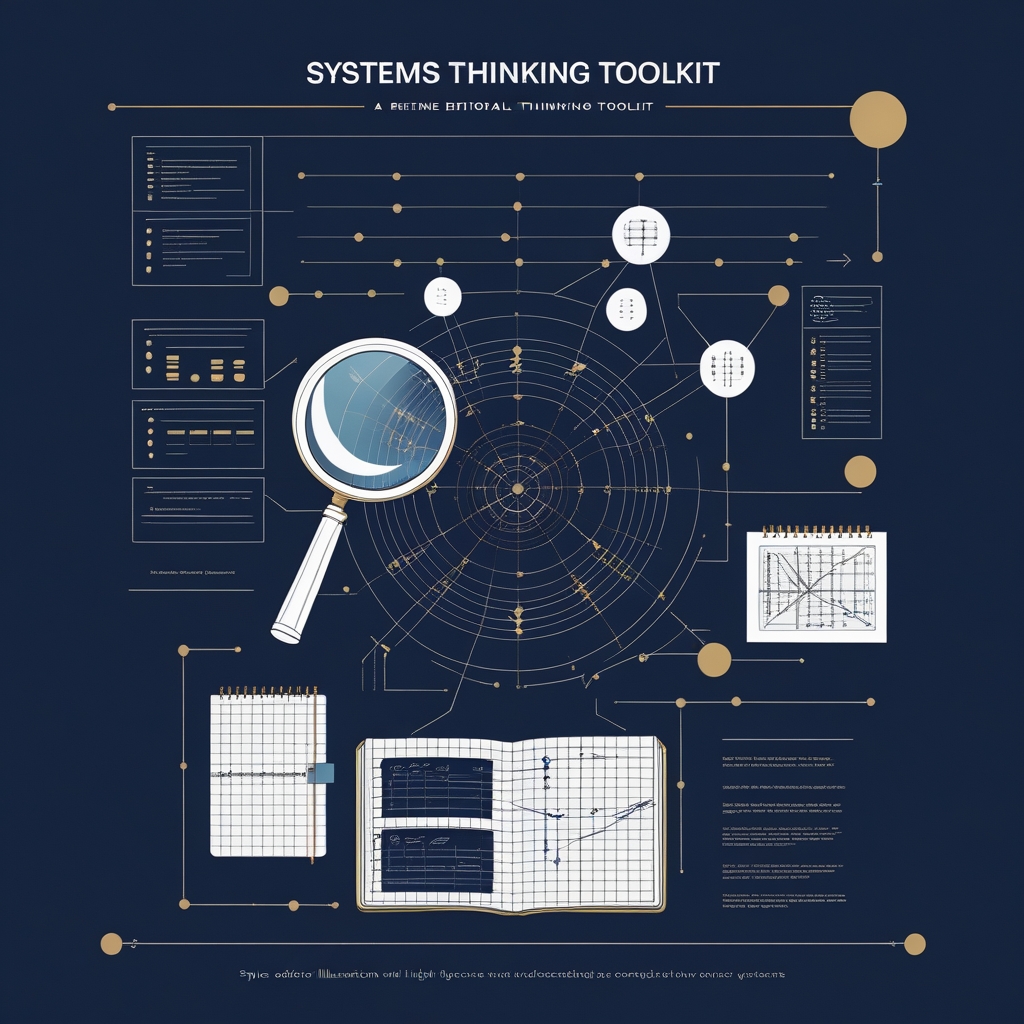
This is the first step in systems thinking. Mapping the machine. And I am going to show you how to do it. Step by step. So that you can take any system, anything you encounter, and see through it. See the structure. See the power. See the extraction.
Let me show you how to map the machine.
The first question to ask is: who are the actors? Who are the people, the organizations, the institutions involved in this system? Not everyone. Not the entire world. Just the main ones. The ones who matter. The ones with power. The ones making decisions.
Start by listing them. On paper. Or on a screen. Just list them. By category if it helps. Individuals. Companies. Regulators. Government bodies. Trade unions. Lobby groups. Whatever categories make sense for your system.
Let me give you an example. You want to understand your local housing market. Who are the actors?
Buyers. People trying to buy homes. Sellers. People selling homes. Estate agents. Banks. Mortgage lenders. Surveyors. Solicitors. The local council. Planning department. Housing associations. Landlords. Buy-to-let investors. Developers. Construction companies. And the government. Through policy. Through taxation. Through regulation.
That is a lot of actors. But you do not need to map all of them. Not yet. Just identify them. So you know who exists. Who is playing the game.
And here is the key. Do not assume all actors have equal power. They do not. Some are powerful. Some are not. Buyers, for instance, have very little power. They need a home. They compete with each other. They have no leverage. Estate agents have more power. They control access to properties. They set expectations. They extract fees. Banks have even more power. They decide who gets mortgages. How much. On what terms. And without a mortgage, most buyers cannot buy. So banks are critical. Powerful.
So when you list actors, note power. Who has it. Who does not. And power comes from control. Control over resources. Over information. Over access. Over decisions. If an actor controls something essential, something others need, they have power.
Now the second question: what flows through this system? What moves? From actor to actor. What is being exchanged?
In most systems, the primary flow is money. Money is power. So trace it. Who pays whom? For what? And how much?
Go back to the housing example. The buyer pays the seller. The price of the house. The buyer pays the estate agent. One percent of the price. Sometimes more. The buyer pays the surveyor. For a survey. The buyer pays the solicitor. For legal work. The buyer pays the bank. Interest. On the mortgage. For decades.
Already, you can see extraction. The buyer is paying multiple actors. And each one is taking a cut. And the buyer, needing the home, has no choice but to pay.
But money is not the only thing that flows. Information flows. The estate agent has information. About properties. About prices. About buyers. And they control that information. They share it selectively. To maximize their commission. The bank has information. About the buyer's finances. About risk. And they use that information to set terms. To set interest rates.
And approvals flow. The council approves planning applications. Or refuses them. And that approval, or refusal, determines what gets built. Where. And for whom. So approvals are power. And the people who grant approvals, planners, councillors, have leverage. Over developers. Over landowners. And sometimes, that leverage is used. For public benefit. And sometimes, it is not.
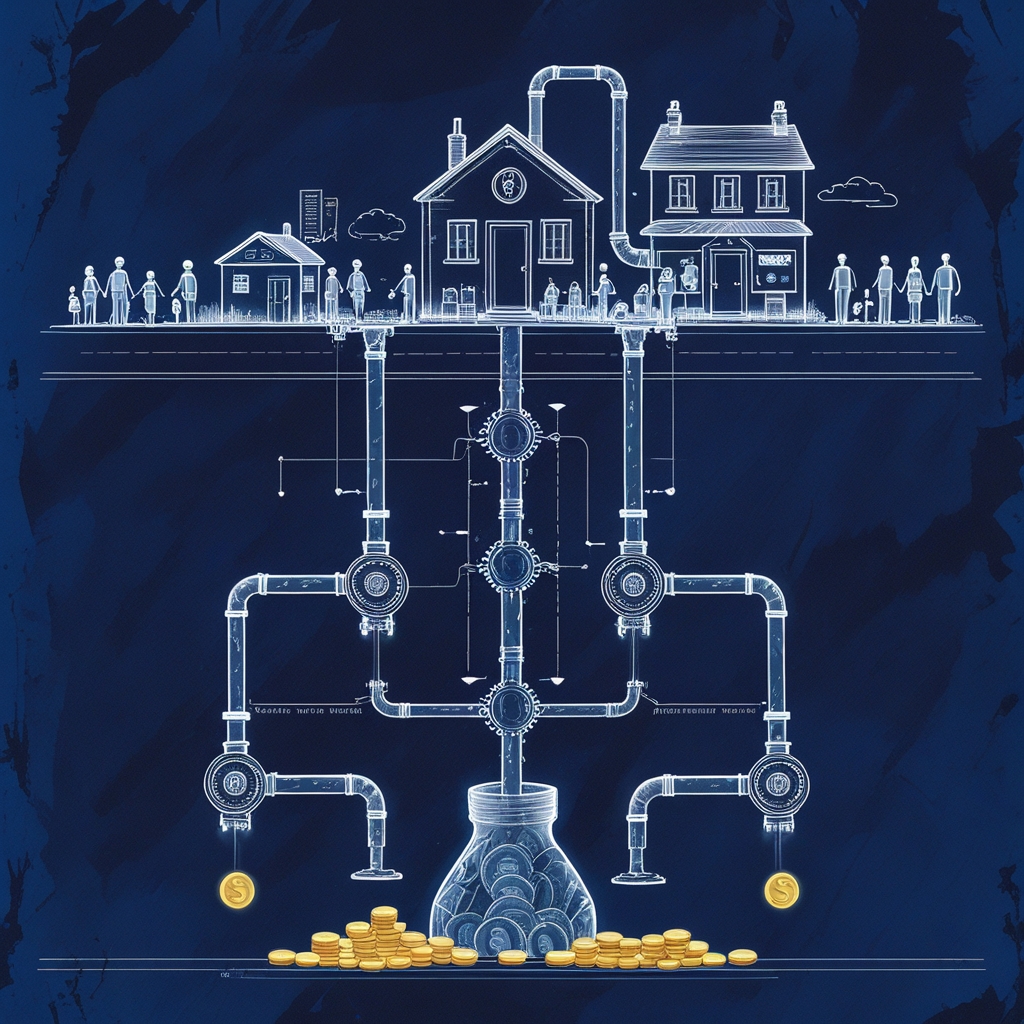
So map the flows. Draw arrows. Money flows from buyer to seller. From buyer to agent. From buyer to bank. Information flows from agent to buyer. From bank to buyer. Approvals flow from council to developer. And each flow represents a relationship. A transaction. A point of power.
The third question is: where are the chokepoints? A chokepoint is a place where flow is restricted. Controlled. Bottlenecked. And chokepoints create power. Because if you control a chokepoint, you control the system.
In the housing example, mortgages are a chokepoint. Most buyers cannot buy without a mortgage. So banks, who provide mortgages, control access. They decide who gets to buy. And on what terms. This gives them enormous power.
Planning permission is a chokepoint. Developers cannot build without permission. And permission is granted by the council. So the council, through planning, controls supply. Controls what gets built. And where. And that control, that chokepoint, is power.
Estate agents are a minor chokepoint. They control access to properties. You can buy without an agent. But most properties are listed with agents. So agents have some control. Some leverage. And they extract fees because of it.
So when you map, identify chokepoints. Draw them. Highlight them. Because chokepoints are where power concentrates. And where intervention, if you want to change the system, can be most effective.
The fourth question is: where is the complexity hidden? Systems hide complexity. Deliberately. Because complexity confuses. Intimidates. And prevents scrutiny. So part of mapping is identifying where the system is deliberately opaque. Where jargon is used. Where processes are obscure. Where information is withheld.
In housing, mortgages are complex. Interest rates. Fixed versus variable. Terms. Fees. Early repayment charges. Most buyers do not fully understand what they are signing. And banks, brokers, do not clarify. They present options. But do not explain trade-offs. Not clearly. So buyers, confused, choose poorly. Or choose what the broker recommends. And the broker recommends what earns them the highest commission. Not what serves the buyer best.
Planning is complex. Policies. Local plans. Section 106 agreements. Viability assessments. Most people do not understand how planning works. What criteria are applied. How decisions are made. And councils, developers, use that complexity. To push through developments that serve them. Not the community.
So when you map, note complexity. Where is it? Why is it there? And who benefits from it? Because complexity is not accidental. It is structural. And it serves interests.
The fifth question is: what are the dependencies? Who needs whom? Who cannot function without whom? And dependencies create power imbalances. Because if you depend on someone, they have leverage over you.
Buyers depend on banks. Without mortgages, they cannot buy. Banks do not depend on any individual buyer. There are millions of buyers. So the dependency is one-way. And the power imbalance is stark. The bank sets terms. The buyer accepts. Or does not buy.
Developers depend on councils. For planning permission. But councils also depend on developers. For housing supply. For revenue. From planning fees. From Section 106 contributions. So the dependency is mutual. And the power is more balanced. Though often, developers have more leverage. Because they can walk away. Build elsewhere. And councils, needing housing, cannot afford that.
So map dependencies. Draw them. And note asymmetries. Where dependency is one-way. Because that is where exploitation happens. Where power is exercised. Where the weak pay. And the strong extract.
The sixth question is: who regulates this system? And how effective is the regulation? Regulation is supposed to constrain power. Protect the weak. Ensure fairness. But regulation often fails. Because regulators are captured. Underfunded. Or ideologically aligned with the industry they regulate.
In housing, the Financial Conduct Authority regulates mortgages. The council regulates planning. The Property Ombudsman regulates estate agents. But how effective are they? Do they protect buyers? Or do they protect the industry?
Often, regulation is weak. Reactive. Not proactive. The FCA responds to complaints. But does not prevent mis-selling. The council enforces planning rules. But also negotiates them away. With developers. The Property Ombudsman adjudicates disputes. But has no power to penalize agents. So agents ignore them.
So when you map, identify the regulator. And ask: is this regulation effective? Does it constrain power? Or does it legitimize it? Because often, regulation gives the appearance of control. Without the substance. And industries hide behind regulation. Claim they are compliant. Even as they exploit.
Now let me give you a practical method. A step-by-step process. For mapping any system.
Step one: Define the boundaries. What system are you mapping? Be specific. Not the entire economy. Not the whole housing market. Your local housing market. Or your workplace procurement process. Or your child's school admissions system. Something concrete. Bounded. Manageable.
Step two: List the actors. Who is involved? Write them down. Individuals. Organizations. Institutions. Do not overthink it. Just list. You can refine later.
Step three: Trace the money. Who pays whom? Draw arrows. Money flows from X to Y. From Y to Z. And note the amounts. If you know them. Or estimate. If you do not. Because the scale of the flow tells you the scale of the power.
Step four: Trace the information. Who knows what? Who controls access to information? Who shares it? Who withholds it? Information is power. And information asymmetry, where one side knows more than the other, creates exploitation.
Step five: Identify chokepoints. Where is flow restricted? Where do actors have to pass through? Planning permission. Credit approval. License issuance. Whatever it is. Mark it. Because chokepoints are leverage.
Step six: Map dependencies. Who needs whom? Draw arrows. A depends on B. B depends on C. And note asymmetries. Where dependency is one-way. Because that is where power imbalances are greatest.
Step seven: Identify the regulator. Who is supposed to oversee this? What powers do they have? Are they using them? Or are they captured? Underfunded? Ineffective?
Step eight: Look for hidden complexity. Where is jargon used? Where are processes opaque? Where is information withheld? And ask: who benefits from this complexity?
And once you have done all of this, step back. Look at your map. And ask: what does this reveal? Where is power concentrated? Who is extracting? Who is being extracted from? Where are the dependencies? The chokepoints? The weak points?
And now you understand. You see the structure. You see the machine. Not perfectly. Not completely. But clearly enough. Enough to ask better questions. Enough to see who benefits. Enough to see where intervention could shift outcomes.
This is mapping. This is the first step. And every system can be mapped. Your workplace. Your industry. Your local council. Your child's school. The rental market. The planning system. Healthcare. Energy. Whatever it is. The method is the same. Identify actors. Trace flows. Find chokepoints. Map dependencies. Identify regulation. Spot complexity.
And once you have mapped, you can analyze. You can ask: who profits? Why does this keep happening? Why does it resist change? And where could we intervene? But those are the next steps. The next articles. For now, just map. Just see the structure. Because once you see it, you cannot unsee it. And once you understand how the machine works, you can start to ask how it could work differently.
The next article will show you how to find who profits. Because systems are not neutral. They serve interests. And identifying those interests, the people who benefit from the system working the way it does, is the key to understanding why it does not change. And why, if you want it to change, you will face resistance.