The Feedback Loops: How the Trap Tightens

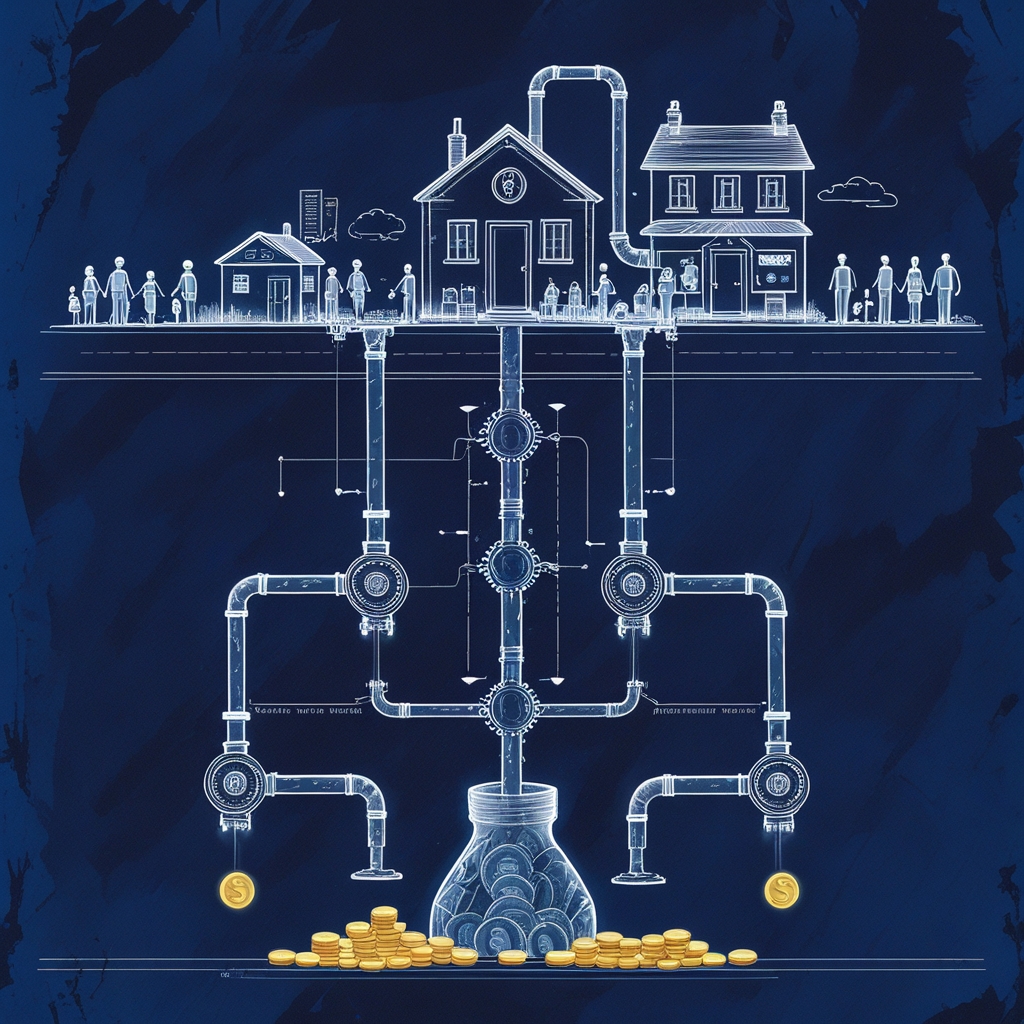
Shared ownership contains multiple self-reinforcing dynamics that trap participants and grow the system while worsening outcomes. These feedback loops operate automatically once participants enter the system. Understanding them reveals why individual effort and good intentions cannot overcome structural forces designed to prevent escape.
The Rent Escalation Trap
Rent rises create a vicious cycle that tightens annually. Higher rent increases housing association revenue. This revenue funds more shared ownership development. More development creates more shared ownership properties. More properties mean more people paying rising rent. This reinforces housing association commitment to the model and expands the number of people trapped in it.
For individual shared owners, the dynamic is brutal. Rising rent reduces your capacity to save for staircasing. Lower savings capacity means you cannot afford to buy additional shares. Inability to staircase means you continue paying rent on the housing association's portion. That rent continues rising annually according to the escalation formula in your lease. Higher rent further reduces your savings capacity. The cycle repeats.
Consider the mathematics over time. In year one, your rent of four thousand nine hundred and fifty pounds represents fourteen percent of your thirty-five thousand pound income. You struggle but manage. By year ten, rent has risen to seven thousand three hundred and ten pounds while your income has grown to forty-two thousand six hundred and fifty pounds. Rent now takes seventeen percent of your income. By year twenty, rent reaches ten thousand seven hundred and seventy-nine pounds against income of fifty-one thousand nine hundred and forty-eight pounds. Rent consumes twenty-one percent of your income.
Each year, rent takes a larger slice of your budget. What remains for everything else shrinks. Your ability to save diminishes. Meanwhile the cost of additional shares rises due to property appreciation. The gap between what you can save and what you need to save widens inexorably. You work hard. You budget carefully. You make every payment on time. But you fall further behind because the system is designed to ensure you do.
The housing association benefits from your inability to escape. Every year you remain at your initial ownership percentage is another year they collect rent. The longer you stay trapped, the more they profit. They have no incentive to facilitate your staircasing. They profit from your failure to achieve full ownership. Your rent trap is their revenue stream.
The Property Appreciation Barrier
Rising property values make housing less affordable for everyone. They also make staircasing impossible for most shared owners. As prices rise, the cost of additional shares increases faster than you can save. Property appreciation creates a barrier that moves away from you faster than you can move toward it.
When you bought your forty percent share, the property was worth three hundred thousand pounds. You paid one hundred and twenty thousand pounds. You planned to save and buy the remaining sixty percent over time. If property values stayed constant, the remaining sixty percent would cost one hundred and eighty thousand pounds. Saving fifty thousand pounds and staircasing three times at ten percent increments each would achieve full ownership.
But property values do not stay constant. They rise. Assume three percent annual appreciation, which is conservative for many areas over recent decades. After ten years, the property is worth four hundred and three thousand nine hundred and seventeen pounds. The remaining sixty percent now costs two hundred and forty-two thousand three hundred and fifty pounds, not one hundred and eighty thousand pounds. You need to save an additional sixty-two thousand three hundred and fifty pounds beyond what you originally planned.
After twenty years, the property is worth five hundred and forty-two thousand two hundred and sixty pounds. The remaining sixty percent costs three hundred and twenty-five thousand three hundred and fifty-six pounds. Your target has nearly doubled. Meanwhile you have paid over one hundred thousand pounds in rent over those twenty years. Money that could have funded equity purchases instead disappeared into the housing association's accounts. You are further from full ownership after twenty years than you were at the start despite paying diligently throughout.
This dynamic benefits the housing association directly. Their retained sixty percent appreciates from one hundred and eighty thousand pounds to three hundred and twenty-five thousand pounds. They capture one hundred and forty-five thousand pounds in appreciation gains while collecting one hundred thousand pounds in rent. Their total benefit from your property exceeds two hundred and forty-five thousand pounds while you remain stuck at forty percent ownership. Your failure is their windfall.
The Service Charge Inflation Spiral
Service charges do not rise predictably or gradually. Buildings age and maintenance requirements increase. Regulatory changes impose new costs. Major works projects arrive with bills that spike charges dramatically. Service charge inflation follows an irregular pattern that makes budgeting impossible and financial planning futile.
Assume you budget two thousand pounds annually for service charges when you buy. This seems manageable. Year three, service charges rise to twenty-five hundred pounds. Year seven, major works are required and your service charge jumps to four thousand pounds that year. Year ten, service charges settle at three thousand five hundred pounds ongoing but continue rising at five percent annually thereafter. By year twenty, you are paying over five thousand pounds annually in service charges.
These rises reduce your financial capacity in multiple ways. First, they consume income you might have saved for staircasing. Second, they create financial stress that makes household budgeting precarious. Third, they force you to choose between paying service charges and meeting other obligations. Fourth, they reduce your creditworthiness for additional borrowing if you wanted to mortgage more to fund staircasing.
The feedback loop operates through reduced capacity creating inability to escape creating continued exposure to rising costs. Service charges rise because you own and must pay them. Rising charges prevent you from staircasing because you cannot save enough. Continued partial ownership means continued exposure to further service charge rises. Each increase makes the next increase more damaging because your financial cushion has already been depleted.
Housing associations and managing agents benefit from this dynamic. Higher service charges mean higher management fees for agents. More extensive works mean more opportunities for commissions. Neither party faces pressure to minimize costs. You pay the bills. They collect the fees. Your financial stress is their revenue enhancement.
The Selling Difficulty Trap
Selling shared ownership properties is difficult by design. Housing associations have first refusal rights lasting eight to eighteen weeks. During this period, your property is effectively off-market. The housing association can nominate buyers or choose to buy your share themselves. If they decline, you can market to eligible buyers only. Eligibility criteria restrict the buyer pool to first-time buyers or people who cannot afford to buy on the open market. This dramatically reduces demand compared to unrestricted sales.
These selling restrictions reduce property values and transaction speeds. Potential buyers face the same complex arrangement you are trying to escape. Many avoid shared ownership after researching the reality. Those who do buy often negotiate lower prices because they understand the trap they are entering. Sellers accept lower prices because they are desperate to leave.
Difficult selling creates a feedback loop that keeps people trapped. You want to leave because costs have become unaffordable. But leaving requires selling. Selling is slow and may realize less money than you owe. You might need to bring money to the sale to clear your mortgage. This financial loss prevents some people from selling even when staying is unsustainable. They remain trapped not because they want to but because leaving would bankrupt them.
This dynamic serves housing associations' interests perfectly. If shared owners could sell easily, many would escape when costs became unbearable. Difficult selling processes discourage exit. People endure rising costs rather than face the difficulty and financial loss of selling. They stay trapped, continuing to pay rent and service charges, because leaving is too hard. The selling trap ensures a captive tenant base for housing associations to extract rent from indefinitely.
The Two-Tier Market Divergence
In twenty twenty-one, government introduced improved lease terms for new shared ownership properties. New agreements include nine hundred and ninety year leases rather than ninety-nine to one hundred and twenty-five years. Housing associations must cover repair costs up to five hundred pounds annually for the first ten years. These improvements help new shared owners.
But they create a two-tier market that harms existing shared owners. Properties with old terms become less attractive than properties with new terms. Buyers comparing options choose new-term properties over old-term properties when possible. This reduces demand for old-term properties and depresses their values relative to new-term properties.
Existing shared owners cannot upgrade their lease terms without expensive legal processes. They are stuck with ninety-nine year leases that will require costly extensions. They remain fully liable for all repair costs from day one. Their properties depreciate relative to newer shared ownership offerings. When they try to sell, buyers offer less for old-term properties than for equivalent new-term properties. The value gap widens as more new-term properties enter the market.
This feedback loop worsens over time. As the proportion of new-term properties grows, old-term properties become progressively less desirable. Existing shared owners find themselves in depreciating assets while paying escalating costs. They cannot escape because their properties have lost value. They cannot improve their terms without substantial expense. They are trapped in the older, worse version of an already-bad system while newer entrants get slightly better terms that will also trap them eventually but less severely initially.
These five feedback loops operate simultaneously and reinforce each other. Rent escalation reduces savings capacity making property appreciation barriers insurmountable. Service charge inflation depletes financial resources needed for staircasing. Selling difficulties trap people in arrangements that become less affordable annually. The two-tier market depresses property values for those in old-term agreements. Together these loops create a system where individual escape becomes nearly impossible while systemic growth continues. The machine feeds on those caught in it while attracting new victims who see only the initial affordability without understanding the trap they are entering.