The Machine - How UK Shared Ownership Works
Shared ownership operates through a split ownership structure that multiplies costs and makes achieving full ownership practically impossible despite being theoretically available. The machine has four interlocking components that together trap participants in perpetual payment obligations.
How Ownership Splits
You purchase a percentage of the property, typically between twenty-five and seventy-five percent. The housing association retains the remainder. This creates a peculiar legal arrangement where you are simultaneously owner and tenant. The housing association is simultaneously your landlord and your co-owner. You hold a leasehold interest in your share. The housing association holds the freehold of the entire property.
Your lease typically runs for ninety-nine to one hundred and twenty-five years. This means everything that applies to standard leasehold also applies to shared ownership. You will pay ground rent. You will pay escalating service charges. You will receive major works demands with short notice periods. You will need permission for alterations. When your lease drops below eighty years, you will face expensive extension costs with marriage value calculations making the process prohibitively expensive. Shared ownership is leasehold with additional traps layered on top.
The property deed shows the split clearly. You own forty percent. The housing association owns sixty percent. But responsibilities do not split the same way. You pay one hundred percent of interior maintenance costs despite owning only forty percent. You pay your proportional share of exterior and communal maintenance through service charges. You pay rent on the sixty percent you do not own. You pay mortgage costs on the forty percent you do own. Costs stack while ownership remains partial.
The Three Payment Streams
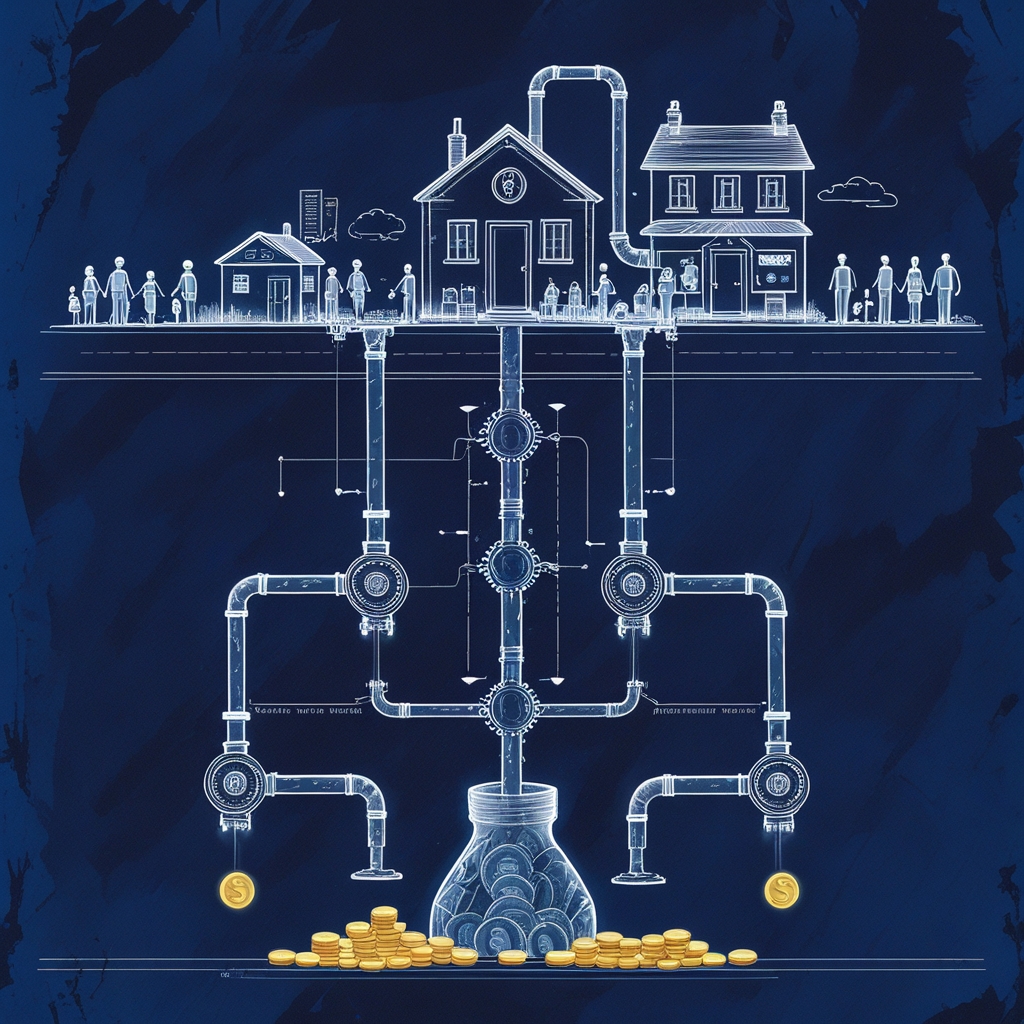
Every month, your money flows in three separate directions. Each stream serves different parties and each rises independently of the others.
First, mortgage payments. You borrow money to buy your share. A mortgage of one hundred and twenty thousand pounds at five percent interest over twenty-five years costs approximately seven hundred pounds monthly. This is secured debt. If you stop paying, you lose your share of the property. The mortgage lender has no interest in or claim on the housing association's share. You bear the full debt obligation for your partial ownership.
Second, rent payments to the housing association. You pay rent on their retained share. The typical formula is two point seven five percent of the housing association's share value annually. Take a property worth three hundred thousand pounds where you own forty percent. The housing association owns one hundred and eighty thousand pounds worth of the property. Your annual rent is four thousand nine hundred and fifty pounds, or four hundred and twelve pounds monthly. This money disappears. It builds no equity. It simply transfers wealth from you to the housing association for the privilege of occupying property they own but you maintain.
Third, service charges for the building. These cover insurance, management fees, repairs to communal areas, maintenance of lifts and corridors, gardening, cleaning. The charges work exactly like standard leasehold. Managing agents take eight to fifteen percent as commission. Costs rise annually, often well above inflation. Typical service charges run between two thousand and four thousand pounds annually, though some buildings charge substantially more. That averages to around two hundred pounds monthly but can spike dramatically when major works are required.
Add these three streams together. Seven hundred pounds mortgage, four hundred and twelve pounds rent, two hundred pounds service charges. Your total monthly cost is one thousand three hundred and twelve pounds for owning forty percent of a property. If you rented the same property privately, you might pay thirteen hundred to fourteen hundred pounds monthly with no deposit required, no mortgage commitment, and the ability to leave with two months notice. Shared ownership delivers less flexibility than renting at similar total cost.
How Rent Escalates
The rent you pay does not stay fixed. It rises every year according to formulas written into your lease. Most commonly, rent increases by Retail Price Index inflation plus one percent. Some leases specify Consumer Price Index inflation plus one or two percent. A few specify fixed percentage increases regardless of what inflation does. These escalation clauses are contractual. You cannot negotiate them. You cannot opt out. They operate automatically for the duration of your lease.
Consider what this means over time. Your initial annual rent of four thousand nine hundred and fifty pounds rises by four percent each year. After five years, your annual rent reaches six thousand and eight pounds. After ten years, seven thousand three hundred and ten pounds. After twenty years, ten thousand seven hundred and seventy-nine pounds. Your rent more than doubles while you still own the same forty percent of the property. The housing association's income from your flat rises relentlessly while your ownership stake remains static.
This is extraction by formula. The housing association writes escalation into the contract when you buy. Every year thereafter, their revenue from your property grows faster than general inflation. Your costs rise faster than your wages. The gap between what you pay and what you can afford widens inexorably. This is not market forces or economic cycles. This is contractual wealth transfer operating on autopilot.
The Staircasing Process
Staircasing is how you supposedly buy additional shares from the housing association to increase your ownership percentage. You can typically purchase shares in increments of ten percent or more. The process appears straightforward. Save money, buy another ten percent, reduce your rent, repeat until you reach one hundred percent ownership. This is the promised path out of the trap.
Every staircasing transaction requires expensive professional involvement. First, the housing association demands a property valuation to determine current market value. You cannot use your own valuer. You cannot rely on recent sales data. The housing association chooses the valuer and you pay the fee, typically three hundred to six hundred pounds. Second, you need a solicitor to handle the legal transfer of additional shares. Legal fees run five hundred to fifteen hundred pounds depending on complexity. Third, if you are increasing your mortgage to fund the purchase, you pay mortgage arrangement fees of five hundred to fifteen hundred pounds. Before you buy a single additional percent of equity, you have spent thirteen hundred to thirty-six hundred pounds on transaction costs.
The property valuation determines how much that additional ten percent costs. When you initially bought forty percent, the property was worth three hundred thousand pounds. You paid one hundred and twenty thousand pounds for your share. Now you want to buy another ten percent. But property values have risen. The flat is now worth three hundred and fifty thousand pounds. That ten percent share costs thirty-five thousand pounds, not the thirty thousand pounds it would have cost at original valuation. Property appreciation makes each subsequent share more expensive than the last.
This creates a vicious dynamic. As property values rise, later shares become increasingly unaffordable. The distance between your current ownership percentage and full ownership grows rather than shrinks. You are chasing a target that moves away from you faster than you can run toward it. Meanwhile you continue paying rent on the housing association's share, and that rent rises annually, consuming more of your income and leaving less available to save for staircasing.
The Maintenance Trap
Here is the aspect that catches most shared owners completely by surprise. Despite owning only twenty-five to seventy-five percent of your property, you pay one hundred percent of all maintenance and repair costs.
The boiler breaks down. You own forty percent of the flat. The housing association owns sixty percent. Who pays for the replacement boiler? You pay one hundred percent of the cost. The kitchen needs replacing. You own twenty-five percent. Who pays for the new kitchen? You pay one hundred percent. Your building needs cladding work following the Grenfell fire safety crisis. Costs reach fifty thousand to one hundred thousand pounds per flat. You own seventy-five percent. Who pays your flat's share of the remediation? You pay one hundred percent.
Housing associations defend this arrangement by arguing that given the benefits of the scheme, it is fair and reasonable for shared owners to pay for repairs. The logic is remarkable. We have given you access to homeownership at reduced upfront cost, therefore you should bear full maintenance liability despite partial ownership. You should be grateful for the privilege of paying everything while owning only a fraction.
Major repairs can devastate shared owners financially. A new boiler costs three thousand pounds. A new kitchen costs eight to twelve thousand pounds. Structural repairs can reach tens of thousands. Building safety work can exceed one hundred thousand pounds. You face these bills while simultaneously paying mortgage costs on your share, rent on the housing association's share, and service charges on communal areas. Costs accumulate in every direction while ownership remains partial. You bear homeowner responsibilities without homeowner benefits.
The machine operates through these four mechanisms working together. Split ownership creates legal complexity and multiple payment obligations. Three separate payment streams extract wealth continuously. Rent escalation increases housing association revenue while reducing your financial capacity. Staircasing becomes unaffordable due to property appreciation and transaction costs. Maintenance liability exposes you to catastrophic expenses. Each component reinforces the others. Together they create a trap that tightens annually while promising eventual escape that never materializes for most participants.