Why It Persists: Serving Power, Not People

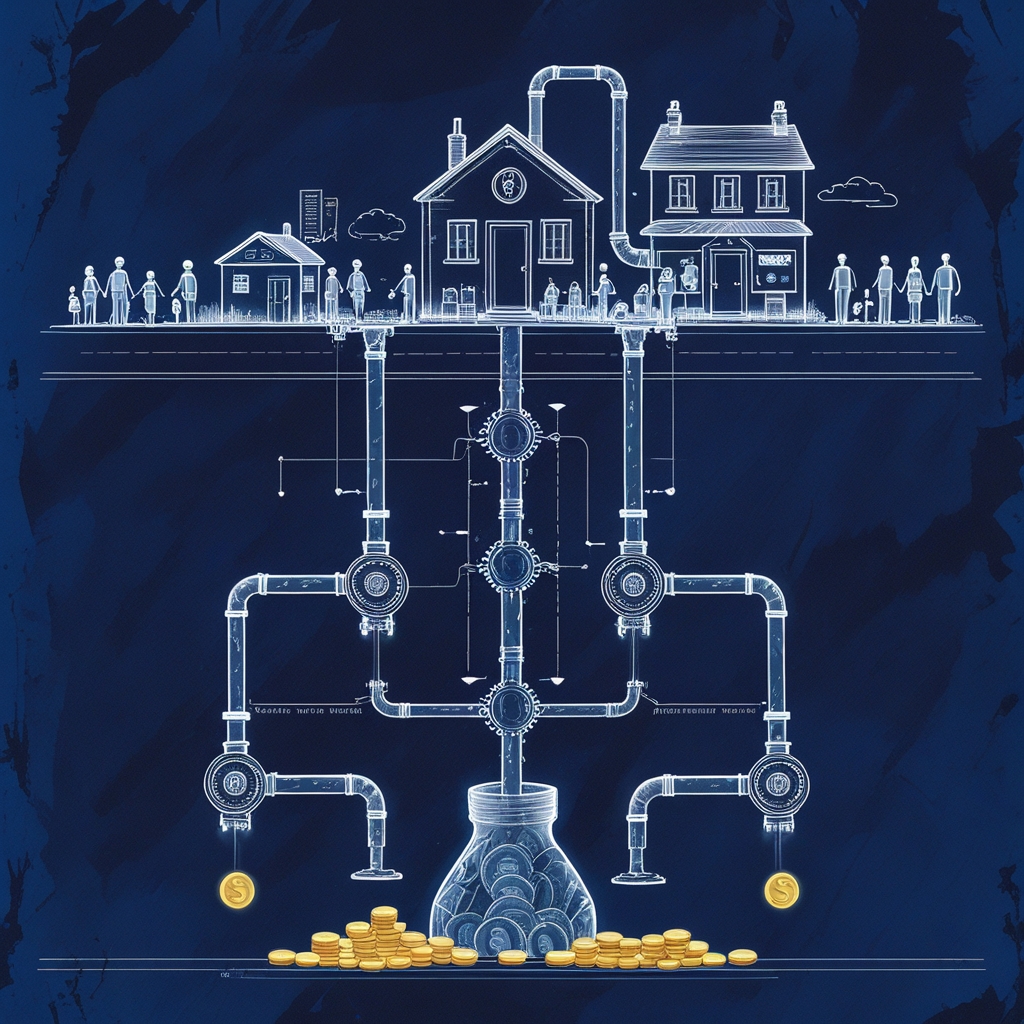
Shared ownership continues and expands despite mounting evidence of failure because it serves powerful interests and provides political cover for inaction on the housing crisis. Understanding why it persists reveals the barriers to reform and the forces that must be overcome to end the system.
The Affordable Housing Narrative
Government needs to appear to address the housing crisis without spending the money or making the difficult decisions that genuine solutions would require. Shared ownership provides this appearance perfectly. Ministers announce thousands of new shared ownership properties. Media reports describe government helping first-time buyers onto the property ladder. Press releases highlight affordable homeownership for key workers. The narrative suggests decisive action on housing.
The reality behind the narrative is different. Social housing provision collapsed from the nineteen eighties onward. Council house sales under Right to Buy reduced social housing stock by one point five million units between nineteen eighty and twenty twenty. New construction failed to replace sold properties. Waiting lists for social housing exceed one million households. Meanwhile house prices rose faster than wages for four decades. The ratio of median house price to median income increased from three point five in nineteen ninety-seven to over eight in some regions by twenty twenty-two.
These problems require enormous public investment to solve. Building sufficient social housing to meet need would cost one hundred billion pounds over a decade. Controlling house prices through market intervention would anger existing property owners who form a significant voting bloc. Reforming planning regulations to enable more building would face local opposition in every affected area. These are all politically difficult and expensive responses.
Shared ownership avoids all these difficulties. It requires minimal government expenditure because housing associations and developers provide the finance. It satisfies planning requirements for affordable housing without costing developers their full profit margins. It allows ministers to announce housing initiatives without committing to the sustained investment that social housing would require. It creates statistics that suggest progress regardless of whether participants achieve genuine homeownership.
As long as the narrative serves political purposes, outcomes for participants matter less than appearance. Ministers can point to shared ownership numbers when questioned about housing policy. They can describe helping people without having built social housing or controlled prices. The system persists because it solves government's political problem even as it creates financial problems for the people it claims to help.
The Planning Requirement Solution
Planning regulations require new developments to include affordable housing, typically ten to thirty percent of total units. This requirement could be met through social housing sold or rented at genuinely affordable rates. But social housing requires someone to cover the gap between construction costs and affordable prices. This gap could be funded by developers accepting lower returns or by government providing subsidy. Neither party wants to do this.
Shared ownership solves the problem for both. Developers sell shared ownership units at full market value split between shared owners and housing associations. They receive the same revenue they would get from open market sales. Their profit margins are protected. Housing associations buy their retained shares at market rates, funding purchases through their own borrowing rather than through government grants. Government provides minimal subsidy. The affordable housing requirement is satisfied according to planning definitions even though the affordability is statistical rather than real.
Consider a development of three hundred properties with ninety designated as affordable under planning obligations. If these ninety were sold as social housing at thirty percent below market rates, the developer would lose twenty million pounds in revenue. If government funded the difference, taxpayers would pay twenty million pounds. Neither party wants this outcome. With shared ownership, those ninety properties sell at full market value. Developers lose nothing. Government pays nothing. The planning requirement is met. Everyone benefits except the shared owners who discover later they cannot afford to complete their purchases.
This alignment of interests between developers, government, and housing associations ensures shared ownership persists. It solves all their problems simultaneously. That it creates problems for shared owners is unfortunate but insufficient to overcome the convenience it provides to parties with power to change the system.
Housing Association Revenue Dependence
Housing associations face a fundamental financial challenge. They have social missions to house people affordably, but they need commercial revenue to fund those missions after government grants declined from nineteen ninety onward. Shared ownership generates revenue that social housing cannot while appearing to serve social purposes.
Each shared ownership property produces rent income tied to market values and rising with property appreciation. This creates revenue streams that grow over time rather than staying fixed at below-market rates like social housing rents. Housing associations use this revenue to cross-subsidize social housing and fund development programs that government no longer funds adequately. Without shared ownership revenue, many housing associations would struggle to maintain their social housing stock and could not fund new development.
From housing associations' perspective, shared ownership is financially essential even if outcomes for participants are poor. They need the revenue to fulfill broader missions. The alternative would be returning to full government funding of social housing, which government has shown no willingness to provide. Housing associations are trapped between their social purposes and their financial requirements. Shared ownership provides money to pursue social goals by extracting it from working households.
This creates a perverse situation where organizations founded to help people afford housing now depend on a model that makes housing unaffordable for participants. Housing associations become locked into extraction because they need the revenue to function. Abandoning shared ownership would require alternative funding that does not exist. The model persists because housing associations have become dependent on it regardless of harm to the people they were created to serve.
The Illusion of Progress
Shared ownership allows government to claim progress on housing while avoiding the fundamental changes needed to actually address the crisis. Building sufficient social housing would require massive sustained public investment and challenge the dominance of private development. Controlling house prices would require market intervention that could reduce property values, angering millions of existing homeowners. Reforming planning to enable much more building would face opposition in every area where development is proposed.
These are all politically difficult responses requiring sustained commitment over decades. They would face opposition from powerful interests and voters. They would cost enormous sums of public money. They would require government to confront the reality that housing has become an asset class for wealth extraction rather than primarily accommodation for people to live in.
Shared ownership avoids all these confrontations. It works entirely within existing market structures. It requires minimal government expenditure. It does not challenge property ownership patterns or development models. It does not threaten existing homeowner wealth. It generates positive announcements and statistics that suggest action without requiring sustained political capital or financial commitment.
As long as shared ownership creates the appearance of addressing the housing crisis without requiring government to make difficult decisions or spend significant money, it will continue. The system serves its political purpose regardless of whether it serves shared owners. Appearance matters more than outcomes when political calculation determines policy.
The Individual Failure Narrative
When shared ownership fails individual participants, the failure is consistently framed as personal rather than systemic. You did not save enough. You did not plan properly. You did not understand the commitment you were making. Your personal circumstances changed. These are individual explanations for outcomes that are systematic and predictable.
This narrative protects the system from scrutiny. If failures are individual aberrations rather than designed outcomes, the system needs no reform. Each trapped shared owner becomes an isolated case of personal misfortune. Housing associations can point to thousands of satisfied shared owners while dismissing complaints as minority experiences that reflect individual circumstances rather than systemic flaws. Government can cite overall participation numbers rather than individual outcomes.
The reality is inverted. The system produces failure systematically. The mathematics ensure most shared owners cannot achieve full ownership. Rent escalation outpaces wage growth. Property appreciation makes later shares unaffordable. Service charge inflation depletes savings capacity. Transaction costs make staircasing expensive even before considering the cost of additional shares. These are not individual failures. These are system features operating as designed.
But the individual failure narrative means each new cohort of buyers is told the problems were earlier buyers' mistakes rather than system flaws. You will be different. You will plan better. You will save more diligently. You will succeed where others failed because you are more responsible. This narrative ensures new victims enter the trap while existing victims are blamed for outcomes the system was designed to produce.
The narrative serves everyone except shared owners. Housing associations avoid responsibility for extracting wealth from people who cannot afford it. Developers avoid accountability for profiting from a model that traps buyers. Government avoids admitting their affordable housing policy relies on making housing unaffordable for participants. The system continues extracting while blaming victims for systematic failures.
Shared ownership persists because it serves powerful interests while providing political cover for inaction. Housing associations need the revenue. Developers need to satisfy planning requirements while maintaining profit margins. Government needs to appear to address housing without spending money or making difficult decisions. These aligned interests overcome mounting evidence of failure because the costs fall on people with least power to demand change. Until political calculation shifts or organized pressure forces reform, the system will continue trapping working households while calling this affordable homeownership. The appearance serves purposes that outcomes do not threaten.