Case Study - The 2022-23 Energy Crisis
In early 2022, energy bills started to rise. Not slowly. Sharply. The price cap, which had been around twelve hundred pounds per year for a typical household, jumped. To two thousand. Then three thousand. And by October 2022, it was projected to hit four thousand. Five thousand. Some forecasts said six thousand. For a typical household. Per year. Just for energy. Gas and electricity.
And for many households, this was impossible. Unaffordable. People earning average wages. Families. Pensioners. Could not pay. Four thousand pounds per year is over three hundred pounds per month. On top of rent. Or mortgage. On top of food. Transport. Council tax. There was nothing left. And millions of people faced a choice. Heat or eat. Pay the energy bill or pay for food. And some could not do either.
This was not a natural disaster. This was not an accident. This was the UK energy system. Working exactly as designed. Amplifying an external shock. A war. In Ukraine. And turning that shock into a crisis. A crisis that hurt consumers. Devastated households. And enriched generators. Networks. Traders. All of whom profited. While families froze. While businesses closed. While the economy contracted.
Let me show you what happened during the 2022-23 energy crisis. And what it reveals about the UK energy system.
The crisis began with Russia. Russia supplies gas to Europe. A significant portion. Through pipelines. And in early 2022, Russia invaded Ukraine. And Europe, supporting Ukraine, imposed sanctions. On Russia. On Russian energy. And Russia responded. By reducing gas supply. To Europe. Deliberately. As leverage. As punishment.
European gas prices soared. Because supply fell. And demand stayed high. Europe needed gas. For heating. For electricity generation. For industry. And with Russian supply constrained, Europe competed for gas from other sources. LNG. Liquefied natural gas. Shipped from the US. From Qatar. From anywhere. And that competition drove prices up. Globally.
The UK, despite not relying heavily on Russian gas, was affected. Because the UK is connected to European gas markets. Through pipelines. Through interconnectors. And because the UK competes for LNG on global markets. So when European prices rose, UK prices rose. Because gas is traded globally. And the UK, buying LNG, paid global prices. Which were soaring.
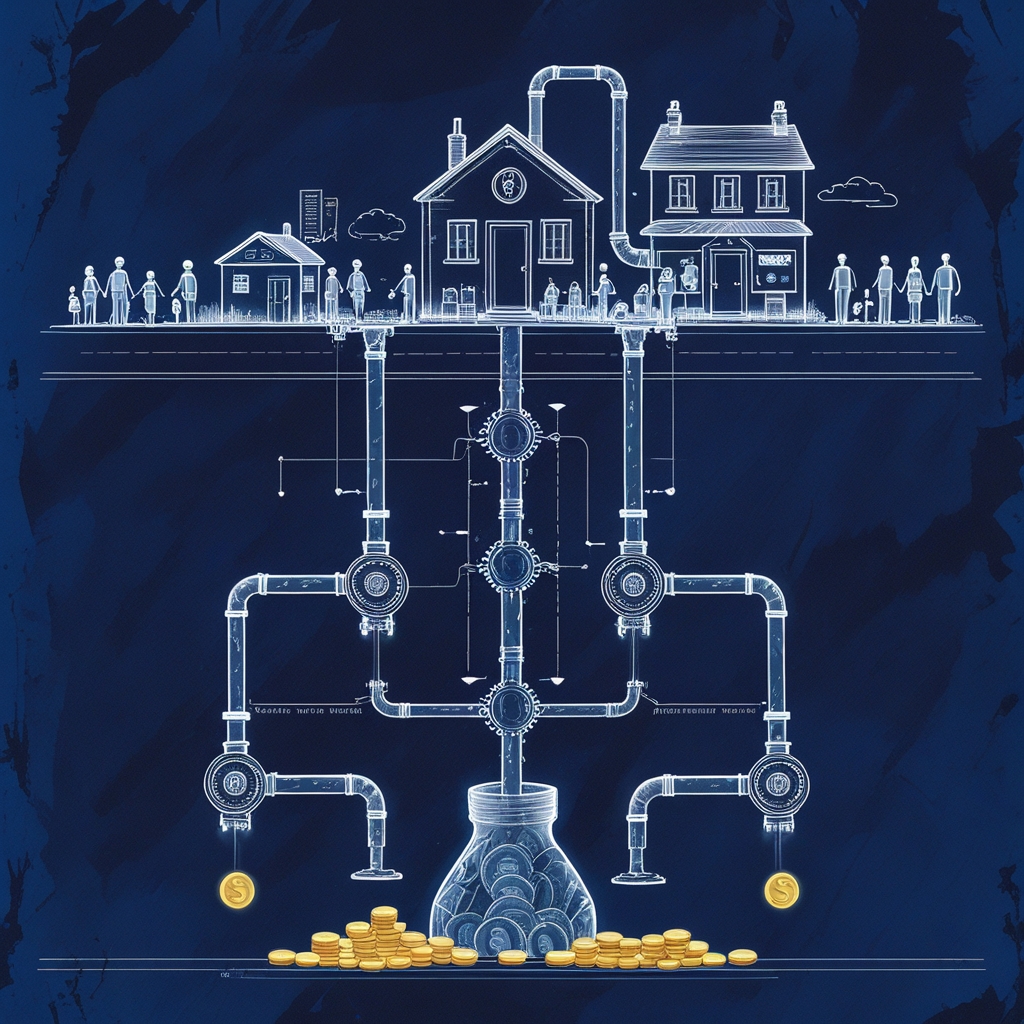
And here is where the UK energy system amplified the shock. Gas prices rose. Wholesale gas prices. And because electricity in the UK is priced at the margin, and because gas sets the margin, electricity prices rose too. Dramatically. Even though most UK electricity does not come from gas. Wind generates a large share. Nuclear generates some. But the price is set by gas. So when gas prices quintupled, electricity prices quintupled too.
And generators profited. Wind farms. Nuclear plants. They were generating at the same cost as before. Wind is free. Nuclear fuel is stable. But they were selling at prices set by expensive gas. Five times higher. Ten times higher. And the difference was profit. Windfall profit. Billions. In a single year.
Meanwhile, consumers paid. The price cap, which is updated quarterly based on wholesale prices, rose. In April 2022, it jumped to nearly two thousand pounds per year. In October 2022, it was projected to reach over four thousand. And households, seeing their bills double, triple, panicked. Some could not pay. Some went into debt. Some cut usage. Turned off heating. Wore coats indoors. And some just gave up. Stopped paying. And faced disconnection.
The government intervened. In September 2022. Announced the Energy Price Guarantee. A cap within the cap. The price cap was projected to hit four thousand pounds. The government said, we will limit it to two thousand five hundred. And we will subsidize the difference. Pay energy suppliers to charge less than the cap allows.
This cost money. Enormous money. Estimates suggested the scheme would cost one hundred billion pounds. Over two years. Funded by borrowing. By the taxpayer. And the subsidy worked. Sort of. Bills did not hit four thousand. They stayed at two thousand five hundred. Which was still double what they had been. Still unaffordable for many. But less catastrophic than the alternative.
But here is the problem. The subsidy did not address the underlying issue. It did not reform marginal pricing. Did not stop generators making windfall profits. Did not reduce gas dependency. It just paid. Paid suppliers to absorb the difference. And suppliers, receiving the subsidy, passed it on. To consumers. In the form of lower bills. Temporarily.
And the subsidy was regressive. Everyone got it. Rich and poor. High users and low users. Someone heating a mansion got the same subsidy per unit as someone in a one-bedroom flat. And the cost, one hundred billion, was borrowed. Added to public debt. To be repaid. By taxpayers. Through higher taxes. Or reduced public spending. For years. Decades.
Meanwhile, generators made record profits. BP reported profits of twenty-three billion pounds in 2022. Shell reported forty billion. Renewable generators, wind farms, made record profits too. Selling low-cost electricity at gas prices. And those profits were not taxed properly. The windfall tax, introduced in 2022, applied to oil and gas extraction. Not to electricity generation. So renewable and nuclear generators kept their windfalls. Untaxed.
And networks profited. The National Grid. DNOs. Because their revenues are linked to investment. And investment continued. Even during the crisis. Even as households struggled. Networks invested in upgrades. In connections. And earned regulated returns. Guaranteed returns. While consumers paid. Through standing charges. Through network costs. Embedded in their bills.
And suppliers collapsed. Twenty-nine suppliers went bust. In 2021 and 2022. Because they could not pass wholesale price rises onto customers quickly enough. The price cap lagged. It was updated quarterly. Based on past wholesale prices. So when wholesale prices spiked suddenly, suppliers were caught. Buying at crisis prices. Selling at capped prices. And losing money. Massively.
And when suppliers collapsed, costs were created. Costs of transferring customers to new suppliers. Supplier of Last Resort costs. And those costs were recovered from all consumers. Through higher bills. So consumers paid. Not just through high energy prices. But through the cost of cleaning up the supplier failures. Caused by the crisis.
Now let us talk about what the crisis revealed. About the UK energy system.
First, it revealed the vulnerability of marginal pricing. Linking electricity prices to gas prices meant that a gas price shock became an electricity price shock. Automatically. Even though most electricity did not come from gas. And this created windfall profits for non-gas generators. Who did nothing to earn them. They just benefited. From a pricing mechanism. That favored them.
Second, it revealed the lack of gas storage. The UK has very little gas storage. Compared to Europe. Because storage was privatized. And then closed. Because it was not profitable. So when the crisis hit, the UK could not buffer. Could not store gas when it was cheap. And release it when it was expensive. The UK was entirely reliant on the spot market. On day-to-day supply. And that made the UK vulnerable. To price spikes. To supply shocks.
Third, it revealed the inadequacy of the price cap. The cap is supposed to protect consumers. But it only protects against being overcharged by suppliers. It does not protect against high wholesale prices. When wholesale prices rise, the cap rises. With a lag. But it rises. So the cap, during a crisis, does not cap bills at an affordable level. It caps them at a level determined by the market. Which can be unaffordable.
Fourth, it revealed the profiteering. Generators made record profits. While consumers struggled. And the government, while introducing a windfall tax, did so weakly. Partially. And allowed billions in profits to go untaxed. Uncaptured. And those profits were not reinvested. Not in the UK. They were distributed. To shareholders. Through dividends. Through buybacks. And many of those shareholders were foreign. So the wealth, extracted from UK consumers during a crisis, flowed out. To investors abroad.
Fifth, it revealed the lack of insulation. UK homes are poorly insulated. And during the crisis, poorly insulated homes used more energy. Cost more to heat. And households in those homes suffered most. They could not reduce usage. Because even with heating turned down, the homes were cold. Drafty. And they paid more. Far more. Than households in well-insulated homes.
And the government, while subsidizing bills, did not invest in insulation. Did not use the crisis as an opportunity to permanently reduce demand. To upgrade housing stock. It just paid. Temporarily. To reduce bills. And when the subsidy ended, bills rose again. And the underlying problem, poor insulation, remained.
Sixth, it revealed the regressive impact of standing charges. Standing charges are fixed. Daily charges. That you pay regardless of usage. And during the crisis, standing charges rose. Because network costs rose. And those standing charges hit low-usage households hardest. Households trying to conserve. Trying to reduce bills. But unable to reduce the fixed charges. So their efforts to save were undermined. By standing charges that kept rising.
Seventh, it revealed the political power of energy companies. Generators lobbied against strong windfall taxes. And succeeded. Networks lobbied to protect their returns. And succeeded. Suppliers lobbied for support. And got it. Through subsidies. Through relaxed regulations. And consumers, lacking organization, lacking lobbying power, got subsidies. Eventually. Temporarily. But not structural reform. Not insulation. Not proper windfall taxes. Just temporary relief. That cost taxpayers billions. And left the system unchanged.
And eighth, it revealed that the energy system is designed to protect generators and networks. Not consumers. When the crisis hit, suppliers collapsed. Consumers suffered. But generators profited. Networks continued earning. And the government intervened. Not to change the system. But to subsidize it. To keep it running. To protect it. While consumers paid. Through higher bills. And through higher taxes. To fund the subsidy.
The crisis was sold as unprecedented. Unpredictable. But it was not. It was the result of choices. The choice to link electricity prices to gas. The choice to privatize storage and then allow it to close. The choice not to insulate homes. The choice not to regulate networks tightly. The choice not to tax windfall profits properly. And the choice to subsidize bills temporarily rather than reform the system permanently.
And those choices served interests. Generator interests. Network interests. Investor interests. And those interests, having profited from the crisis, have no incentive to change the system. Because the system, during the crisis, worked. For them. It extracted maximum profit. From maximum pain. And the government, rather than challenging the system, subsidized it. Funded it. Protected it.
The 2022-23 energy crisis was not an anomaly. It was the system. Operating at full capacity. Amplifying shocks. Extracting profits. And passing costs to consumers. And until the system changes, until marginal pricing is reformed, until networks are controlled, until homes are insulated, until windfall profits are taxed, the next crisis will be the same. Generators will profit. Networks will earn. And consumers will pay. Through higher bills. Through colder homes. Through choosing between heat and food.
This is not a broken system. This is a system working exactly as it was designed to work. Not for consumers. But for the people who profit from it. And until consumers organize, until they demand change, until they force politicians to prioritize them over generators and networks and investors, the system will stay as it is. Expensive. Volatile. Exploitative. And ready to profit. From the next crisis.