The Feedback Loops - Why Bills Keep Rising
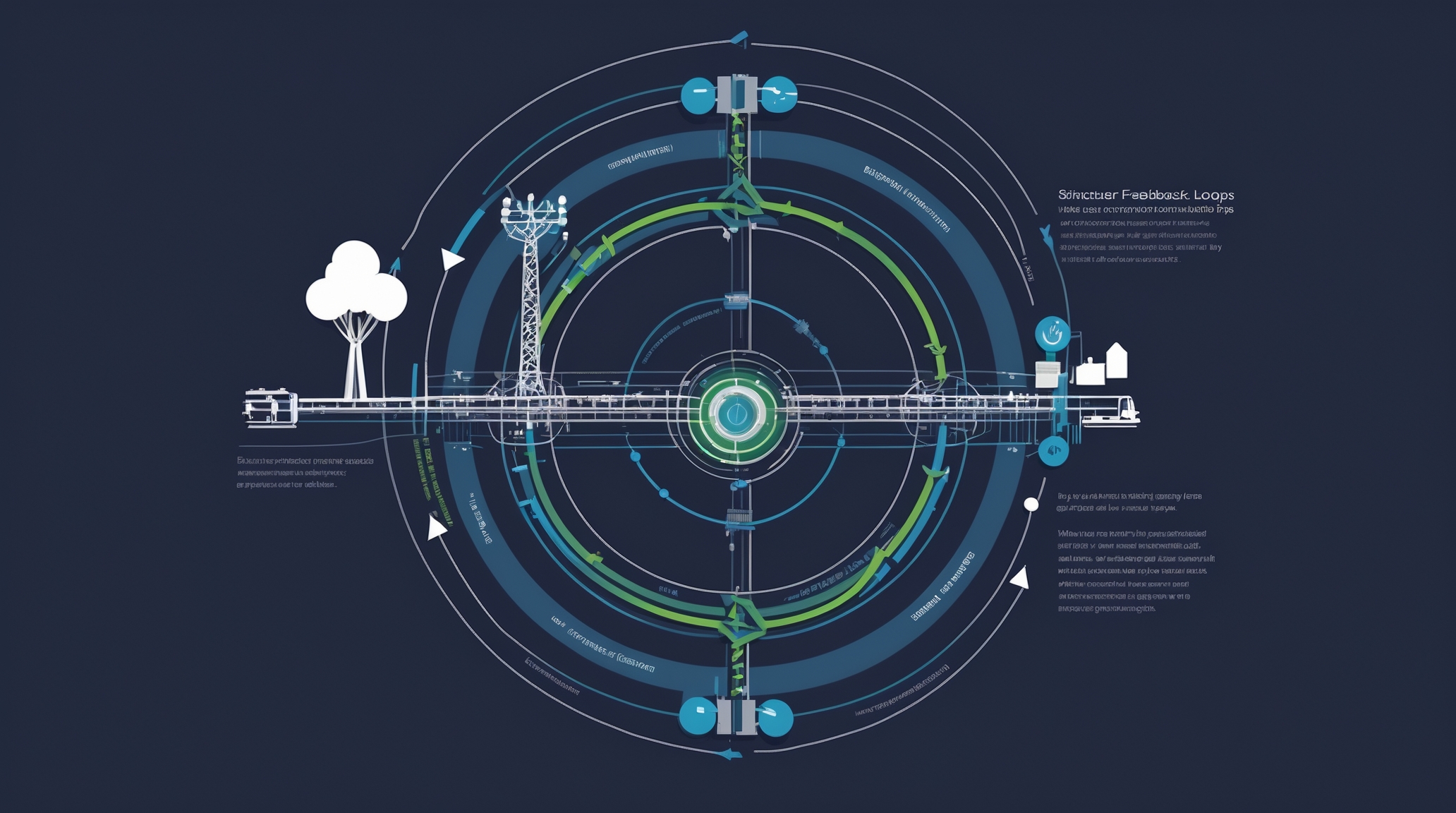
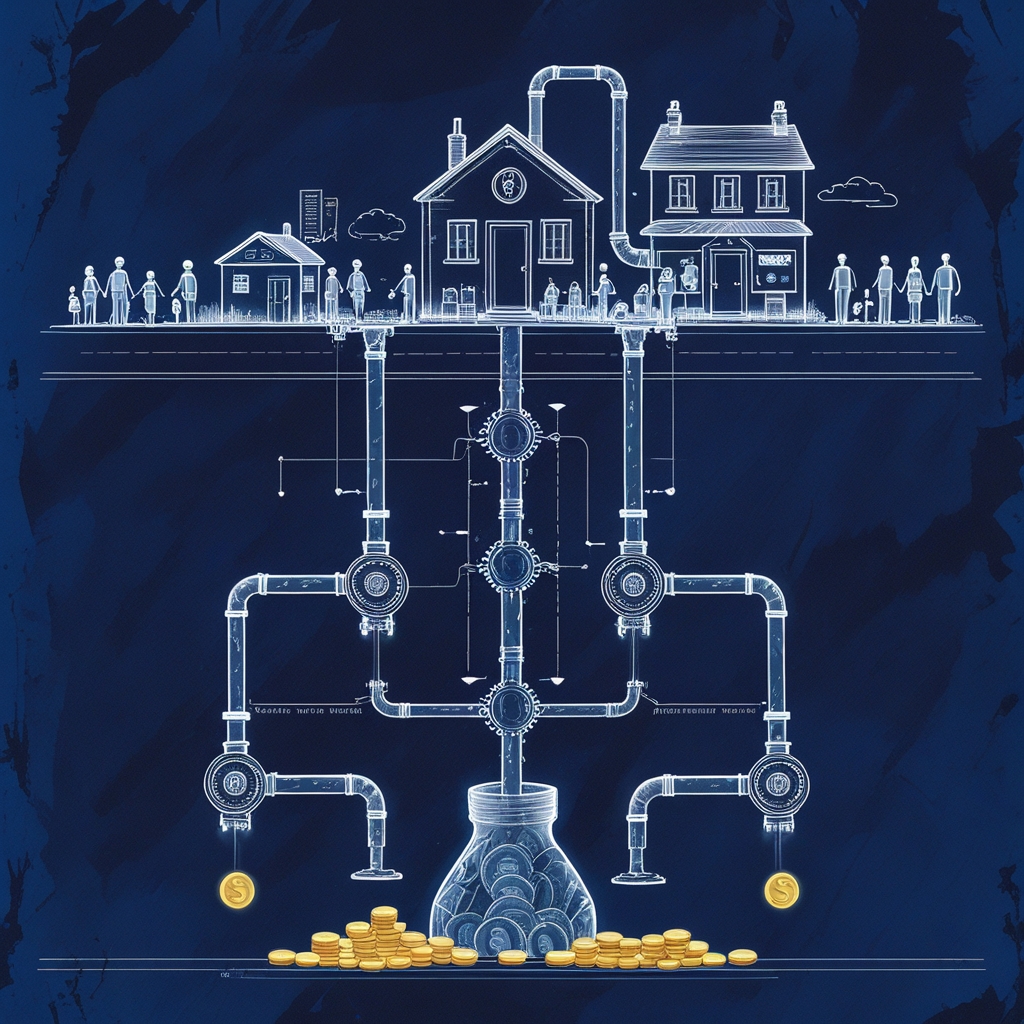
Energy bills do not just rise. They ratchet. Up. They spike during crises. And when the crisis passes, they do not fall back to where they were. They settle higher. Permanently higher. And then, the next crisis hits. And they spike again. And settle higher still. And the cycle repeats. Year after year. Each crisis resetting the baseline. Each spike becoming the new normal.
This is not random. This is not just market forces. This is feedback loops. Loops that turn temporary price increases into permanent ones. That ensure costs rise faster than they fall. That shift risks onto consumers and profits onto generators and networks. And once these loops are in motion, they are very hard to stop. Because they feed themselves. They amplify. And they ensure that energy bills, despite falling wholesale prices, despite increased renewable generation, stay high. Or rise higher.
Let me show you the feedback loops that keep UK energy bills rising.
The first loop is the marginal pricing lock-in loop. Electricity prices are set by the marginal generator. Gas. And this creates a feedback loop. When gas prices rise, electricity prices rise. For all generators. Including renewables. Including nuclear. So renewable and nuclear generators profit. Windfall profits. And those profits attract investment. More wind farms. More solar. More renewables.
And here is the feedback. More renewables should reduce electricity prices. Because renewables have near-zero marginal costs. But they do not reduce prices. Because prices are still set by gas. Gas is still the marginal generator. Because renewables are intermittent. When the wind stops. When the sun sets. Gas fills the gap. So gas remains on the margin. And sets the price. Even though renewables are generating most of the time.
So the loop continues. High gas prices create high electricity prices. High electricity prices create windfall profits for renewables. Windfall profits attract more renewable investment. But more renewables do not lower prices. Because gas still sets the price. So prices stay high. And the loop reinforces.
And this loop benefits generators. All of them. Because even as renewables grow, even as the share of gas generation falls, gas continues to set the price. During peak times. During low wind. And that price, the marginal price, is paid to everyone. So generators have no incentive to change the pricing mechanism. Because the current mechanism maximizes their revenue.
The second loop is the network investment loop. Energy networks, the National Grid and DNOs, are regulated monopolies. They earn revenue based on the assets they own. The infrastructure they build. And the more they invest, the more they earn. This creates an incentive to invest. To upgrade. To build. Even when the upgrades are not urgent.
And here is the feedback. Investment increases the asset base. The asset base determines allowed revenue. Allowed revenue, plus a regulated return, generates profit. Profit is distributed to shareholders. Shareholders demand more profit. So the network invests more. And the loop continues.
And consumers pay. Through network charges. Which rise as investment rises. And network charges are a growing portion of energy bills. Larger than they used to be. Because the networks are investing. Heavily. In grid upgrades. In connecting renewables. In smart meters. All necessary, arguably. But all expensive. And all passed on. To consumers. Through standing charges. Through unit rates.
And the loop is self-reinforcing. Because Ofgem, the regulator, approves investment. Based on forecasts. On plans. Submitted by the networks. And the networks, knowing their revenue is guaranteed, propose large investment programs. And Ofgem approves. Because the investment, on paper, serves the public interest. Connects renewables. Improves resilience. And the networks invest. And earn. And consumers pay.
The third loop is the supplier margin compression loop. Suppliers operate on thin margins. A few percent. And during crises, when wholesale prices spike, suppliers are squeezed. They buy energy at crisis prices. But cannot immediately pass those prices onto consumers. Because of the price cap. The cap lags. It is updated quarterly. Based on past wholesale prices. So there is a delay.
And during that delay, suppliers lose money. They buy high. Sell low. And if the crisis is severe, if the delay is long, suppliers collapse. Go bust. And when suppliers collapse, costs are created. Costs of transferring customers. Costs of honoring contracts. Costs of cleaning up. And those costs, Supplier of Last Resort costs, are recovered. From all consumers. Through higher bills.
And here is the feedback. Supplier collapses create costs. Costs increase bills. Higher bills reduce competition. Because fewer suppliers enter the market. Fewer suppliers mean less competition. Less competition means higher prices. Higher prices create more pressure on suppliers. And the loop continues.
And the surviving suppliers, having seen others collapse, change behavior. They stop offering fixed tariffs. Long-term fixed prices. Because fixed tariffs create risk. If wholesale prices rise, the supplier cannot adjust. So they offer variable tariffs. Linked to the price cap. And consumers, on variable tariffs, bear the risk. Of price spikes. Of volatility. The supplier passes the risk on. And consumers, having no alternative, accept it.
The fourth loop is the standing charge creep loop. Standing charges are fixed daily charges. That you pay regardless of usage. They cover network costs. Metering costs. Supplier costs. And they are rising. Faster than unit rates. Because network costs are rising. And those costs, fixed costs, are recovered through standing charges.
And here is the feedback. Rising network investment increases fixed costs. Fixed costs are recovered through standing charges. Standing charges rise. And as they rise, they become a larger portion of the bill. Particularly for low-usage households. Households trying to reduce consumption. To save money. But they cannot reduce standing charges. So their savings, from reduced usage, are eroded.
And this creates perverse incentives. If standing charges are high, and unit rates are lower, the incentive to reduce usage is weakened. Because most of the bill is fixed. So why bother reducing usage? The savings are minimal. And this reduces the effectiveness of energy efficiency. Of conservation. Because the pricing structure does not reward it.
And the loop continues. Network investment drives standing charges up. High standing charges reduce the incentive to conserve. Continued high usage justifies more network investment. And the cycle repeats.
The fifth loop is the green levy cost recovery loop. Green levies fund renewable energy. Contracts for Difference. Feed-in tariffs. Energy efficiency schemes. And they are added to bills. As a levy. A charge. Per unit of energy. And when energy usage falls, when people conserve, the levy per unit must rise. To recover the same total cost.
Here is the feedback. Green policies have fixed costs. Contracts that must be honored. Payments that must be made. And those costs are recovered from consumers. Through levies. If consumption falls, the cost per unit rises. To maintain revenue. So conservation, which should reduce bills, is partially offset. By higher levies per unit.
And this creates resentment. Consumers conserve. Use less energy. And their bills do not fall proportionately. Because the levy per unit has risen. So they feel punished. For conserving. And they blame green levies. Blame renewable subsidies. Even though the total cost of green levies is small. Compared to wholesale costs. Compared to network costs. But the perception is that green policies are expensive. And that perception creates political pressure. To reduce support. To slow the transition. Which benefits fossil fuels.
The sixth loop is the gas dependency lock-in loop. The UK generates electricity from gas. A lot of it. And heats homes with gas. Most homes. And this creates dependency. Dependency on gas prices. On gas supply. And when gas prices rise, energy bills rise. Across the board.
And here is the feedback. High gas prices create high bills. High bills create political pressure. To reduce dependency on gas. To build more renewables. So the government supports renewables. Through subsidies. Through contracts. And renewable generation grows. But gas dependency does not fall. Because renewables are intermittent. And gas fills the gaps. So gas remains essential. And sets the price. And bills stay linked to gas prices.
And the loop continues. Gas dependency creates vulnerability. Vulnerability creates high bills. High bills create pressure for renewables. But renewables do not eliminate gas. Because gas provides flexibility. Reliability. So gas stays. And prices stay linked. And bills stay high.
And gas companies, seeing this, invest. In gas infrastructure. In import terminals. In storage. And those investments, in gas, lock in dependency. For decades. Because once built, the infrastructure must be used. Justified. And the longer gas is used, the longer bills are linked to gas prices.
The seventh loop is the price cap ratchet loop. The price cap is updated quarterly. Based on wholesale prices. And it rises quickly when wholesale prices rise. But falls slowly when wholesale prices fall. This asymmetry is deliberate. To protect suppliers. From the risk of undercharging.
And here is the feedback. Wholesale prices spike. The cap rises. Quickly. Bills rise. Then wholesale prices fall. The cap falls. Slowly. Bills stay elevated. And consumers, having paid high bills during the spike, do not see equivalent savings when prices fall. The cap, lagging, keeps bills higher than wholesale prices justify.
And each spike resets the baseline. The cap, after rising and then falling, settles higher than it was before the spike. Not at the pre-spike level. Higher. Because network costs have risen. Because standing charges have risen. Because the methodology includes buffers. To protect suppliers. So the post-spike cap is higher than the pre-spike cap. And the next spike starts from that higher baseline. And settles higher still. The ratchet effect.
The eighth loop is the winter demand spike loop. Energy demand spikes in winter. Heating. Lighting. And winter demand creates scarcity. Particularly during cold snaps. When everyone turns up the heating. And scarcity drives up prices. Wholesale prices. Gas prices. And those high prices feed through. Into bills.
And here is the feedback. High winter bills create financial stress. For households. Particularly low-income households. And financial stress creates energy debt. Arrears. And arrears increase supplier costs. Costs of collection. Costs of bad debt. And those costs are recovered. From all consumers. Through higher prices. So winter demand spikes increase bills. Not just in winter. But year-round. Because the costs of winter, the debts, the arrears, are spread.
And the loop continues. Winter creates demand. Demand creates high prices. High prices create debt. Debt creates supplier costs. Costs are recovered from all consumers. And bills rise. Permanently. Not just in winter. But always.
The ninth loop is the underinvestment in insulation loop. The UK housing stock is poorly insulated. The worst in Western Europe. And poor insulation increases energy demand. Households need more energy to heat poorly insulated homes. And higher demand drives up bills. And drives up wholesale prices. Because aggregate demand is higher.
And here is the feedback. High bills create pressure. Political pressure. To help consumers. So the government intervenes. Through subsidies. Energy bill support. Winter fuel payments. But not through insulation. Not through upgrading housing stock. Because insulation requires upfront investment. Capital spending. And the benefits, lower bills, accrue to householders. Not to government. So the government subsidizes bills. Temporarily. Rather than fixing the underlying problem. Permanently.
And the loop continues. Poor insulation creates high demand. High demand creates high bills. High bills create pressure for subsidies. Subsidies reduce bills temporarily. But do not reduce demand. So high demand persists. And bills stay high. And the cycle repeats.
So here are the loops. Marginal pricing keeps electricity prices linked to gas even as renewables grow. Network investment drives up standing charges and network costs. Supplier collapses create costs that are passed onto all consumers. Standing charges rise and erode conservation incentives. Green levies increase per unit when consumption falls. Gas dependency locks in price volatility. The price cap ratchets up after each spike. Winter demand creates debt that is recovered year-round. And poor insulation sustains high demand that keeps bills elevated.
These loops interact. Reinforce each other. And together, they ensure that energy bills rise. Quickly during crises. Slowly during calm. But always upward. And even when wholesale prices fall, even when renewables grow, bills stay high. Because the loops keep them high. Because the structure is designed to protect generators. To protect networks. To protect investors. And to pass costs, risks, and volatility onto consumers.
The next article will show you why the energy system resists reform. Why, despite the crisis being visible, despite bills being unaffordable, the structure does not change. Because the forces protecting high prices are stronger than the forces opposing them. And those forces are political. Economic. And structural.