The Machine - How UK Energy Markets Actually Work
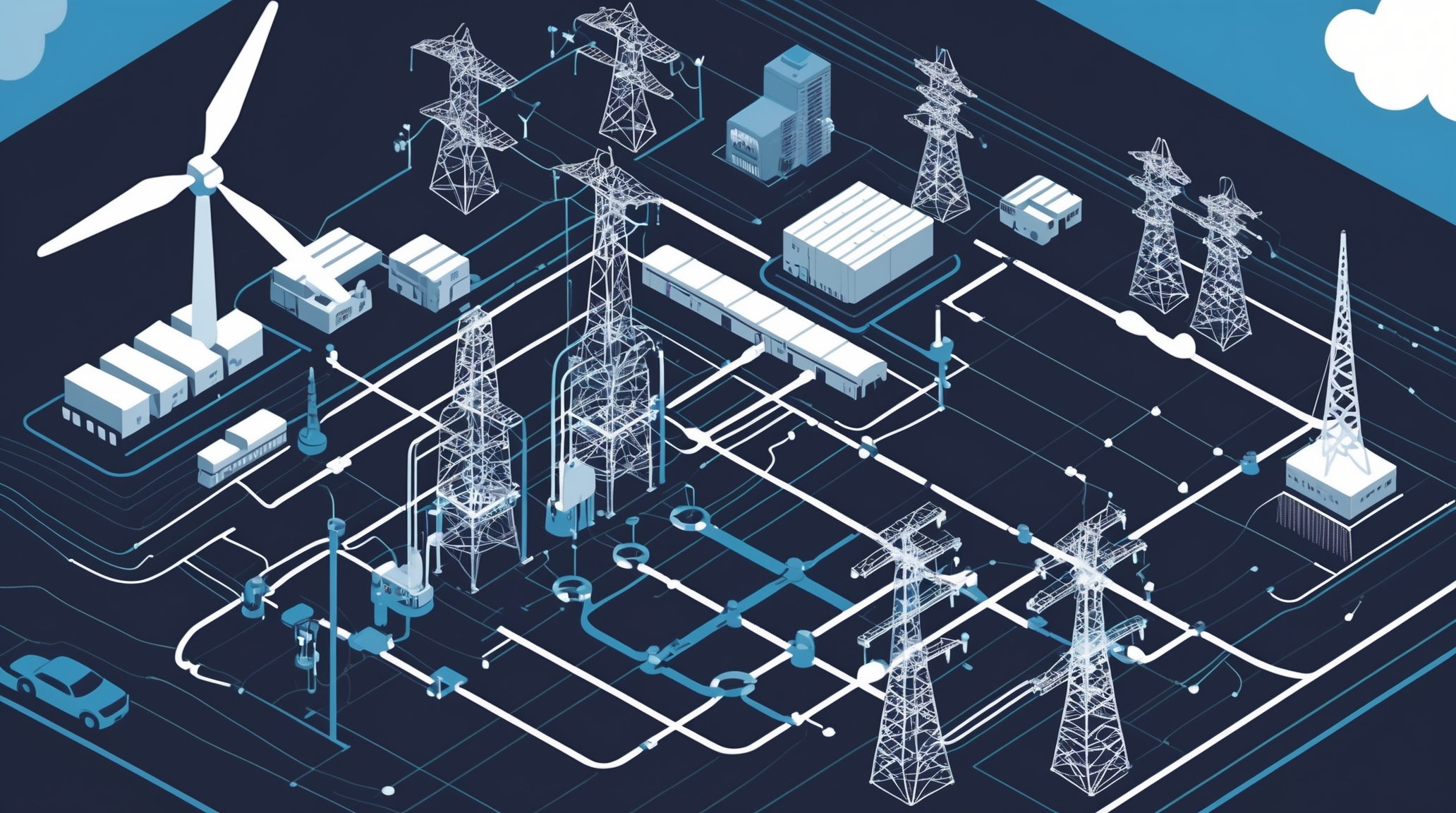
You use energy. You turn on lights. Heat your home. Cook food. Charge devices. And at the end of the month, you get a bill. And the bill is high. Higher than it used to be. Higher than it should be. And you do not understand why. Because you have not used more energy. You have used less. Turned down the heating. Switched off lights. Been careful. And still, the bill is higher.
And when you look at the bill, it is confusing. Unit rates. Standing charges. Green levies. All listed. All charged. And you do not understand how they are calculated. Or why they are so high. Or why, when wholesale energy prices fall, your bill does not. You are told it is the market. Supply and demand. Global prices. But it does not feel like a market. It feels like a racket.
This is the UK energy system. And it is not designed to provide affordable energy. It is designed to generate profit. For generators. For suppliers. For the networks. And the structure, the pricing, the regulation, all of it serves that goal. Not your goal. Which is cheap, reliable energy. But their goal. Which is maximum revenue at minimum risk.
Let me show you how the UK energy system actually works.
The first thing to understand is that energy, electricity and gas, is not one thing. It is a system. Multiple systems. Generation. Transmission. Distribution. Supply. Each separate. Each operated by different companies. And each extracting profit at every stage.
Let us start with generation. Electricity is generated. By power stations. Gas-fired power stations. Nuclear. Wind farms. Solar. Coal, though barely any now. And each type of generation has different costs. Wind and solar, once built, have near-zero marginal costs. The wind is free. The sun is free. Nuclear has low fuel costs but high fixed costs. Gas has high fuel costs. Variable costs. Depending on global gas prices.
And generators sell electricity. Into the wholesale market. A market where electricity is traded. Bought and sold. By suppliers. By traders. By large industrial users. And the price, the wholesale price, is set by supply and demand. When demand is high and supply is tight, prices rise. When demand is low and supply is abundant, prices fall.
But here is the key. The wholesale price is set by the marginal generator. The most expensive generator needed to meet demand. And in the UK, that is almost always gas. Because gas-fired power stations are flexible. They can ramp up quickly. And they fill the gap. When wind is low. When demand spikes. So gas sets the price. And all generators, even wind, even nuclear, get paid that price. The marginal price.
This is called marginal pricing. And it means that when gas prices rise, electricity prices rise. For everyone. Even though wind and nuclear costs have not changed. They still get paid the high price. Because that is the market price. And this inflates their profits. Enormously. They generate at low cost. And sell at high prices. Set by gas.
Now add in transmission. The National Grid. This is the network of high-voltage power lines that carries electricity from generators to local areas. The grid is owned by National Grid plc. A private company. And it charges. For using the network. Generators pay. Suppliers pay. And those costs are passed on. To you.
The National Grid is a natural monopoly. You cannot have competing grids. So it is regulated. By Ofgem. The regulator. And Ofgem sets the revenue the National Grid can earn. Based on its costs. Plus a return. A profit. For investors. And the National Grid, knowing its revenue is guaranteed, invests. In infrastructure. In maintenance. And charges users. And profits.
Now add in distribution. Local networks. The cables that carry electricity from the National Grid to your home. These are owned by Distribution Network Operators. DNOs. Regional monopolies. Fourteen of them in the UK. Each covering a region. And like the National Grid, they are regulated. By Ofgem. And like the National Grid, they charge. For using their network. And earn a guaranteed return.
And then, finally, supply. The energy supplier. The company you pay. British Gas. EDF. Octopus. Shell. Hundreds of them. They do not generate electricity. Most of them. They do not own the grid. They do not own the local network. They just buy electricity from the wholesale market. And sell it to you. At a markup.
Suppliers are the visible part of the system. The part you interact with. And they are often blamed for high prices. But suppliers are not the main profiteers. They operate on thin margins. A few percent. And during the energy crisis, many collapsed. Went bust. Because they could not pass costs onto customers quickly enough. The price cap, set by Ofgem, limited what they could charge. And wholesale prices rose faster than the cap. So suppliers lost money. And collapsed.
But the generators. The networks. They did not collapse. They profited. Because their revenues are protected. Guaranteed. Or tied to wholesale prices that soared.
Now let us talk about the price cap. This is the maximum amount suppliers can charge households. Per unit of energy. And it is set by Ofgem. Quarterly. Based on wholesale prices. Network costs. Operating costs. And a margin for suppliers. The idea is to protect consumers. From being overcharged. And it does. Partially. Suppliers cannot charge more than the cap. So there is a ceiling.
But the cap is not a fixed price. It moves. Every quarter. And when wholesale prices rise, the cap rises. With a lag. So consumers are protected from instant price spikes. But not from sustained high prices. If wholesale prices stay high, the cap stays high. And your bill stays high.
And the cap is calculated based on a typical household. Using a typical amount of energy. If you use more, you pay more. If you use less, you pay less. But the unit rate, the price per kilowatt-hour, is the same for everyone under the cap. And the cap includes standing charges. Fixed daily charges. That you pay regardless of usage.
Standing charges cover the fixed costs. Of maintaining the network. Of being connected. And they are controversial. Because they are regressive. A household using little energy pays the same standing charge as a household using a lot. So the standing charge, as a proportion of the bill, is higher for low-usage households. And standing charges have been rising. Faster than unit rates. Because network costs are rising. And those costs are recovered through standing charges.
Now let us talk about why gas prices set electricity prices. This is the marginal pricing mechanism. And it is crucial. The UK generates electricity from multiple sources. Gas. Wind. Nuclear. Solar. And each has different costs. But they all sell into the same market. At the same price. The marginal price. Set by gas.
Here is how it works. Demand for electricity varies. Throughout the day. Throughout the year. And supply must match demand. Exactly. In real time. So generators are dispatched. Called upon to generate. In order of cost. Cheapest first. Wind and solar, near-zero marginal cost, go first. Then nuclear. Then gas. And gas, being the most expensive, is the marginal generator. The last one needed to meet demand.
And the price paid to all generators is the price of the marginal generator. Gas. So even though wind generated at near-zero cost, it gets paid the gas price. And wind generators, during periods of high gas prices, make extraordinary profits. They are generating at the same cost as before. But selling at five times the price. Ten times. Because gas is expensive.
This benefits generators. Hugely. But it does not benefit consumers. Because consumers pay the marginal price. Even though most of their electricity might have come from wind. Or nuclear. Which did not get more expensive. But they pay as if it all came from gas.
And this structure is defended. By generators. By the industry. They argue that marginal pricing incentivizes investment. Because generators know they will get paid the market price. Even if their costs are low. So they invest. In renewables. In nuclear. And the system benefits. But consumers pay. Through inflated prices. That do not reflect the actual cost of generation.
Now let us talk about green levies. These are charges on your bill. To fund renewable energy. Feed-in tariffs. Contracts for Difference. CfDs. And energy efficiency schemes. And they are controversial. Because they add to bills. And people resent paying for green policies when they are struggling to afford energy.
But here is the reality. Green levies are a small part of the bill. Five percent. Maybe ten. Most of your bill is wholesale costs. Network costs. Supplier margin. And VAT. Green levies fund the transition to renewables. To cleaner energy. And they do that by guaranteeing prices to renewable generators. So that investment is viable.
Contracts for Difference work like this. A renewable generator, a wind farm, agrees a strike price with the government. A guaranteed price per unit of electricity. If the market price is below the strike price, the government pays the difference. If the market price is above the strike price, the generator pays the difference back. So the generator has certainty. A guaranteed revenue. And investors, seeing that certainty, fund the project.
And during the energy crisis, when wholesale prices soared, CfD generators paid back. Because the market price was above the strike price. So the scheme, which is usually a cost, became a revenue. For the government. And that revenue was used to reduce bills. Slightly. But most people did not notice. Because the reduction was smaller than the increase.
So green levies are not the problem. They are not why bills are high. Bills are high because wholesale prices are high. Because gas is expensive. And because the pricing mechanism ties electricity prices to gas prices. Even when gas is not being used.
Now let us talk about the wholesale market. This is where energy is bought and sold. And it is complex. There are day-ahead markets. Where energy is traded for delivery the next day. And there are futures markets. Where energy is traded for delivery months or years ahead. And there are balancing markets. Where the National Grid buys energy in real time. To balance supply and demand.
Suppliers buy from the wholesale market. Some buy day-ahead. Some buy futures. Hedging. Locking in prices in advance. And some buy on the balancing market. Paying whatever the real-time price is. And the strategy varies. By supplier. By market conditions. And by risk appetite.
During the energy crisis, suppliers who had hedged, who had locked in prices before the crisis, survived. They were paying pre-crisis prices. And selling at capped prices. And making margins. Suppliers who had not hedged, who were buying day-ahead or on the balancing market, paid crisis prices. And could not pass them on quickly enough. Because of the cap. So they collapsed.
And the collapse of suppliers created costs. For consumers. Because when a supplier collapses, its customers are transferred. To another supplier. Appointed by Ofgem. And the new supplier, inheriting customers, inherits costs. Costs of acquiring those customers. And those costs, called the Supplier of Last Resort costs, are recovered. From all consumers. Through higher bills.
So the energy crisis, which was caused by high wholesale prices, which was exacerbated by marginal pricing, which led to supplier collapses, ended up costing consumers. Not just through high energy prices. But through the costs of cleaning up the mess. The failed suppliers. The stranded customers. All of it paid for. By you.
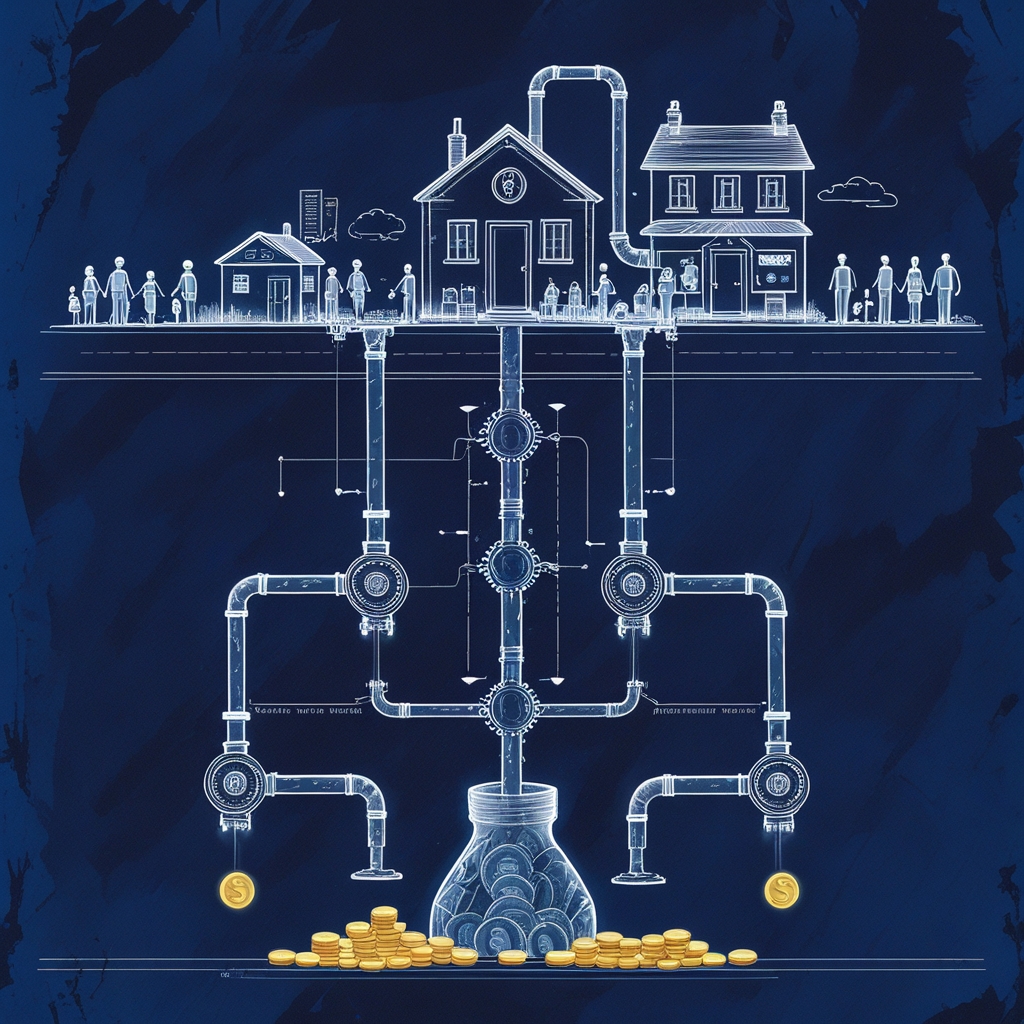
So here is what the UK energy system looks like. Electricity generated by multiple sources. Sold into a wholesale market priced by the marginal generator. Gas. Transmitted by the National Grid. A private monopoly. Distributed by regional monopolies. And supplied by companies operating on thin margins. Regulated by Ofgem. Which sets a price cap. Based on wholesale costs. Which rise when gas prices rise. Even though most electricity does not come from gas. And standing charges. Which rise to cover network costs. And green levies. Which fund renewables. And a wholesale market. Where prices spike. And suppliers collapse. And consumers pay. For everything.
This is the machine. And it is not designed to deliver cheap energy. It is designed to generate returns. For generators. For networks. For investors. And consumers, needing energy, have no choice but to pay. Whatever the price. Because energy is essential. And the market, despite being called a market, is not competitive. It is a series of monopolies. And oligopolies. And regulatory structures. That protect profits. And pass costs. To you.
The next article will show you who profits from high energy bills. Because bills are high. And someone is benefiting. Not you. But generators. Network owners. Traders. And understanding who profits, and how, is the key to understanding why bills stay high. Even when costs fall.