The Feedback Loops: How the Trap Tightens

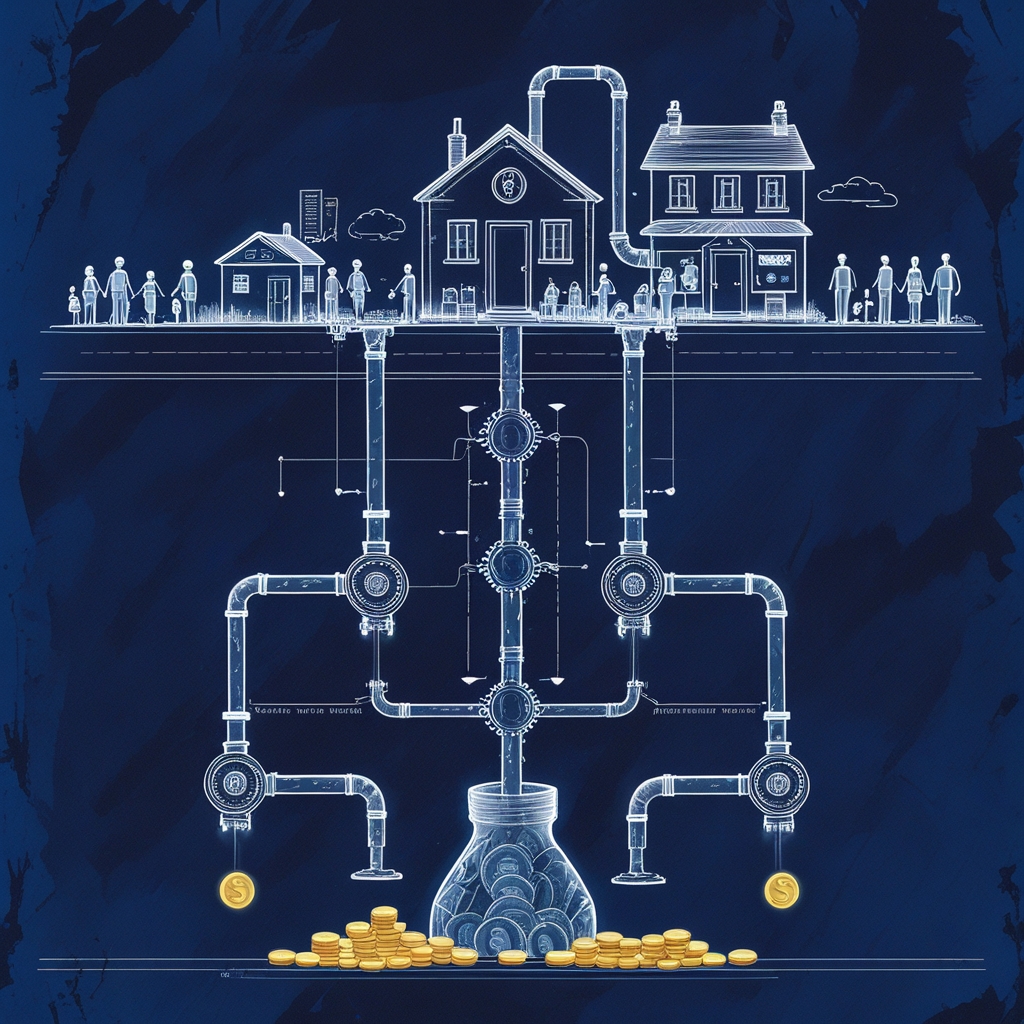
Leasehold contains self-reinforcing dynamics that worsen leaseholder positions over time while strengthening freeholder advantages. These feedback loops operate automatically once you enter the system. Understanding them reveals why individual effort and compliance cannot overcome structural forces designed to transfer wealth from leaseholders to freeholders.
The Declining Lease Loop
Leasehold is a wasting asset. Every day that passes reduces your remaining lease term. This decline creates a feedback loop where time automatically erodes your property value while increasing freeholder leverage and extraction opportunities.
Your lease shortens daily. A ninety-nine year lease becomes ninety-eight years, then ninety-seven, declining inexorably toward zero. Nothing you do stops this decline. Maintaining the property perfectly does not extend the lease. Paying all charges promptly does not add time. Improving the property increases its value but reduces remaining lease length. Time works against you automatically.
As leases shorten, property values decline. A flat worth three hundred thousand pounds with one hundred and fifty years remaining might be worth two hundred and eighty thousand pounds with ninety years, two hundred and forty thousand pounds with seventy years, one hundred and eighty thousand pounds with fifty years. The building quality has not changed. Location has not changed. The only difference is less remaining lease time. Value evaporates through time passage alone.
Below eighty years, the marriage value trap springs. Extension costs spike because you must pay half the value increase from extending. What would cost twelve thousand pounds to extend at eighty-two years costs thirty-five thousand pounds at seventy-eight years. Waiting four years creates twenty-three thousand pounds in additional costs. Leaseholders who delayed extending to save money discover they created massive additional expense by crossing the eighty year threshold.
Below sixty years, properties become difficult to sell. Mortgage lenders restrict lending. Buyer pools shrink. Sale prices drop significantly. Some properties become effectively unsaleable without extensions leaseholders cannot afford. They are trapped in depreciating assets with no market exit.
The freeholder benefits from every aspect of this loop. Declining lease values increase reversion rights value. Properties closer to reverting are worth more to freeholders because they regain possession sooner. Marriage value transfers wealth from leaseholders to freeholders for value leaseholders created. Unmortgageability makes leaseholders desperate, improving freeholder negotiating position when leaseholders seek extensions. Time enriches freeholders while impoverishing leaseholders automatically.
The Service Charge Escalation Spiral
Service charges do not stay stable. They rise continuously, usually faster than inflation, creating a spiral where each increase makes the next increase more likely and more damaging.
Charges rise annually for stated reasons. Buildings age and maintenance costs increase. Insurance premiums rise. Utilities become more expensive. Managing agent fees rise with inflation. Each year brings new justifications for increases. Most are plausible individually. Collectively they create relentless upward pressure.
Higher charges reduce leaseholder financial capacity. A leaseholder budgeting two thousand pounds annually for service charges can manage. When charges rise to three thousand pounds, they struggle. At four thousand pounds, financial stress emerges. At five thousand pounds, they cannot sustain payments while meeting other obligations. Each increase consumes income that could fund other expenses or savings.
Financial stress reduces ability to challenge costs. Challenging service charges at tribunal costs five thousand to fifteen thousand pounds in legal fees and surveyor reports. A leaseholder struggling to pay four thousand pounds annual service charges cannot afford ten thousand pounds to challenge them. Tribunals become accessible only to those who can afford to fight. Those most hurt by excessive charges cannot challenge them.
Inability to challenge enables further increases. Managing agents and freeholders increase charges knowing most leaseholders will pay rather than fight. Absence of effective challenge removes the constraint that competitive markets create. Charges rise because they can rise, not because costs require increases.
Service charge increases make major works more acceptable. A building with annual service charges of six thousand pounds per flat can more easily impose a forty thousand pound major works bill than a building with two thousand pound service charges. Higher ongoing costs normalize higher one-time costs. Leaseholders already paying substantial service charges accept major works bills they would have found shocking earlier.
Major works themselves increase ongoing service charges. A building installing new lifts sees service charge increases for lift maintenance contracts, increased insurance costs covering new equipment, and higher managing agent fees proportional to larger budgets. Today's major works create tomorrow's service charge increases creating the next major works creating higher service charges. The spiral continues indefinitely.
Leaseholders who cannot sustain increases face forfeiture. Missing service charge payments puts you in arrears. Arrears trigger forfeiture proceedings. Legal costs pile on top of arrears. You pay everything plus legal fees or lose your property. The threat disciplines leaseholders into paying increases they can barely afford rather than risking everything by defaulting.
The Permission and Control Trap
Leasehold subordinates leaseholders to freeholder control. This subordination creates a feedback loop where compliance reinforces freeholder power while resistance becomes costlier and riskier.
Leases specify what requires freeholder permission. Structural alterations, external changes, subletting, keeping pets, commercial use. Each restriction gives freeholders leverage. You must ask permission and pay fees for actions homeowners take freely. This creates revenue opportunities and control mechanisms freeholders exploit.
Requesting permission establishes freeholder authority. Every time you ask permission for alterations or subletting, you acknowledge their power over property you paid for. Repeated permission requests normalize subordination. You internalize that you do not truly own your home and must defer to the freeholder for decisions about how you use it.
Permission fees accumulate. Installing new flooring costs three hundred pounds permission fee. Subletting costs five hundred pounds annual permission fee. Keeping a pet costs two hundred pounds permission fee. Over decades, permission fees extract thousands from leaseholders for exercising rights freehold owners have by default. Each fee transfers wealth from leaseholder to freeholder for nothing.
Denial of permission creates leverage for extracting compliance or payments. Freeholders can refuse permission for alterations, giving them power to demand concessions or additional payments for reconsidering. A leaseholder wanting to install a new bathroom can be refused permission unless they agree to unrelated freeholder demands or pay additional fees beyond the standard permission charge. Refusal creates negotiating leverage.
Challenging permission refusals costs more than accepting them. If a freeholder unreasonably refuses permission, you can take them to tribunal. This costs five thousand to fifteen thousand pounds in legal fees for a dispute about permission for alterations worth a few thousand pounds. Most leaseholders accept refusal rather than spend more on legal fees than the alteration would cost.
Accepting refusals reinforces freeholder power. Every time leaseholders accept refusals rather than challenging them, freeholders learn they can refuse capriciously without consequence. Power that goes unchallenged becomes entrenched. Freeholders expand control because leaseholders cannot afford to contest each exercise of power.
Freeholder control over alterations limits how you can maintain or improve your property. If you cannot make improvements without permission that might be refused or will be expensive to obtain, you defer improvements. Properties deteriorate because leaseholders cannot freely maintain them. Deterioration justifies higher service charges for major works later. Freeholder control creates building decline creating costs creating freeholder revenue.
The Collective Action Failure Loop
Leaseholder interests align. Everyone in a building faces the same freeholder, pays the same inflated service charges, suffers from the same managing agent incompetence. Collective action could challenge costs, change managing agents, or purchase the freehold. But collective action requires sustained cooperation among strangers with different circumstances and risk tolerances. This difficulty creates a feedback loop where failure to organize enables further exploitation enabling further failure.
Organizing requires time and emotional investment. Someone must initiate contact with other leaseholders, arrange meetings, coordinate communication, maintain momentum. Most leaseholders work full time, have families, face daily pressures. Organizing on top of everything else is exhausting. Many recognize problems but cannot sustain organizing effort required to address them.
Different leaseholders have different priorities and capacities. Some want to challenge service charges. Others accept charges but want better service. Some want to buy the freehold. Others cannot afford collective purchase. Elderly leaseholders on fixed incomes have different concerns from young professionals. Buy-to-let landlords have different interests from owner-occupiers. Aligning these diverse interests is difficult.
Attempts to organize often fail. Meetings are scheduled and few attend. Those who attend disagree on priorities. Momentum builds then dissipates when key people lose interest or move away. Failed organizing attempts discourage future efforts. People tried before, it did not work, why try again?
Failure to organize leaves freeholders and managing agents unopposed. Seeing that leaseholders cannot coordinate, they increase charges and reduce service quality knowing no organized resistance will emerge. Exploitation intensifies because it can intensify without pushback.
Intensified exploitation makes organizing harder. As financial pressure increases, leaseholders have less time and emotional capacity for organizing. Someone struggling to pay rising service charges while working longer hours to earn more money cannot also organize collective action. The very conditions that make organizing necessary also make it practically impossible.
Some leaseholders free-ride on others' organizing efforts. If five people organize and achieve service charge reductions, all fifty leaseholders benefit. The forty-five who contributed nothing receive the same benefit. This discourages organizing. Why invest time and effort when others benefit equally without contributing? Recognizing this dynamic, fewer people organize. Collective action becomes impossible even when collective interests are clear.
Freeholders can divide leaseholders by offering individual deals. Offering one leaseholder a favorable lease extension price or service charge discount splits solidarity. That leaseholder has less reason to support collective action. Freeholders use individual concessions strategically to prevent collective organization threatening their interests.
The Expertise Asymmetry Loop
Leasehold law and practice are complex. Freeholders, managing agents, and solicitors have professional expertise. Leaseholders are amateurs navigating specialized legal and financial territory. This expertise gap creates a feedback loop where leaseholder ignorance enables exploitation enabling continued ignorance.
Leaseholders do not understand their leases. Dense legal language obscures rights and obligations. Most leaseholders never read their full lease. Those who try often cannot interpret complex clauses. Not understanding lease terms, leaseholders cannot identify when freeholders exceed their authority or when charges are unauthorized.
Ignorance makes leaseholders accept claims they could challenge. A freeholder claims a charge is required by the lease when it is not. A managing agent claims work is urgent when it could be deferred and consulted. Leaseholders lacking expertise accept these claims. Challenges require knowing enough to recognize dubious claims and confident enough to contest them.
Experience with leasehold issues takes years to accumulate. By the time a leaseholder understands the system through painful experience, they have already paid excessive costs and made mistakes. Knowledge comes too late to prevent exploitation. Each new leaseholder starts ignorant and learns through costly trial and error.
Professional advisors have expertise but cost money. Solicitors, surveyors, and specialist consultants understand leasehold and can identify problems and solutions. But consultations cost hundreds to thousands of pounds. Leaseholders facing financial pressure from high service charges cannot afford professional advice that could reduce those charges. Lack of money prevents accessing knowledge that could save money.
Freeholders and agents deliberately maintain opacity. Providing minimal information, using technical language, delaying responses, and obscuring decision-making processes keeps leaseholders confused and passive. The more opaque the system, the harder leaseholders find it to navigate and challenge. Opacity serves freeholder interests by preventing informed challenge.
Leaseholder ignorance makes tribunal challenges less effective. Tribunals expect technical legal arguments and expert evidence. A leaseholder representing themselves without surveyor reports or legal submissions has little chance against freeholder legal teams. Ignorance reduces already-slim chances of successful challenge.
Some leaseholders become experts through painful experience. They learn the law, understand their leases, develop expertise through years of engagement. But this expertise benefits only them. When they sell and move, their knowledge leaves with them. New leaseholders start ignorant again. Expertise does not accumulate collectively. Each individual must learn painfully for themselves.
These feedback loops operate simultaneously and reinforce each other. Declining leases increase freeholder leverage and extension costs. Service charges escalate beyond leaseholder capacity to challenge. Permission systems entrench freeholder control. Collective action failures leave leaseholders isolated. Expertise gaps enable ongoing exploitation. Together these dynamics ensure leaseholders fall further behind over time while freeholders accumulate power and wealth automatically. The system is designed to produce these outcomes. Individual effort cannot overcome structural forces operating continuously against leaseholder interests.