Case Study - The Final Salary Collapse
In the 1970s and 1980s, if you worked for a large company or in the public sector, you had a final salary pension. It was not unusual, it was not a luxury, it was standard. You worked for an employer, you stayed with them for twenty or thirty years, and when you retired, you received a pension based on your final salary and your years of service. If you earned forty thousand pounds in your final year and had worked for thirty years, you might receive two-thirds of that salary as a pension, around twenty-six thousand pounds per year, for the rest of your life, usually increasing with inflation.
This was security. You knew what you would get, you could plan for retirement, and you did not have to worry about stock market crashes, about investment choices, or about outliving your savings. The employer guaranteed the pension, and the risk, the risk of ensuring there was enough money to pay you for decades, was theirs, not yours. Final salary pensions were defined benefit schemes, and they were the gold standard of pension provision.
But today, final salary pensions are almost extinct in the private sector. Nearly all private employers have closed their defined benefit schemes and replaced them with defined contribution pensions, where you save into a pot, the pot is invested, and what you get in retirement depends on how much was saved, how well the investments performed, and how long you live. There is no guarantee, no certainty, and all the risk, the risk of poor returns, of high fees, of living too long, is yours.
This shift, from defined benefit to defined contribution, was one of the most significant changes in the UK pension system, and it happened quietly, without public debate, without legislation mandating it, and without most workers understanding what they were losing. It was driven by employer decisions, by accounting rules, by demographic pressures, and by a desire to reduce costs and transfer risk. And the consequences are only now becoming visible as the generation retiring on defined contribution pensions discovers that their pots are inadequate, that their incomes are uncertain, and that the security their parents had is gone.
Understanding what happened to final salary pensions is essential for understanding the current pension crisis and for recognizing that the system we have now is not inevitable, it is the result of choices, and different choices could produce different outcomes.
Let me show you what happened to final salary pensions and what we lost.
Final salary pensions, or defined benefit schemes, were built on a simple principle. The employer promised to pay a pension based on your salary and your years of service, usually calculated as a fraction of final salary for each year worked. A common formula was one-sixtieth of final salary for each year of service, so thirty years of service gave you thirty-sixtieths, or half, of your final salary as a pension. Some schemes were more generous, offering one-fiftieth or even one-fortieth, which meant you could retire on two-thirds of your salary after thirty years.
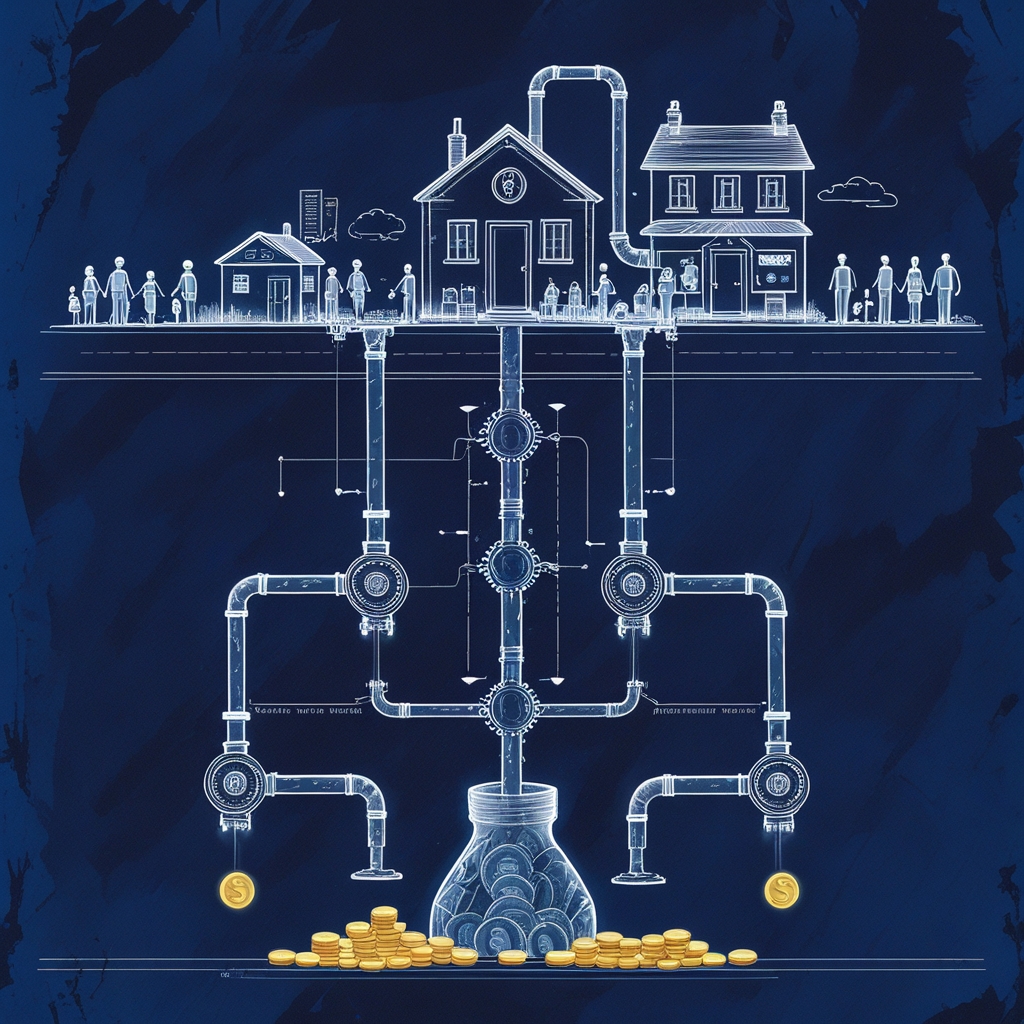
The employer funded these pensions by contributing to a pension fund, and the fund invested the contributions in stocks, bonds, and property to generate returns. The employer was responsible for ensuring the fund had enough money to pay all the promised pensions, which meant if investment returns were poor or if people lived longer than expected, the employer had to contribute more. This was expensive and risky for employers, but it provided certainty and security for employees.
Final salary schemes were common in the mid-twentieth century because companies were stable, employment was long-term, and the demographic profile was favorable. People did not live as long after retirement, so pensions were paid for fewer years, and workforces were younger, with many contributors and few retirees, which meant contributions exceeded payouts and funds grew.
But this started to change in the 1980s and 1990s. People began living longer, which meant pensions were paid for more years, sometimes thirty or forty years after retirement. This increased the cost of providing pensions because the employer had to fund decades of payments. And workforces were aging, with more retirees relative to active workers, which meant fewer people contributing and more people claiming, which put pressure on pension funds.
And accounting rules changed. In the 1990s and 2000s, new accounting standards required companies to report pension fund deficits on their balance sheets. If a pension fund did not have enough assets to cover its liabilities, the deficit appeared as a liability on the company's accounts, which reduced shareholder value and made the company look financially weaker. This created pressure on employers to close defined benefit schemes because the deficits were large, volatile, and difficult to manage.
And stock markets became more volatile. In the 2000s, the dot-com crash and the 2008 financial crisis caused significant losses in pension fund investments, which created or worsened deficits. Employers, facing demands to top up pension funds to cover these losses, became increasingly reluctant to maintain defined benefit schemes because the costs were unpredictable and potentially enormous.
So employers began closing final salary schemes. First, they closed them to new members, which meant existing employees kept their defined benefit pensions but new hires were put into defined contribution schemes. This reduced future liabilities because new employees did not accrue defined benefit pensions, but it created a two-tier workforce where older employees had security and younger employees did not.
Then, employers closed schemes to future accrual, which meant even existing members stopped building up defined benefit pensions and were moved to defined contribution schemes for future service. This further reduced liabilities and shifted risk onto employees, and it broke the promise that had been made to workers when they joined, that they would have a final salary pension for their entire career.
And in some cases, employers went further. They bought out members, offering lump sums in exchange for giving up their defined benefit pensions entirely, or they transferred pension obligations to insurance companies through bulk annuity purchases, which removed the liability from the employer's balance sheet but often reduced the security and flexibility of the pensions.
The shift from defined benefit to defined contribution was framed as necessary, as inevitable, as the only way companies could survive in a competitive global economy. Employers argued that they could not afford the cost and the risk of final salary pensions, that defined benefit schemes were unsustainable, and that defined contribution schemes were fairer because they gave employees more choice and control over their pensions.
But this framing obscured the real motivation, which was cost reduction and risk transfer. Defined contribution schemes are cheaper for employers because their obligation ends when they pay the monthly contribution, they do not have to worry about whether the pension is adequate, whether investments perform well, or whether employees live longer than expected. All of that risk is transferred to the employee, who bears it individually and who often lacks the knowledge, the resources, or the time to manage it effectively.
And the shift was not driven by employee demand. Workers did not ask for defined contribution pensions, they did not demand more choice or more control, and surveys consistently show that employees prefer the certainty of defined benefit pensions to the uncertainty of defined contribution. The shift was driven by employer interests, by the desire to reduce costs and eliminate risk, and employees, lacking power to resist, accepted it.
The consequences of this shift are profound and are only now becoming fully visible. Workers retiring on defined contribution pensions have smaller incomes than those retiring on final salary pensions, and they face uncertainty about whether their savings will last, whether they will run out of money, and whether they will have to reduce their living standards in retirement.
And defined contribution pensions create inequality. Under final salary schemes, everyone with the same salary and the same years of service received the same pension, which meant pensions were predictable and relatively equal. But under defined contribution schemes, pensions depend on individual choices, on when contributions were made, on how funds were invested, and on market performance at the time of retirement. This creates wide variation in outcomes, where some people retire with adequate pots and others, who made different choices or were unlucky with timing, retire with inadequate pots.
And defined contribution pensions shift responsibility and blame. Under final salary schemes, if a pension was inadequate, the employer was responsible because they had promised a certain income and failed to deliver. But under defined contribution schemes, if a pension is inadequate, the individual is blamed for not saving enough, for choosing the wrong funds, or for retiring at the wrong time. The system individualizes risk and individualizes failure, and this obscures the structural causes of pension inadequacy.
The public sector has largely retained defined benefit pensions, which means public sector workers still have the security that private sector workers have lost. This creates resentment, with private sector workers and taxpayers arguing that public sector pensions are too generous, that they are unaffordable, and that public sector workers should accept the same defined contribution schemes that private sector workers have. But the argument is backward, the solution is not to make public sector pensions worse, it is to make private sector pensions better, to restore the security that was taken away.
But restoring defined benefit pensions in the private sector is politically and economically difficult. Employers will not voluntarily reintroduce them because they are expensive and risky, and without regulation or incentives, the shift to defined contribution is irreversible. And even if defined benefit schemes were restored, rebuilding trust and rebuilding the infrastructure would take decades.
So what was lost when final salary pensions collapsed? Security was lost. The certainty of knowing what income you would have in retirement, of being able to plan, of not having to worry about markets or investments or outliving your savings. Equality was lost. The predictability that meant everyone with the same career had the same pension, regardless of luck or individual choices. And collective risk-sharing was lost. The principle that employers, who benefited from workers' labor, bore the responsibility for ensuring they had adequate retirement income.
What replaced it was insecurity, inequality, and individualized risk. Pensions became uncertain, dependent on markets and on individual decisions that most people are not equipped to make well. Outcomes became unequal, with wide variation based on luck and timing rather than years of service. And risk was shifted onto individuals, who bear it alone and who are blamed when their pensions are inadequate.
And the collapse of final salary pensions reveals something essential about how pension systems change. They do not change through democratic deliberation, through public debate, or through legislation that mandates new structures. They change through employer decisions, through accounting rules, through market pressures, and through the quiet erosion of promises made decades earlier. And by the time workers realize what has been lost, it is too late to reverse it.
The lesson of final salary pensions is that good systems can be dismantled, that security can be taken away, and that promises can be broken, not through malice or through sudden crisis, but through incremental decisions driven by cost pressures and by the desire to transfer risk. And understanding this is essential for fighting to protect what remains and for building systems that provide the security and adequacy that final salary pensions once delivered.