The Feedback Loops - Why Retirement Keeps Moving Further Away
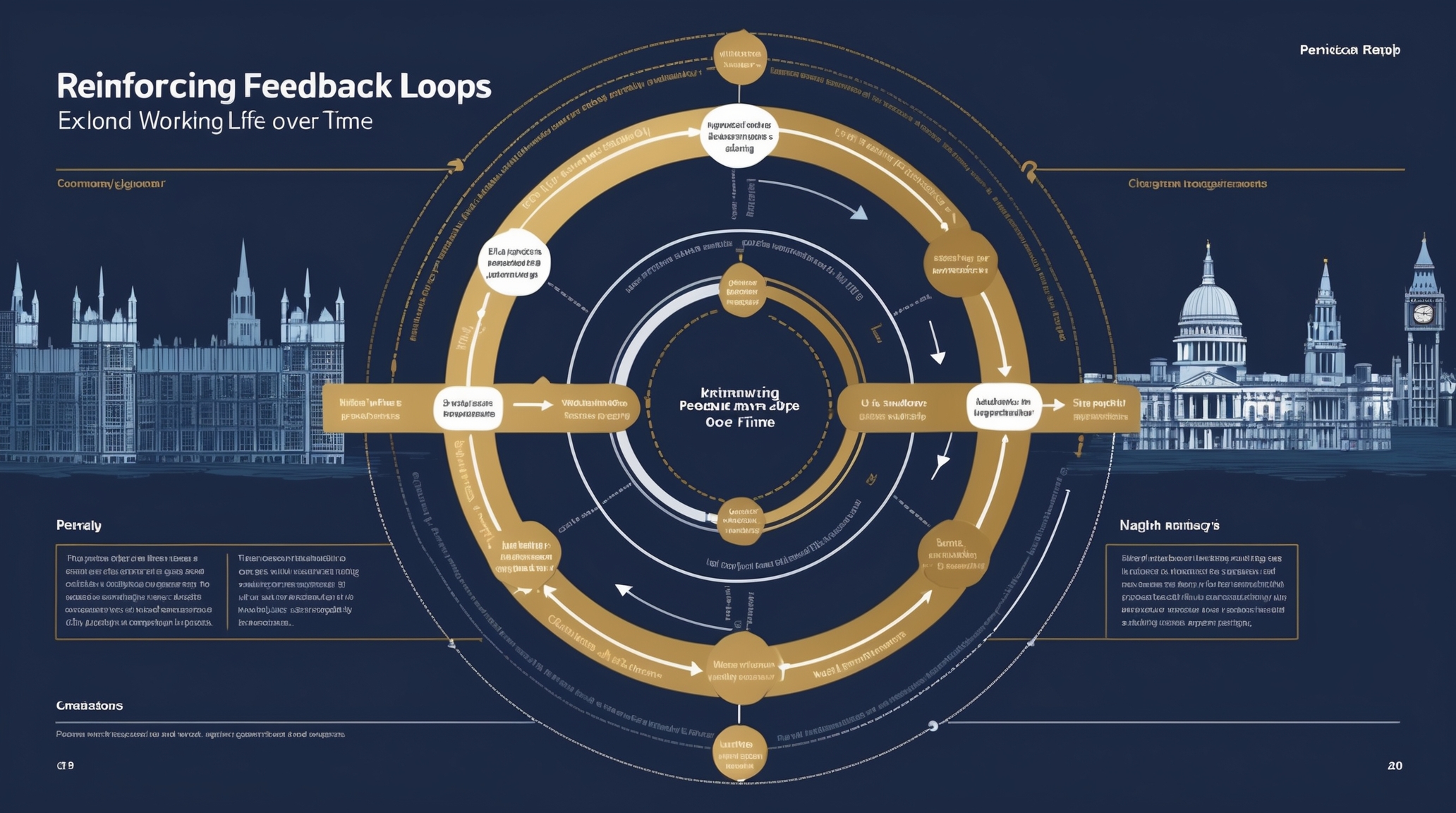
Retirement used to be a clear destination, something you could plan for and expect to reach. You worked until sixty or sixty-five, you retired, you received a pension, and you lived the rest of your life without working. The age was fixed, the income was predictable, and the system, while not perfect, was stable enough that people could rely on it.
But that stability has broken down. The state pension age is rising, not as a one-time adjustment but as an ongoing process that will continue for decades. Workplace pensions are less generous than they were, providing smaller incomes that require longer working lives to fund. And the amount people are saving is inadequate, which means retirement either gets pushed further into the future or happens at the planned age but with insufficient income. Either way, the promise of a secure, comfortable retirement is receding, and for younger people especially, it feels less like a realistic goal and more like a distant hope.
This is not random, it is not just demographic inevitability, and it is not simply a matter of people living longer. This is feedback loops, loops that make retirement harder to reach, that push it further away, that reduce the adequacy of pensions, and that ensure the system continues to serve those who profit from it while failing those who depend on it. And once these loops are in motion, they reinforce themselves, they accelerate, and they ensure that retirement becomes not a right or a reward for a lifetime of work but a privilege available only to those wealthy enough to afford it.
Let me show you the feedback loops that keep pushing UK retirement further away.
The first loop is the longevity-pension age spiral. People are living longer, which is good, but it creates pressure on the pension system because longer lives mean more years of pension payments. If the average person retired at sixty-five and lived to seventy-five, the state had to fund ten years of pension. But if people live to eighty-five, the state has to fund twenty years, which doubles the cost.
Governments respond to this pressure by raising the state pension age, and here is the feedback. Raising the pension age reduces the number of years people claim pensions, which reduces costs and makes the system more sustainable. But it also means people work longer, contribute more National Insurance, and delay claiming, which further improves the fiscal position. And that improvement creates political space to raise the pension age again in the future, which reduces costs further, which allows another increase, and the loop continues.
The pension age has already risen from sixty to sixty-seven for many people, and it is scheduled to reach sixty-eight and will likely go to sixty-nine or seventy in the coming decades. And each increase creates hardship, particularly for people in poor health, in physically demanding jobs, or unable to find work in their sixties, but the fiscal logic is relentless. As long as people live longer, governments will raise the pension age, and the loop will continue spiraling upward.
The second loop is the adequacy-contribution loop. Auto-enrollment has increased pension participation, millions of people are now saving who were not before, but the contribution rates are set too low. The minimum is eight percent of qualifying earnings, split between employer and employee, and eight percent is not enough to fund a comfortable retirement, particularly if you retire at sixty-seven and live into your nineties.
Here is the feedback. Low contributions mean small pension pots, and small pots mean inadequate income in retirement. People retiring with inadequate income face poverty, hardship, or the need to keep working. And the government, seeing pensioner poverty, responds not by increasing contribution requirements, which would be unpopular with employers and workers, but by increasing state benefits, by extending the pension age, or by encouraging people to work longer.
And working longer delays the need to draw on inadequate pensions, which makes the inadequacy less immediately visible. But it does not solve the problem, it just defers it. And deferring it reduces political pressure to increase contributions, which means contributions stay low, which means future pots stay small, and the loop continues. Inadequate contributions create inadequate pensions, which create pressure to work longer, which reduces pressure to fix contributions.
The third loop is the fee extraction loop. Pension savers pay fees to fund managers, to pension providers, to advisors, and to platforms, and those fees compound over decades and reduce final pension pots significantly. A one percent annual fee can reduce your pot by twenty to thirty percent over a working life, which means you have twenty to thirty percent less income in retirement.
Here is the feedback. Smaller pots mean less retirement income, which creates pressure to save more or to work longer to compensate. But saving more means contributing more into the same fee-laden system, which means paying more fees, which further reduces the final pot. The system extracts more, the pot grows less, and the saver, trying to compensate, contributes more, which feeds more fees into the system.
And the financial industry benefits from this loop because higher contributions mean higher assets under management, which means higher fee income even if the percentage fee stays the same. So the industry has no incentive to reduce fees, and savers, lacking knowledge or power to negotiate, continue paying them.
The fourth loop is the risk transfer loop. Employers have shifted from defined benefit pensions, where they guaranteed income in retirement, to defined contribution pensions, where employees bear all the risk of investment performance and longevity. This transfer reduces employer costs and liabilities, which makes it attractive to more employers, which accelerates the shift.
Here is the feedback. More employers adopting defined contribution reduces the availability of defined benefit schemes, which means workers have fewer options for secure pensions. And with fewer options, workers accept defined contribution even though it is less secure, which normalizes the model and reduces pressure on employers to offer anything better. And normalization allows more employers to shift, and the loop continues.
And workers, bearing more risk, experience more volatility in pension outcomes. Some retire with adequate pots because markets performed well, but others retire with inadequate pots because markets crashed at the wrong time or because fees were too high. And those with inadequate pots work longer or claim more state support, which increases pressure on the state, which creates fiscal pressure, which leads to pension age increases or benefit cuts, which makes private saving even more essential, which feeds back into the system that is already failing.
The fifth loop is the political protection of pensioners loop. Pensioners vote in high numbers, and they are politically powerful, which means governments protect pensioner benefits, particularly the triple lock, even when fiscal pressures are severe. The triple lock guarantees that the state pension increases every year, which protects pensioner incomes and prevents them from falling behind inflation or earnings.
Here is the feedback. Protecting pensioner incomes costs money, and that money comes from taxes paid by working-age people. But working-age people are less politically powerful because they vote in lower numbers and are more fragmented. So governments prioritize pensioners, increase taxes or reduce other spending to fund the triple lock, and working-age people pay the cost through higher taxes, stagnant wages, or reduced public services.
And higher taxes on working-age people reduce their disposable income, which makes saving into pensions harder, which means their future pensions will be smaller, which increases the pressure on the state to support them in retirement. But by the time they retire, decades from now, they will be the politically powerful group, and they will demand protection just as current pensioners do, and the loop continues. Each generation demands protection when they retire, funded by the next generation, and each successive generation faces worse outcomes because the system is unsustainable.
The sixth loop is the property wealth concentration loop. Many current pensioners own property, often outright, which provides wealth and security in retirement even if their pensions are modest. Property values have increased dramatically over recent decades, which means pensioners sitting on valuable assets even if their cash income is low. And property wealth allows them to downsize, to release equity, or to borrow against their homes, which supplements pension income.
Here is the feedback. Property wealth among current pensioners reduces their need for high pension incomes, which reduces political pressure to increase state pensions or to improve workplace pensions. But younger people, priced out of property ownership by high prices, will not have that wealth in retirement, which means they will depend entirely on pensions. And pensions, as we have established, are inadequate.
So property wealth masks pension inadequacy for current retirees, which allows the system to continue underfunding pensions, which creates a crisis for future retirees who will not have property wealth to fall back on. The loop concentrates wealth among older property owners and leaves younger non-owners facing a retirement with neither adequate pensions nor property assets.
The seventh loop is the employer cost minimization loop. Employers, facing competitive pressures and cost constraints, minimize pension contributions by contributing only the auto-enrollment minimum. And because most workers do not understand pensions or do not negotiate over them, employers can get away with minimal contributions without facing pressure to increase them.
Here is the feedback. Minimal contributions create inadequate pensions, which mean workers have to save more themselves or work longer. But workers, already struggling with stagnant wages and high living costs, cannot afford to save more, so they work longer. And working longer reduces pressure on employers to increase contributions, because employees are not retiring and claiming pensions, they are staying employed and continuing to contribute. So employers avoid the cost of higher contributions, workers bear the burden of longer working lives, and the loop continues.
The eighth loop is the complexity and disengagement loop. The pension system is complex, with multiple types of pensions, opaque fee structures, jargon-heavy documentation, and difficult choices about investment options, drawdown strategies, and annuities. Most people do not understand it, find it overwhelming, and disengage.
Here is the feedback. Disengagement means people do not check their pensions, do not review their contributions, do not compare fees, and do not optimize their savings. And disengagement allows providers to maintain high fees, to default savers into expensive funds, and to extract profits without scrutiny. And the more complex the system becomes, the more people disengage, and the more providers profit from that disengagement.
And disengagement also means people do not realize until late in their working lives that their pensions are inadequate, and by the time they realize, it is too late to fix. They cannot increase contributions enough, they cannot recover from poor investment performance, and they face retirement with insufficient income. And facing that reality, they work longer, which reduces pressure to simplify the system or to fix adequacy, and the loop continues.
The ninth loop is the intergenerational resentment loop. Younger people see older people retiring on generous final salary pensions, owning property, and benefiting from the triple lock, while they themselves face defined contribution pensions, unaffordable housing, stagnant wages, and rising pension ages. This creates resentment, a sense that the system is rigged in favor of older generations at the expense of younger ones.
Here is the feedback. Resentment reduces solidarity between generations, which makes it harder to build political coalitions for pension reform. Older people resist changes that would reduce their benefits, younger people demand changes that would improve their outcomes, and the two groups, divided, cannot agree on solutions. And without agreement, reform stalls, the system continues as it is, and resentment deepens. The loop fractures the social contract and makes collective action to fix pensions nearly impossible.
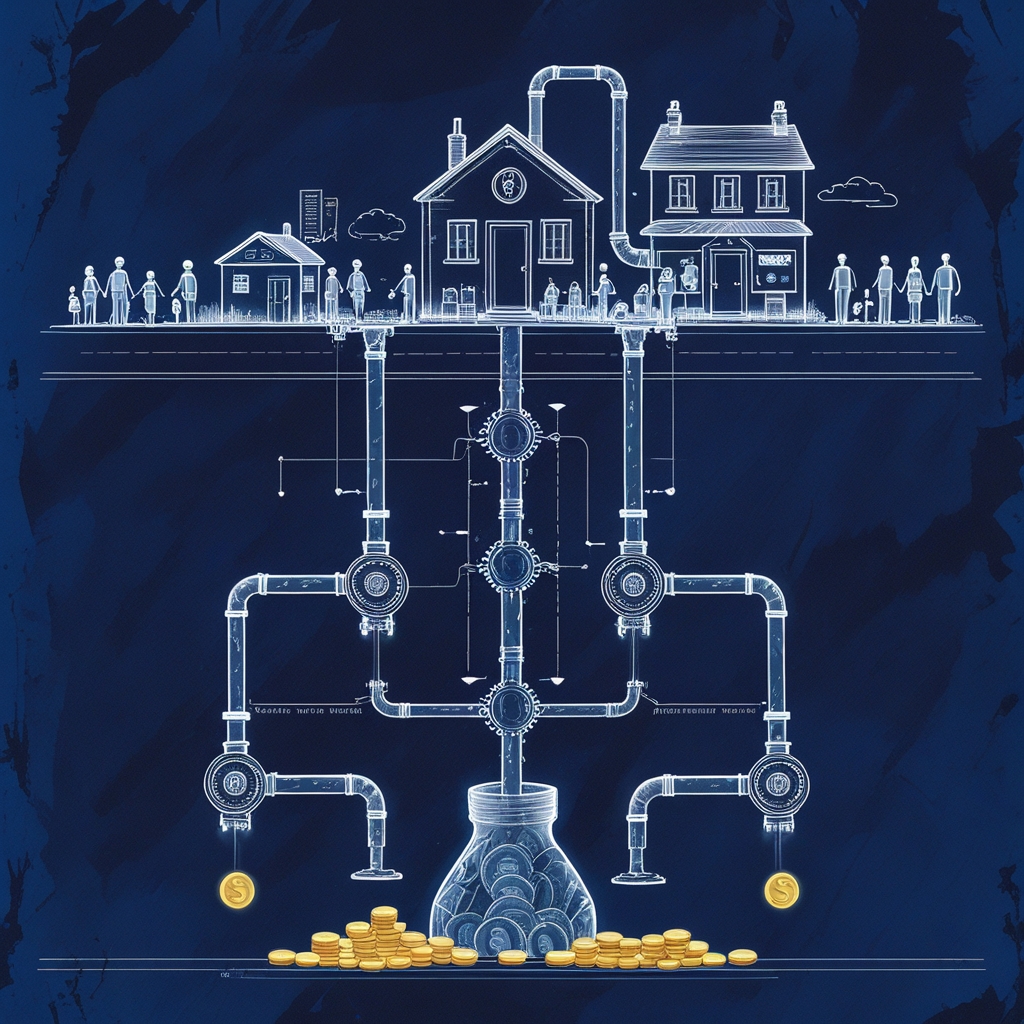
So here are the loops. Longevity increases pension age which reduces costs which enables further increases. Low contributions create inadequate pensions which pressure people to work longer which reduces pressure to increase contributions. Fees extract from pots which reduces income which pressures savers to contribute more which generates more fees. Risk transfer normalizes insecurity which reduces options which allows more risk transfer. Political protection of pensioners increases costs for workers which reduces their savings which creates future pressure. Property wealth masks pension inadequacy which allows continued underfunding which harms future non-owners. Employer cost minimization creates inadequacy which forces longer working which reduces pressure to increase contributions. Complexity drives disengagement which enables extraction which increases complexity. And intergenerational resentment fractures solidarity which prevents reform which deepens resentment.
These loops interact, reinforce each other, and together they ensure that retirement moves further away, that pension adequacy declines, that working lives extend, and that the system serves those who profit from it rather than those who depend on it. The pension system is not broken, it is working exactly as designed, to extract fees, to minimize employer and state costs, and to transfer risk and burden onto individuals who have no power to resist.
The next article will show you why the pension system resists reform, why despite the inadequacy being obvious and the consequences being severe, the structure does not change. Because the forces protecting the current system are stronger than the forces demanding change, and those forces are political, economic, and deeply entrenched.