The Incentives - Who Profits From Pension Contributions
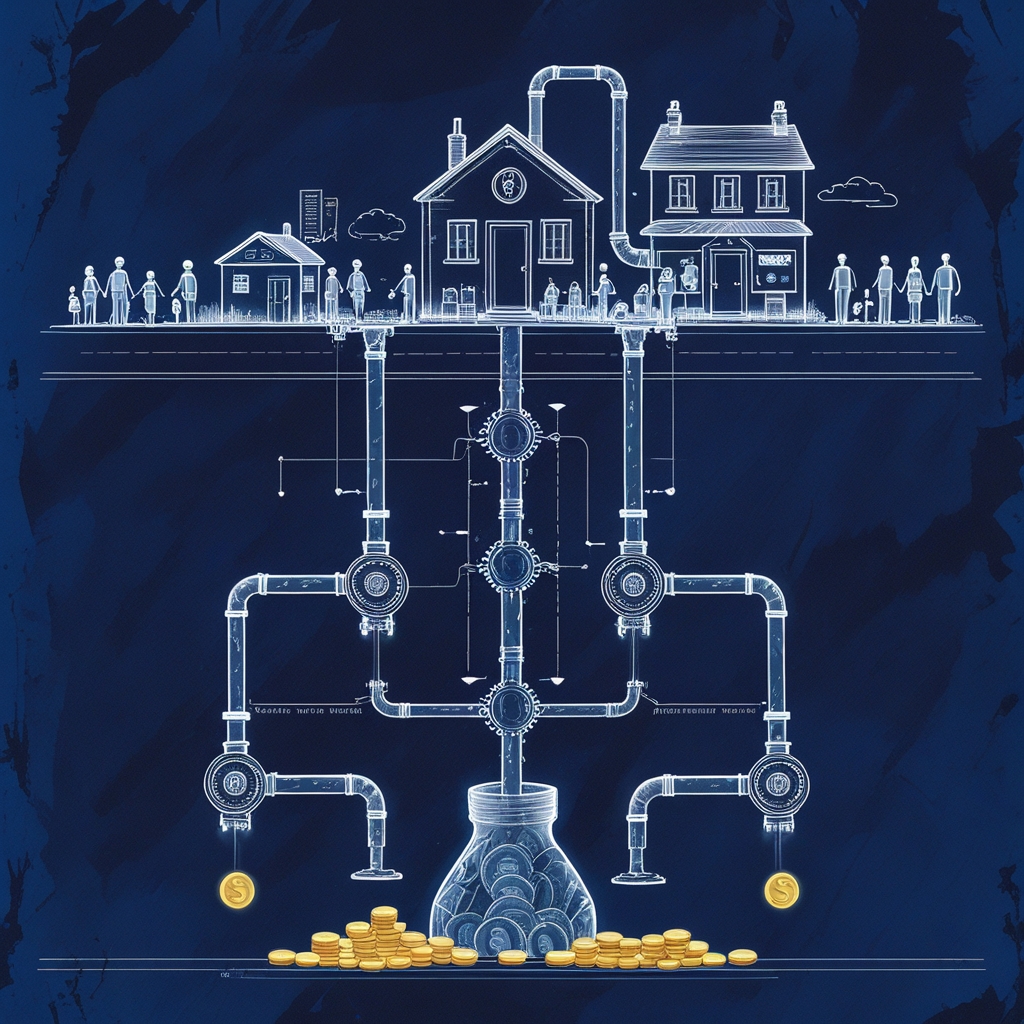
You save into a pension for decades, contributing month after month, year after year, building a pot that you hope will support you in retirement. You are told this is responsible, prudent, necessary, and you trust that your contributions are being invested wisely, growing steadily, and that when you retire, there will be enough to live on. But what most people do not realize is that between the money you put in and the pension you eventually receive, a significant portion is extracted by intermediaries, by fund managers, by pension providers, by financial advisors, and by platforms that facilitate the system.
These extractions are not obvious, they are buried in complex fee structures, expressed as small percentages that sound negligible, and justified as necessary costs for managing investments and providing services. But small percentages compound over decades, and what looks like one percent per year can reduce your final pension pot by twenty or thirty percent over a working life. That is tens of thousands of pounds, sometimes hundreds of thousands, taken from your retirement to enrich companies and individuals who add limited value and operate in a system designed to maximize their extraction rather than your returns.
Understanding who profits from pension contributions is essential, because it reveals that the pension system is not designed primarily to serve savers, it is designed to serve the financial industry. And those profits, those fees, those extractions, come directly from your future retirement income. Every pound taken in fees is a pound you will not have when you stop working, and the people taking those fees are not investing their own money, they are not taking risks, they are extracting from a captive market of people who have no choice but to save and no power to negotiate.
Let me show you who profits from UK pension contributions.
The first and most obvious beneficiary is pension fund managers. These are the companies that invest your pension contributions in stocks, bonds, property, and other assets, and they charge fees for doing so. The fees are usually expressed as a percentage of assets under management, typically between half a percent and one and a half percent per year, which sounds small but compounds devastatingly over time.
Here is how it works. If you save into a pension for forty years and your contributions and growth total two hundred thousand pounds, and the fund manager charges one percent per year, they will take around fifty thousand pounds in fees over that period. That is a quarter of your pot, gone, not to fund your retirement but to fund the fund manager's profits. And if the fee is one and a half percent, which is not uncommon, the extraction is even greater, potentially sixty or seventy thousand pounds over a working life.
Fund managers justify these fees by claiming they add value through expert investment decisions, through diversification, and through active management that beats the market. But the evidence shows that most active fund managers do not beat the market over the long term, after fees they actually deliver worse returns than passive index funds that simply track the market and charge much lower fees. Yet active management fees remain high, and pension savers, who do not understand the difference or who are automatically enrolled into high-fee funds, pay them.
And fund managers profit regardless of performance. Whether your pension pot grows or shrinks, whether their investment decisions are good or bad, they still charge their percentage. If the market crashes and your pot halves in value, they still take their fee on what remains. There is no accountability, no penalty for poor performance, and no incentive to minimize fees because the savers, who ultimately pay, have little ability to challenge or negotiate.
The second beneficiary is pension providers, the companies that administer pension schemes, process contributions, manage records, and provide platforms where your pension is held. These are companies like Aviva, Legal & General, Standard Life, and Scottish Widows, and they charge platform fees, administration fees, and sometimes additional fees for services like switching funds or providing advice.
Platform fees are typically between point two and point five percent per year, which again sounds small but adds up over decades. On a hundred thousand pound pot, point three percent per year is three hundred pounds annually, which is three hundred pounds that could have remained invested and compounded. And these fees are charged on top of fund management fees, so you are paying both the platform provider and the fund manager, and together they can easily exceed one and a half percent per year.
Pension providers also profit from inertia. Most people, once enrolled in a pension, never review it, never check what fees they are paying, never compare providers, and never switch to cheaper alternatives. Providers rely on this inertia because it allows them to maintain high fees without losing customers, and they design their systems to make fee information opaque, buried in documentation, and difficult to understand. This keeps savers in the dark and keeps profits flowing.
The third beneficiary is financial advisors. People who provide advice on pensions, on how much to save, where to invest, and what to do at retirement, charge fees either as a percentage of assets, as an hourly rate, or as a commission on products they recommend. Commission-based advice is particularly problematic because it creates conflicts of interest, where advisors recommend products that pay them the highest commission rather than products that are best for the client.
Even fee-based advisors, who claim to be independent and client-focused, extract significant amounts. If an advisor charges one percent of your pension pot per year to manage it, and your pot is one hundred thousand pounds, they take one thousand pounds annually. Over twenty years, that is twenty thousand pounds, and for what? For making investment decisions that you could make yourself using low-cost index funds, or for rebalancing portfolios once or twice a year, which takes minimal time and expertise.
And advisors benefit from complexity. The more complicated pensions are, the more jargon and regulation and choice, the more people feel they need advice and are willing to pay for it. So advisors, and the industry more broadly, have no incentive to simplify the system, to make it accessible, or to educate people to manage their own pensions. Complexity creates dependency, dependency creates fees, and fees create profit.
The fourth beneficiary is annuity providers. When you retire and convert your pension pot into income, one option is to buy an annuity, which is a guaranteed income for life. Annuity providers, insurance companies that sell these products, profit from the difference between what they pay you and what they earn by investing your lump sum. And that difference is significant, particularly in a low interest rate environment where annuity rates are poor.
If you hand over a hundred thousand pound pension pot to an annuity provider and they pay you four thousand pounds per year for life, they are betting that you will live twenty-five years, during which they will pay you a total of one hundred thousand pounds. But they invest your hundred thousand, earn returns on it, and if you die sooner than expected, they keep the remainder. If you live longer, they pay more than expected, but actuarially, across all their customers, they profit.
Annuity providers also profit from people not shopping around. Annuity rates vary significantly between providers, and the difference between the best and worst rate can be ten or fifteen percent, which over a lifetime is tens of thousands of pounds. But most people buy an annuity from their existing pension provider without comparing rates, and providers rely on this laziness because it allows them to offer lower rates and keep more profit.
The fifth beneficiary is the government, through taxation. Pensions receive tax relief on contributions, which means you do not pay income tax on the money you put into your pension, and that relief is generous and costs the government billions every year. But the government recoups much of that through taxation on pension income in retirement. When you draw your pension, seventy-five percent of it is taxable as income, which means the government taxes you on money that you saved decades earlier.
The government also benefits from auto-enrollment because it shifts responsibility for retirement income from the state to individuals. If people save more into private pensions, they rely less on state benefits, which reduces long-term government spending. And auto-enrollment, by making pension saving the default, ensures that most workers are saving something, which reduces future pressure on the state to provide adequate state pensions or to support pensioners who have nothing.
The sixth beneficiary is employers, particularly those who offer the bare minimum under auto-enrollment. Employers are required to contribute at least three percent of qualifying earnings, which is a modest amount, and by contributing only the minimum, they keep their costs low while appearing to support their employees' retirement planning. And because auto-enrollment is mandatory, employers cannot opt out, but they can structure pay and benefits to minimize their pension contributions, for example by paying bonuses that do not count as qualifying earnings or by using salary sacrifice schemes that reduce National Insurance costs.
Employers also benefit from defined contribution pensions because they transfer risk to employees. Under defined benefit schemes, employers had to ensure there was enough money to pay guaranteed pensions for life, which was expensive and unpredictable. Under defined contribution schemes, the employer's obligation ends when they pay the monthly contribution, and if the pension pot is inadequate in retirement, that is the employee's problem, not the employer's.
The seventh beneficiary is wealthy pensioners who benefit from the triple lock. The triple lock guarantees that the state pension increases every year by whichever is highest, earnings growth, inflation, or two and a half percent, and this provides security and protects pensioner incomes from erosion. But it also benefits wealthier pensioners, who have private pensions, property wealth, and savings, more than it benefits poorer pensioners, because everyone receives the same state pension increases regardless of their total income or wealth.
Wealthy pensioners, who own their homes outright, who have generous final salary pensions, and who have accumulated assets over decades, receive the same state pension and the same triple-locked increases as pensioners who have nothing else. And because the state pension is universal, not means-tested, there is no distinction made between those who need it and those who do not. This concentrates public spending on pensioners who already have adequate resources while working-age people, many of whom are struggling, pay higher taxes to fund it.
The eighth beneficiary is asset managers who run pension funds as collective investment vehicles. These companies pool money from thousands or millions of savers, invest it in portfolios of stocks and bonds, and charge fees on the total assets under management. The larger the fund, the more they earn, and they have an incentive to attract as much money as possible, which they do by marketing, by offering multiple fund options, and by partnering with pension providers who default savers into their funds.
Asset managers profit from scale because their costs do not increase proportionally with fund size. Managing a ten billion pound fund does not cost ten times as much as managing a one billion pound fund, so as funds grow, profit margins increase. And because most pension savers are passive, enrolled automatically and not actively choosing funds, asset managers can maintain high fees without losing customers to cheaper competitors.
The ninth beneficiary is consultants and actuaries who advise pension schemes, particularly large occupational schemes in the public sector or in corporations. These consultants charge fees for calculating pension liabilities, for advising on investment strategies, for managing scheme governance, and for navigating regulation. And those fees run into millions for large schemes, paid ultimately from the pension fund, which means less money available to pay pensions.
Consultants benefit from complexity and from regulatory change because every new rule, every new reporting requirement, every change to accounting standards creates demand for their services. They do not lobby for simplification or for reducing regulation because that would reduce demand for their expertise. Instead, complexity sustains their business model, and they are incentivized to maintain it.
The tenth beneficiary is private equity firms and hedge funds that invest pension money. Pension funds, seeking higher returns, allocate portions of their assets to alternative investments, including private equity and hedge funds, and these vehicles charge significantly higher fees than traditional funds. Private equity typically charges a two percent annual management fee plus twenty percent of profits, which is extortionate compared to passive index funds that charge point one or point two percent.
The justification is that private equity and hedge funds deliver higher returns, but the evidence is mixed, and after fees, many deliver returns no better than cheaper alternatives. But pension fund managers, under pressure to achieve returns in a low-yield environment, allocate to these expensive strategies, and the private equity firms and hedge fund managers extract enormous fees from pension savers who have no say in these decisions and often do not even know their money is being invested this way.
So here is who profits from UK pension contributions. Fund managers extracting fees regardless of performance. Pension providers charging platform and administration fees on top of fund fees. Financial advisors taking percentages for advice that could be automated or self-managed. Annuity providers profiting from poor rates and lack of shopping around. The government recouping tax relief through taxation on pension income and reducing future benefit obligations through auto-enrollment. Employers minimizing contributions and transferring risk to employees. Wealthy pensioners benefiting from universal triple-locked state pension increases. Asset managers profiting from scale and from passive savers who do not switch. Consultants and actuaries charging fees for navigating complexity they benefit from maintaining. And private equity and hedge funds extracting high fees for uncertain returns.
Notice who is not on that list. Pension savers. The people whose money is being managed, whose future retirement depends on adequate returns, who bear all the risk, and who have no power to negotiate fees, to choose providers, or to challenge poor performance. They do not profit, they pay, and the system is designed to extract from them at every stage while enriching everyone else.
The next article will show you the feedback loops that make pensions worse over time, that push retirement further away, that reduce the adequacy of pension pots, and that ensure the system continues to serve those who profit from it rather than those who depend on it for survival.