Where Policy Actually Has Leverage
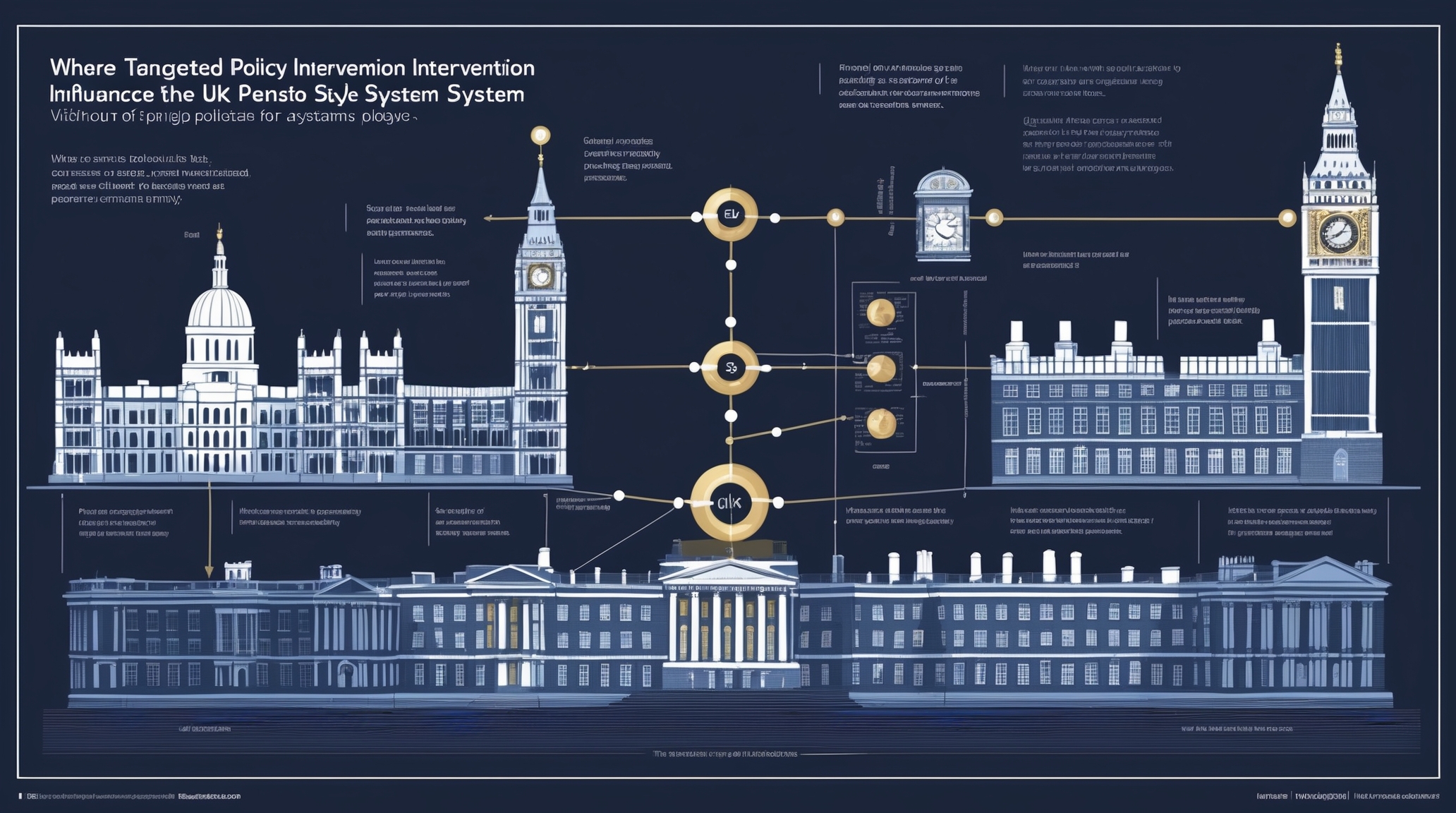
The UK pension system is resistant to reform, but it is not immovable. There are points where policy could shift outcomes, where intervention could increase adequacy, reduce fees, improve sustainability, or create fairer distribution between generations. Not easily, and not without political cost, but it is possible. The challenge is not that solutions do not exist, they do. The challenge is that implementing them requires overcoming resistance from pensioners, from the financial industry, from employers, from the Treasury, and from ideological opposition to greater state involvement.
But leverage points exist, and understanding where they are and how to use them is essential for anyone who wants to see pensions become more adequate, more affordable, and more fair. Some interventions are weak, delivering marginal improvements without changing the structure. Others are strong, reshaping the system fundamentally and creating lasting change. And the difference between wasting political capital and achieving meaningful reform is knowing which is which and prioritizing accordingly.
Let me show you where UK policy actually has leverage over pensions.
The first point of leverage is increasing auto-enrollment contribution rates. The current minimum is eight percent of qualifying earnings, with employers contributing at least three percent and employees at least five percent including tax relief. This is inadequate to provide decent retirement income, particularly for people who retire at sixty-seven and live into their nineties. Financial advisors typically recommend saving twelve to fifteen percent to maintain living standards in retirement, which means current contributions are falling short by half.
Increasing the minimum to twelve percent, with employers and employees each contributing six percent, would significantly improve pension adequacy without requiring complete system redesign. This is a relatively straightforward policy change, it works within the existing auto-enrollment framework, and it builds on infrastructure that already exists. The additional contributions would compound over decades, and someone saving twelve percent instead of eight percent for forty years could retire with fifty percent more in their pension pot, which is the difference between poverty and adequacy.
The political obstacle is employer resistance and employee affordability. Employers argue that higher contributions increase labor costs, reduce competitiveness, and threaten jobs, particularly in small businesses. Employees, already struggling with stagnant wages and high living costs, resist higher deductions from their pay. But the economic case is strong because higher contributions today prevent poverty tomorrow, and the cost of supporting pensioners through state benefits later is far higher than the cost of requiring adequate saving now.
The second point of leverage is capping pension fees and mandating transparency. Fees on pensions are opaque, expressed in complex percentage terms, buried in documentation, and difficult for savers to compare across providers. A one percent annual fee sounds small but can reduce a pension pot by twenty to thirty percent over a working life, and many savers do not even know what fees they are paying.
Capping fees at, say, half a percent per year and requiring all providers to publish fees in standardized, comparable formats would protect savers from excessive extraction and create competitive pressure to reduce costs. This is not radical, it is basic consumer protection, and it would save billions for pension savers over their working lives while reducing profits for the financial industry by an equivalent amount.
The political obstacle is industry lobbying. Fund managers and pension providers resist fee caps, arguing that they would reduce quality, limit choice, and drive providers out of the market. But the evidence from countries with fee caps shows that markets do not collapse, quality does not deteriorate, and savers are significantly better off. The resistance is about protecting profits, not about protecting savers.
The third point of leverage is creating a public pension fund option. The UK could establish a low-cost public pension fund, similar to Sweden's AP funds or Canada's CPP Investment Board, that invests at scale with minimal fees and offers an alternative to expensive private providers. A public fund could charge fees of point one or point two percent instead of one percent or more, which would dramatically improve returns for savers and put competitive pressure on private providers to reduce their fees.
The fund would be professionally managed, invested in diversified global portfolios, and accessible to all auto-enrolled workers as a default option. Workers could opt out and choose private providers if they preferred, but most would stay in the public fund because of lower costs and comparable or better returns. This would shift billions of assets from private providers to public management, which would reduce fee extraction and improve outcomes for savers.
The political obstacle is ideological opposition to state provision and industry resistance. Private providers would lose market share and fee income, and they would lobby fiercely against a public fund, arguing that it would crowd out private investment, reduce innovation, and create inefficiency. But the evidence from other countries shows that public funds deliver strong returns at low cost, and the argument that only private markets can manage pensions effectively is not supported by international experience.
The fourth point of leverage is reforming or scrapping the triple lock and means-testing state pension increases. The triple lock costs billions every year and benefits all pensioners equally regardless of income or wealth. Wealthy pensioners receive the same increases as poor pensioners, which is inefficient and unfair. Means-testing state pension increases so that only pensioners below a certain income or wealth threshold receive the full increase would save money and target support where it is needed most.
Alternatively, the triple lock could be replaced with a double lock that tracks only earnings and inflation, removing the arbitrary two and a half percent floor. This would still protect pensioner incomes from erosion but would reduce cost and fiscal pressure, freeing up resources to improve pensions for younger generations.
The political obstacle is enormous because pensioners are a powerful voting bloc and any reform to the triple lock is portrayed as an attack on older people. But the current system is unsustainable, and protecting wealthy pensioners through universal increases while younger people face inadequate pensions and rising pension ages is neither fair nor viable long-term.
The fifth point of leverage is reducing or eliminating the state pension age increases and funding pensions adequately through taxation. The state pension age is rising to sixty-eight and will likely go higher, which forces people to work longer even when they are exhausted, in poor health, or unable to find work. Stopping these increases and funding pensions through progressive taxation rather than through delaying eligibility would be fairer and more humane.
This would require political courage because it means raising taxes, but it would distribute the cost of pensions across the population based on ability to pay rather than forcing individuals to work into their late sixties or seventies. Countries with lower pension ages and higher state pensions fund them through higher taxes, and they deliver better outcomes without forcing people to work until they drop.
The political obstacle is tax resistance and Treasury opposition. Raising taxes is politically unpopular, and the Treasury resists permanent spending increases. But the alternative, forcing people to work longer and accepting inadequate pensions, is creating poverty and hardship that could be avoided through adequate taxation.
The sixth point of leverage is restoring defined benefit pensions for public sector workers and incentivizing them for private sector workers. Defined benefit pensions provide security and predictability because they guarantee income based on salary and years of service, and they remove the risk of poor investment performance or outliving your savings. Most public sector workers still have defined benefit pensions, but they are under threat, and private sector workers have almost none.
Protecting public sector defined benefit schemes and creating incentives, such as tax breaks or subsidies, for private employers to offer them would improve pension security for millions of workers. This would reverse the trend toward defined contribution and restore some of the certainty that previous generations had.
The political obstacle is cost and employer resistance. Defined benefit pensions are expensive for employers because they bear longevity and investment risk, and employers, having shifted to defined contribution to reduce costs, will not voluntarily shift back. Government incentives would be needed, which costs money, and the Treasury resists. But the improvement in pension adequacy and security would justify the cost.
The seventh point of leverage is equalizing pension provision between genders by crediting National Insurance for unpaid care work. Women typically have lower pensions than men because they take time out of work to care for children or elderly relatives, which reduces their National Insurance contributions and their workplace pension savings. Crediting National Insurance years for periods of unpaid care would address this inequality and ensure that caring, which is essential work, does not result in pension poverty.
This is relatively straightforward to implement within the existing National Insurance system, and it would significantly improve pension outcomes for women, who currently face higher rates of pensioner poverty than men. The cost would be modest compared to the benefit, and it would correct a structural injustice.
The political obstacle is fiscal cost and resistance from those who believe that only paid work should qualify for pension credits. But unpaid care work subsidizes the economy by reducing demand for expensive paid care services, and recognizing it through pension credits is both fair and economically rational.
The eighth point of leverage is extending auto-enrollment to the self-employed. Self-employed people currently have no auto-enrollment, which means many do not save into pensions at all, and they face significant pension poverty in retirement. Extending auto-enrollment to the self-employed, with mechanisms for flexible contributions based on fluctuating incomes, would increase pension saving and reduce future poverty.
The challenge is administrative because self-employed incomes vary and contributions need to be flexible, but other countries have implemented similar systems successfully, and the UK could do the same. This would require building new infrastructure and engaging with self-employed workers, but it is achievable and would improve outcomes for millions of people.
The political obstacle is cost and complexity. Extending auto-enrollment to the self-employed would require subsidies to make contributions affordable and would require systems to manage variable incomes, which is administratively complex. But the long-term benefit, in terms of reduced pensioner poverty and increased retirement security, justifies the investment.
The ninth point of leverage is mandating pension dashboards and consolidation to reduce lost pots and improve engagement. Many people have multiple pension pots from different employers over their working lives, and they lose track of them, which means billions are sitting in lost or forgotten pots. Pension dashboards, which allow people to see all their pensions in one place, and automatic consolidation, which merges small pots into current schemes, would increase engagement and reduce losses.
This is a relatively low-cost intervention that improves outcomes without requiring major structural change. It makes pensions more visible and more manageable, which encourages people to engage, to check their savings, and to top up if needed.
The political obstacle is industry resistance because consolidation reduces the number of pots under management, which reduces fee income for providers. But the benefit to savers, in terms of visibility and reduced losses, outweighs the industry cost.
So here is where policy has leverage. Increase auto-enrollment contributions to twelve percent to improve adequacy. Cap fees at half a percent and mandate transparency to protect savers from extraction. Create a public pension fund to offer low-cost alternatives and competitive pressure. Reform or scrap the triple lock and means-test increases to target support fairly. Stop pension age increases and fund adequately through progressive taxation. Restore defined benefit pensions for public and private sectors to provide security. Credit National Insurance for unpaid care to equalize outcomes between genders. Extend auto-enrollment to the self-employed to reduce future poverty. And mandate dashboards and consolidation to reduce lost pots and improve engagement.
Each of these would help, some more than others, and some are easier to implement than others. But all are possible, and all would shift the system toward adequacy, fairness, and sustainability. The obstacle is not technical, it is political and ideological. The will to act, the courage to override industry and pensioner resistance, and the willingness to prioritize long-term outcomes over short-term electoral calculations.
Most governments do not have that will, so the levers exist but are not pulled, and the system continues inadequate, expensive, and unfair. But the levers are there, and understanding them is the first step toward using them.
The final article will show you a case study, the collapse of final salary pensions and what was lost when they were replaced by defined contribution schemes. Because final salary pensions worked, they provided security, and they were dismantled not because they failed but because they became inconvenient and expensive for employers. Understanding what happened is essential for understanding what is possible and what is at stake.