Why the UK Pension System Resists Reform
Every political party promises to fix pensions. They promise security in retirement, adequate incomes, fairness between generations, and sustainability for the future. The rhetoric is consistent across elections and across parties, speaking of protecting pensioners, supporting savers, and ensuring that people who work hard all their lives can retire with dignity. And voters, worried about their future and seeing the inadequacy of current pension provision, believe these promises and vote accordingly.
And then, once in office, very little changes. The triple lock is maintained despite its cost. Auto-enrollment contribution rates stay low despite being inadequate. Pension ages continue rising. Fees remain high and opaque. And defined contribution pensions, insecure and insufficient, remain the norm for private sector workers. A few years later, the next government makes similar promises, uses similar language, and delivers similar disappointing results.
This is not incompetence, and it is not a failure to understand what needs to be done. This is resistance. The pension system resists reform because the forces protecting it are stronger than the forces demanding change. Those forces are political, because pensioners are a powerful voting bloc. They are economic, because the financial industry profits enormously from the current system. They are ideological, because pensions are tied to beliefs about personal responsibility and market efficiency. And they are structural, because the system has been built over decades and changing it requires confronting vested interests, fiscal pressures, and intergenerational conflicts that no government wants to face.
Let me show you why the UK pension system resists reform.
The first reason is pensioner voting power and the political untouchability of the triple lock. Pensioners vote in higher numbers than any other age group, they are politically engaged, and they are concentrated in marginal constituencies. This gives them enormous political power, and any government that threatens pensioner benefits faces immediate backlash, media criticism, and electoral punishment.
The triple lock, which guarantees that the state pension increases every year by whichever is highest among earnings growth, inflation, or two and a half percent, is the clearest symbol of this power. The triple lock is expensive, costing billions every year, and it benefits all pensioners equally regardless of whether they need it or whether they have other income. Wealthy pensioners with private pensions and property wealth receive the same increases as poor pensioners with nothing else, which is fiscally inefficient and distributionally unfair.
But the triple lock is politically untouchable because any party that proposes scrapping it or means-testing it is accused of attacking pensioners, of breaking promises, and of creating insecurity for older people. Pensioners, hearing these accusations, vote against that party, and the electoral cost is immediate and visible. So governments, even when facing severe fiscal pressure, maintain the triple lock, and reform that would make pensions more sustainable or more fairly distributed is blocked by pensioner voting power.
The second reason is financial industry lobbying and profit protection. The pension industry, including fund managers, pension providers, financial advisors, and platforms, generates billions in fees every year, and those fees come from pension savers who have limited ability to negotiate or to choose cheaper alternatives. The industry lobbies to protect this revenue stream, to resist regulation that would cap fees or require transparency, and to block reforms that would simplify the system or shift provision toward lower-cost public options.
Industry lobbying is sophisticated and well-resourced. Trade bodies like the Investment Association and the Pensions and Lifetime Savings Association represent industry interests, meet regularly with ministers and regulators, fund research that supports their positions, and shape the narrative around pensions. They argue that high fees are justified by expertise and performance, that regulation would reduce choice and harm savers, and that public provision would be inefficient and bureaucratic.
And the industry benefits from complexity, because complexity justifies fees and creates dependency on advisors and intermediaries. So the industry resists simplification, resists standardization of fees, and resists transparency measures that would allow savers to compare costs easily and switch to cheaper providers. The more opaque and complicated pensions remain, the more the industry profits, and the more power it has to resist reform.
The third reason is Treasury opposition to increased public spending. Most meaningful pension reforms cost money, whether through increasing state pension levels, funding higher auto-enrollment contributions, subsidizing fees for low earners, or building public pension infrastructure. The Treasury, committed to fiscal discipline and wary of creating permanent spending commitments, resists these proposals.
But the Treasury also benefits from the current system in ways that are rarely acknowledged. Raising the state pension age reduces long-term pension liabilities and keeps people working and paying taxes for longer. Low auto-enrollment contributions reduce pressure on the state to top up inadequate private pensions. And defined contribution pensions transfer risk from the state to individuals, which means the state is not responsible if pensions turn out to be inadequate.
The Treasury sees pension reform through a fiscal lens, and from that perspective, the current system works because it minimizes state obligations and maximizes individual responsibility. Reforming it to provide better outcomes for savers would increase state costs, which the Treasury opposes even when the long-term benefits, in terms of reduced poverty, better health outcomes, and lower welfare spending, would outweigh the upfront costs.
The fourth reason is ideological commitment to individual responsibility and private provision. Pensions in the UK are increasingly based on the principle that individuals are responsible for saving for their own retirement, that the state provides a safety net but not a generous income, and that private markets are the best way to deliver pension provision. This ideology is deeply embedded in policy and is defended by those who believe that state provision is inefficient, that it creates dependency, and that markets drive innovation and efficiency.
This ideology shapes what reforms are considered acceptable. Policies that work within the private system, like auto-enrollment or tax relief, are acceptable because they preserve the market structure. But policies that would move toward greater state provision, like a higher state pension funded through taxation, or a public pension fund that competes with private providers, are seen as going backward, as socialist, and as undermining personal responsibility.
The ideology is powerful because it is not just economic, it is moral. It frames saving for retirement as a personal duty, and it frames reliance on the state as a failure of responsibility. And this framing makes it difficult to argue for reforms that would increase state provision, because such arguments are portrayed as encouraging dependency and penalizing those who save responsibly.
The fifth reason is intergenerational conflict and the lack of solidarity between age groups. Younger people, facing high housing costs, stagnant wages, student debt, and inadequate pensions, resent older people who retired on generous final salary pensions, who own property, and who benefit from the triple lock. Older people, who worked and saved and followed the rules, resent being blamed for a system they did not design and resent suggestions that their benefits should be cut to help younger generations.
This conflict makes collective action difficult because the two groups have different interests and different priorities. Older people want to protect their benefits and resist any changes that would reduce them. Younger people want higher contributions, better pensions, and a more sustainable system. And bridging this divide requires compromise, trust, and a shared sense of fairness, none of which currently exist.
And politicians exploit this divide rather than bridging it. They promise to protect pensioners, which wins older votes, while also promising to help young people, which wins younger votes, but they do not reconcile the two because reconciling them would require trade-offs that alienate one group or the other. So the conflict persists, reform stalls, and the system continues serving older people at the expense of younger ones.
The sixth reason is employer resistance to higher contributions. Auto-enrollment requires employers to contribute at least three percent of qualifying earnings, which is a modest cost, but employers resist increases because higher contributions would increase labor costs, reduce profitability, and potentially reduce employment. Employer groups, including the CBI and the British Chambers of Commerce, lobby against increases, arguing that higher pension costs would burden businesses, particularly small businesses, and harm competitiveness.
And employers benefit from the current system because it transfers risk to employees while minimizing employer obligations. Under defined contribution schemes, the employer's responsibility ends when they pay the monthly contribution, and whether the pension is adequate in retirement is the employee's problem. This is far cheaper and far less risky for employers than defined benefit schemes, where they had to guarantee income for life, and employers resist any reforms that would shift risk or cost back onto them.
The seventh reason is path dependency and the sunk cost of the current system. The UK pension system has been built over decades, with auto-enrollment infrastructure, tax relief mechanisms, regulatory frameworks, and an entire financial industry structured around defined contribution pensions and private provision. Changing this system would require dismantling and rebuilding, which is expensive, disruptive, and politically risky.
And those who have invested in the current system, pension providers who have built businesses, employers who have set up schemes, savers who have accumulated pots in the existing structure, all have a stake in the system continuing. They resist change not just because it threatens future profits or benefits but because it threatens the value of investments already made. Path dependency locks the system in place, and overcoming it requires political will that rarely exists because the costs and disruption are immediate while the benefits are long-term and uncertain.
The eighth reason is complexity and fear of unintended consequences. Pensions are complex, involving actuarial calculations, investment strategies, tax rules, regulatory requirements, and interactions between state and private provision. Any reform risks unintended consequences, and politicians, risk-averse and aware that failures will be blamed on them, hesitate to act boldly.
Industry warnings amplify this fear. Providers warn that capping fees will reduce innovation and harm savers. Employers warn that higher contributions will kill jobs. Actuaries warn that increasing state pensions will bankrupt the Treasury. And politicians, confronted with these warnings from experts and stakeholders, cannot dismiss them entirely even when they are exaggerated or self-serving. Complexity creates paralysis, and paralysis preserves the status quo.
The ninth reason is lack of public understanding and engagement. Most people do not understand how pensions work, do not know what fees they are paying, do not know whether their contributions are adequate, and do not engage with their pensions until it is too late to fix them. This lack of understanding limits political pressure for reform because people do not know what to demand or how to demand it.
And the industry benefits from this ignorance because it allows them to maintain high fees and poor value without facing accountability. If people understood that one percent annual fees could reduce their pension pot by thirty percent, they would demand change. But they do not understand, so they do not demand, and the system continues extracting.
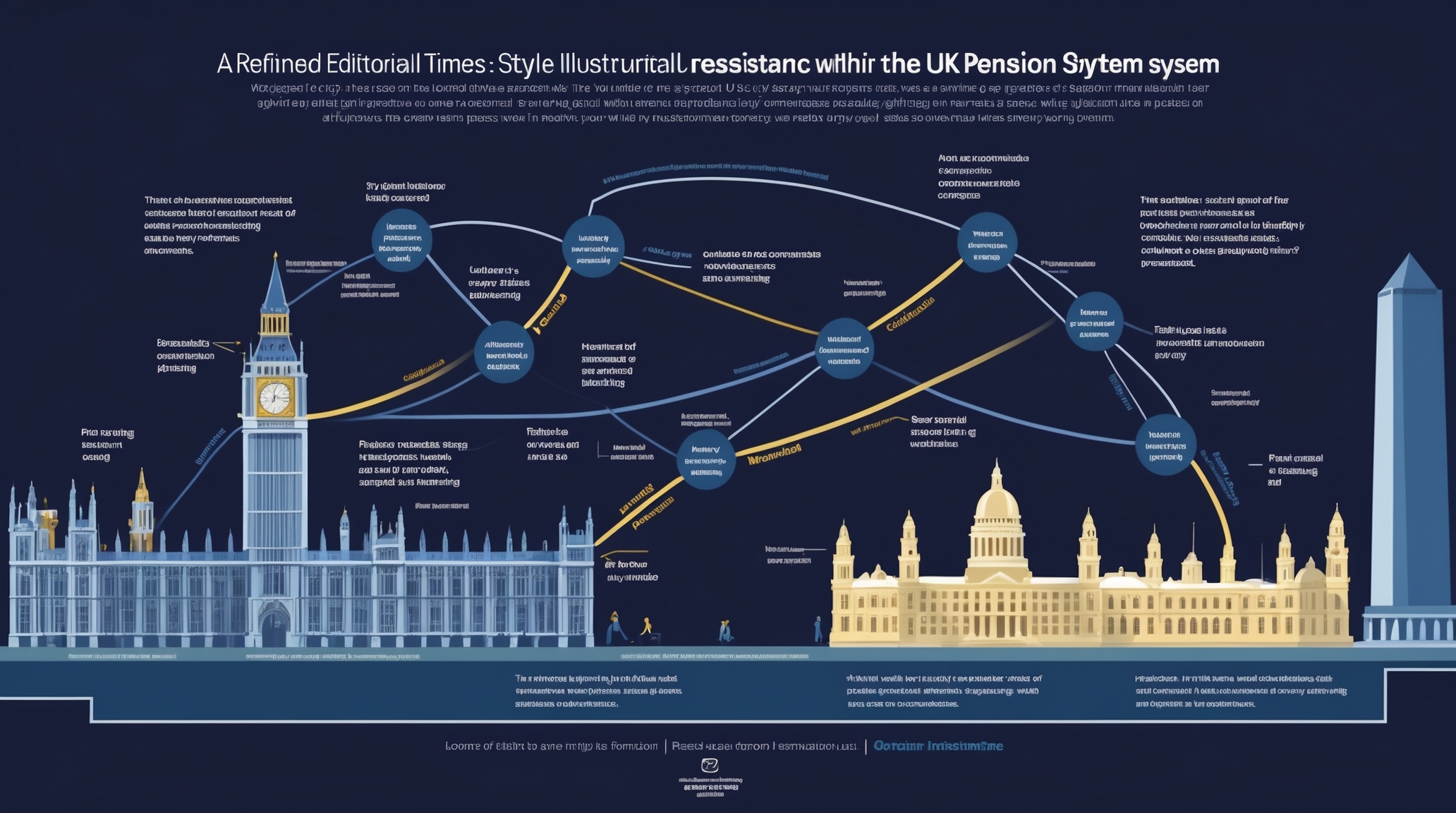
So here is why the UK pension system resists reform. Pensioner voting power makes the triple lock untouchable and protects current benefits at the expense of future sustainability. Financial industry lobbying protects fee extraction and resists transparency or cost reduction. The Treasury opposes spending and benefits from a system that minimizes state obligations. Ideological commitment to individual responsibility blocks greater state provision. Intergenerational conflict prevents solidarity and collective action. Employer resistance blocks higher contributions. Path dependency locks in the existing system. Complexity creates fear of unintended consequences. And public ignorance limits pressure for change.
These forces interact and reinforce each other, and together they ensure that reform, despite being needed and despite being promised repeatedly, does not happen or happens in ways that do not meaningfully change the structure. The system stays expensive for savers, profitable for the industry, unsustainable for the state, and inadequate for future retirees. And the people who will suffer most, younger workers who will retire decades from now with insufficient pensions, have no power to change it because they are not yet pensioners and do not yet vote as a bloc.
The next article will show you where policy actually has leverage, where intervention could reduce fees, increase adequacy, improve sustainability, or create fairer outcomes despite the resistance. Because the system is not immovable, it is just very resistant, and knowing where to push is the difference between wasted effort and meaningful change.