The Incentives - Who Profits From High Rents
Rents are high. Higher than they have ever been. Higher than wages. Higher than inflation. And rising faster than either. In some cities, rent consumes fifty percent of income. Sixty percent. More. And renters, struggling to pay, cut spending elsewhere. Food. Transport. Savings. Social life. Everything is sacrificed to keep a roof overhead. Because the alternative is homelessness.
But while renters struggle, someone is profiting. From high rents. From insecurity. From the shortage. And those profits create interests. Interests that benefit from the crisis. That depend on it. And that resist solutions that would end it. Because cheap rent is bad for business. Tenant security reduces leverage. And solving the housing shortage would reduce returns.
Understanding who profits from high rents is the key to understanding why they stay high. Because the people benefiting have power. Economic power. Political power. And they use that power to protect the system that enriches them. Not through conspiracy. Through the normal operation of markets and politics. They defend their interests. And their interests are served by expensive, insecure rental housing.
Let me show you who profits from high UK rents.
The first and most obvious beneficiary is landlords. Buy-to-let landlords. Individual investors who own rental property. They profit directly. The higher the rent, the higher the income. And income, after costs, is profit. Mortgage payments are mostly fixed. Insurance is stable. So when rents rise, costs do not. And the gap, the difference between income and costs, widens. Profit grows.
And landlords benefit from capital appreciation. House prices rise. The rental property, bought years ago for two hundred thousand, is now worth four hundred thousand. And the landlord, while collecting rent, is also accumulating wealth. Unearned wealth. Because the property value increased not through anything the landlord did. But through scarcity. Through demand exceeding supply. Through the housing crisis. And the landlord, simply by owning, captures that gain.
So landlords have a dual income stream. Rental yield. The profit from rent. And capital gain. The profit from rising property values. And both depend on the housing crisis continuing. If supply increased, rents would moderate. Prices would stabilize. Yields would fall. Capital gains would slow. So landlords, rationally, oppose policies that would increase supply. That would cap rents. That would give tenants security. Because those policies would reduce their income. Their wealth. Their returns.
And landlords are organized. The National Residential Landlords Association. The NRLA. Represents landlords. Lobbies government. Opposes tenant protections. Opposes rent controls. Opposes restrictions on Section 21. And argues that landlords provide a service. That they should be rewarded. That regulation will drive them out. Reduce supply. Hurt tenants. Some of this is self-serving. But some of it is believed. Landlords genuinely see themselves as providing housing. And they resist being told they are exploiting tenants. Even when they are.
The second beneficiary is corporate landlords. Institutional investors. Build-to-Rent operators. Pension funds. Sovereign wealth funds. Real estate investment trusts. All of them own rental housing. Thousands of units. Tens of thousands. And they profit from scale. Economies of scale in management. In maintenance. In financing. And from yield. Seven percent. Eight percent. Returns that justify the investment.
Corporate landlords are not sentimental. They do not care about tenants as people. They care about tenants as income streams. And they optimize. They maximize rent. They minimize voids. They standardize processes. And they extract maximum value. Legally. Professionally. Ruthlessly.
And corporate landlords benefit from financialization. Rental housing is an asset class. Like stocks. Like bonds. And investors, looking for stable returns, buy into it. Not because they care about housing. But because rental income is predictable. Reliable. And inflation-linked. So it is attractive. Particularly to pension funds. Looking for long-term, inflation-protected returns. And the more attractive rental housing becomes as an investment, the more capital flows into it. And the more capital flows in, the higher prices go. And the higher rents go. Because investors expect returns.
So corporate landlords have an interest in high rents. Sustained high rents. Because their investors expect yield. And yield comes from rent. And rent, to be profitable, must be high. Higher than costs. Higher than inflation. High enough to generate the seven or eight percent return that justifies the investment. So corporate landlords, structurally, cannot support affordable rents. Because affordable rents do not generate sufficient yield. And without yield, the investment fails.
The third beneficiary is letting agents. Agents make money from rent. Not directly. But through fees. Fees charged to landlords. A percentage of the monthly rent. Eight percent. Ten percent. Twelve percent. Every month. For managing the property. For finding tenants. For handling maintenance. And the higher the rent, the higher the fee.
So letting agents have an interest in high rents. And in rent increases. Because a rent increase increases their fee. Automatically. If rent is fifteen hundred pounds per month, and the agent charges ten percent, they earn one hundred and fifty pounds per month. If rent rises to sixteen hundred, they earn one hundred and sixty. For doing nothing. Just because the rent increased. So agents encourage landlords to raise rents. Every year. Annual rent reviews. In line with inflation. Or above. And landlords, trusting the agent's advice, comply.
And agents profit from churn. From tenancies ending. From new tenancies starting. Because new tenancies generate fees. Referencing fees. Contract fees. Inventory fees. Charged to the landlord. And passed, indirectly, to the tenant through higher rent. So agents have an incentive to turn over tenants. To not renew. To encourage landlords to find new tenants. At higher rents. Rather than keeping existing tenants at stable rents. Because churn is profitable.
And agents resist regulation. Resist tenant protections. Resist anything that makes tenancies more secure. Because secure tenancies mean less churn. Less churn means fewer fees. So agents, through their trade bodies, ARLA, Propertymark, lobby against tenant security. Against longer tenancies. Against rent controls. And they frame it as protecting landlords. Protecting the market. But really, they are protecting their fees.
The fourth beneficiary is mortgage lenders. Banks. Building societies. They profit from buy-to-let mortgages. And buy-to-let is profitable. For lenders. Because buy-to-let mortgages have higher interest rates than residential mortgages. The risk is higher. The landlord might not find a tenant. Might not collect rent. So the lender charges more. One percent more. Two percent more. And on a two-hundred-thousand-pound mortgage, that difference is significant. Thousands per year. In additional interest. Pure profit for the lender.
And lenders benefit from rising house prices. Because rising prices mean bigger mortgages. Bigger mortgages mean more interest. More profit. And rising prices also mean lower risk. Because if the landlord defaults, the lender repossesses. And sells. And if prices have risen, the sale price covers the loan. The lender does not lose. So rising prices, which drive rising rents, benefit lenders. Both through higher mortgage values and through lower risk.
And lenders, while not directly lobbying for high rents, lobby for a strong housing market. For policies that support homeownership. For Help to Buy. For low interest rates. All of which inflate house prices. Which drive rents. So lenders, indirectly, benefit from high rents. And have an interest in maintaining the conditions that produce them.
The fifth beneficiary is developers. Property developers. Housebuilders. They profit from building rental housing. Build-to-Rent. Purpose-built student accommodation. PBSA. And they profit from selling to landlords. To investors. To corporate buyers. And the higher the rent that properties can command, the more developers can charge for them. Because the buyer, the investor, is buying yield. Return on investment. And yield comes from rent. So high rents justify high sale prices.
So developers have an interest in high rents. Because high rents make their developments valuable. Profitable. And developers, when designing Build-to-Rent, design for yield. Not for affordability. They build small. Studios. One-beds. Because small units rent for more per square foot. They build cheaply. Standardized layouts. Minimal finishes. Because cost matters. And they charge premium rents. Because investors expect returns.
And developers resist affordable housing requirements. Requirements to include social housing. To include affordable units. Because affordable units dilute yield. Reduce returns. Make the development less attractive to investors. So developers negotiate. They argue viability. They claim that including affordable housing makes the project uneconomic. And councils, desperate for any housing, reduce the requirement. From thirty percent to twenty. From twenty to ten. And the affordable housing that does get built is minimal. Tokenistic. And the development, mostly market-rate, generates maximum yield. And maximum profit.
The sixth beneficiary is landlords who own commercial property. Not residential. Commercial. Office buildings. Retail units. And they are converting. To residential. To rental. Because commercial property is struggling. Offices are empty. Retail is dying. And residential, particularly rental, is profitable. So landlords convert. Permitted development rights allow it. No planning permission needed. And they convert office blocks into flats. Small flats. Bedsits. And rent them. At high rents. Because demand is high. Supply is low. And tenants, desperate, will take anything.
And these conversions are often substandard. No natural light. Poor ventilation. No outdoor space. Because permitted development bypasses building standards. Bypasses quality controls. And the flats, while legal, are grim. But they rent. Because people need somewhere to live. And landlords, commercial landlords pivoting to residential, profit. From the housing crisis. From the shortage. From desperate tenants willing to pay for substandard housing.
The seventh beneficiary is the government. Indirectly. The government does not profit from rents. But it benefits from the rental sector existing. Because the rental sector houses people the government does not have to house. Millions of people. Who, if the rental sector did not exist, would need social housing. Council housing. And the government, which has not built enough social housing for decades, cannot house them. So the private rental sector fills the gap. And the government, relieved of responsibility, allows it to continue. Even though rents are high. Even though conditions are poor. Even though tenants are exploited.
And the government benefits fiscally. Landlords pay tax. On rental income. On capital gains. And while the tax is not as much as it should be, because of reliefs, because of loopholes, it is something. And the government, collecting that tax, has a fiscal interest in the buy-to-let sector continuing. Not growing, necessarily. But continuing. Because losing the tax would create a fiscal hole.
And the government uses the rental sector politically. Housing benefit. Universal credit. Paid to tenants. Who use it to pay rent. To private landlords. So housing benefit is, effectively, a subsidy. Not to tenants. But to landlords. Because the money flows through the tenant to the landlord. And the landlord, receiving housing benefit, profits. And the government, rather than building social housing, pays landlords to house benefit claimants. At market rents. Which are high. So the government spends more. On housing benefit. Than it would cost to build social housing. But building social housing requires upfront investment. Capital spending. And housing benefit is revenue spending. Which is politically easier. So the government pays. And landlords profit.
The eighth beneficiary is estate agents. Not letting agents. Estate agents. Who sell properties. Because high rents make buy-to-let attractive. And attractiveness drives demand. Demand from investors. From landlords. Looking to buy rental property. And estate agents, selling to landlords, earn commission. One percent of the sale price. Two percent. And the higher the price, the higher the commission.
So estate agents benefit from high rents. Because high rents make property investment attractive. And attractiveness drives sales. And sales generate commissions. So estate agents, while not setting rents, have an interest in rents staying high. And in the buy-to-let market staying active. Because activity is profit.
The ninth beneficiary is landlords' families. The children. The grandchildren. Who inherit. Landlords accumulate property. Rental property. And that property, on death, is inherited. By family. And the family, inheriting, becomes landlords. Often without effort. Without investment. Just by inheritance. And they collect rent. For life. And accumulate wealth. Generational wealth. Passed down. And compounding.
This creates a rentier class. People who live off rent. Who do not work. Or who work, but whose wealth comes from property. From tenants. And this class grows. Because property accumulates. Through inheritance. Through purchase. And wealth concentrates. In the hands of landlords. And their families. While tenants, paying rent, cannot save. Cannot buy. Cannot accumulate. And stay tenants. For life.
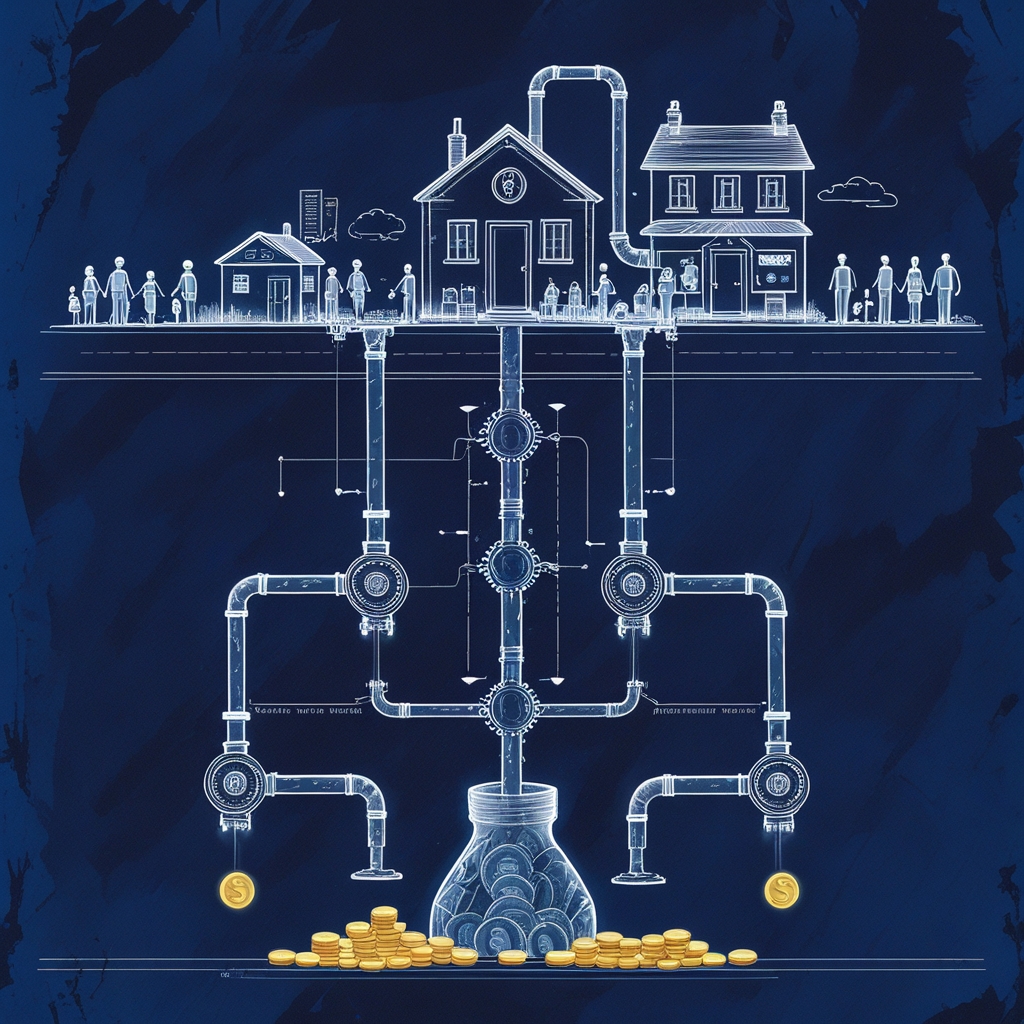
So here is who profits from high UK rents. Buy-to-let landlords, earning rental yield and capital gains. Corporate landlords, generating returns for institutional investors. Letting agents, extracting fees from every transaction and rent increase. Mortgage lenders, charging higher rates on buy-to-let loans. Property developers, selling Build-to-Rent at premium prices. Commercial landlords, converting offices to substandard flats. Government, outsourcing social housing to the private sector through housing benefit. Estate agents, earning commissions from buy-to-let sales. And landlords' families, inheriting wealth accumulated from tenants.
Notice who is not on that list. Tenants. Renters. The people paying the rent. They do not profit. They pay. Through high rents. Through insecurity. Through poor conditions. Through giving up homeownership. Through giving up savings. Through giving up stability. And the wealth they pay, every month, flows upward. To landlords. To investors. To agents. To lenders. And accumulates. Concentrates. And entrenches the system that extracts it.
The system is not broken. It is working. For the people who profit from it. And those people, rationally, protect it. They lobby. They donate. They shape policy. Not to fix the rental crisis. But to preserve the conditions that make it profitable. Because the crisis is not a crisis for them. It is an opportunity.
The next article will show you the feedback loops that make rents rise. That ensure supply never meets demand. That ensure tenants stay powerless. And that ensure the rental system, despite being exploitative, despite being unstable, continues. Because the loops are self-reinforcing. They amplify. And they ensure that high rents, rather than being a temporary problem, are a permanent feature.