Case Study - The 2007 Inheritance Tax Panic
In 2007, inheritance tax became a political crisis. House prices had soared throughout the 2000s, driven by cheap credit, low interest rates, and undersupply. The average house price in the UK had risen from £100,000 in 1999 to £200,000 by 2007, doubling in less than a decade. And in London and the South East, prices had risen even more dramatically, with average homes worth £300,000, £400,000, £500,000, and family homes in desirable areas worth far more.
But the inheritance tax nil-rate band had not kept pace. In 1999, it was £231,000. By 2007, it had risen to £300,000, an increase of just 30% while house prices had doubled. And this meant that hundreds of thousands of families, families who had bought modest homes decades earlier, families who had never considered themselves wealthy, were now facing inheritance tax bills. Because their house, the family home, had inflated in value to the point where it exceeded the threshold, and when they died, their children would owe tens of thousands, sometimes hundreds of thousands, in tax.
And this created panic. Middle-class families, people who had worked, who had saved, who had bought a home, were suddenly facing a tax they had never expected to pay. And they were angry. They saw inheritance tax as unfair, as punishing them for house price inflation that was beyond their control, as forcing their children to sell the family home to pay a tax bill. And that anger created political pressure, enormous pressure, that forced the government to act.
Understanding what happened in 2007, how the crisis developed, how the government responded, and what the consequences were, reveals the dynamics of inheritance tax politics and shows what is possible when public anger is strong enough and organized enough to overcome Treasury resistance.
Let me show you what happened.
The buildup to the crisis began in the early 2000s. House prices were rising, driven by low interest rates, by buy-to-let investment, by undersupply, and by a booming economy. And as prices rose, more estates were pulled into the inheritance tax net. In 2000, about 25,000 estates paid inheritance tax. By 2007, that number had risen to 37,000, an increase of nearly 50%. And projections showed that if house prices continued rising and the nil-rate band did not increase, the number of estates paying tax would reach 50,000, 60,000, within a few years.
And the estates being caught were not wealthy estates in any traditional sense. They were middle-class families with one house, with some savings, with modest pensions. A retired couple in a three-bedroom semi in Kent, bought for £80,000 in 1985, now worth £400,000. A widow in a terraced house in North London, bought for £50,000 in 1975, now worth £500,000. These were not mansions, not luxury properties, just ordinary family homes that had appreciated due to a property bubble.
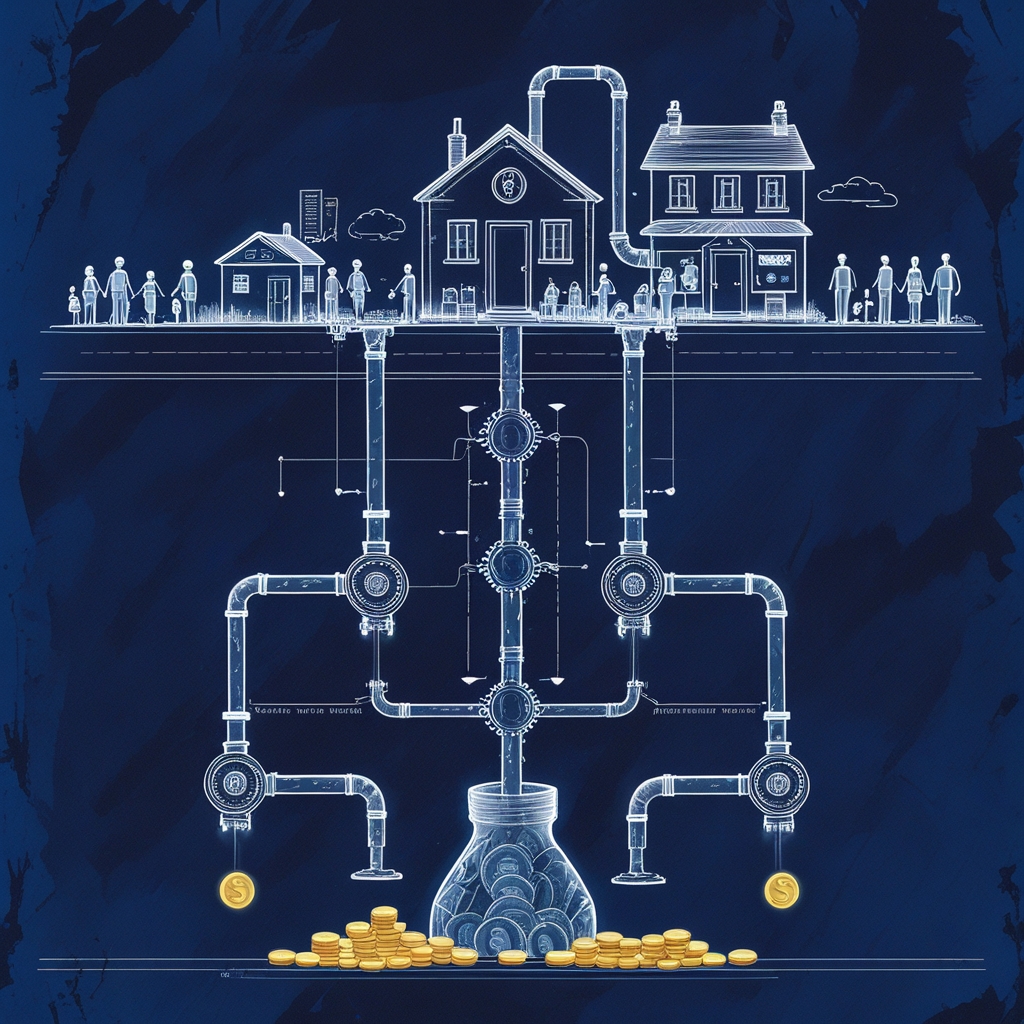
And the tax bills were significant. A £400,000 estate, with a nil-rate band of £300,000, owed tax on £100,000 at 40%, meaning £40,000 due to HMRC. A £500,000 estate owed £80,000. And these were cash bills, due within six months, and most heirs did not have that kind of cash. So they faced a choice: borrow to pay the tax, or sell the family home.
And selling was often the only option, because borrowing against a property you had just inherited, while grieving, while dealing with probate, was difficult and expensive. So families sold, often quickly, often at below market value, to raise the cash to pay HMRC. And investors, seeing the distressed sales, bought properties at discounts, and the family home, held for decades, passed to someone else.
And this created anger. Families felt betrayed, felt punished for something beyond their control. They had not chosen for house prices to rise, they had just lived in their homes, and now they were being told that because the house was worth more, they owed tax, and if they could not pay, the house would be sold. And the unfairness was compounded by the fact that the very wealthy, with business assets, with farmland, with trusts, were avoiding inheritance tax entirely through reliefs and planning. So middle-class families paid while the rich did not.
The political opportunity came in September 2007, at the Conservative Party conference. The Conservatives, in opposition, were looking for issues to attack the Labour government, and inheritance tax was perfect. It was unpopular, it was affecting middle-class voters, traditional Conservative voters, and it could be framed as a tax on aspiration, on hard work, on family.
George Osborne, then Shadow Chancellor, announced a bold policy. The Conservatives, if elected, would raise the inheritance tax nil-rate band to £1 million per couple. This would take the vast majority of estates out of inheritance tax, would protect family homes, and would end the panic. The policy was expensive, it would cost the Treasury billions, but it was popular. The conference hall erupted in applause, the media covered it extensively, and polling showed immediate public support.
And the policy created pressure on the Labour government. Labour was in power, led by Gordon Brown, who had recently become Prime Minister after Tony Blair's resignation. And Labour was considering calling an early election, hoping to win a mandate and secure a full term. But the Conservative inheritance tax pledge changed the calculus. If Labour called an election and the Conservatives campaigned on abolishing inheritance tax for most families, Labour would be defending a tax that was deeply unpopular, and they would likely lose votes, possibly lose the election.
So Labour panicked. They needed to neutralize the issue, to remove inheritance tax as a Conservative weapon, and they needed to do it quickly, before an election was called. And in October 2007, just weeks after the Conservative announcement, Alistair Darling, the Labour Chancellor, announced changes to inheritance tax in the Pre-Budget Report.
Darling did not match the Conservative pledge of a £1 million threshold, that was too expensive, too politically difficult for Labour to justify. But he introduced a compromise, a policy that would reduce the number of estates paying tax without abolishing the tax or raising the threshold dramatically. And the policy was the transferable nil-rate band.
Under the old rules, each individual had a £300,000 nil-rate band, and if you left everything to your spouse, the spouse inherited tax-free but the first nil-rate band was wasted. So when the spouse died, only their £300,000 allowance applied, and estates above that were taxed. This meant that a couple, even though they had two allowances of £300,000 each, could only use one, and a £600,000 estate would pay tax on £300,000.
The transferable nil-rate band changed this. It allowed the unused nil-rate band from the first spouse to be transferred to the surviving spouse, so that when the surviving spouse died, they had two nil-rate bands, £600,000 total. This meant that a couple could pass on £600,000 tax-free, and only estates above that would pay tax.
And this was significant. It did not raise the individual nil-rate band, which stayed at £300,000, but it effectively doubled the threshold for couples. A couple with a £500,000 house would pay nothing. A couple with a £700,000 estate would pay tax on £100,000, not on £400,000. And this removed hundreds of thousands of estates from inheritance tax, reduced bills for many more, and defused the political crisis.
And it was cheaper than the Conservative pledge, because it did not raise the threshold to £1 million, it just allowed couples to use both allowances. So the fiscal cost to the Treasury was lower, which made it acceptable to Labour's fiscal discipline, and it neutralized the Conservative attack, because Labour could now say they had acted, they had protected family homes, and the Conservatives' policy was unnecessary.
And the timing worked. The transferable nil-rate band was announced in October 2007, and shortly after, Gordon Brown decided not to call an early election. The inheritance tax issue had been neutralized, the Conservatives had lost their weapon, and Labour avoided an election they might have lost.
But here is what the 2007 case reveals about inheritance tax politics.
First, it shows that inheritance tax reform only happens under extreme political pressure. The nil-rate band had been frozen or increased minimally for years, fiscal drag had been pulling more estates into the tax net, and the Treasury had been content to collect the extra revenue. But when the issue became a political crisis, when the Conservatives made it a major campaign pledge, when Labour feared losing an election over it, reform happened. Not because the government believed in it, not because it was the right thing to do, but because political survival required it.
Second, it shows that the reform was the minimum necessary to defuse the crisis. Labour did not abolish inheritance tax, did not raise the threshold to £1 million, did not match the Conservative pledge. They introduced the smallest change that would neutralize the issue, the transferable nil-rate band, which protected most couples but kept the tax in place and kept revenue flowing. The goal was not fairness, not comprehensive reform, but political survival.
Third, it shows that Treasury resistance can be overcome, but only when the political cost of inaction exceeds the fiscal cost of action. The Treasury opposed raising the nil-rate band because it would cost revenue. But the political cost, losing an election, was greater. So the Treasury accepted the transferable nil-rate band, a compromise that reduced revenue less than abolition or a dramatic threshold increase, but that was enough to remove the political threat.
Fourth, it shows that middle-class anger, when organized and loud, can force change. The families affected by inheritance tax in 2007 were not organized, they did not have a lobby group, they did not fund campaigns. But their anger was real, was widespread, and was picked up by the Conservative Party, which used it as a political weapon. And that weaponization, that channeling of anger into a clear policy demand, created the pressure that forced Labour to act.
Fifth, it shows that inheritance tax politics are driven by perception, not by reality. The reality was that only 37,000 estates out of hundreds of thousands of deaths were paying inheritance tax in 2007. The vast majority of people were unaffected. But the perception was that inheritance tax was a threat to middle-class families, that house price inflation was pulling ordinary people into a tax designed for the wealthy, and that perception drove the politics. People who would never pay inheritance tax opposed it because they feared they might, or because they identified with those who did, or because it felt unfair.
Sixth, it shows that inheritance tax reform is temporary. The transferable nil-rate band, introduced in 2007, helped at the time. But since then, house prices have continued rising, the nil-rate band has been frozen at £325,000 since 2009, and fiscal drag has pulled more estates into the tax net again. By 2024, the number of estates paying inheritance tax is back to where it was in 2007, around 37,000, and rising. So the 2007 reform did not solve the problem, it just delayed it. And the same dynamics, house price inflation, frozen thresholds, fiscal drag, are playing out again.
And seventh, it shows what would be required to abolish or radically reform inheritance tax. It would require a political crisis, a party making it a central campaign pledge, public anger strong enough to threaten electoral outcomes, and a government willing to accept the fiscal cost to avoid the political cost. The 2007 crisis was not strong enough to abolish inheritance tax, it was only strong enough to tweak it. Abolition would require an even bigger crisis, even more anger, even more political will.
So here is what the 2007 inheritance tax panic reveals. Reform happens only under extreme political pressure. The reform is the minimum necessary to neutralize the threat. Treasury resistance can be overcome, but only when the political cost of inaction exceeds the fiscal cost of action. Middle-class anger, when loud and channeled politically, can force change. Perception drives politics more than reality. Reform is temporary, and the problem recurs unless the underlying structure changes. And abolition or radical reform requires a crisis larger than 2007, requires a party willing to fight for it, and requires public anger sustained over time.
And that is the challenge for anyone who wants to see inheritance tax abolished or fundamentally reformed. The 2007 panic forced a tweak, a compromise, but it did not change the system. And the system, resistant to change, extractive, unfair, continues. The nil-rate band is frozen, fiscal drag continues, forced sales continue, and property transfers from families to investors continue. And the anger, while real, is not organized, is not sustained, and is not strong enough to force the kind of change that would be needed.
But the 2007 case shows that change is possible. That political pressure, if strong enough, can overcome Treasury resistance and force reform. And that understanding how it happened, what worked, and what did not, is essential for building the pressure needed to achieve more comprehensive change in the future.