The Feedback Loops - Why Property Wealth Concentrates
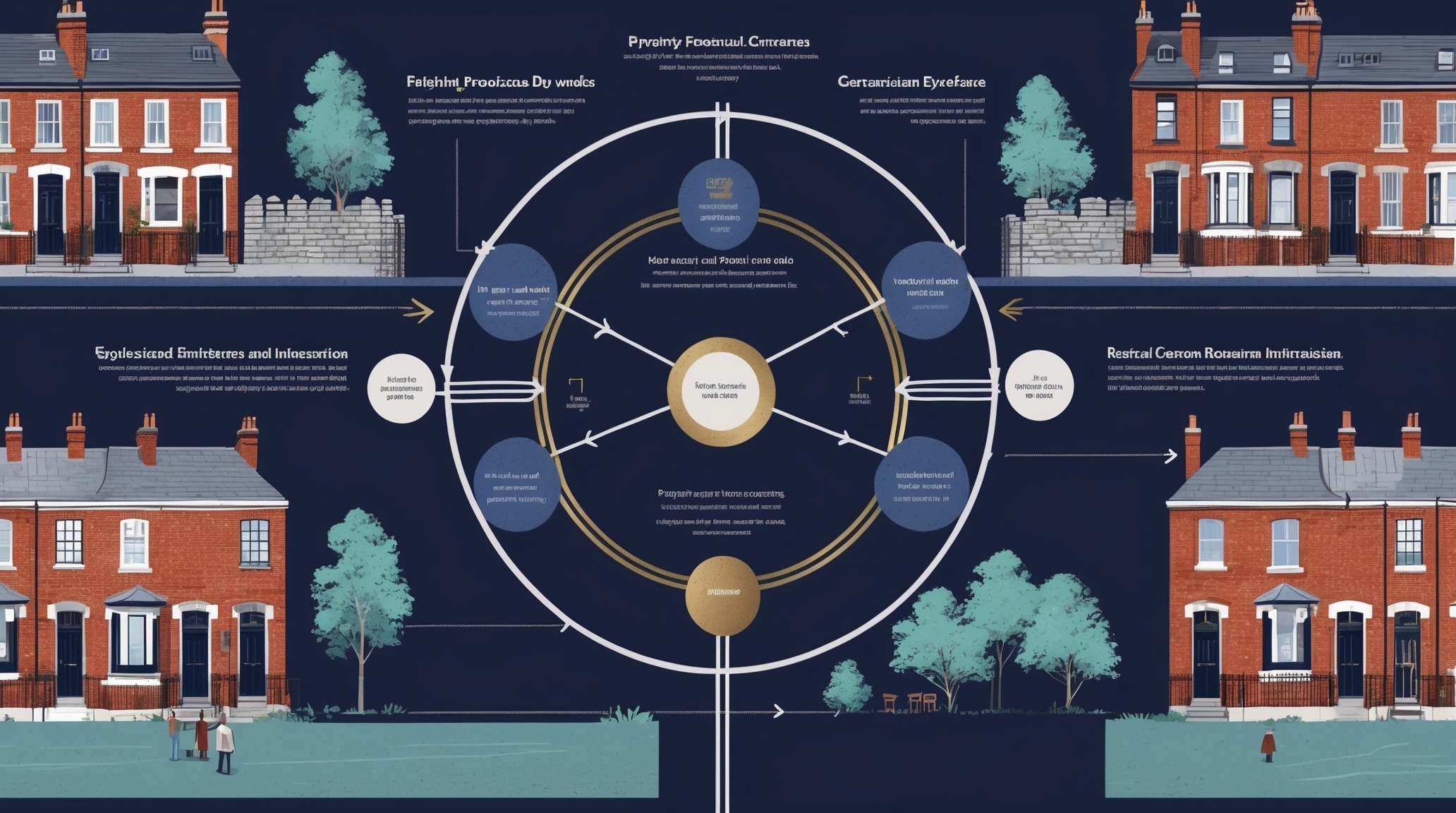
Inheritance tax is supposed to prevent the concentration of wealth across generations, to break up large estates, to ensure that each generation starts more equally, and to redistribute from the wealthy to society. That is the theory, the justification, the reason governments defend it. But the reality is different. Inheritance tax, as structured, accelerates wealth concentration. It does not prevent it, it enables it. And understanding why requires seeing the feedback loops, the dynamics that turn inheritance tax from a tool of redistribution into a mechanism of extraction and consolidation.
Let me show you the loops that ensure property wealth concentrates, that the gap between wealthy and middle class widens, and that inheritance tax, despite its intentions, serves those it claims to constrain.
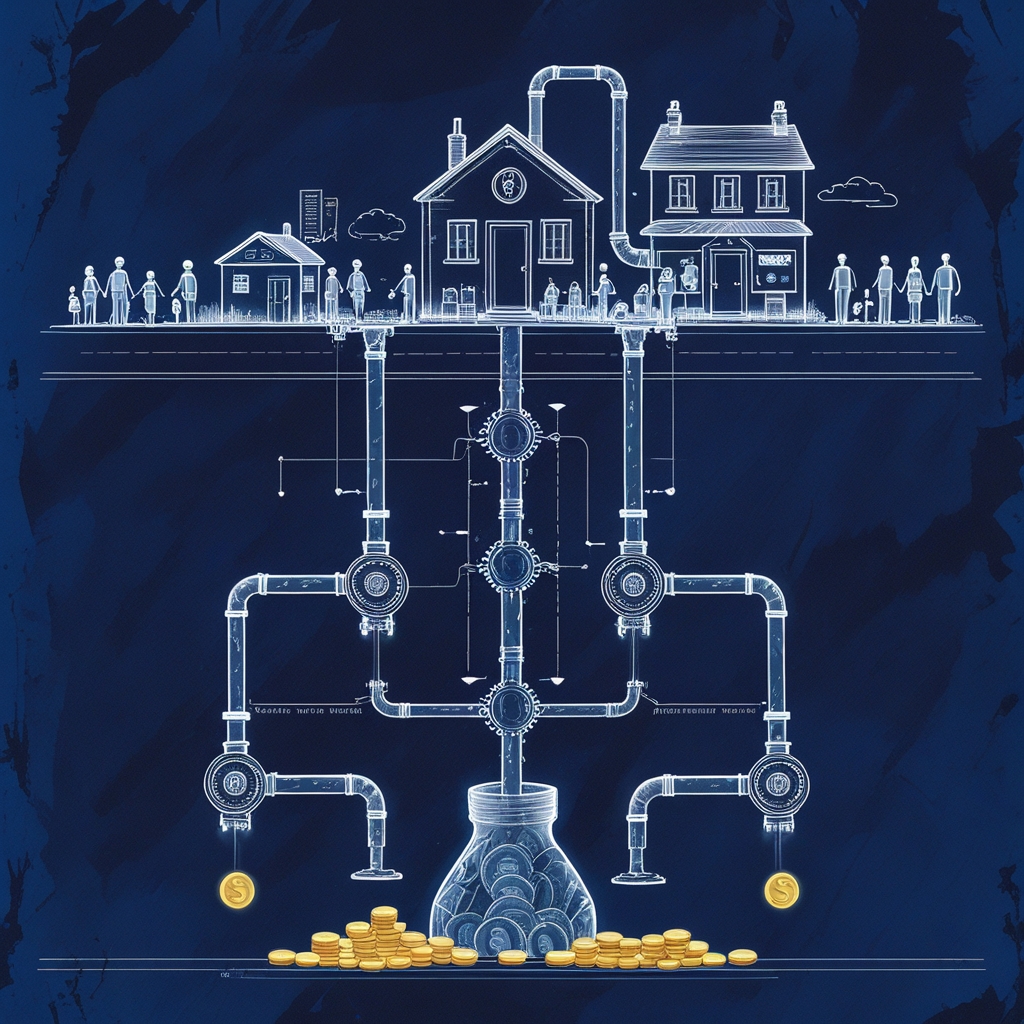
The first loop is the forced sale and investor acquisition loop. When someone dies and their estate includes property, and the property value pushes the estate above the inheritance tax threshold, the heirs owe tax. And the tax must be paid within six months of death, or interest accrues. But the heirs do not have cash, they inherit property, and property is illiquid, it takes time to sell, and selling requires preparation, marketing, negotiations, legal processes.
So the heirs face pressure. They need cash quickly to pay HMRC, and they cannot wait for the best offer, cannot hold out for market value, because every month they delay costs them interest. And this creates a forced sale, a distressed sale, where the heirs are motivated sellers, desperate sellers, and buyers know it.
And here is the feedback. Investors, property developers, corporate buyers, target these sales. They monitor probate registers, they identify estates in tax trouble, and they approach families with cash offers. Below market value, sometimes significantly below, but immediate, no chain, no contingencies, just cash. And families, under pressure, accept. They sell for 10%, 15%, 20% less than they could have achieved in a normal sale, because they do not have time, they do not have leverage, and they need the cash now.
The investor buys the property at a discount. And the discount is profit. The investor holds the property, renovates it, or rents it, or flips it, and sells later at full market value. The difference between what they paid and what they sell for is the profit, and that profit came directly from the inheritance tax creating the forced sale.
And the loop reinforces. The more estates caught by inheritance tax, the more forced sales. The more forced sales, the more opportunities for investors to acquire property at below market value. The more property investors acquire, the more wealth concentrates in their hands. And the more wealth concentrates, the more investors have capital to buy more properties, and the loop accelerates.
And this loop transfers property from families to investors, from those who inherit to those who have cash, and it happens because inheritance tax creates the pressure, the urgency, the forced sale. The tax does not just raise revenue, it redistributes property, from heirs to investors, and investors profit from that redistribution.
The second loop is the wealth planning and avoidance loop. Inheritance tax is avoidable, if you are wealthy enough to afford planning, if you understand the rules, if you have access to advisors. And those who plan avoid tax, and those who avoid tax accumulate more wealth, and more wealth allows more planning, and the loop reinforces.
Here is how it works. A wealthy family, with a £5 million estate, hires advisors. Solicitors, accountants, tax planners. And they restructure the estate. They put the business into a structure that qualifies for business relief, so it passes tax-free. They buy farmland, hold it for seven years, and it qualifies for agricultural relief, so it passes tax-free. They maximize pension contributions, moving assets out of the estate. They create trusts, discretionary trusts, to hold assets outside the estate while retaining some control. They give away assets to children, and if they survive seven years, those gifts are tax-free.
And when they die, their estate, on paper worth £5 million, pays little or no inheritance tax. Because the business is relieved, the farmland is relieved, the pension is outside the estate, the trusts are outside the estate, and the gifts made seven years ago are outside the estate. What remains is minimal, well below the threshold, and the heirs inherit the full £5 million, or close to it.
But a middle-class family, with a £700,000 estate consisting of one house and some savings, does not plan. They do not have advisors, they do not restructure, they do not use trusts or reliefs, because they do not know about them, or because they cannot afford the advice, or because their estate is too simple to benefit from complex planning. And when they die, their estate pays tax. 40% on the excess above £500,000 or £650,000 depending on allowances. The heirs inherit £550,000 instead of £700,000, and £150,000 goes to HMRC.
So the wealthy family passes on £5 million tax-free. The middle-class family passes on £550,000 after tax. And the gap, the difference, widens. The wealthy family's heirs have capital to invest, to buy property, to start businesses, to build more wealth. The middle-class family's heirs have enough to buy a house, maybe, but not enough to invest, not enough to build wealth. So they stay middle class, they do not threaten the wealthy, and the loop continues.
And the feedback reinforces. Wealth enables planning, planning avoids tax, avoiding tax preserves wealth, wealth enables more planning. And the loop accelerates inequality, because those with wealth pay less tax, accumulate more, and widen the gap between themselves and those without wealth.
The third loop is the fiscal drag and middle-class capture loop. The nil-rate band has been frozen at £325,000 since 2009. Frozen for fifteen years. And during those fifteen years, house prices have risen by 50%, 80%, 100% in some areas. A house worth £300,000 in 2009 is worth £600,000 now. So a family that was comfortably below the inheritance tax threshold in 2009 is now well above it, not because they got richer, but because the government froze the threshold and let inflation do the work.
This is fiscal drag. And it pulls more estates into the tax net every year. In 2009, about 15,000 estates paid inheritance tax. In 2024, about 30,000 estates pay it. The number has doubled, not because people are dying richer, but because the threshold has not moved and property values have.
And here is the feedback. More estates paying tax means more families facing forced sales, more opportunities for investors, more fees for advisors, more revenue for the government. And the government benefits from fiscal drag because it raises revenue without a vote, without a debate, without the political cost of raising the rate. So the government has no incentive to raise the threshold, and every incentive to keep it frozen.
And the loop reinforces. Frozen threshold, rising property values, more estates caught, more revenue, more political resistance to raising the threshold because raising it would cost revenue, so the threshold stays frozen, and the loop continues. And each year, more middle-class families, families with one house, are pulled into the net, and the tax that was supposed to target the wealthy targets the middle instead.
The fourth loop is the property price and inheritance tax loop. Inheritance tax forces sales, and forced sales increase supply, and increased supply should reduce prices. But it does not, because the properties sold are bought by investors, not by families, and investors reduce the supply available to families by converting properties to rentals, to corporate ownership, to investment assets.
So here is the feedback. Inheritance tax forces sale of family home. Investor buys it. Investor converts it to rental or holds it as investment. Property is removed from owner-occupied supply. Families competing for remaining owner-occupied properties face higher prices. Higher prices mean larger estates when those families die. Larger estates mean more inheritance tax. More inheritance tax forces more sales. And the loop continues.
And this loop transfers property from owner-occupied to investment, from families who live in homes to investors who extract rent. And it drives up prices because it reduces the supply available to families while increasing demand from investors. So inheritance tax, rather than making property more affordable by forcing sales, makes it less affordable by concentrating ownership.
The fifth loop is the generational transfer and dependency loop. When parents die and leave property to children, the children, after paying inheritance tax, receive less than the property is worth. And if they cannot afford to keep the property, they sell it. But the children, who were hoping to inherit enough to buy their own home or to invest, receive less than expected. So they remain renters, they remain dependent on income, they cannot build wealth.
And here is the feedback. Children inherit less because of tax. Less inheritance means less capital to buy property. Remaining renters means paying rent, which prevents saving. No savings means no deposit for purchase. No purchase means no property wealth. No property wealth means no inheritance to pass on. And the next generation, the grandchildren, inherit even less or nothing. So wealth does not accumulate across generations for middle-class families, it erodes, because inheritance tax takes a cut at each transfer, and the remaining amount is insufficient to build wealth.
But for wealthy families, who avoid tax through planning, wealth does accumulate. They pass on full value, their heirs invest it, grow it, and pass on more to the next generation. So the gap widens, generation by generation, and inheritance tax, which claims to prevent dynastic wealth, actually enables it by exempting the wealthy and taxing the middle.
The sixth loop is the homeownership and inheritance expectation loop. Many people, particularly younger people, cannot afford to buy property without help from family. Deposits are too high, 10%, 15%, 20% of property value, and saving that amount while paying rent is nearly impossible. So they rely on inheritance, on the expectation that when parents die, they will inherit enough to buy.
But inheritance tax reduces what they inherit, sometimes significantly. And if the tax bill forces the sale of the family home at below market value, the inheritance is even less. So the children receive far less than they expected, and when split between siblings, each child's share is insufficient to buy a similar property in the same area. The family home they grew up in is gone, sold to pay tax, and what they inherit doesn't allow them to replicate their parents' property wealth. So they buy smaller, buy further out, or remain renters, and the wealth their parents built doesn't transfer, and the loop continues.
And here is the feedback. Cannot buy without inheritance. Inheritance reduced by tax. Reduced inheritance insufficient to buy. Remain renters. Renting prevents saving. No savings means reliance on inheritance. And the loop reinforces dependency, prevents wealth building, and ensures that property ownership becomes concentrated among those who do not rely on inheritance, those who are already wealthy, those who do not need it.
The seventh loop is the advice industry and complexity loop. Inheritance tax is complex, and complexity creates demand for advice, and advice generates fees, and fees make inheritance tax planning profitable for advisors, and profitability creates an industry, and the industry lobbies to maintain complexity because simplification would destroy the business model.
Here is the feedback. Complex inheritance tax rules create demand for advisors. Advisors charge fees for planning. Fees make inheritance tax advisory profitable. Profitable industry lobbies to maintain complexity, to resist simplification, to create new reliefs and exemptions that require interpretation. More complexity creates more demand for advice. And the loop reinforces.
And this loop benefits advisors but harms families, because complexity makes inheritance tax inaccessible to those who cannot afford advice, and inaccessible rules mean unfair outcomes, where the wealthy avoid tax and the middle class pays. And the industry, profiting from complexity, has no incentive to simplify, and governments, influenced by lobbying, maintain complexity, and the loop continues.
The eighth loop is the political resistance and middle-class anger loop. Inheritance tax is unpopular, 60% to 70% of people oppose it, and opposition is strongest among middle-class families, families with property, families who see inheritance tax as punishing aspiration, as taxing them twice, as unfair. And this anger creates political pressure to abolish or reduce inheritance tax.
But here is the feedback. Anger creates pressure to reform. But reform requires either raising the threshold, which costs revenue, or simplifying the system, which threatens the advice industry and the reliefs that the wealthy depend on. The government resists reform because of fiscal cost. The wealthy resist reform because it would close loopholes. Advisors resist reform because it would reduce demand. So reform does not happen, or happens only marginally, and anger persists. And persistent anger creates more pressure, but the resistance remains, and the loop continues without resolution.
And this loop ensures that inheritance tax, despite being hated, persists, because the forces defending it, the Treasury, the wealthy, the advice industry, are stronger than the forces attacking it, the middle class, who are angry but unorganized.
So here are the loops. Forced sales transfer property to investors who profit from distressed prices. Wealth enables planning which avoids tax which preserves wealth which enables more planning. Fiscal drag pulls more estates into the tax net which raises revenue which incentivizes keeping the threshold frozen. Forced sales reduce owner-occupied supply which increases prices which increases estates which increases tax. Reduced inheritance prevents children from buying which keeps them renting which prevents wealth accumulation. Complexity creates demand for advice which generates fees which creates an industry which lobbies for complexity. And political anger creates pressure for reform which is resisted by those who benefit which maintains the system which maintains the anger.
These loops interact, they reinforce each other, and together they ensure that inheritance tax, despite claiming to redistribute wealth, concentrates it. Property moves from families to investors. Wealth accumulates for those who can avoid tax and erodes for those who cannot. The middle class is pulled into the tax net while the wealthy escape. And the system, resistant to reform, continues extracting, continues transferring, and continues widening inequality.
The next article will show you why inheritance tax resists reform, why despite being unpopular, despite falling heavily on ordinary families, it does not change. Because the forces protecting it are powerful, organized, and entrenched.