The Incentives - Who Profits From Inheritance Tax
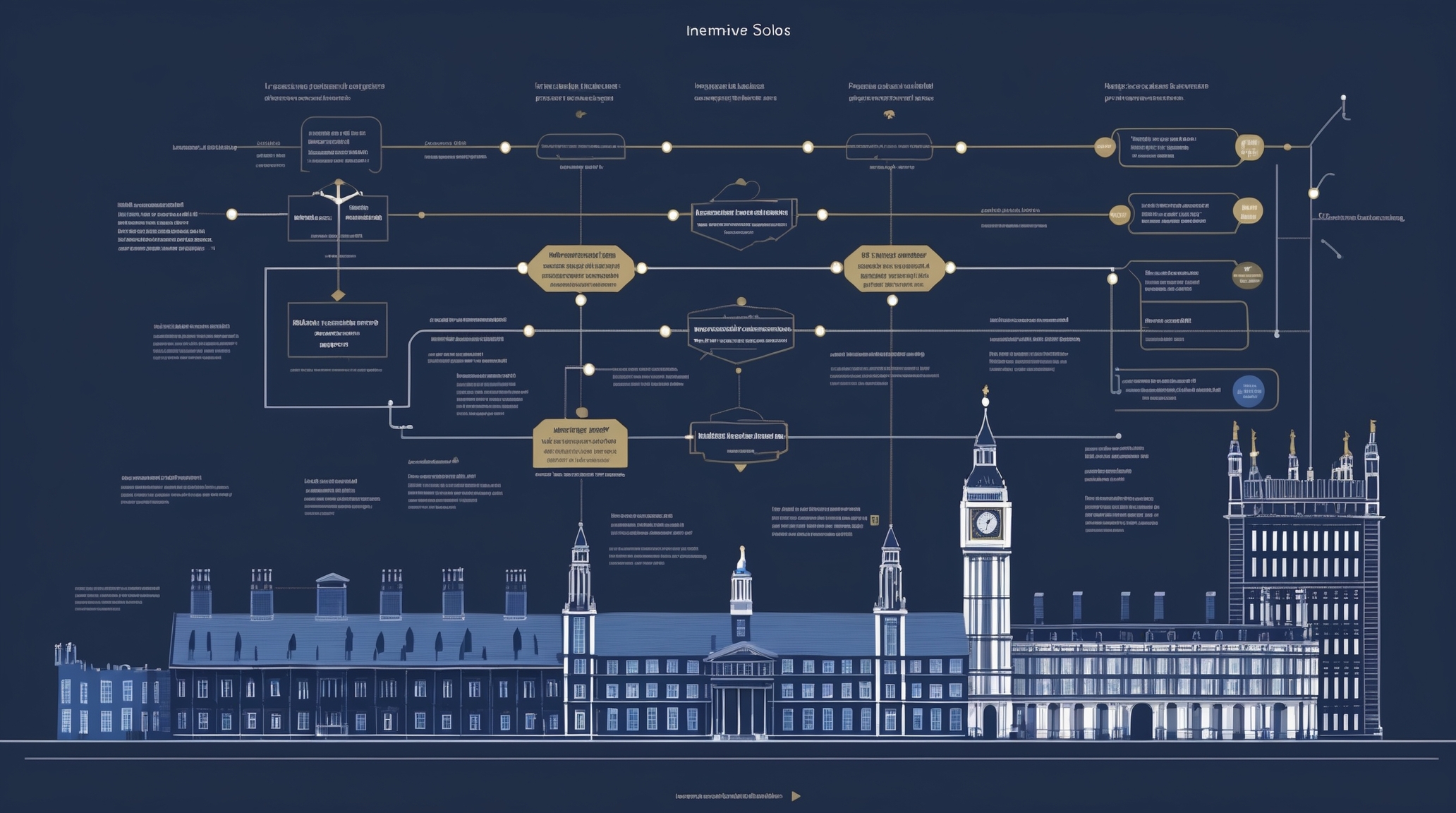
Inheritance tax raises about seven billion pounds per year for the government. Seven billion extracted from estates, from families, when someone dies. That money goes to the Treasury, it funds public services, and in that sense, everyone benefits. Roads, schools, hospitals, all funded partly by inheritance tax. This is the official justification, the reason the tax exists, to raise revenue and to redistribute wealth from those who have accumulated it to society at large.
But that is not the whole story. Because while the government collects seven billion, far more value changes hands because of inheritance tax. Homes are sold, often below market value, because families need cash quickly to pay the bill. Advisors are paid, solicitors, accountants, tax planners, wealth managers, all extracting fees from estates trying to minimize tax. And investors, property developers, corporate buyers, acquire family homes at distressed prices because the sale is forced, is urgent, and the family has no choice.
So the question is not just who collects the tax, but who profits from the existence of the tax, from the structure, from the incentives it creates. And the answer reveals that inheritance tax, while raising seven billion for the government, generates far more value for those who extract from estates, from families under pressure, and from the churn of property that the tax forces.
Let me show you who profits from UK inheritance tax.
The first and most obvious beneficiary is the government, specifically the Treasury. Seven billion pounds per year, collected from estates, added to tax revenue, and spent on public services or on reducing the deficit. This is not trivial, seven billion funds a lot of schools, a lot of healthcare, a lot of infrastructure. And inheritance tax is progressive, in the sense that it falls on estates with assets, not on those with nothing, so it redistributes from those who have wealth to those who need services.
But here is the complication. The government does not just collect tax, it also shapes the system, and the way inheritance tax is structured benefits some groups and harms others in ways that go beyond simple revenue collection. The freeze of the nil-rate band, the fiscal drag that pulls more estates into the tax net, raises revenue without the political cost of explicitly raising the rate. And this benefits the Treasury, which gets more money without a vote, without a debate, just by waiting for inflation to do the work.
And the government benefits from the seven-year rule, from the complexity, from the exemptions and reliefs, because all of this creates uncertainty, creates pressure, and drives behavior. People give away assets early, they buy farmland, they restructure their estates, all to avoid tax. And this behavior, this churn, generates economic activity, generates fees for advisors, and keeps wealth circulating rather than sitting idle. The government does not just collect tax, it shapes the economy through the tax, and the complexity serves that purpose.
The second beneficiary is the legal and financial services industry. Solicitors, accountants, tax advisors, wealth managers, estate planners, all profit from inheritance tax because the tax is complex, and complexity creates demand for expertise. Families, facing a 40% tax bill, hire professionals to minimize it, and those professionals charge fees, significant fees, for advice, for structuring, for administration.
A basic will costs a few hundred pounds. But inheritance tax planning, setting up trusts, restructuring estates, transferring assets, this costs thousands. Tens of thousands for wealthy estates. And the ongoing costs, administering trusts, filing returns, valuing assets, managing investments within tax-efficient structures, these fees compound over years, over decades.
And the more complex the system, the more valuable the advice. If inheritance tax were simple, a flat rate on all estates above a high threshold with no exemptions, no reliefs, no planning opportunities, the demand for advisors would collapse. But the system is not simple, it is full of reliefs, exemptions, allowances, seven-year rules, taper reliefs, business reliefs, agricultural reliefs, pension exclusions, and navigating this requires expertise. So the industry benefits from complexity, and it lobbies, subtly, to maintain it, to resist simplification, because simplification would destroy the business model.
And here is the perverse incentive. Advisors are paid to minimize tax, and they do, successfully, for those who can afford them. But the existence of the advice industry creates inequality, because those wealthy enough to pay for planning avoid tax, and those not wealthy enough pay the full rate. So the industry, while providing a service, also entrenches unfairness, and profits from that unfairness.
The third beneficiary is property investors and developers. Inheritance tax forces sales. Families inherit a house, they owe tax, they do not have cash, so they sell. And forced sales are distressed sales, and distressed sales sell below market value because the seller is desperate, is on a deadline, cannot wait for the best offer.
And investors know this. They watch probate registers, they identify estates in tax trouble, and they approach families with cash offers, below market but immediate. The family, needing to pay HMRC within six months, accepts. The investor buys the property at a discount, renovates it or holds it, and sells later at full market value. The difference, the discount, is profit, extracted from the family's distress.
And developers benefit similarly. A family home, in a desirable area, comes on the market because the heirs cannot afford the tax bill. The developer buys it, demolishes it or converts it, builds flats, sells them at market rates. The profit is significant, and it comes directly from the forced sale, from the fact that inheritance tax created the opportunity.
This is not illegal, it is not even unethical in a narrow sense, it is market activity, investors buying from willing sellers. But the willingness is coerced, the sale is forced by the tax, and the transfer of property from families to investors is a direct consequence of the system. Inheritance tax does not just raise revenue, it redistributes property, from those who inherit to those who have cash to buy.
The fourth beneficiary is HMRC itself, the tax collection agency. Inheritance tax is administratively expensive to collect, estates must be valued, assets listed, reliefs claimed, returns filed, and HMRC must verify, must audit, must investigate. But HMRC also benefits from the revenue, from the fees, from the penalties for late payment, for undervaluation, for errors.
Late payment interest is charged at significant rates, and estates that cannot pay within six months, because property has not yet sold, accrue interest, and that interest is revenue for HMRC. Penalties for incorrect valuations, for failing to disclose assets, for errors in returns, these also generate revenue. And HMRC, under pressure to maximize tax collection, pursues estates aggressively, challenges valuations, disputes reliefs, and extracts not just the tax owed but additional amounts through penalties and interest.
And HMRC benefits from fear. Families, knowing that inheritance tax is complex, that mistakes are penalized, that HMRC can investigate for years after death, over-comply, they pay more than they might legally owe, they accept valuations they could challenge, they do not claim reliefs they might be entitled to, because the cost of getting it wrong, the risk of penalties, the stress of an investigation, is too high. So HMRC collects more than the law strictly requires, not through fraud but through fear and complexity.
The fifth beneficiary is the very wealthy, and this seems counterintuitive, but hear me out. Inheritance tax, as structured, allows the very wealthy to avoid it almost entirely while the modestly wealthy, those with one valuable property, pay heavily. And this serves the interests of the very wealthy because it prevents competition, it prevents the rise of new wealth, and it consolidates their position.
If you are very wealthy, with £10 million, £50 million, £100 million, you use business relief, agricultural relief, trusts, pensions, lifetime gifts, and you pass on your wealth tax-free or nearly tax-free. Your children inherit millions, they invest it, they buy property, they start businesses, and they perpetuate wealth across generations. And inheritance tax does not stop this, it facilitates it, because the reliefs are designed for large estates, for business owners, for landowners, and they work.
But if you are modestly wealthy, with one house worth £700,000, you pay tax. Your children inherit £500,000 after tax, they use it to buy a house, they do not have enough left to invest, to start a business, to build wealth. So they stay middle class, they do not threaten the wealthy, and the gap between very wealthy and modestly wealthy widens.
And this serves the very wealthy because it reduces competition. If inheritance tax were abolished, or if it applied equally to all estates, middle-class families could accumulate wealth across generations, could build businesses, could compete. But as structured, inheritance tax takes from the middle and leaves the top untouched, and this entrenches inequality, and the very wealthy benefit from that.
The sixth beneficiary is farmers and landowners, who benefit enormously from agricultural relief. Farmland is exempt from inheritance tax if it has been owned for seven years and is still being farmed. And this relief is generous, unlimited, a £10 million farm pays no inheritance tax. The justification is that farms should not be broken up to pay tax, that food security requires protecting agricultural land, and that farming is a multi-generational business that should pass down families.
But agricultural relief has become a tax avoidance scheme. Wealthy individuals, with no farming background, buy farmland, hold it for seven years, and pass it on tax-free. The land is farmed, often by tenants, but the owner is not a farmer, is an investor using agricultural relief to avoid inheritance tax. And land prices have been driven up by this demand, not by farming economics but by tax planning, and actual farmers, who need land to farm, cannot afford to buy because investors, seeking tax relief, outbid them.
So agricultural relief benefits landowners, benefits investors, and harms actual farmers. And it transfers wealth tax-free across generations for those wealthy enough to buy land, while families with one house pay 40%.
The seventh beneficiary is those who inherit business assets, because business relief is similarly generous. A family business, if it qualifies, can be passed on tax-free. And this is supposed to protect small businesses, to prevent them being sold to pay tax, to preserve jobs, to maintain continuity. And for genuine family businesses, this works, it allows a shop, a factory, a service business to pass from parent to child without a tax bill that would force a sale.
But business relief is also exploited. Investors buy shares in businesses, hold them for two years, and pass them on tax-free. The business might be quoted on the stock market, might be held through an investment vehicle, might be structured specifically to qualify for relief. And the very wealthy use business relief to avoid tax on investment portfolios, on shareholdings, on assets that are not businesses in any meaningful sense but that qualify technically.
So business relief, like agricultural relief, benefits the wealthy more than the modestly wealthy, and it entrenches inequality rather than reducing it.
The eighth beneficiary is life insurance companies. Families, worried about inheritance tax, buy life insurance policies written in trust, so that when they die, the payout goes directly to beneficiaries outside the estate, and the money can be used to pay the tax bill without forcing the sale of the family home. This is sensible planning, and life insurance companies market these policies heavily, and they profit from the premiums, from the fear that inheritance tax creates, from the demand for protection.
And whole-of-life policies, designed specifically for inheritance tax planning, are expensive, premiums are high, and they are paid for years, for decades, and the insurance company invests those premiums, earns returns, and pays out only when the policyholder dies. And the profit, the difference between premiums collected and payouts made, is significant, and it is driven by inheritance tax.
So life insurance companies benefit from the existence of the tax, from the fear it creates, and from the demand for products that mitigate it. And the more estates caught by inheritance tax, the more frozen the nil-rate band, the more fiscal drag pulls middle-class families into the net, the more demand for life insurance, and the more profit for insurers.
The ninth beneficiary is pension providers and wealth managers, because pensions are outside the estate, and maximizing pension contributions late in life is a tax planning strategy. Individuals, in their sixties and seventies, contribute heavily to pensions, not because they need pension income but because they want to move assets out of their taxable estate. And pension providers benefit from these contributions, from the assets under management, from the fees they charge.
And wealth managers advise on this, on pension strategies, on investment within pensions, on drawdown versus annuities, all with an eye to minimizing inheritance tax. And they charge fees, annual fees, advice fees, and they profit from the complexity, from the planning opportunities that inheritance tax creates.
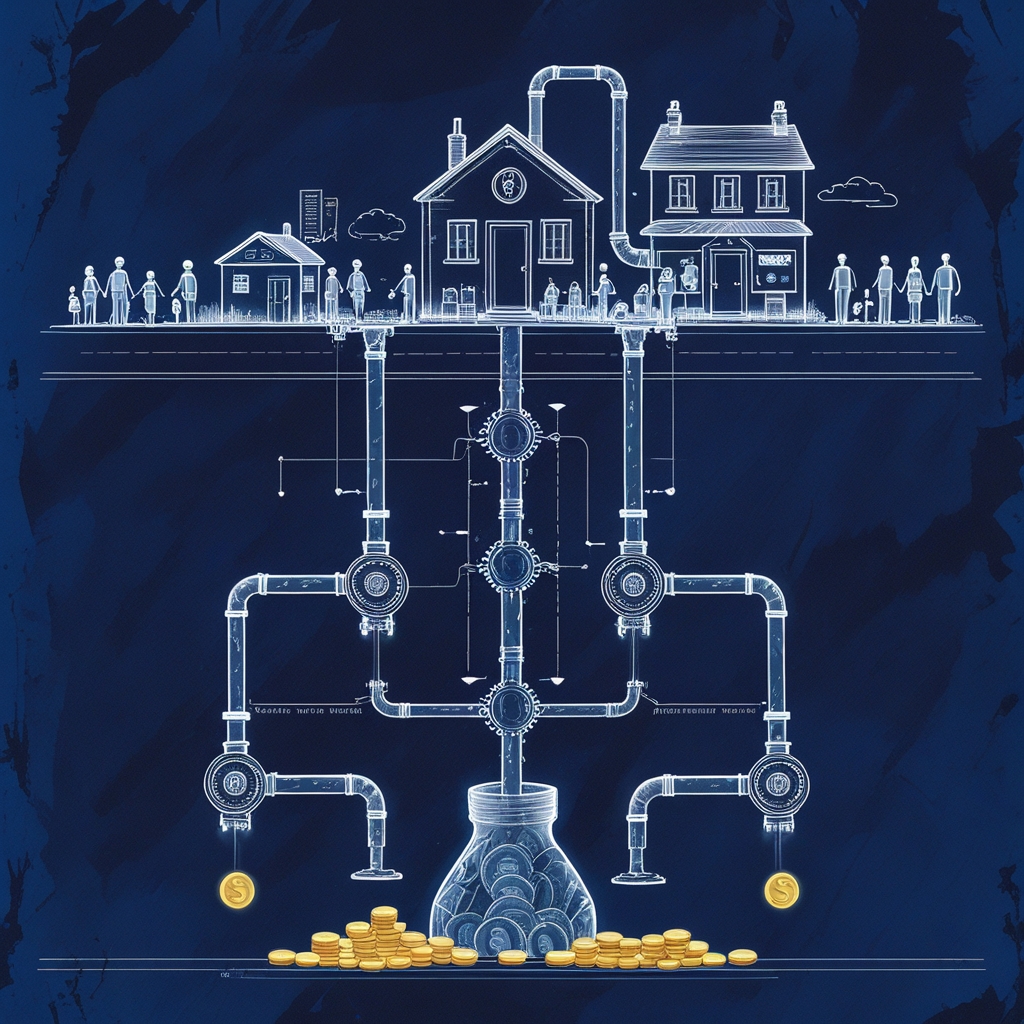
So here is who profits from UK inheritance tax. The government collects seven billion in revenue but also benefits from fiscal drag, from complexity, and from the economic activity the tax drives. The legal and financial services industry extracts fees from estates seeking to minimize tax. Property investors and developers buy family homes at distressed prices when forced sales occur. HMRC collects not just tax but penalties, interest, and over-compliance driven by fear. The very wealthy benefit from a system that allows them to avoid tax while the middle class pays. Farmers and landowners benefit from agricultural relief that drives up land prices. Business owners benefit from business relief that allows tax-free transfers. Life insurance companies profit from fear and from demand for protection. And pension providers and wealth managers profit from late-life contributions and estate planning.
Notice who is not on that list. Families. The people who inherit. The children who lose the family home because they cannot pay the tax. They do not profit. They pay. They lose. And the system, while claiming to tax wealth and redistribute, actually redistributes property from families to investors, entrenches inequality between the very wealthy and the modestly wealthy, and enriches advisors, insurers, and those positioned to profit from complexity and distress.
The next article will show you the feedback loops that ensure inheritance tax, despite being unpopular, despite falling heavily on ordinary families, persists and expands. Because the structure creates loops, loops that accelerate extraction, that widen inequality, and that make reform almost impossible.