NHS Waiting List Hits 7.7 Million: January 2026 Figures Show Record High
Published: 27 February 2026
The Event
NHS England released January 2026 waiting list figures today showing seven point seven million people waiting for hospital treatment, up from seven point six million in December 2025. This is the highest figure on record and represents one in seven people in England.
The increase, though modest month-on-month, continues a relentless upward trend. In January 2020, before the pandemic, two point nine million people were waiting for treatment. The waiting list has more than doubled in six years.
And within that total, the longest waits are worsening. Over four hundred and twenty thousand people have been waiting more than one year for treatment, up from four hundred thousand in December. Sixty-two thousand have been waiting over two years. Some specialties, particularly orthopedics and ear, nose, and throat (ENT), have waits exceeding three years for routine cases.
Why It Matters
Seven point seven million people waiting means one in seven of the entire English population is on an NHS waiting list. That is not abstract. That is your neighbor waiting for a hip replacement. Your colleague waiting for a hernia repair. Your parent waiting for cataract surgery. Your child waiting for tonsil removal.
And waiting is not neutral. Waiting means living with pain, with reduced mobility, with deteriorating quality of life. A person waiting two years for a hip replacement cannot walk properly, cannot work, cannot live normally. A child waiting eighteen months for tonsil removal misses school, suffers repeated infections, falls behind. Waiting turns treatable conditions into chronic suffering.
And the backlog is not clearing. New patients join the list faster than existing patients are treated. In January 2026, hospitals completed around one point nine million treatments. But over two million new referrals were added. The list grew by one hundred thousand in a single month. At this rate, waiting lists will reach eight million by summer 2026.
The cause is clear. The NHS does not have capacity to meet demand. Not enough staff, not enough operating theaters, not enough beds, not enough resources. And demand is rising. The population is aging, and older people need more hospital treatment. Chronic conditions like diabetes and obesity are increasing. And years of delayed care during the pandemic created a backlog that has never been cleared.
Breakdown by Specialty
Not all specialties have equal waits. Some are worse than others, and knowing which specialties have the longest waits helps you understand what you or your family might face.
Orthopedics, mainly joint replacements and musculoskeletal surgery, has the longest waits. Over one point two million people are waiting for orthopedic treatment. Average wait is around eighteen months. Worst cases exceed three years. If you need a knee replacement, you are likely waiting well over a year.
Ear, nose, and throat (ENT) has over six hundred thousand people waiting. Tonsillectomies, sinus surgery, hearing procedures. Average wait is fourteen months. Children waiting for tonsil removal often wait over a year, suffering repeated infections while they wait.
General surgery, including hernia repairs, gallbladder removal, and other routine operations, has over one million people waiting. Average wait is around sixteen months.
Ophthalmology, mainly cataract surgery, has over seven hundred thousand waiting. Cataracts worsen over time, and waiting eighteen months for surgery means progressive vision loss, falls, reduced independence.
Urology, including prostate issues and kidney stones, has over five hundred thousand waiting. Some conditions are painful, urgent, but still face waits of over a year.
And these are averages. Some hospitals, particularly in deprived areas, in regions with fewer staff, have waits far longer. Patients in some parts of the country wait double what patients in wealthy areas wait for the same treatment.
A&E and Ambulances: Also Worsening
The waiting list figures cover planned hospital treatment, but A&E and ambulance services are also in crisis. January 2026 A&E performance shows that only seventy-one percent of patients were seen within four hours. The NHS target is ninety-five percent. Twenty-four percentage points below target.
Seventy-one percent means twenty-nine percent, nearly one in three, wait over four hours. Some wait eight, ten, twelve hours in A&E. The seriously ill, the injured, the vulnerable, waiting in overcrowded departments because there is no capacity.
And ambulance response times are the worst on record. Category 1 calls, the most serious life-threatening emergencies like cardiac arrest, average ten minutes forty-five seconds. The target is seven minutes. For Category 2 calls, serious conditions like strokes and chest pain, the average response is forty-nine minutes. The target is eighteen minutes. Nearly three times longer.
Why? Because ambulances cannot offload patients at hospitals. A&E departments are full, so ambulances queue outside, unable to respond to new calls. The entire system is gridlocked.
Why This Keeps Happening
NHS waiting lists keep growing because the structure ensures it. Demand rises as the population ages and chronic conditions increase. But capacity, the ability to treat patients, is not rising fast enough to meet demand.
The NHS has around one hundred and forty thousand vacancies. Nurses, doctors, therapists, support staff, all desperately needed but not recruited. Existing staff are stretched, working longer hours, seeing more patients, burning out and leaving. And those who remain cannot keep pace with the volume of need.
Funding is not keeping up. NHS funding has grown in cash terms, but when you account for population growth, aging, and healthcare-specific inflation, real-terms per capita funding has barely increased since 2010. The NHS is trying to do more with resources that are not growing fast enough.
And the social care crisis makes it worse. Thirteen percent of hospital beds are occupied by patients who are medically fit to be discharged but cannot leave because there is no social care available. Blocked beds mean hospitals cannot admit new patients. A&E departments become overcrowded. Waiting lists grow.
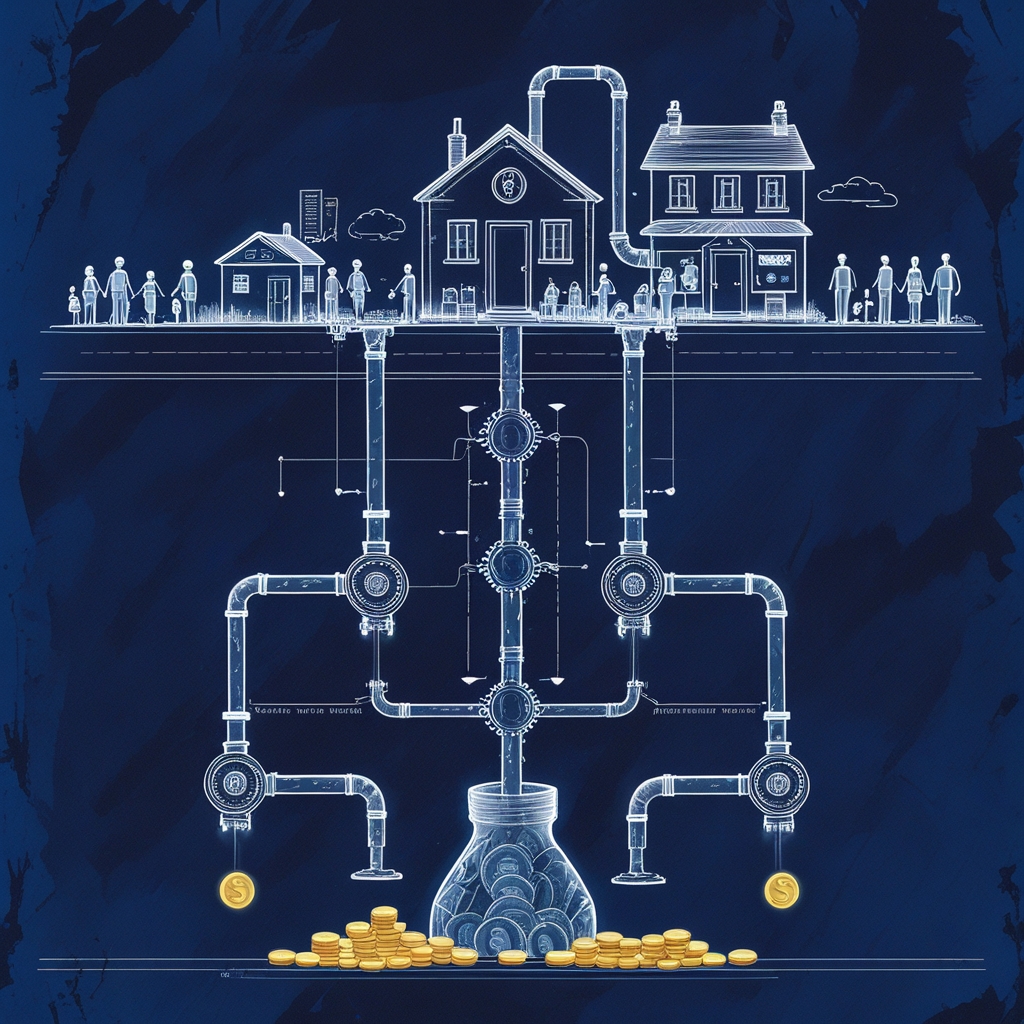
This is not a broken system. This is a system operating exactly as its funding and structure determine. Underfund capacity, create staff shortages, allow social care to collapse, and waiting lists grow. Inevitable.
Impact on Different Groups
Waiting lists affect everyone, but some groups are hit harder.
Older people, who need more hospital treatment, face the longest waits. A seventy-five-year-old waiting two years for a hip replacement loses two years of mobility, two years they cannot get back.
People in deprived areas wait longer. Hospitals in wealthy areas have more staff, more resources, better performance. Hospitals in poor areas are understaffed, overwhelmed, and waiting times are worse.
People with painful but non-urgent conditions suffer most. A hernia is not life-threatening, so you wait. But the pain is constant, debilitating, limiting your ability to work, to care for family, to live. Waiting eighteen months with chronic pain is torture.
Children waiting for routine surgery miss school, fall behind academically, suffer socially. An eighteen-month wait for tonsil removal means eighteen months of infections, missed school, worried parents.
And those who can afford it escape. Private healthcare is growing. Those with money pay for scans, for consultations, for operations, and skip the queue. Those without money wait, suffer, and deteriorate.
What to Watch Next
February 2026 figures will be released in late March. If waiting lists exceed seven point eight million, expect political pressure to intensify. The government has promised to bring waiting lists down, but so far, they have only grown.
Also watch for the Budget on 12th March 2026. If the Chancellor announces additional NHS funding, it might signal a commitment to reducing waits. But funding alone is not enough. The NHS also needs staff, and recruiting and training takes years.
And watch for industrial action. Junior doctors, nurses, and other NHS staff have taken strike action in recent years over pay and conditions. Unresolved disputes mean more strikes, more cancellations, longer waits. If strikes resume in spring 2026, waiting lists will grow faster.
What You Can Do
If you are on a waiting list, stay in contact with your hospital. If your condition worsens, if pain intensifies, if symptoms change, contact your GP and ask for your case to be reviewed. Sometimes urgent cases can be prioritized.
If you can afford it, consider private treatment for non-complex cases. A private scan costs around three hundred to five hundred pounds. A private consultation costs one hundred to two hundred pounds. A private routine operation, like cataract surgery, costs around two to three thousand pounds. For those with savings, this can mean immediate treatment instead of waiting eighteen months.
If you cannot afford private care, ask your GP about alternative pathways. Some conditions can be managed with physiotherapy instead of surgery. Some can be treated in community settings instead of hospitals. Explore all options.
And if you are waiting in pain, suffering, unable to function, seek support. Chronic pain services, mental health support, disability benefits if you cannot work. Waiting should not mean suffering in isolation.
And if you want to understand why NHS waiting lists keep growing despite endless promises to reduce them, why capacity never meets demand, and who profits from the NHS crisis, read the full deep dive on the UK Healthcare System.
Links:
[Read: The UK Healthcare System (NHS) Deep Dive - How This System Really Works]
[Read: Where Is the NHS Heading? Data Snapshot (2026)]