The Hidden Systems Behind Daily Frustrations
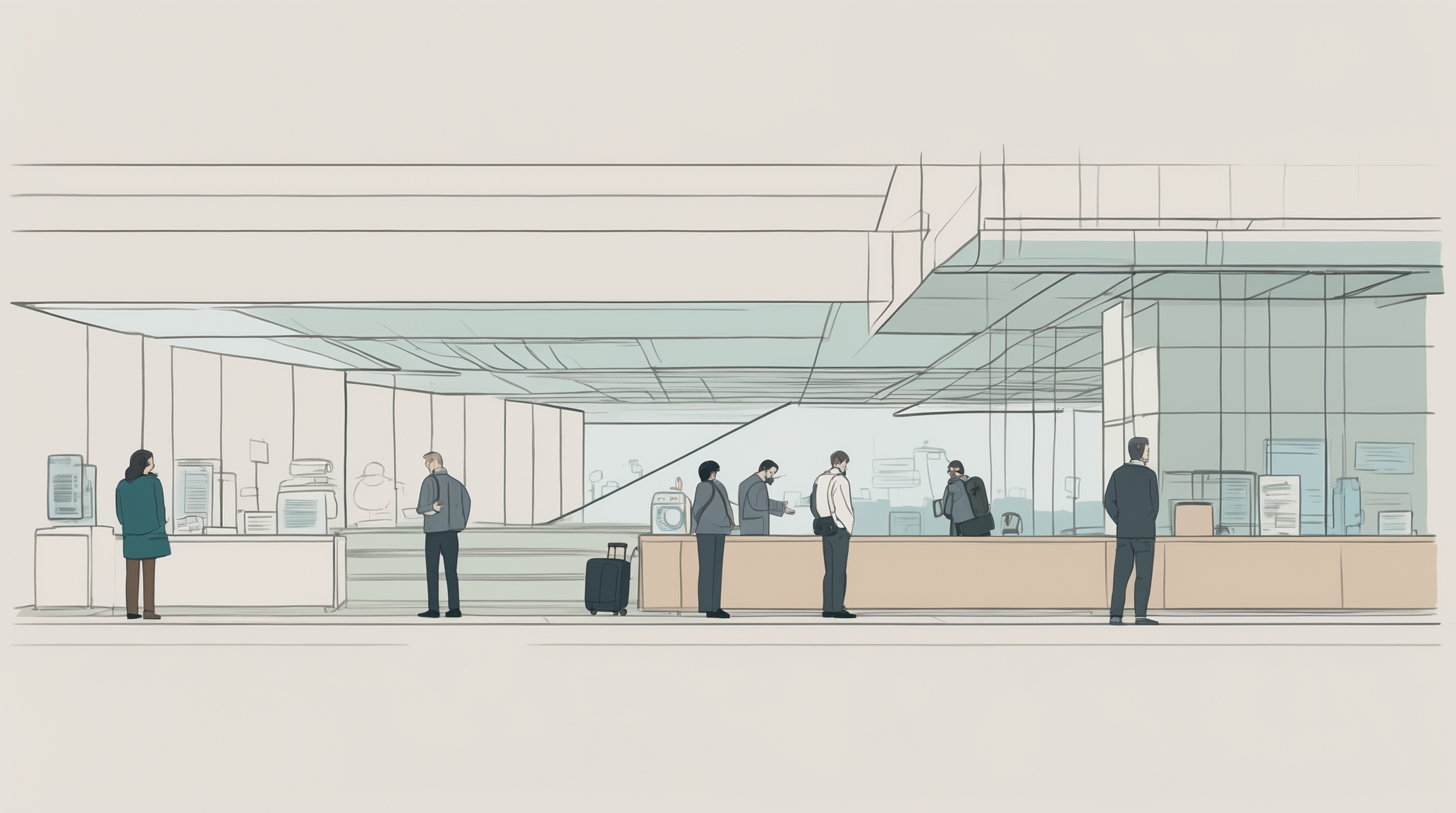
You call your internet provider. The service has been down for two days. You need it fixed. The phone rings. Then a menu. Press one for billing. Press two for technical support. Press three for sales. You press two. The system tells you there is a high volume of calls. You will be on hold. Music plays. Ten minutes pass. Fifteen. Finally, someone answers.
You explain the problem. The person on the other end is polite but scripted. They ask for your account number. Your address. Your date of birth. Information the system should already have. Then they say they need to transfer you to a specialist. More hold music. Another ten minutes. The specialist asks for the same information again. They run a diagnostic. They tell you to restart your router. You have already done this. They insist you do it again. You do. It does not help. They say they will escalate the issue. Someone will call you back within twenty-four hours. No one does.
This is not an accident. This is not incompetence. This is a system working exactly as it was designed to work. Just not designed for you.
Let me show you what is actually happening.
The internet provider does not make money by solving your problem. It makes money by keeping you as a customer while spending as little as possible on support. Every minute a support agent spends on the phone costs money. Every issue that gets escalated costs more. So the system is optimised to handle the maximum number of calls with the minimum cost per call.
That means short interactions. Scripted responses. First-line agents who are trained to resolve common issues quickly and deflect complex ones. It means transferring you between departments so that no single agent spends too long on your case. It means diagnostic steps that are not really about diagnosing your problem but about creating the appearance of effort while running down the clock.
None of this is personal. The agent is not trying to frustrate you. They are following the process they were given. And the process was not designed to fix your internet. It was designed to manage cost. Your experience is a side effect of that optimisation. And unless your frustration causes you to cancel your service, the system does not care.
This is the hidden structure behind one of the most common daily frustrations. And once you see it, you start seeing it everywhere.
Why is the train late? Not because the driver is lazy. But because the system optimises for cost, not reliability. Running fewer trains means lower expenses. So the timetable is built with no slack. One delay cascades into ten. The structure guarantees unreliability because reliability is expensive.
Why is the restaurant service slow even when it is not busy? Not because the staff do not care. But because the system is staffed for average demand, not peak demand. Hiring enough people to handle the busiest times would mean paying people to stand idle during quiet times. So the business optimises for labour cost, and the result is that service suffers whenever demand spikes.
Why is the price of the hotel room different every time you check? Not because the hotel is trying to confuse you. But because the system is using dynamic pricing. An algorithm adjusts the price based on demand, competitor pricing, your browsing history, and a dozen other variables. The goal is not fairness. It is revenue maximisation. And revenue maximisation means charging different people different prices based on what the system thinks they will pay.
Why is it so hard to cancel a subscription? Not because the company has not figured out how to build a cancel button. But because the system is designed to retain customers, and retention is easier when cancellation is difficult. Every extra step, every phone call required, every attempt to offer you a discount instead, is a friction point designed to make you give up. The process is not broken. It is working exactly as intended.
These are not isolated failures. They are system outputs. And the systems are not optimised for your convenience, your satisfaction, or your time. They are optimised for profit, efficiency, and survival. And when those goals conflict with your experience, your experience loses.
Here is why this matters. Most people encounter these frustrations and assume someone is doing a bad job. The support agent is unhelpful. The manager is incompetent. The company does not care. And sometimes, that is true. But more often, the people inside the system are doing exactly what the system asks them to do. They are following the incentives. And the incentives are not aligned with what you want.
Think about airport security. You wait in line for an hour. You take off your shoes. You unpack your bag. You get scanned. You get patted down. The process is slow, invasive, inconvenient. And you think, "This is ridiculous. There has to be a better way."
But here is what the system is optimised for. Not your convenience. Risk avoidance. The system is designed to prevent the one-in-a-million catastrophic event. And to do that, it treats everyone as a potential threat. It applies the same procedures to a grandmother and a young man traveling alone. It does not matter that the risk is different. Because differentiating risk is hard, subjective, and opens the system to accusations of bias. So the system defaults to universal inconvenience. It is inefficient for you. But it is safe for the system.
Or think about healthcare. You wait weeks for an appointment. The appointment lasts ten minutes. The doctor barely looks at you. They prescribe something generic and send you on your way. You feel unheard. Dismissed. And you blame the doctor.
But the doctor is not the problem. The doctor is inside a system that pays them based on volume, not outcomes. The more patients they see, the more they earn. Or the more the clinic earns. So the incentive is speed, not care. The system rewards efficiency, not thoroughness. And the doctor, who probably went into medicine because they wanted to help people, is now trapped in a structure that prevents them from doing the thing they trained for.
This is what systems do. They take well-intentioned people and push them toward behaviours that serve the system's goals, not the individual's needs. And because the system is invisible, the individual gets blamed.
Here is another pattern. Shrinkflation. You buy a chocolate bar. It costs the same as it did last year. But it is smaller. The company has not raised the price, but they have reduced the quantity. Why? Because the system is under pressure. Costs are rising. Ingredients. Labour. Energy. But raising prices is visible. Customers notice. They complain. They switch brands. So the company optimises differently. Keep the price the same. Reduce the size. Most customers do not notice immediately. And by the time they do, they have already bought it.
This is not dishonesty. It is a response to a constraint. The constraint is that customers are price-sensitive but less size-sensitive. So the system adjusts around the constraint. And the result is that you get less for the same money, and the company stays profitable. The incentive structure produced the outcome.
Or think about loyalty programs. You sign up because you are told you will save money. And maybe you do. But here is what the system is actually doing. It is tracking your behaviour. Learning what you buy. When you buy. How much you are willing to pay. And it uses that information to optimise pricing. Not to save you money. To extract more from you over time.
The program offers you a discount on something you were going to buy anyway. That feels like savings. But it also charges you more for something else because the data shows you are less price-sensitive on that item. The net effect is that the system extracts more revenue from you while giving you the feeling of being rewarded. The loyalty program is not for your benefit. It is a data-gathering tool disguised as a perk.
Here is the part that makes this so frustrating. You cannot escape these systems by being smarter or more careful. Because the systems are designed by people who understand behaviour far better than you understand the system. They have data. They have algorithms. They have entire teams optimising for one goal: get you to behave in a way that benefits the system.
You are not in a fair fight. You are one person with limited time and attention, going up against a structure that has been refined over years to exploit exactly the biases and constraints you have. The system knows you do not read terms and conditions. It knows you will not comparison shop for every purchase. It knows you will give up after two failed attempts to cancel. And it uses that knowledge.
This is not conspiracy. It is competition. Every business is trying to survive. And survival in a competitive market means optimising for revenue and cost. And optimising for those things often means creating friction, confusion, and inconvenience for customers. Not because businesses hate customers. But because the incentives point that way.
So what do you do?
First, you stop taking it personally. The systems are not designed to frustrate you specifically. You are just caught in a structure that is optimised for something other than your convenience. The support agent, the train driver, the restaurant server, they are not your enemy. They are inside the same system you are. And they have even less power to change it than you do.
Second, you recognise the pattern. When you encounter a frustration, ask: what is this system optimised for? Is it cost? Speed? Revenue? Risk avoidance? Once you see the optimisation target, the behaviour makes sense. And once it makes sense, you stop being surprised by it. You stop expecting it to change.
Third, you adjust your expectations. Not in a defeated way. But in a realistic way. You know the internet provider is not going to fix your problem quickly. So you do not waste emotional energy being outraged when they do not. You know the hotel price is going to fluctuate. So you do not feel cheated when it does. You know the loyalty program is tracking you. So you use it with your eyes open.
And fourth, you vote with your behaviour when you can. Some systems give you an exit. You can switch providers. Cancel subscriptions. Choose businesses that optimise differently. It is not always possible. Some systems are monopolies or near-monopolies. But where you have choice, use it. Not to punish bad actors. But to support systems that are optimised in ways that align with what you value.
Because here is the truth. These systems exist because they work. They work for the organisations running them. And they will keep existing until they stop working. Until enough people exit. Until enough frustration builds that the cost of the bad experience outweighs the benefit of the optimisation.
But that takes collective action. And collective action is hard. So most of these systems will persist. Not because they are good. But because they are stable. And stability, in systems, is more powerful than fairness.
The next article will show you what you can actually change. And what you cannot. Because understanding systems is useful. But only if it helps you act differently.
And that is where most people get stuck.